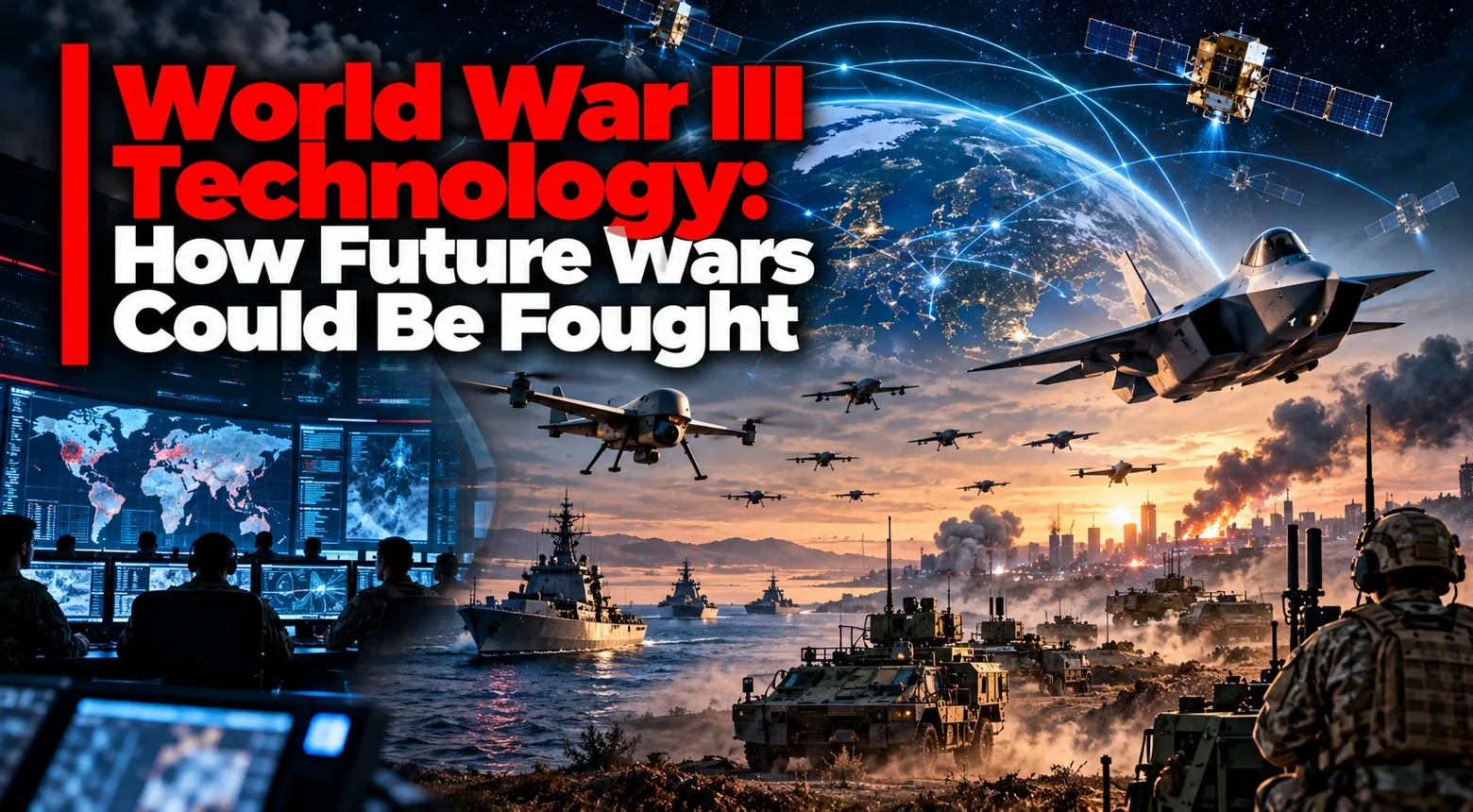
World War III technology is not a single superweapon. If a future conflict were to expand across several major powers, its outcome could be shaped by drones, artificial intelligence, satellites, cyber resilience and the industrial capacity to replace losses. NATO's October 2026 experiments already test how these systems work together, while new military-spending figures underline the resources states are committing to defence. None of this establishes that a third world war is imminent. The useful question is how modern technology could change a large-scale conflict — and where its limits remain.
From 5 to 9 October 2026, NATO Allied Command Transformation conducted the final phase of its SHINE 2026 Innovation Continuum in Dartmouth, Nova Scotia. The event examined AI-supported command and control, contested electromagnetic environments, counter-drone capabilities and the protection of critical undersea infrastructure. It was an experimentation programme, not a declaration that these technologies are deployed at scale or combat-proven across the Alliance.
On 16 October, NATO described further tests linking counter-uncrewed aircraft system cells across national and technical boundaries. These developments illustrate the central shift in warfare: individual aircraft, ships and missiles increasingly depend on the quality of the data, networks, logistics and defensive architecture around them. At the same time, the 19 October NATO account of its Bucharest Hybrid Symposium highlighted critical infrastructure, sabotage and cyber resilience as security concerns beyond the battlefield.
What Would Make a Future Major-Power War Different?
The phrase World War III suggests a single global battlefield. In reality, any hypothetical major-power conflict would be shaped by geography, political decisions, alliance obligations and the objective of each participant. A confrontation could remain limited, involve several regional theatres or trigger wider escalation. Technology cannot predict which path political leaders would choose.
What can be assessed is the changing relationship between military systems. A surveillance satellite may contribute data to an early-warning network; an airborne sensor may update a shared picture; software may help analysts sort information; an interceptor may respond to a threat. Yet every link depends on trustworthy data, compatible software, trained personnel and functioning communications. Losing a single component does not necessarily disable the whole force if there are resilient alternatives.
NATO's 13 January 2026 Alliance Digital Strategy explicitly prioritises data-driven human–machine collaboration, cyber defence and interoperable digital systems. Its 26 May implementation strategy positions digital change as an enabler of multi-domain operations. Both documents describe priorities and programmes, not proof that every Allied platform can already exchange data seamlessly under wartime conditions.
AI Warfare: Faster Analysis Does Not Mean Autonomous War
Artificial intelligence could affect how military organisations process imagery, maintain equipment, identify patterns in sensor data and prioritise information for commanders. Used appropriately, AI can reduce analyst workload and improve the speed of selected support functions. These possibilities are relevant to aerospace surveillance, air and missile defence, intelligence fusion and logistics alike.
However, AI-assisted decision support should not be confused with an autonomous weapon making its own engagement decisions. The difference is legal and operational, not just semantic. NATO said the uncrewed systems involved in SHINE 2026 were under ultimate human control. The International Committee of the Red Cross explained on 8 October 2026 that autonomous weapon systems can select and apply force without further human intervention after activation, raising distinct concerns about predictability and civilian protection.
The UN Secretary-General and ICRC President's 25 August 2026 appeal called for new binding rules on such systems. It reflected a policy and humanitarian dispute that remains unresolved in the sources cited here. Claims that AI will inevitably control all military decisions are therefore neither technically demonstrated nor institutionally settled.
An additional limitation is data quality. Models can generate misleading outputs, misclassify patterns or degrade when conditions differ from training and testing environments. Human oversight, validation, auditability and fallback procedures matter because a faster incorrect conclusion can be more dangerous than a slower, well-founded one. Defence Agenda's analysis of autonomous-weapons definitions and human control provides further context.
Drone Swarms and Air Defence: Mass Meets Integration
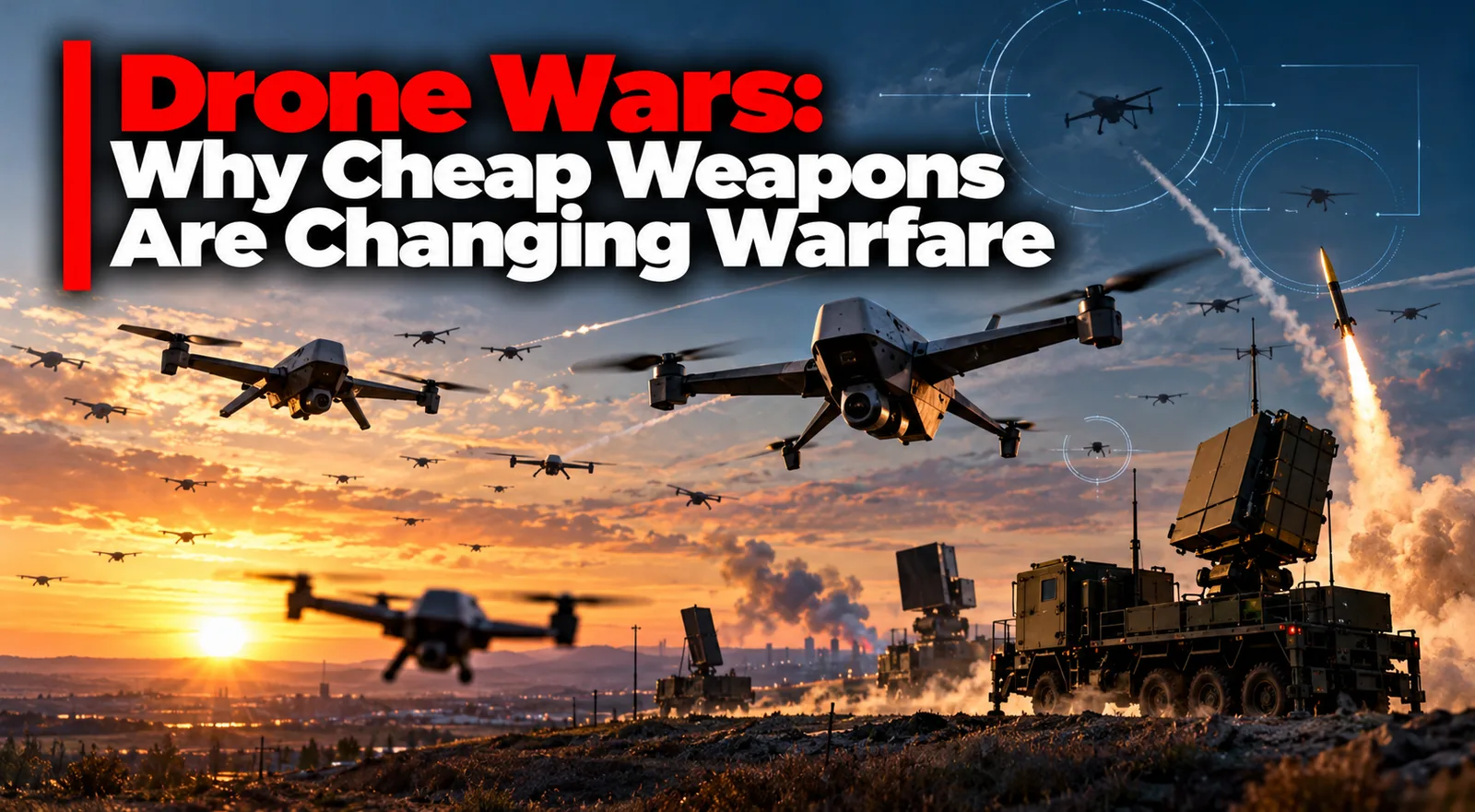
Uncrewed aircraft can impose pressure through affordability, availability and the ability to be deployed in numbers. Yet a mass launch is not automatically an autonomous swarm. Cooperative autonomy requires verified coordination and decision-making capabilities, while many systems operate through remote control, pre-planned routes or separately assigned missions. The distinction matters when assessing both battlefield effectiveness and procurement claims.
NATO's Drone Edge statement of 7 July 2026 set out plans for more than USD 40 billion in counter-drone investment over five years and fivefold operator training by the end of 2027. On 16 October, Allied Command Transformation described tests connecting multiple defensive cells. The shift is towards layered defence that can coordinate sensors and response systems, rather than assuming that one missile, gun, jammer or drone interceptor can solve every problem.
The industrial cost question is substantial. A comparatively inexpensive airborne threat may force a defender to employ scarce personnel, radar capacity or a costly munition. Yet an expensive defensive engagement can still be justified when it protects human life or critical infrastructure. Calculating the exchange purely from the sticker prices of a drone and missile overlooks probability of success, maintenance, readiness and the consequences of a missed interception.
The wider picture is covered in Defence Agenda's Drone Warfare 2026: AI, Robots and Swarms and NATO counter-drone investment reporting. Their central relevance is that force design needs both affordable mass and higher-end, survivable capabilities. Conventional aircraft, artillery, armoured forces and human operators do not vanish because uncrewed systems become more numerous.
Space Warfare: Satellites as Essential Infrastructure
Space systems support communication, navigation, timing, observation and missile warning. They also enable civilian activities such as transport, banking and disaster management. That overlap makes space resilience a wider societal issue, not simply a contest over military satellites. A future war involving sophisticated militaries could place heavy pressure on access to space-derived services, although the nature and scale of any interruption would depend on circumstances.
At the NATO Summit Defence Industry Forum in Ankara on 7 July 2026, eight Allies launched HALO, an initiative intended to improve connectivity among sovereign military satellites. The proposed network is intended to improve communications, intelligence and missile tracking. NATO also described its STARLIFT effort to examine responsive launch options. Neither announcement demonstrated a fully completed or invulnerable replacement constellation.
Technological resilience could therefore be judged by redundancy, the ability to restore services and whether military users can continue essential tasks when satellite support is degraded. The NATO 2026 Resilience Baseline Requirements explicitly note the vulnerabilities associated with dependence on space-based assets. Those vulnerabilities also affect societies that depend on the same broad categories of infrastructure.
Cyber Warfare and the Electromagnetic Spectrum
Cyber operations, electronic warfare and information disruption can affect the reliability of data and the availability of communications. They do not replace physical military power, but they can change its effectiveness. A sophisticated aircraft remains dependent on maintenance data, navigation, mission systems, communications and wider logistical networks.
NATO's 2026 Digital Strategy calls for more resilient architectures and stronger security controls. The organisation's 19 October Hybrid Symposium summary describes coordination with governments, industry and the European Union to protect infrastructure, particularly energy systems, against hybrid threats. These are documented security priorities; the reports do not establish that a specific future attack or war will occur.
The practical industrial consequence is that resilience cannot be added as a software afterthought. System suppliers must consider integration testing, secure updates, supply-chain assurance and service continuity across complex fleets. Defence Agenda's report on U.S. Army NGC2 network integration challenges illustrates how achieving interoperability with existing equipment can be more difficult than presenting an advanced command-and-control concept.
Missiles, Air Power and Naval Systems Still Matter
Long-range precision weapons, advanced combat aircraft, submarines, conventional ground forces and integrated air and missile defence will remain central to any credible major-power scenario. Smaller uncrewed systems cannot automatically match the speed, payload, operational reach, protection or mission flexibility of every conventional platform. The likely trend is integration and changing force composition, rather than a single revolutionary weapon replacing all previous capabilities.
At the 7 July 2026 NATO Summit Defence Industry Forum, Allies announced work on long-range capabilities, loitering-munition and 155 mm ammunition production, missile procurement and air defence. These activities underline the continued demand for conventional weapons alongside drones and digital systems. The announced procurement of 700 PAC-2 and 200 PAC-3 missiles is an acquisition statement, not evidence that all were delivered by October.
Naval warfare raises similar questions. Aircraft carriers, frigates and submarines have roles that small autonomous platforms cannot simply assume. Uncrewed vehicles may expand surveillance or reduce risk to crews, but their utility depends on integration, survivability and communications. The U.S. Navy's reported GPS-denied autonomous ship-landing research is a useful example of technical progress whose next maturity gate is operational fleet testing, rather than immediate fleet-wide adoption.
Military Spending and Defence Production: Capacity Is a Weapon
Technology has limited strategic value if it cannot be produced, maintained, repaired and replenished. According to SIPRI's April 2026 fact sheet, global military expenditure reached USD 2.887 trillion in 2025, up 2.9% in real terms and the highest recorded level in its dataset. Europe spent USD 864 billion, a 14% annual increase, while Asia and Oceania spent USD 681 billion, up 8.1%. These are region-wide expenditure aggregates, not measures of available ammunition or deployable combat power.
Large budgets do not translate automatically into production. Procurement lead times, skilled labour, testing capacity, raw materials, export controls, spare parts and repair facilities all affect readiness. A state can acquire a technologically impressive system and still struggle to sustain operations if its maintenance and replacement pipeline is slow. Conversely, large-scale production of inexpensive systems has limited value without trained crews, reliable equipment and viable operational concepts.
NATO's July 2026 Defence Industry Forum announced initiatives designed to link defence demand with industrial capacity, including the NATO Engine concept. These developments should be tracked through signed contracts, funded production lines, deliveries and independent acceptance testing rather than through headline investment totals alone.
Comparative Technology and Programme-Risk Assessment
| Capability | Observed 2026 development | Potential strategic value | Principal limitation or risk |
|---|---|---|---|
| AI-enabled command systems | NATO SHINE trials and Digital Strategy | Faster information processing and decision support | Data quality, integration and accountability |
| Drones and counter-UAS | NATO Drone Edge and connected-cell testing | Affordable scale and layered defence | Electronic interference, attrition and sustainment |
| Space-based networks | HALO initiative launched by eight Allies | Communications, observation and warning resilience | Coverage, costs, dependence and incomplete fielding |
| Cyber and digital resilience | NATO 2026 digital and resilience requirements | Continuity of operations and essential services | Legacy systems and supply-chain exposure |
| Long-range weapons and air defence | July NATO procurement and industry initiatives | Deterrence and defence against high-end threats | Production lead times and interceptor stockpiles |
| Industrial mobilisation | SIPRI spending increase; NATO industry initiatives | Replenishment and endurance | Budget-to-output delays and workforce constraints |
The table is an editorial synthesis of publicly reported developments, not a ranking of operational readiness or evidence of superiority in a specific conflict.
Would Nuclear Weapons Change the Technology Equation?
Any discussion of a possible world war must acknowledge nuclear deterrence and escalation risk. A conflict between nuclear-armed states would be governed not only by battlefield effectiveness but also by political signalling, uncertainty and the possibility of catastrophic miscalculation. Advanced conventional systems may affect perceptions of vulnerability, but cannot eliminate the consequences of nuclear escalation.
In its 8 June 2026 Yearbook announcement, SIPRI said nuclear-armed states continued to modernise their arsenals and warned of growing escalation and miscalculation risks. These findings demonstrate why faster technology is not automatically stabilising. Human judgement, communication between adversaries, crisis-management mechanisms and international law remain essential elements of risk reduction.
The scenario framing here is deliberately conditional: neither the SIPRI findings nor NATO's technology trials are evidence that a third world war has begun or is unavoidable. The most responsible way to assess future warfare is to distinguish observable deployments and policy decisions from strategic speculation.
Implications / Next: What Should Defence Leaders Watch?
The next meaningful indicators are not viral demonstrations or sweeping claims that AI has transformed warfare. They are repeatable test results, procurement contracts, delivered quantities, agreed interoperability standards and the ability to continue operations when individual networks or services are unavailable. A new prototype is not the same as initial operating capability, and a multinational policy initiative is not a delivered military system.
For NATO, the key follow-up to SHINE and Crucible 4-26 is whether experimentation produces deployable, secure and sustainable systems. For industrial suppliers, the test is whether engineering teams can integrate new equipment with legacy infrastructure while meeting cyber, safety and qualification requirements. For governments, the principal trade-off is balancing cutting-edge capability with production capacity, training and the protection of civilian infrastructure.
The geopolitical dimension is equally important. Procurement and technological change may reinforce deterrence, but they do not remove the possibility of miscalculation. Policymakers will need to monitor international discussions on autonomous weapons, resilience standards and practical channels for crisis communication as closely as they monitor drone deliveries and missile orders.
Conclusion
Future large-scale warfare would likely be shaped by connected technology, but not decided by technology alone. AI, drones, space services and cyber systems may change the speed and reach of military operations; conventional forces, industrial replenishment, resilience and human command will still determine what those systems achieve. The enduring strategic question is whether states can integrate advanced capabilities responsibly and sustain them without losing control of escalation.
Further Reading
- NATO ACT — SHINE 2026 Brings Innovation into Operational Experimentation (9 October 2026)
- NATO ACT — NATO Scales Counter-UAS Experimentation (16 October 2026)
- NATO — Alliance Digital Strategy (13 January 2026)
- SIPRI — Trends in World Military Expenditure, 2025 (April 2026)
- SIPRI — Nuclear and Escalation Risks in Yearbook 2026 (8 June 2026)
- ICRC — Joint UN/ICRC Appeal on Autonomous Weapons (25 August 2026)
- Defence Agenda — Drone Warfare 2026: AI, Robots and Swarms
- Defence Agenda — Autonomous Weapons Definition Gap