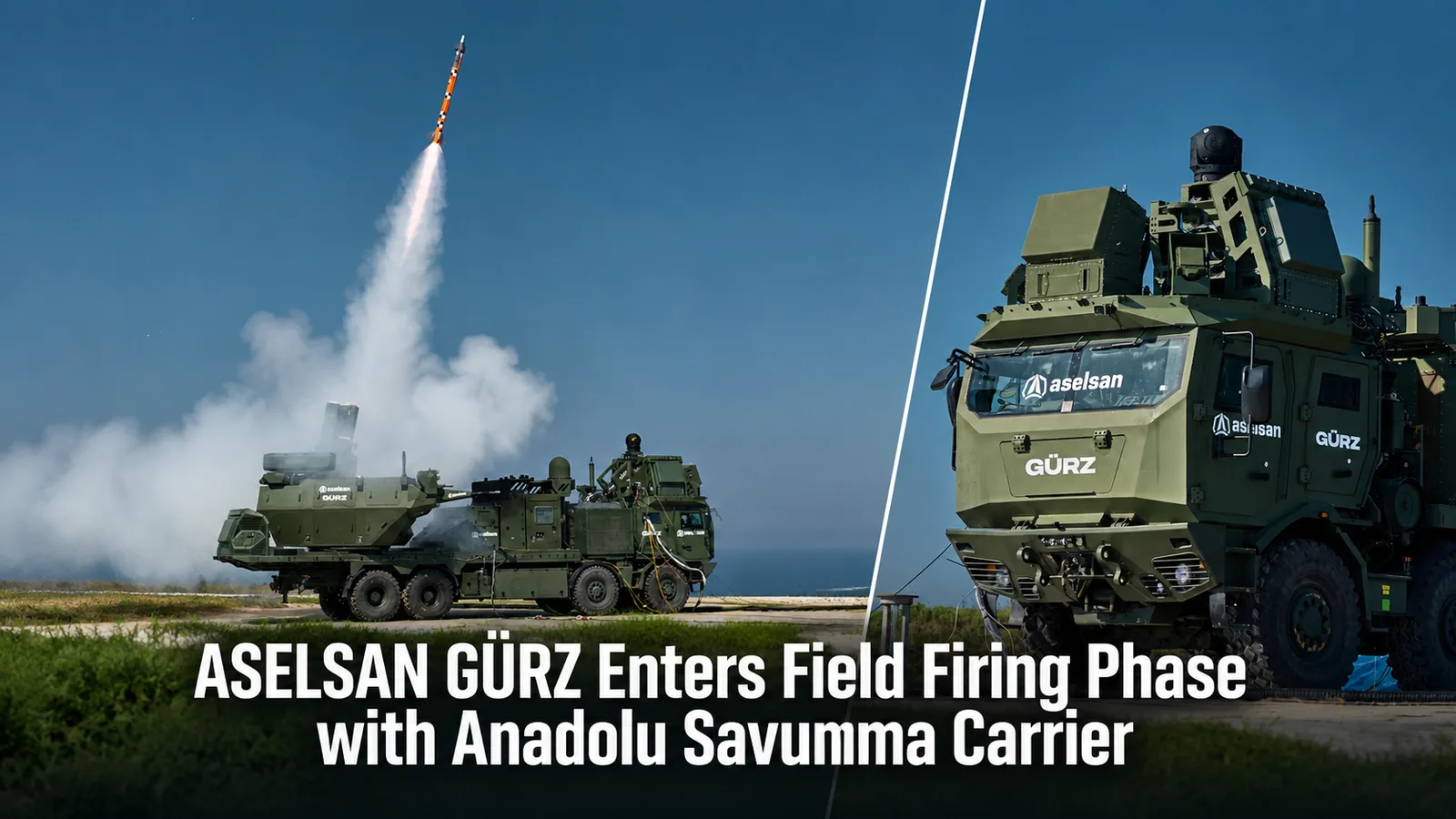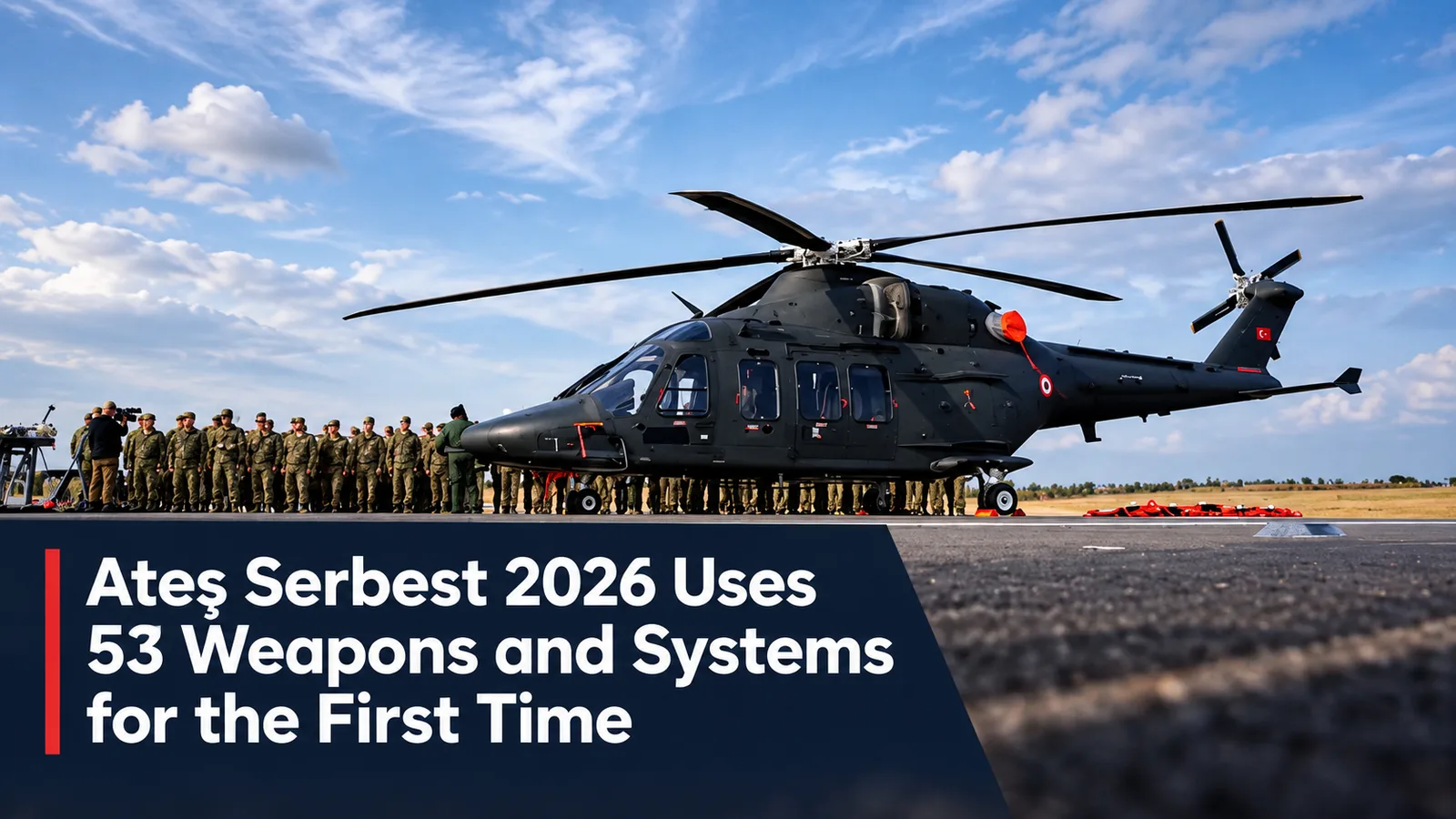
Türkiye’s Ateş Serbest 2026 live-fire activity showcased 104 weapons and systems, used 93 in firing events and employed 53 weapons, systems or mission activities in the exercise for the first time, according to event reporting from Polatlı. The exercise brought together the Land Forces, Naval Forces, Air Force and Special Forces under a common live-fire framework.
The first-use total included capabilities ranging from artificial-intelligence-assisted target planning and autonomous systems to air-launched precision weapons and directed-energy systems. The result was a demonstration of how Türkiye is linking conventional firepower with newer sensors, autonomy and effectors rather than presenting each technology in isolation.
104 Systems Were Displayed and 93 Took Part in Firing
DHA reported that 104 weapons and systems were exhibited during the activity, with 93 taking part in the firing sequence. Anadolu Agency independently reported the same 104-system display total and described 53 different activities as appearing in the exercise for the first time.
The figures are useful because they separate the exhibition layer from the live-fire layer. Not every displayed item was fired, and not every system counted among the 53 should be interpreted as a completely new weapon entering service. The first-use figure refers specifically to its first appearance or use within the Ateş Serbest exercise framework unless another source documents a broader first-ever milestone.
The 53 First-Use Elements Included AI, Autonomy and Directed Energy
DHA listed artificial-intelligence-based target planning, Sivrisine Gözükara, Kargu Gözükara, BOYGA Uçangöz, paramotor activity, AKINCI and TB2/KEMANKEŞ firing and the ALKA directed-energy weapon system among the capabilities used for the first time in the exercise.
That mix shows the direction of travel in Turkish force development. The event is no longer centred only on artillery, armour and crew-served weapons; it increasingly includes target-generation software, autonomous or remotely operated systems and non-traditional effectors.
KEMANKEŞ Added a Networked Precision-Strike Layer
Anadolu Agency reported that a Bayraktar TB2 fired KEMANKEŞ against a designated target during the exercise. The inclusion of an air-launched mini cruise missile or loitering-type precision effector gives the exercise a longer-range unmanned strike dimension alongside traditional artillery and aircraft-delivered weapons.
The importance of KEMANKEŞ in this context is not simply the weapon itself, but the sensor-to-shooter chain required to identify, assign and prosecute a target. Ateş Serbest’s emphasis on AI-assisted target planning suggests the exercise is increasingly demonstrating how those chains are managed across multiple force elements.
ALKA Brought Directed Energy Into the First-Use Group
ASELSAN’s ALKA directed-energy system was also listed among the capabilities appearing in the exercise for the first time. ALKA is designed as a counter-UAS solution combining electronic and directed-energy effects against small aerial threats.
Its presence alongside MKE TOLGA highlights the emergence of multiple Turkish directed-energy and counter-drone architectures. The systems should not be treated as identical or interchangeable, but their joint presence at Ateş Serbest signals that directed energy is moving from exhibition halls toward repeated field demonstrations.
MKE TOLGA Added a 760-Metre Laser Kill
MKE’s TOLGA short-range air-defence system was used in a live-fire role in the exercise for the first time, according to DHA. The integrated 20 kW fibre-laser weapon destroyed a drone at 760 metres, providing one of the event’s clearest new-technology firing results.
The laser engagement complements TOLGA’s wider layered architecture, which also includes radar, electro-optical sensing, electronic attack, guns and missiles. The 760-metre result should be treated as a demonstrated engagement point rather than the system’s maximum effective range.
Conventional Firepower Remained the Core of the Exercise
Despite the technology emphasis, the exercise still relied heavily on conventional systems. DHA reported that 155 mm FIRTINA and 105 mm BORAN artillery, MK-series aircraft bombs and national small arms including MPT-55, MPT-76, KNT-76, BORA-12 and KN-12 were among the systems used or shown.
This matters because the Turkish Armed Forces are not replacing conventional firepower with autonomy or directed energy. The emerging model is layered: established guns and munitions remain the volume firepower base while newer technologies add precision, survivability, counter-UAS options and better targeting.
MKE Used the Event to Display a Wider New-Generation Portfolio
DHA also reported that MKE displayed a set of newer systems including the ALPAY-2 unmanned minefield breaching system, DAĞHAN hybrid tracked armoured vehicle, KÖSTEBEK microwave underground explosive detection and imaging system, DENİZHAN national naval gun, BALKIN Çaf-S countermeasure ammunition and MPT-76 MH rifle.
These systems were part of the exhibition layer and should not automatically be counted as having completed live-fire qualification during the event. Their presence nevertheless shows how Ateş Serbest is being used as a showcase for technology moving through different stages of testing, fielding and operational integration.
The Exercise Is Becoming a Cross-Service Integration Venue
The Ministry of National Defence says Ateş Serbest is intended to demonstrate inventory systems, show their effects on targets and develop coordination of fire support across the services. It also explicitly highlights autonomous systems, artificial intelligence, electronic warfare and cyber capabilities.
That makes the exercise increasingly relevant as an integration event. The important question is not whether a single weapon can hit a target, but whether sensors, command systems, unmanned platforms and effectors from different services can be connected into a coherent kill chain under realistic operational conditions.
What the 53-System Figure Does — and Does Not — Mean
The headline number should be interpreted carefully. It does not mean Türkiye introduced 53 completely new weapon systems into service on 13 October. DHA and Anadolu Agency describe 53 weapons, systems or activities as being used in Ateş Serbest for the first time.
For Defence Agenda, the more meaningful conclusion is that the exercise absorbed a much larger number of new capabilities than previous iterations, particularly across AI-enabled targeting, autonomy, counter-UAS and directed-energy missions. Procurement, qualification and service-entry status still need to be assessed system by system.