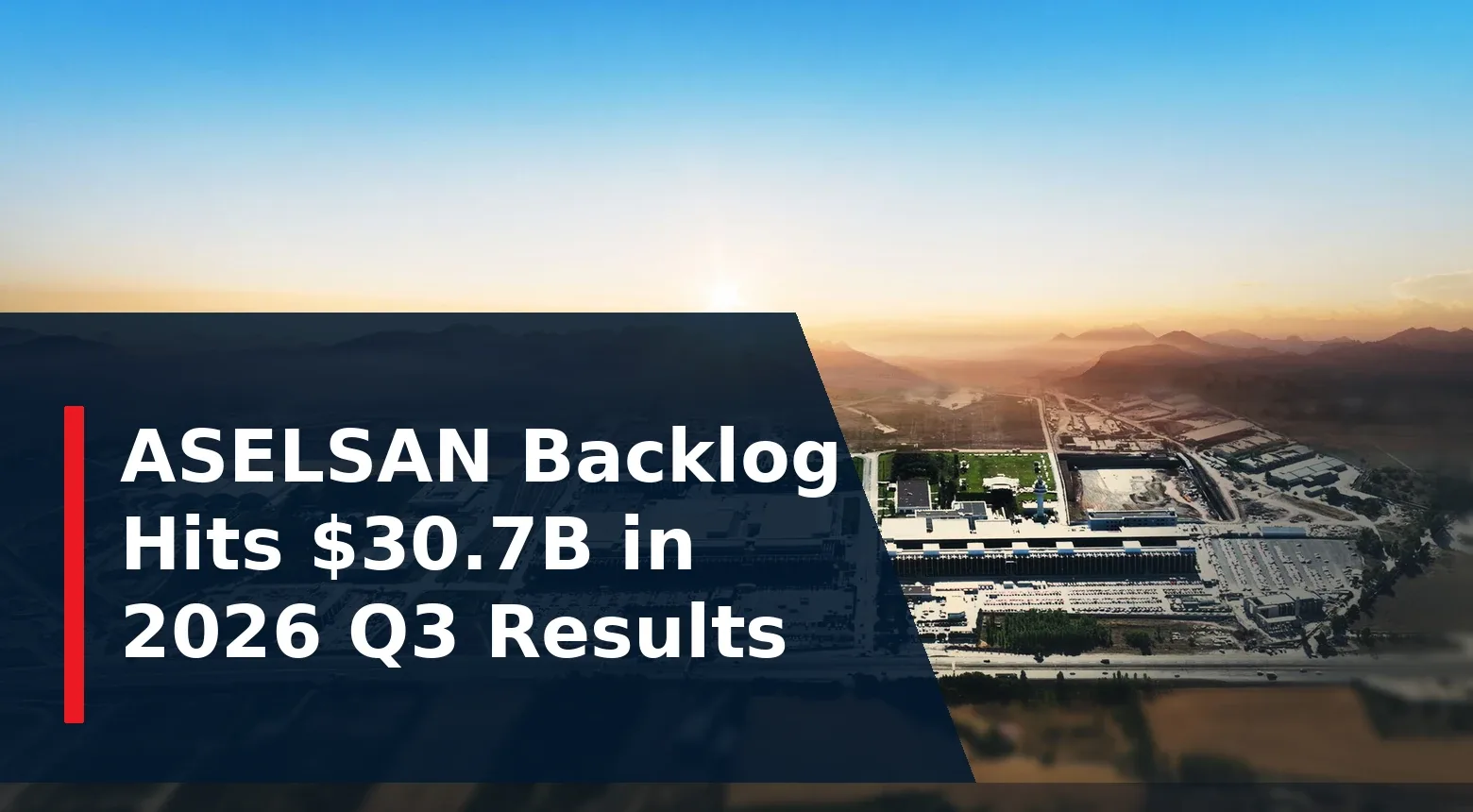
ASELSAN Q3 2026 results show that Türkiye's defence electronics manufacturer ended September with a record $30.7 billion order backlog, alongside $14.0 billion in newly signed contracts during the first nine months of the year. Nine-month revenue reached TL151.5 billion, representing 28% real growth on the company’s comparable figures. The results matter for procurement programmes because ASELSAN is expanding its production infrastructure at the same time as commitments across air defence, radar, electronic warfare and other systems increase.
moreWhy the ASELSAN Q3 2026 Results Matter
The distinguishing feature of the latest earnings disclosure is the widening gap between the value of new business and sales already delivered. ASELSAN's book-to-bill ratio reached 4.4 in the first nine months, compared with 2.5 in the equivalent 2025 period. The measure indicates the volume of orders received relative to recognised sales, but it is not a measure of cash collection, profitability or completion of customer acceptance.
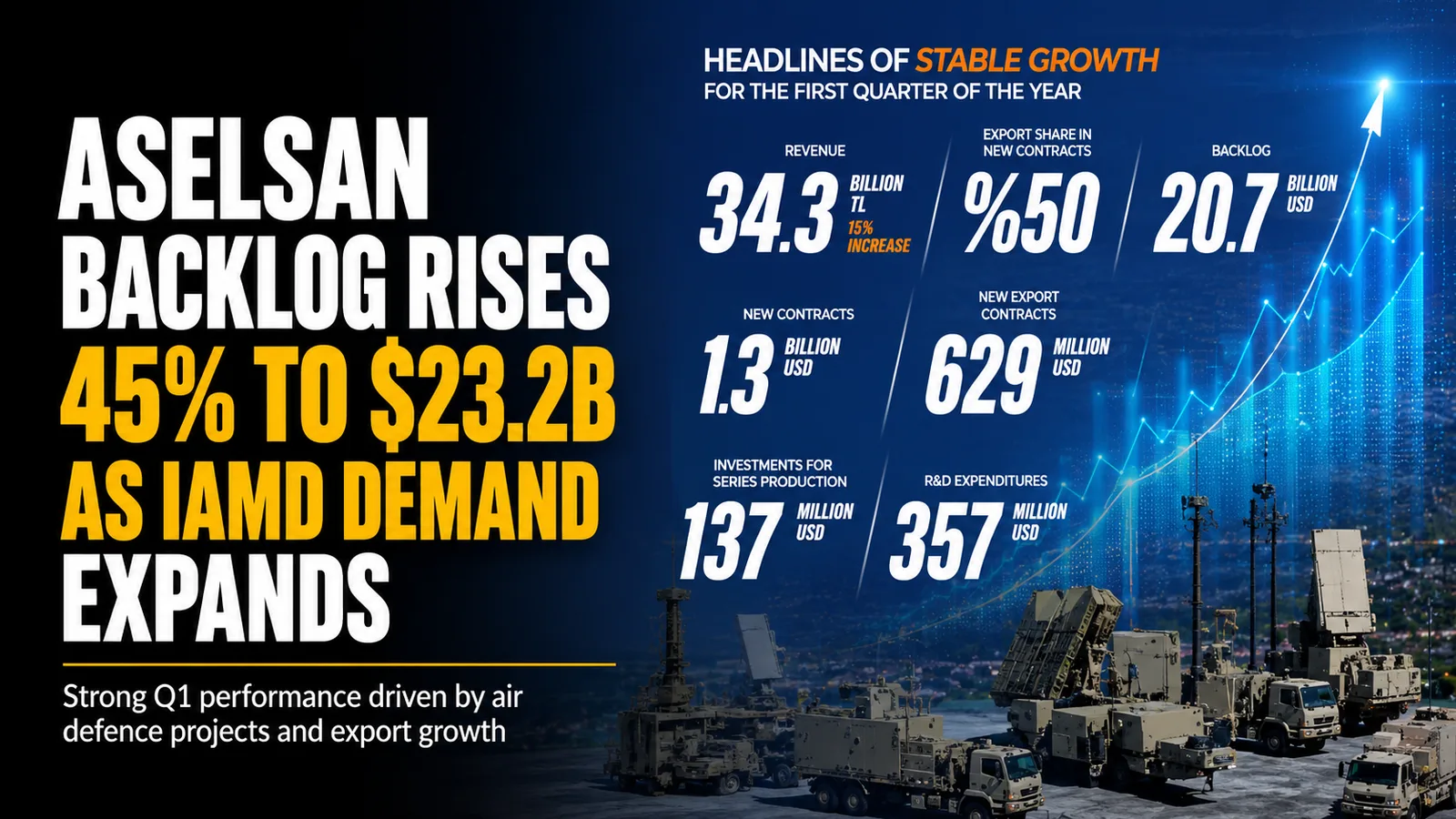
In its first-half 2026 results coverage, Defence Agenda reported a backlog of $23.2 billion. The September figure is approximately $7.5 billion higher than the June figure, consistent with ASELSAN's latest statement. The comparison suggests that the company's order book is expanding much faster than it can be converted into deliveries in the short term; whether that turns into sustainable revenue depends on programme execution.
The consolidated nine-month results were publicly filed through Türkiye's Public Disclosure Platform on 27 October 2026, alongside a separate board activity report. The figures describe the first nine months of 2026, not a standalone July–September income statement. Treating TL151.5 billion as revenue for the third quarter alone would overstate the company's quarterly performance.
Revenue, EBITDA and Order Intake
ASELSAN disclosed TL151.486 billion in revenue for January–September 2026, compared with TL117.890 billion in the comparable period of 2025. Its reporting materials describe growth as 28% in real terms. Gross profit reached TL47.496 billion, up from TL36.439 billion. The tabulated gross margin was 31% in both periods, illustrating that top-line expansion did not produce a comparable percentage-point improvement at this level.
EBITDA increased to TL40.555 billion from TL29.408 billion, approximately 38% on the company's reported rounded comparison. The underlying margin rose by 190 basis points to 26.8%, rather than merely remaining at the rounded 27% shown in the headline table. ASELSAN attributes the margin improvement to efficiency measures, digital transformation, the use of artificial intelligence in operations and a higher-value product mix. Those explanations are management's attribution; the published summary does not quantify each individual contribution.
New contracts signed during the nine months totalled $14.015 billion. This should be distinguished from the $1.9 billion figure reported for new export contracts: the first covers the wider newly contracted business and the second is the export component reported by the company. Neither should be confused with recognised revenue or billed cash. The reported backlog of $30.744 billion is similarly an order-book measure, not the amount already earned.
Which Defence Systems Are Driving Growth?
According to ASELSAN, demand for air-defence systems, radar, electronic warfare, underwater systems, AI-enabled urban-security technologies, guided munitions, electro-optics and communications contributed to the period's revenue. The company identified export contracts in air defence, communications, electronic warfare, electro-optics and related payload categories, while domestic awards covered additional air-defence production, hybrid air-defence systems, long-range air-defence equipment and radar procurement.
The report lists categories of major agreements but does not supply a complete contract-by-contract allocation of the $14.015 billion total. It would therefore be inappropriate to infer precise shares for particular platforms, identify undisclosed foreign buyers or attribute every radar and air-defence export to a named product. Defence Agenda separately covered the October counter-drone export contract, but that post-September disclosure must not automatically be added to the 30 September backlog without confirmation of the reporting cut-off and accounting treatment.
The order book provides programme visibility, particularly for governments planning multi-year procurement and sustainment. It does not, however, guarantee that every contract will convert into revenue on its initially anticipated timetable. Complex systems may face production qualification, component-sourcing, test, customer acceptance and integration dependencies.
Oğulbey Production Begins as Investment Reaches $684M
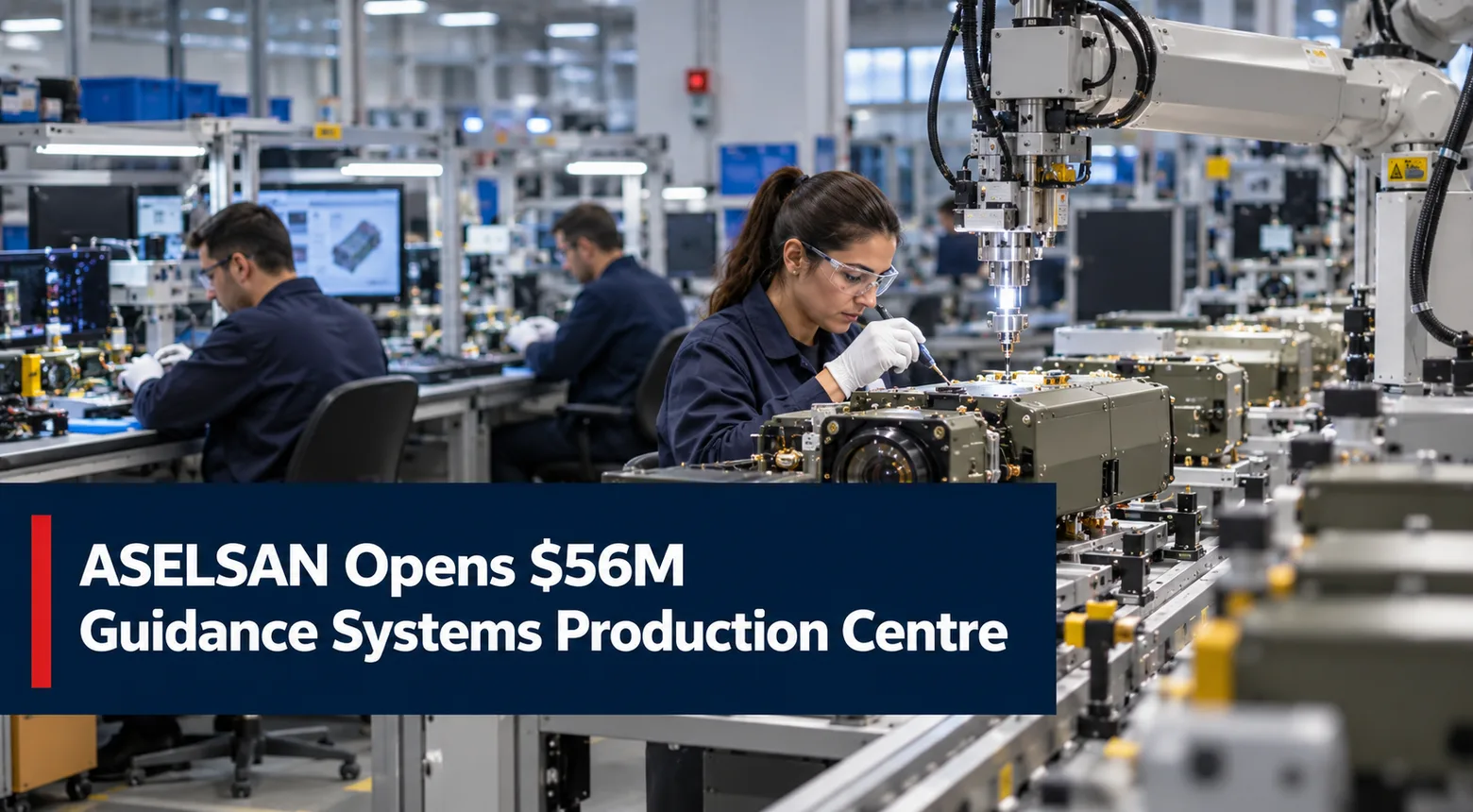
The most tangible industrial milestone in the results is ASELSAN's confirmation that the first phase of its Oğulbey Technology Base has begun production. The company also cites the commissioning of its Guided Ammunition Systems Production Centre and an expansion of robotic and automated manufacturing infrastructure for land, naval and air-defence equipment.
Infrastructure and capacity-related expenditure reached $684 million in the first nine months, a reported increase of 228%. This is investment expenditure, not the total value of the Oğulbey project alone. ASELSAN said research and development spending rose 36% to approximately $1.262 billion over the same period, with work spanning satellite technologies, underwater systems, quantum computing, high-power microwave technologies, microelectronics and smart munitions.
The company is attempting to scale several high-technology product families in parallel. As Defence Agenda's reporting on naval production investment previously noted, physical factory expansion does not eliminate software verification, supplier qualification and subsystem test bottlenecks. The latest statement confirms that the first Oğulbey phase is operating, but does not provide an independently audited estimate of throughput gained or an updated delivery timetable for particular systems.
Cash Generation and Financial Resilience
ASELSAN reported TL23 billion in operating cash flow for the nine months. Total assets were TL618.871 billion as of 30 September, compared with TL536.532 billion at 31 December 2025, while equity reached TL340.068 billion. The company said financial liabilities represented approximately 14% of assets and that financing expenses fell 10.3% year on year.
These indicators are relevant because capital-intensive expansion can put pressure on liquidity, even where the order book is strong. The balance-sheet disclosure also identifies TL60.700 billion in advances received from customers, compared with TL42.383 billion at the 2025 year-end. Such advances support working capital but generally remain obligations associated with future performance; they are not equivalent to earned operating income.
ASELSAN reported return on equity of 16.6% and return on assets of approximately 9%, but those summary performance measures do not remove the need to examine collection cycles and free cash flow as the investment programme progresses. The resilience question is whether rising output, staged customer payments and supplier capacity can stay aligned with a larger backlog.
Procurement Risks and Competitive Context
From the perspective of programme offices, a record backlog is a two-sided signal. It can demonstrate continued customer demand and help justify capacity investment, but it can also increase competition among programmes for engineering labour, production slots, critical components and test facilities. The company's expansion of Oğulbey and automated lines addresses part of that challenge; the degree to which it accelerates delivery remains to be established through future reported milestones.
Export mix will also matter. Deliveries to different users can involve varying national-security requirements, local-content obligations, acceptance standards and after-sales support. New orders across a wider set of capability areas diversify the pipeline, yet they can increase the number of configurations and support arrangements the company must manage. ASELSAN has not published sufficient order-level information in the supplied results to quantify these particular exposures.
A second qualification concerns terminology. The report is styled as the third-quarter 2026 financial results, but its headline revenue, EBITDA, contracts and R&D figures aggregate January through September. The balance-sheet numbers are as of 30 September. This distinction should be preserved when comparing ASELSAN with companies publishing standalone three-month results.
Implications / Next
The next indicators to watch are year-end backlog conversion, the pace of actual deliveries, export contract implementation and the output of the newly commissioned production facilities. Investors and procurement teams should also monitor changes in operating cash flow, customer advances and the EBITDA margin as capital expenditure accelerates.
The company's reported book-to-bill of 4.4 signals an unusually large intake relative to nine-month sales, but it is not a delivery forecast. Oğulbey's first operational phase marks progress from planned capacity to physical production. A fuller assessment of its effect will require subsequent manufacturing and programme data rather than extrapolation from the contract total alone.
Further Reading
- ASELSAN Q3 2026 consolidated financial disclosure — KAP
- ASELSAN nine-month board activity report — KAP
- ASELSAN's 2026 nine-month results — Demirören News Agency
- ASELSAN H1 backlog and capacity analysis — Defence Agenda
- ASELSAN naval investment and industrial scale — Defence Agenda
- ASELSAN counter-drone export contract — Defence Agenda
Original ASELSAN 2026 Q3 Financial Results (PDF)
Primary document: ASELSAN, 2026 Third Quarter Financial Results, October 2026; 14-page bilingual company presentation (Turkish and English). The document reports January–September performance.
Read the original ASELSAN financial results (PDF, 14 pages)
Source: ASELSAN. Upload the unchanged original PDF from the accompanying package to the WordPress Media Library and replace the link placeholder with its confirmed media URL before publication.