ASELSAN EJDERHA disabled 51 drones within seconds, according to the Turkish defence company, in a high-power electromagnetic (HPEM) counter-UAS demonstration announced on 15 November 2026 to mark its 51st anniversary. At ASELSAN’s Gölbek Firing and Test Centre, the company separately reported neutralising two cable-controlled drones at approximately 1,000 metres. The result highlights how directed electromagnetic energy could complement missiles, guns and conventional jammers in Türkiye’s layered Steel Dome air-defence network. However, ASELSAN’s description of a world-first engagement remains a manufacturer claim, not an independently certified record or a published measure of performance under operational combat conditions. Anadolu Agency reported the demonstration on 15 November 2026.
ASELSAN EJDERHA HPEM Trial: 51 Drones and Two Wired Targets
The demonstration described in ASELSAN’s supplied press statement comprised two separate scenarios. In the first, EJDERHA used electromagnetic effects to disable two different wired drones at around 1,000 metres. The company presented this as evidence that the system can affect aircraft which are resistant to conventional radio-link jamming because their command signal is carried by a cable rather than a vulnerable radio connection. The reported distance belongs to this particular two-target test: the source does not specify a comparable stand-off distance for the subsequent 51-drone trial.
In the second scenario, 51 aircraft were launched simultaneously to represent ASELSAN’s 51 years of operation. The company says EJDERHA neutralised all of them within seconds without launching a missile or consuming a kinetic round. TRT Haber’s 15 November coverage reproduces the company’s description of a single-command engagement and the claim that no comparable number of drones had previously been defeated simultaneously with a directed-energy system.
Those statements describe a controlled demonstration and should not be read as a universal 100% interception probability. ASELSAN has not publicly released the full target inventory, target spacing, engagement geometry, weather conditions, measured electromagnetic exposure, subsequent equipment inspections or repeat-trial statistics. The absence of those details prevents a meaningful comparison with tests of other directed-energy systems under equivalent conditions. Nor does the available evidence establish that all 51 targets were affected at exactly the same instant, rather than over a short period of seconds.
The company’s description is technically consistent with its published EJDERHA/AD 200 product brochure, which explains that vacuum electronics generate directed HPEM waves intended to interfere with electronic circuits inside small drones. Potential effects include suppression, unwanted rebooting, loss of function and electronic damage. The brochure also describes tracking and directional control features. These are manufacturer-defined capabilities; the document is not an independent certification of the November trial.
Unlike conventional radio-frequency interference aimed mainly at a drone’s communications or navigation links, high-power electromagnetic effects are intended to disrupt vulnerable electronics within the air vehicle itself. This distinction helps explain why the wired-drone scenario is relevant: fibre-optic or other cable-controlled FPV systems can retain operator connectivity when radio links are jammed, yet still contain electronic components susceptible to other kinds of interference. It does not mean every wired drone can automatically be defeated at a fixed range. Results depend on the target configuration and the conditions of an engagement, neither of which has been fully disclosed.
The photographs supplied for this story show an ASELSAN-branded event and an antenna structure; they do not, by themselves, establish the precise specification or configuration of the weapon used in the trial. ASELSAN had previously publicised EJDERHA/AD 200, while its 6 May 2026 Steel Dome announcement introduced EJDERHA 210 with updated radar, electro-optical equipment and an extended range claim. The November anniversary statement uses the broader EJDERHA AD name without definitively identifying the trial unit as one of those precise variants. Applying the 210’s specifications to the November test would therefore be unjustified.
Production Status, Steel Dome Integration and Procurement Questions
ASELSAN chief executive Ahmet Akyol said the EJDERHA technology had reached the field and entered serial production. The company’s 2025 Annual Report separately records that EJDERHA/AD 200 was unveiled at IDEF 2025 and underwent an FPV-threat field demonstration with end-user participation before progressing to the mass-production stage. Together, the publications support a manufacturing-maturity narrative, but neither provides a November 2026 factory throughput figure, accepted delivery quantity, contract value or named operational unit receiving the system.
EJDERHA is part of the lower counter-drone layer of Çelik Kubbe (Steel Dome), Türkiye’s integrated air and missile defence architecture. The wider system combines detection, identification, command-and-control and multiple engagement mechanisms rather than relying on one class of effector. Defence Agenda’s earlier coverage of ASELSAN’s new Steel Dome counter-UAS layer describes the introduction of new electronic warfare, microwave, laser and kinetic defensive tools at SAHA 2026. This context matters because high-power electromagnetic systems may be particularly relevant where multiple small, inexpensive targets stress a defended site’s available ammunition and engagement capacity.
Nevertheless, a missile-free intercept is not a cost-free one. The total cost of an HPEM installation includes equipment acquisition, electrical infrastructure, thermal management, maintenance, operator training, support vehicles where required and the sensors and command systems that enable appropriate target discrimination. Public statements about the Gölbek event do not quantify those costs, nor do they provide reliable data for energy consumed per engagement. Assertions about a specific cost per defeated drone should therefore await a documented accounting basis.
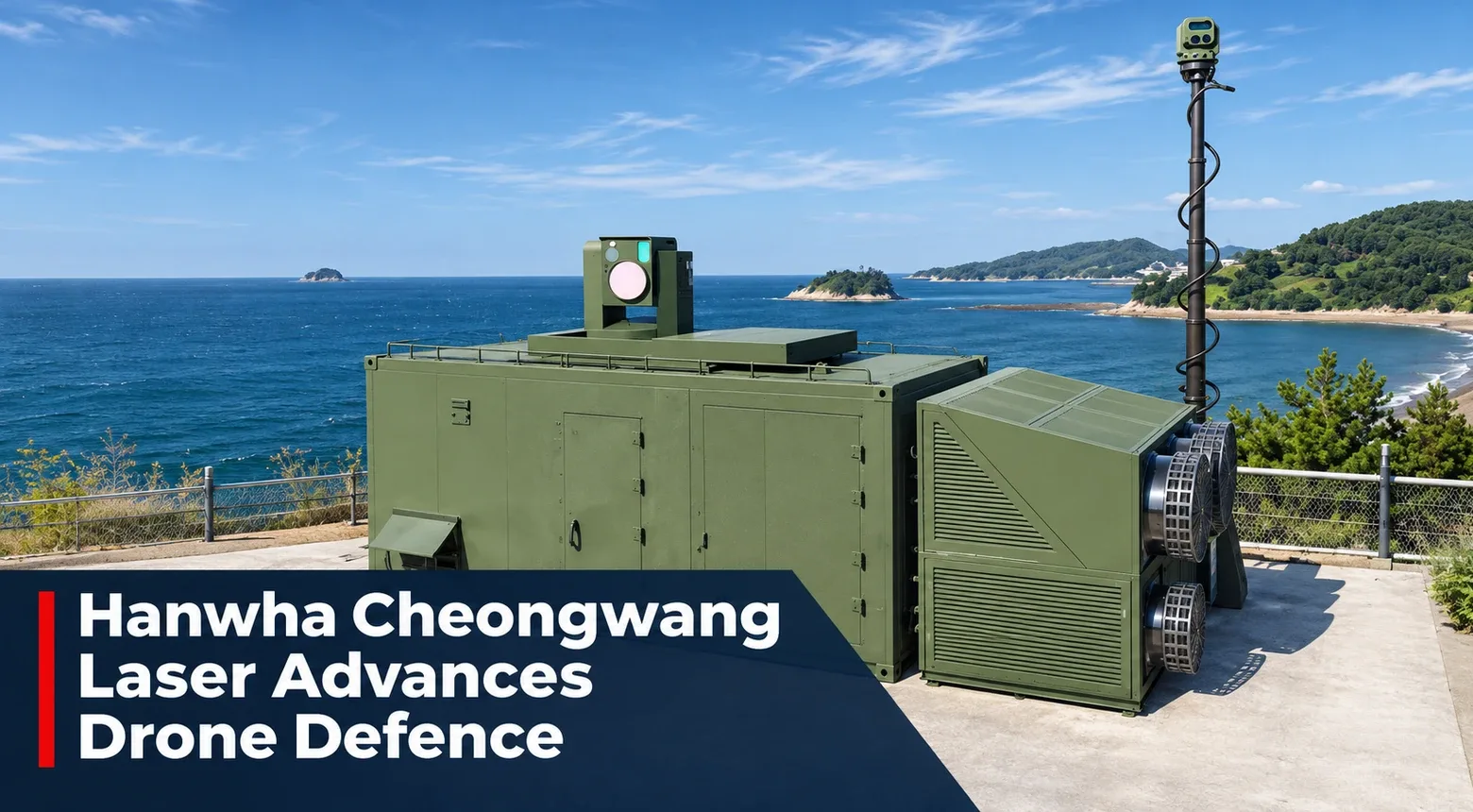
There are also important differences among counter-UAS effectors. Conventional jammers target exposed navigation and command signals; guns and missiles use kinetic effects; lasers deliver concentrated energy to a target; and HPEM systems seek to disrupt electronic components. None is necessarily preferable in every scenario. For example, Defence Agenda has previously examined MKE TOLGA’s layered short-range air defence arrangement and Hanwha Cheongwang’s laser-based drone-defence trials. Their outcomes cannot be ranked directly against EJDERHA without comparable target sets, test conditions, operational constraints and acceptance criteria.
An HPEM system also raises ordinary integration requirements that extend beyond its demonstrated effect on drones. Potential users would have to assess electromagnetic compatibility with friendly systems, safe operating procedures, the reliability of the detection-to-engagement chain, mobility and maintenance burden. Such requirements do not invalidate the demonstration, but they help define the distinction between a successful manufacturer trial and an independently accepted operational capability. The supplied statement does not contain the full qualification record required to resolve them.
The strategic significance of the 51-drone event is therefore twofold. It suggests that directed electromagnetic effects may have a role against dense groups of small airborne threats, while the separate wired-drone scenario addresses a limitation of radio-link-focused countermeasures. At the same time, the published material leaves the performance envelope, reliability and acquisition economics open. A single controlled event cannot establish the effect against every possible swarm size, distribution or air-vehicle design.
Implications / Next. The most informative follow-on evidence would be a documented series of repeated trials showing target configuration, distances, success criteria and representative operational conditions. Separately, confirmed production quantities, customer deliveries, safety qualification and integration with Steel Dome command systems would clarify the system’s procurement maturity. As of 16 November 2026, the firm evidence is that ASELSAN reported neutralising 51 drones within seconds, reported disabling two wired drones at about 1,000 metres, and stated that EJDERHA had entered serial production. The claimed world record and broader operational effectiveness still require independent verification.
Further Reading
- ASELSAN EJDERHA demonstration — Anadolu Agency, 15 November 2026
- EJDERHA anniversary demonstration — TRT Haber, 15 November 2026
- ASELSAN EJDERHA/AD 200 — Official technical brochure (PDF)
- ASELSAN 2025 Annual Report — Preventive Electronic Warfare Systems (PDF)
- ASELSAN Steel Dome Adds New C-UAS Layer — Defence Agenda
- MKE TOLGA Short-Range Air Defence System — Defence Agenda
- Hanwha Cheongwang Laser Advances Drone Defence — Defence Agenda