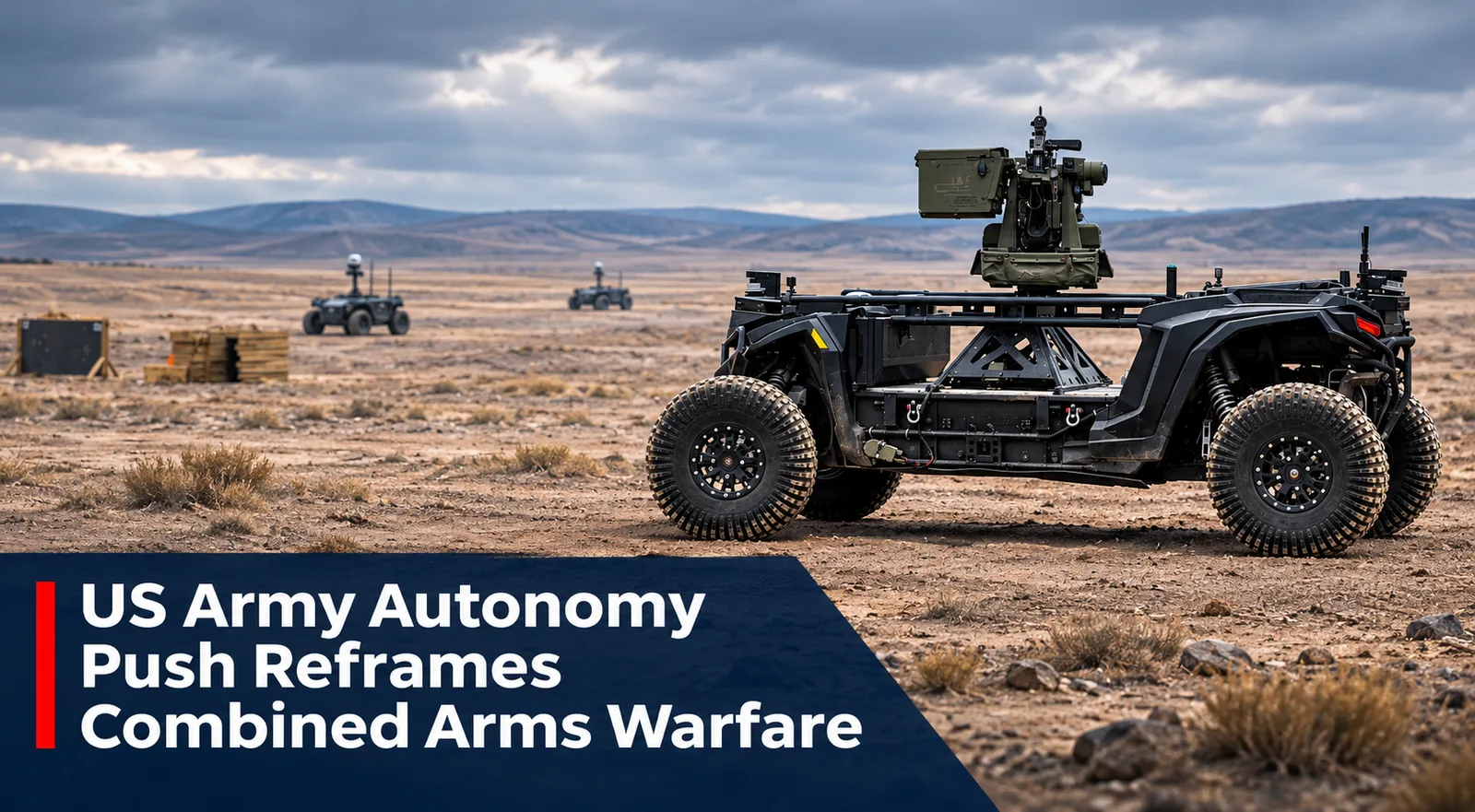
Autonomy in combined arms warfare may depend less on acquiring more individual robots than on integrating human commanders, machine-speed coordination and distributed uncrewed systems into a functioning formation. In an 11 November 2026 analysis for the Modern War Institute, retired US Army General James Mingus, a former vice chief of staff, argues that the traditional combined-arms principles of manoeuvre, fires, protection and sustainment will endure even as their delivery changes. His central proposition is a human-directed force using AI-assisted orchestration, not an independently fighting machine army. Recent US Army restructuring and laboratory work provide useful evidence of experimentation, but not confirmation that such formations are operationally mature.
From Combined Arms Platforms to AI-Orchestrated Formations
Mingus's argument begins with a distinction between the enduring purposes of warfare and the changing mechanisms for coordinating military units. The traditional combined-arms model links movement and fires, intelligence and protection, engineering and sustainment. A formation gains advantage when those functions reinforce one another rather than acting as disconnected platforms. He proposes that agentic AI—systems capable of coordinating tasks within assigned parameters—could become a connective layer for increasingly diverse networks of people, sensors, robots and communications tools.
His formulation is deliberately about command relationships. Humans would still define political and military purpose, mission intent, priorities and permitted authority; machines would coordinate larger numbers of subordinate functions under those limits. That architecture is an argument about future force design, not an announcement of a fully deployed Army system or approval to delegate lethal targeting without human judgement. Mingus writes in his individual capacity, and the Modern War Institute identifies his article as commentary rather than an official Department of the Army position.
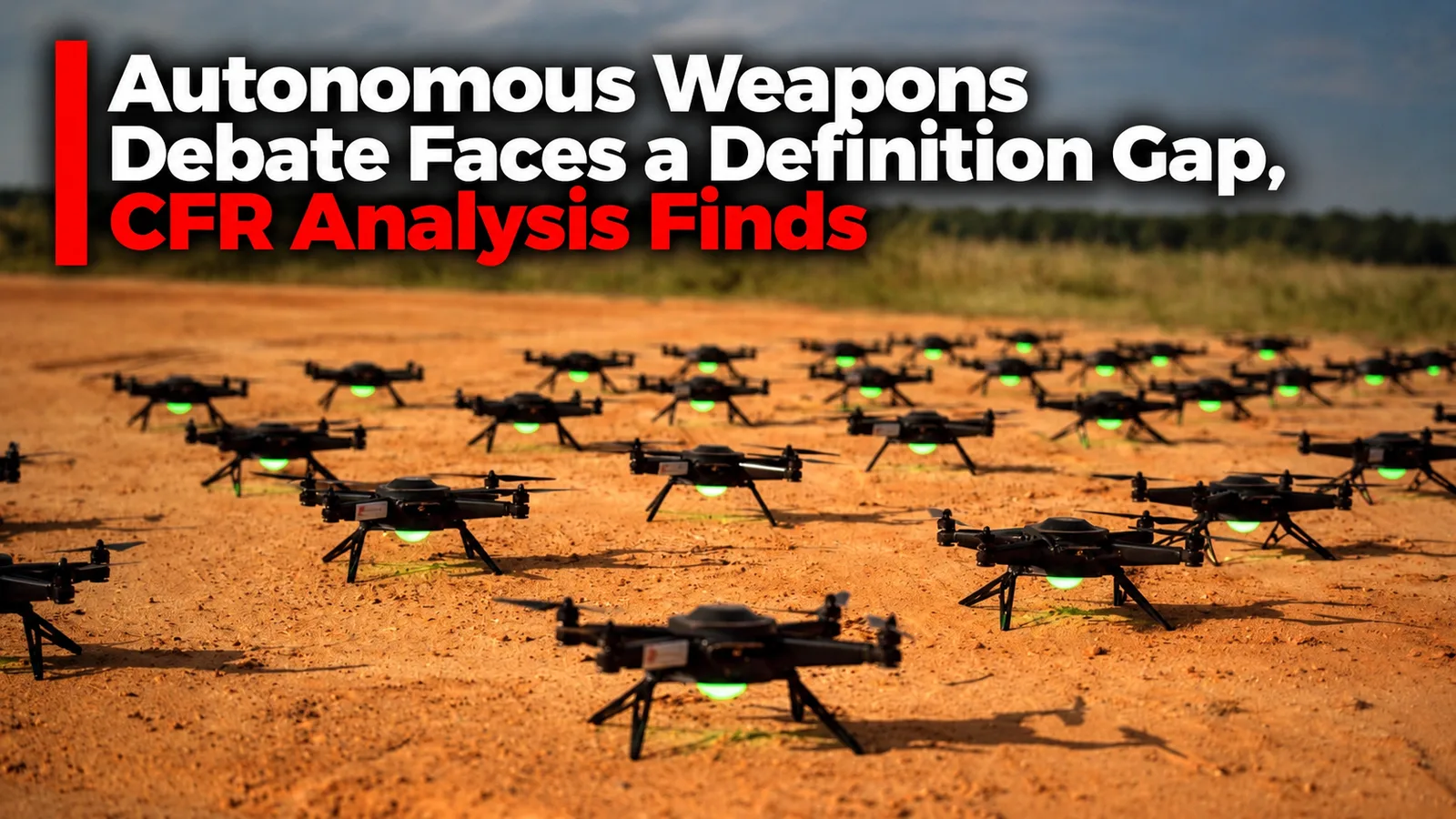
One of the analysis's central concepts is mass without massing: a geographically dispersed force could combine surveillance, manoeuvre, electronic effects and other capabilities without physically concentrating all platforms in one place. Mingus also distinguishes a heterogeneous autonomous formation from a basic drone swarm. The former would involve complementary roles and shared mission awareness rather than only large numbers of similar unmanned vehicles. Both ideas are conceptual propositions whose effectiveness would depend on system reliability, interoperability and command arrangements.
The US Army has, however, begun making organisational decisions consistent with a wider autonomy agenda. On 2 October 2026, it announced the establishment of the Futures and Autonomous Systems Command (FASCOM) following a memorandum signed on 1 October. The Army said autonomous capabilities would be prioritised across at least six formation areas: aviation, armour, fires, sustainment, engineers and training. It also identified the goal of prioritising autonomous fires, combat vehicles, resupply, breaching and reconnaissance capabilities by fiscal year 2028. This is an announced direction and target, not a report that those capabilities have all entered service.
A further 13 October Army update connected FASCOM to experimental formations involving long-range fires, protection, tanks, logistics and obstacle breaching. It also described technical-professional roles and training changes intended to bring robotics expertise closer to military units. Those decisions support the argument that autonomy is moving beyond isolated demonstrations towards questions of organisational structure, acquisition and manpower.
There is a narrower research result against which to test the more ambitious vision. In a technical note published on 30 September 2026, DEVCOM Army Research Laboratory analysed a two-week, simulation-based human-machine demonstration. Thirteen soldiers used a mixed formation involving a manned control vehicle, two robotic combat vehicles, a future vertical-lift platform and shared launched effects against a human-controlled opposing force. Researchers reported that the simulated formation developed stable handoff patterns and maintained broadly stable subjective workloads as scenarios became more complex. This is valuable evidence of feasible teaming under the tested laboratory conditions; it is not proof of battlefield-wide AI orchestration or autonomous targeting reliability.
A separate Fort Knox demonstration reported by the Army on 22 October 2026 involved four autonomous ground vehicles in a controlled multi-vehicle experiment. As with the laboratory study, the demonstration indicates progress in coordinating robotic platforms, but a controlled event should not be treated as evidence of enduring performance across electronic warfare, contested logistics and unpredictable civilian environments.
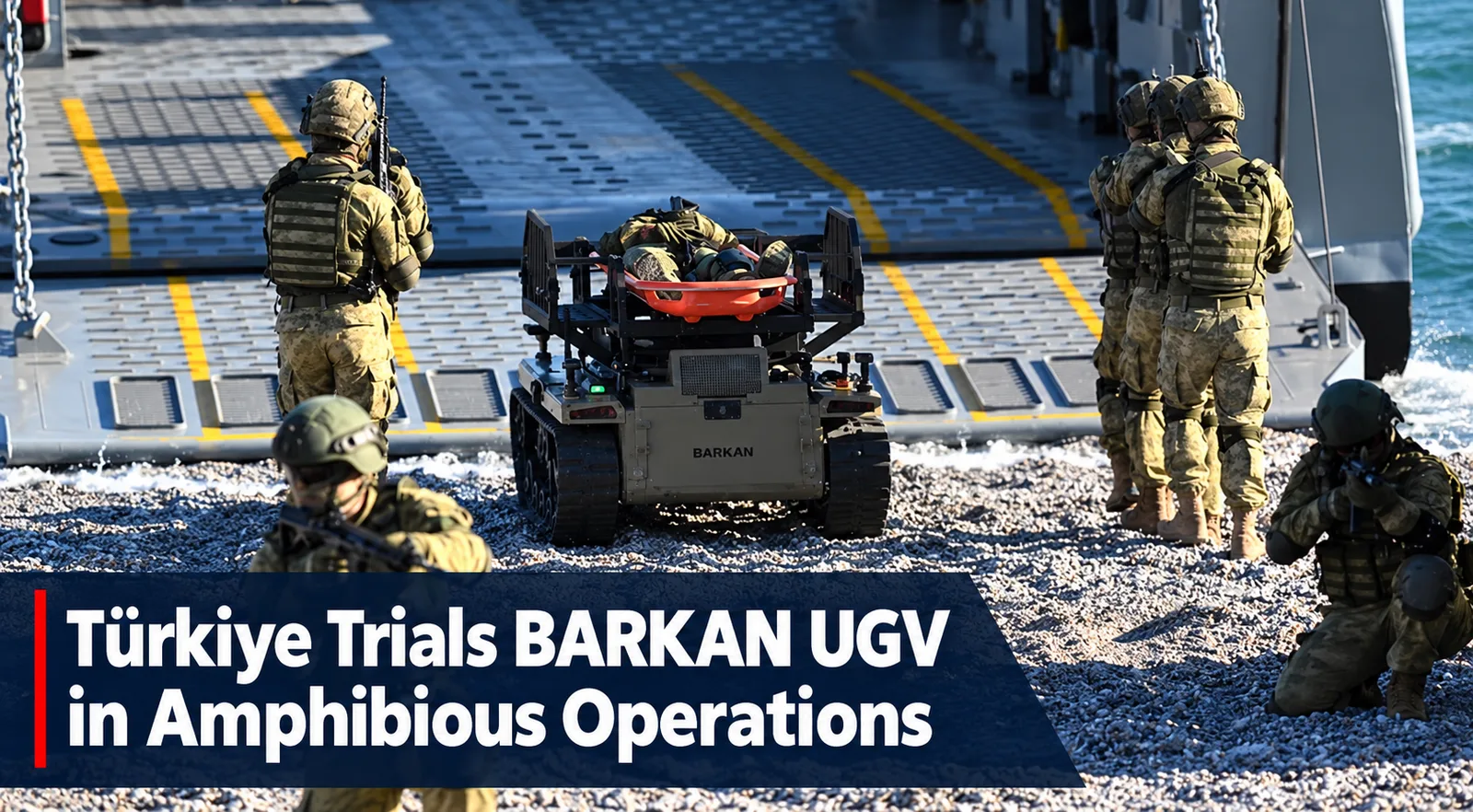
The same distinction appears in current defence-industry coverage. Defence Agenda's Robot Soldiers analysis explains why remote operation, automated navigation and autonomous weapon engagement represent different levels of control. Its report on ASLAN, BARKAN and PALEM shows how ground platforms are being assigned different support functions, without assuming that display or exercise participation equals field-wide adoption. Such examples illustrate why formation integration should be evaluated separately from an individual platform's technical specifications.
Procurement, Human Control and the Limits of Machine-Speed Manoeuvre
The principal procurement question arising from Mingus's thesis is not simply how many robots to buy. It is whether a defence organisation can acquire and sustain an architecture that makes heterogeneous systems work together under clear human authority. That includes data governance, communications resilience, software assurance, operator training, maintenance, configuration management and testing across mixed fleets. Buying more vehicles before resolving those dependencies can expand equipment inventories without delivering the proposed formation-level advantage.
The following comparison distinguishes the concepts and programme evidence currently available. The metrics are not interchangeable and should not be combined into a single readiness score.
| Development or concept | Evidence available by 13 November 2026 | What remains unproven |
|---|---|---|
| AI orchestration of combined arms | Mingus's published strategic argument | Operational integration at the scale and complexity envisaged |
| FASCOM restructuring | Army announcement of 2 October 2026; formation priorities and FY2028 ambitions | Completion, procurement quantities and combat readiness across all target areas |
| Air–ground human-machine teaming | ARL two-week simulation with 13 soldiers and two robotic combat vehicles | Representative field performance, long-term fatigue and contested-network reliability |
| Four-vehicle autonomous cooperation | Army-reported Fort Knox demonstration on 15 October 2026 | Repeated deployment under more varied conditions |
| Human control over lethal autonomy | US and international policy debates; ICRC guidance | Commonly accepted legal thresholds and validated accountability mechanisms |
The strongest counterargument to rapid transformation is that networking numerous autonomous systems creates new dependencies. A force that relies on a shared digital architecture may be vulnerable when communications, geolocation, timing data or software dependencies fail. Distributed systems can reduce the concentration of physical assets while still concentrating risk in a common control layer. Performance should therefore be assessed during degraded and disconnected operation, not only in ideal network conditions.
Another challenge is human workload. Although the ARL laboratory demonstration reported encouraging workload results, the experiment involved thirteen soldiers and a bounded two-week scenario. It did not establish that one staff can sustainably supervise thousands of autonomous systems during a prolonged operation. Effective supervision requires understandable system behaviour, reliable alerts, usable interfaces and the ability to override or terminate actions where appropriate. The workload saved by automation in one function can reappear as supervisory burden elsewhere.
Legal responsibility also cannot be inferred from machine performance. In its October 2026 explanation of autonomous weapon systems, the International Committee of the Red Cross distinguishes unmanned systems generally from weapons that select and apply force to targets without further human intervention. The organisation stresses that international humanitarian law continues to apply and advocates stronger restrictions on particularly unpredictable and anti-personnel autonomous weapons. The US position on permissible autonomy and the ICRC's recommendations are not identical; both highlight the need to specify exactly which functions and decisions remain under human authority.
This is why the phrase "humans command, machines control" needs careful interpretation. It may describe delegated navigation, coordination or administrative tasks, but it is not by itself a legal authorisation for software to decide whom to attack. The boundaries must be articulated and tested for each use case. Defence Agenda's analysis of the autonomous-weapons definition gap presents another reason to distinguish mission support, autonomous mobility and weapon target selection rather than group them all under one headline.
For procurement offices, a credible evaluation could examine integration time, communications availability, operator workload, maintenance demand, software update assurance and the speed at which a formation recovers after individual platforms are lost. Public information does not supply comparable quantified cost or performance curves for those metrics across all proposed Army configurations. Claims that a coordinated force will automatically be cheaper than a platform-centric one are therefore not yet substantiated. Expensive infrastructure, specialist staff and verification may offset some savings from lower-cost unmanned assets.
There are alternative development paths. The Army could initially focus on bounded logistics, reconnaissance and engineering tasks with clear supervisory arrangements, before expanding interoperability and higher-risk autonomy. A more ambitious mission-architecture-first approach might create greater potential synergy but also carries integration and cybersecurity risks. Neither strategy can be declared superior from the cited demonstration data alone; the best progression depends on mission, assurance requirements and tested failure modes.
The Army's February 2026 robotics leadership training programme provides an additional reminder that skills and doctrine must evolve alongside equipment. The reported pilot course prepared officers and non-commissioned officers to incorporate robotic ground and aerial systems into planning exercises, including attention to limitations, electronic-spectrum conditions and ethical issues. Training reform is measurable progress, but the number of trainees or future unit assignments should not be assumed without an authoritative published figure.
Implications and Next Milestones
The next evidence to monitor includes FASCOM's organisational implementation, formal acquisition decisions, more demanding mixed-platform field exercises and published assessments of workload and resilience under degraded conditions. The fiscal-year-2028 ambition identified by the Army is a planning horizon, not a universal deadline for fully operational machine-directed combined-arms formations.
For allied armed forces and defence manufacturers, Mingus's argument shifts attention from platform autonomy alone to interoperable formations under human command. The potential reward is faster, more adaptive integration of capabilities. The central risks are software and communications fragility, costly integration, insufficient assurance and blurred accountability. The defensible conclusion as of 13 November 2026 is that the Army has made concrete organisational moves and conducted limited trials, while machine-speed combined-arms orchestration remains a future military proposition rather than a verified, field-wide capability.
Further Reading
- Modern War Institute — James Mingus, Autonomy and Combined Arms Maneuver (11 November 2026)
- U.S. Army — Futures and Autonomous Systems Command announced (2 October 2026)
- DEVCOM ARL — Air–Ground Teaming research summary (30 September 2026)
- U.S. Army — Fort Knox autonomous-vehicle demonstration (22 October 2026)
- ICRC — Autonomous weapon systems and human control
- Defence Agenda — Robot Soldiers: The Future of Ground Warfare
- Defence Agenda — ASLAN, BARKAN and PALEM UGV roles
- Defence Agenda — Autonomous Weapons Debate Faces a Definition Gap