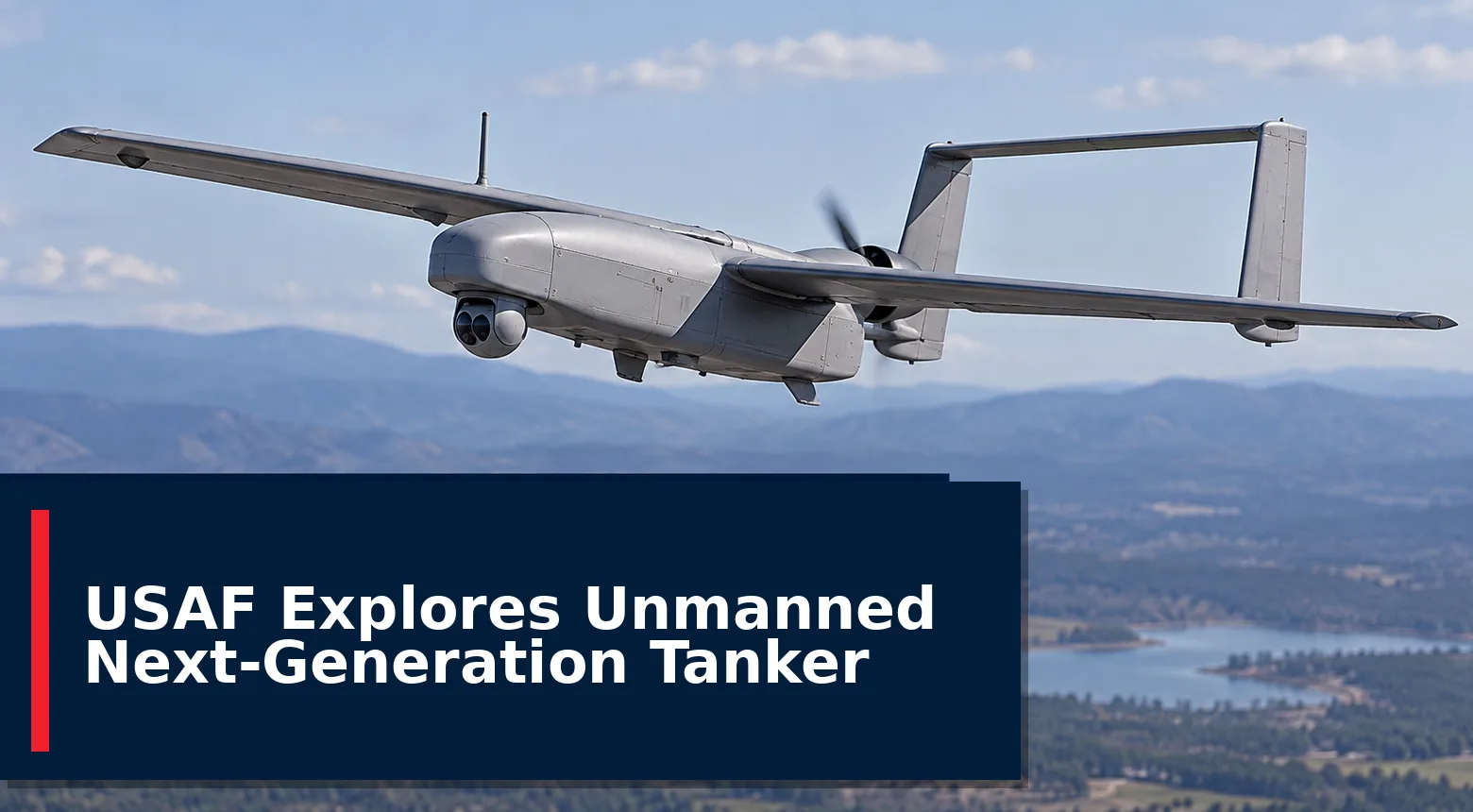
The U.S. Air Force is examining whether its next generation of aerial-refuelling capability should include unmanned or optionally manned aircraft, according to Air Mobility Command chief Lt Gen Daniel Tulley. The concept remains exploratory, but it comes as the service shifts near-term funding toward a $13 million Advanced Tanker Systems effort focused on resilient mission systems rather than a new tanker airframe.
Air Mobility Command is widening the design space
Tulley told reporters at the Air, Space & Cyber conference on 16 September 2026 that a future tanker must be connected and capable of defending itself, then questioned whether the platform must always carry a crew. He pointed to possibilities ranging from an optionally manned aircraft to a fully autonomous platform or a family of solutions. Air & Space Forces Magazine separately reported that the service is considering a broad set of options for a mid-2030s tanker requirement.
Those comments do not constitute a selection. The Air Force has not awarded a contract for an unmanned large tanker, established a configuration or announced an operational date. The remarks instead expand the analysis of alternatives as the service considers how much of the future requirement should be satisfied by improved KC-46s, new airframe concepts, distributed systems or a more survivable specialised tanker.
The FY2027 budget shifted emphasis to mission systems
The budget context is important because the Air Force has changed how it is funding the problem. Defense One and DefenseScoop reported in April that the FY2027 request removed the previous Next-Generation Air Refueling System line and instead sought $13 million for Advanced Tanker Systems. Officials described the new line as focused on mission systems, including connectivity, resilience and defensive capabilities, while broader analysis of a replacement platform continues.
That approach reduces the risk of locking the service too early into a single airframe concept. Mission systems developed for contested refuelling could potentially migrate across a future platform family or be inserted into existing tankers. It also means that a new stealthy or autonomous tanker is not currently funded as a conventional full-scale aircraft development programme.
MQ-25 provides a reference, not a direct template
Tulley cited the U.S. Navy’s MQ-25 programme as evidence that unmanned aerial refuelling is technically credible. The comparison has limits. MQ-25 is a carrier-based system designed for a different fuel-transfer scale and operating model, while Air Force tankers carry far greater fuel loads over intercontinental distances and must integrate with a much wider receiver fleet.
A large uncrewed tanker would also face certification, command-and-control, cyber security and degraded-communications requirements that differ from smaller autonomous aircraft. The concept would need safe boom or drogue operations, robust contingency behaviour and assured integration with crewed receivers. Those challenges make autonomy a force-design option rather than a shortcut to a rapid replacement for the KC-135.
Implications / Next
The next evidence to watch is the Air Force’s analysis of alternatives and the content of Advanced Tanker Systems technology investments. Industry studies, demonstrators or mission-system contracts will show whether autonomy is becoming a formal requirement or remains one of several concepts under examination. The planned additional KC-46 procurement also means the service can continue recapitalisation while delaying a final decision on the farther-term platform.
For programme reporting, the correct status is exploration of unmanned and optionally manned tanker options. There is no disclosed production award, selected design or IOC date. The significance lies in the Air Force treating crewed status itself as a variable in the future refuelling architecture, reflecting the growing priority placed on survivability, networking and distributed operations.
The programme should also be judged against implementation evidence rather than announcement language. For procurement and industrial readers, the most useful next data will be contracted quantities, funded orders, test results, delivery schedules and evidence of repeatable production. Those measures distinguish a credible capability path from an attractive concept and will determine whether the development changes force structure or remains a limited experiment.