ASELSAN has demonstrated a new electronic-warfare and radar mission chain using two Bayraktar TB2 UAVs in Konya, Türkiye. The event combined the ANTIDOT 2ES 100 electronic-support pod, ANTIDOT 2EA 200 electronic-attack pod and FULMAR 200 synthetic-aperture radar, showing how separate unmanned aircraft can detect, geolocate, jam and image targets within one coordinated sequence.
Two TB2s carried three distinct ASELSAN payload functions
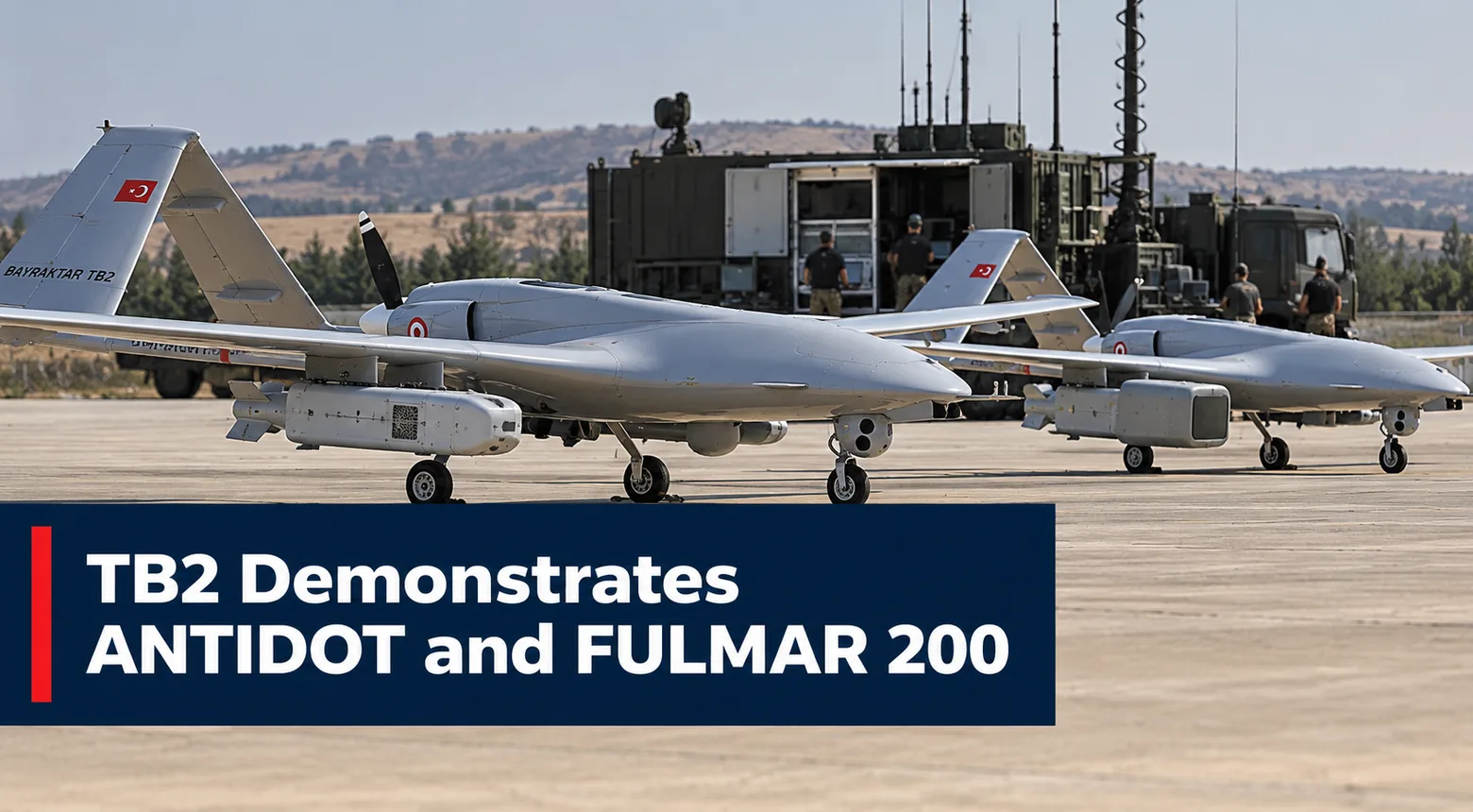
According to Anadolu Agency and ASELSAN material, one Bayraktar TB2 carried the ANTIDOT 2ES 100 electronic-support payload together with the ANTIDOT 2EA 200 electronic-warfare payload. A second TB2 carried the FULMAR 200 synthetic-aperture radar pod. Defence delegations from 18 countries attended the live demonstration in central Türkiye.
The payload roles were deliberately different. ASELSAN describes ANTIDOT 2ES 100 as a target-detection and geolocation system, ANTIDOT 2EA 200 as an electronic-attack and platform-protection system, and FULMAR 200 as a SAR imaging and reconnaissance payload. The demonstration therefore focused on how the functions can be combined rather than on a single new sensor.
The first phase demonstrated detection, geolocation and electronic attack
During the first phase, the ANTIDOT-equipped TB2 detected emissions from a live target radar, determined its location and carried out an autonomous electronic attack. Reporting on the event said the jamming action allowed the unmanned aircraft to approach without being detected by the target radar.
That sequence is more significant than a simple payload carriage trial. It connects passive electronic support with an active electronic-attack response on the same airborne platform. ASELSAN said the event marked the first test of the ANTIDOT systems against live radars aboard the TB2, providing a clearer maturity marker than a static integration display.
The second phase linked ANTIDOT to FULMAR 200
A second scenario used ANTIDOT to locate another target and then pass the target coordinates to the TB2 carrying FULMAR 200. The radar-equipped aircraft used those coordinates to generate high-resolution radar imagery of the target area. The sequence demonstrated an information hand-off from an electronic-support sensor to a separate imaging platform.
FULMAR 200 is intended to provide radar imagery by day and night and in adverse weather, giving it a different operating profile from optical and infrared cameras. In the demonstrated architecture, the radar payload did not need to discover the emitter independently; it could be cued by another aircraft’s electronic-support data. That type of distributed sensing can reduce the time between detection and detailed target characterisation.
The demonstration broadens the TB2 mission set
Bayraktar TB2 is already widely associated with electro-optical intelligence, surveillance, reconnaissance and precision strike. Integrating electronic-support, electronic-attack and SAR payloads shifts the platform towards additional stand-off sensing and electromagnetic-spectrum missions. The key point is not that a TB2 becomes a specialised electronic-warfare aircraft, but that a relatively compact UAV can carry modular payloads and cooperate with another air vehicle to build a multi-sensor picture.
The event also illustrates an export-facing element. With representatives from 18 countries present, ASELSAN and Baykar were demonstrating not only individual pods but an integrated mission concept that could be relevant to existing TB2 users. No customer, order quantity or delivery schedule was announced, so export adoption should not be inferred from attendance.
Implications / Next
Follow-on evidence should include repeat demonstrations in more complex electromagnetic environments, longer-range data sharing, operation against multiple emitters and integration with ground or wider command-and-control networks. Formal qualification, user acceptance or an announced production order would represent a separate maturity step from the Konya demonstration.
For now, the event is best described as a successful live demonstration of distributed electronic warfare and radar reconnaissance on two TB2s. It showed the sequence from emitter detection and geolocation to electronic attack and SAR imaging, while leaving procurement status and operational fielding undisclosed.