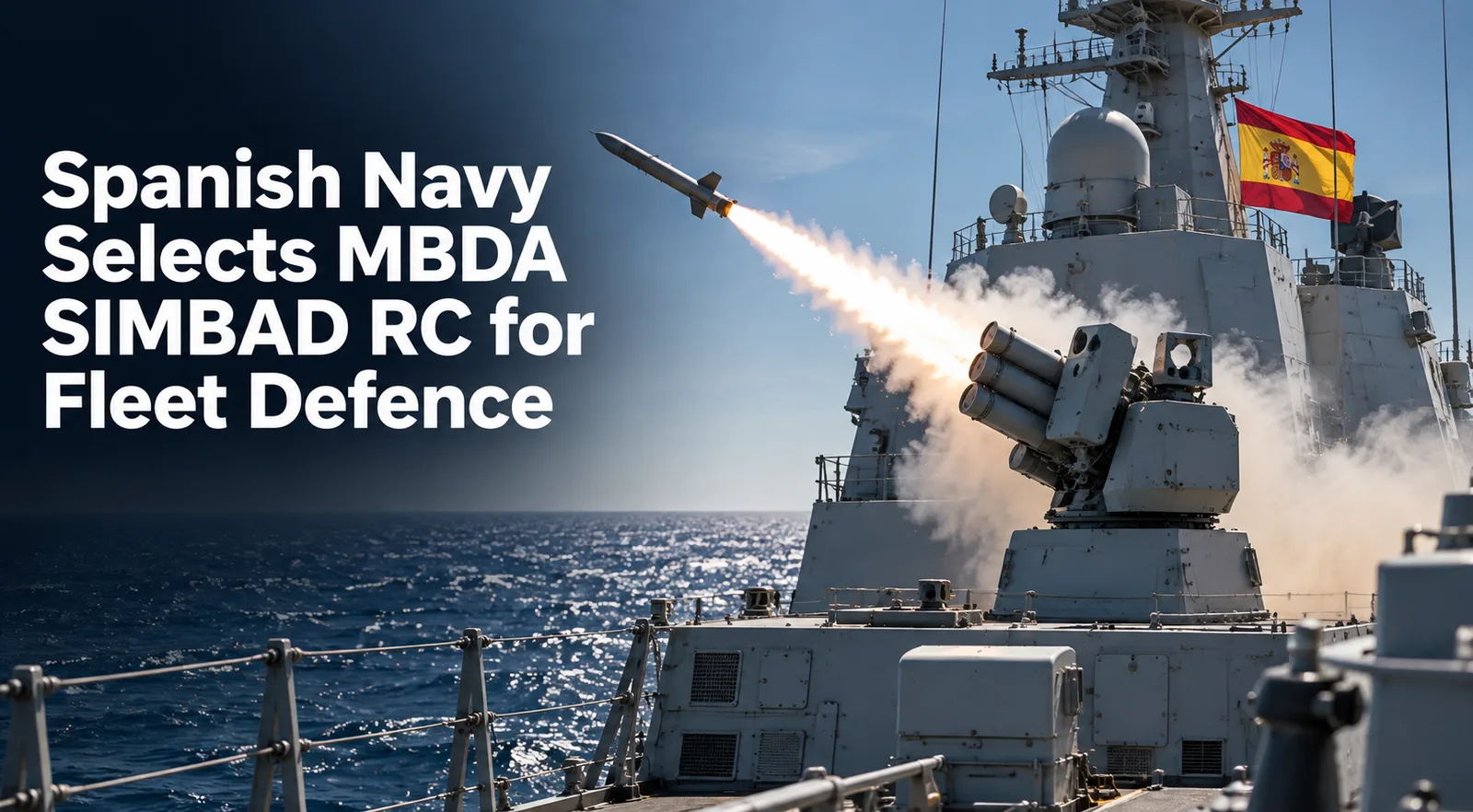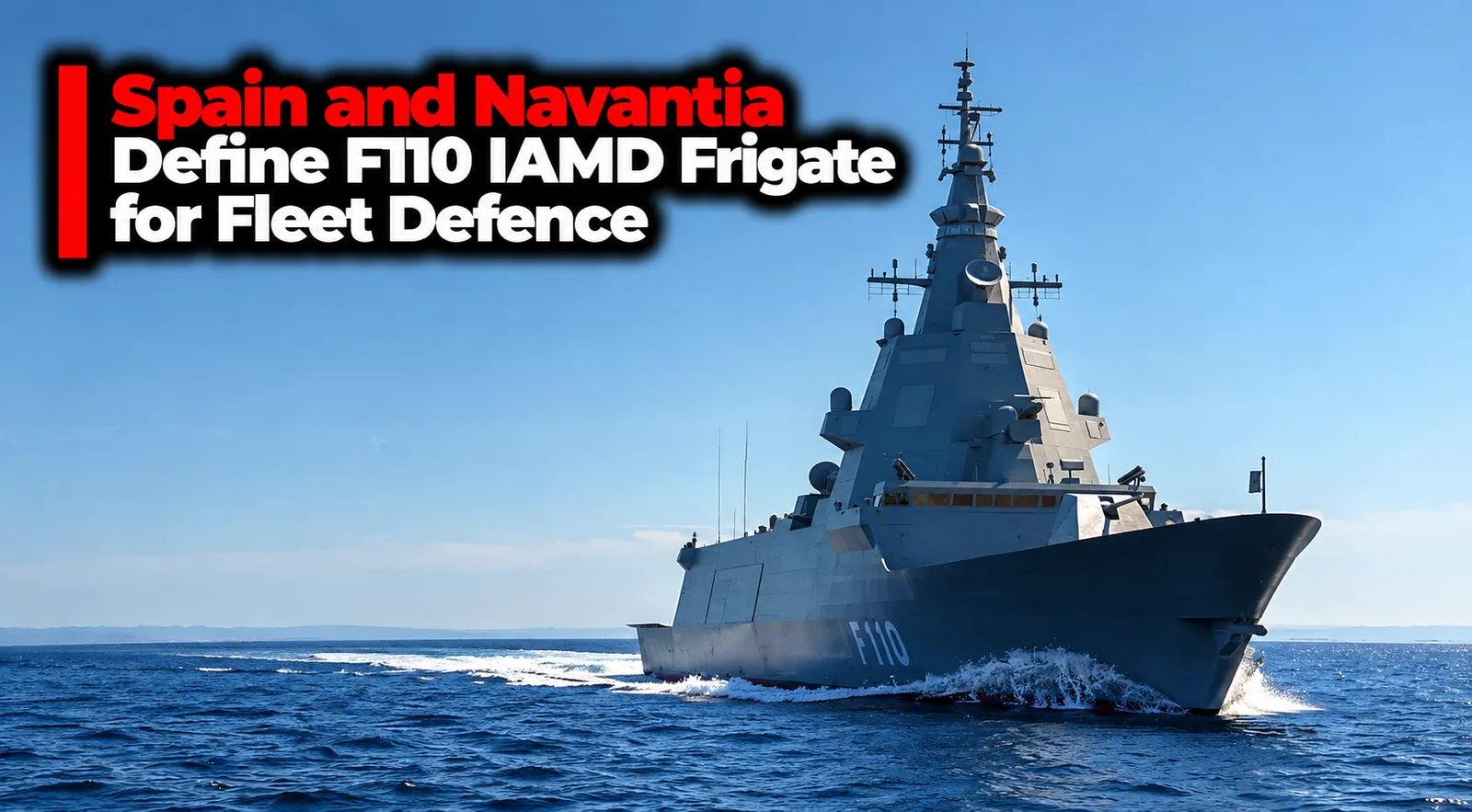
Spain’s navy and shipbuilder Navantia have confirmed work on the F110 IAMD frigate, a proposed variant of the Bonifaz class designed to strengthen fleet air and missile defence. Announced on 23 October 2026, the effort would add missile-launch capacity and a new combat-management architecture to a design already being built for the Spanish Navy. It matters because the service is examining how to protect naval formations against simultaneous aircraft, cruise-missile and ballistic-missile threats. This is design-definition work, not an announced order for additional warships.
Key Facts
- Announcement: 23 October 2026, by Navantia, working with the Spanish Navy.
- Programme status: Design definition under the Armada 2050 capability requirements; no additional construction contract announced.
- Baseline: Five F110 Bonifaz-class frigates are already under construction.
- Intended mission: Integrated air and missile defence, area defence and protection of high-value naval units.
- Proposed changes: More vertical-launch capacity and SCOMBA New Generation combat management.
- Unconfirmed: Final missile-cell count, selected interceptors, ship quantity, price and delivery schedule.
Context: From Multimission Escort to Fleet Air Defence
The F110 programme provides Spain with a new generation of multimission frigates, combining anti-submarine and surface-warfare roles with digital combat systems. The proposed IAMD configuration would not replace those five vessels. Instead, it is intended to extend the family with a more specialised capacity to defend a naval task group against complex aerial threats.
Navantia said the requirement originates in the Spanish Navy’s Armada 2050 planning framework. The company’s original announcement of 23 October identifies simultaneous engagement of different threat types, high-value asset escort and coordination of a formation’s air defence as central objectives. These are requirements and design intentions, rather than demonstrated capabilities of a completed ship.
What Happened: Navantia Confirms a New Design Track
The shipbuilder and the navy are jointly defining a configuration called F110 IAMD, short for Integrated Air and Missile Defence. Navantia envisages a vessel with greater speed and endurance for demanding multinational deployments while retaining the existing family’s anti-submarine, anti-surface and electronic-warfare functions.
The announcement also envisages a flexible mission area able to accommodate mission modules, uncrewed systems and a second helicopter. Baird Maritime’s 23 October report independently documented the proposed design direction and emphasised that the final configuration remains subject to the Spanish procurement process.
No public announcement establishes how many additional ships Spain will buy, when a contract will be signed or which weapons will be fitted. Display models and industry concepts should not be mistaken for an approved national build standard.
Technical and Operational Details
The most visible proposed change is a larger vertical launch system (VLS) magazine. A larger magazine could allow a task-group escort to carry a more varied mix of defensive missiles and sustain more engagements before replenishment. Navantia has not specified a final number of cells or identified the interceptors that the Spanish Navy will purchase for the variant.
The design would also introduce SCOMBA New Generation, a cloud-hosted combat-management architecture intended to connect sensors, weapons, data links and uncrewed platforms. The objective is a shared tactical picture across ships and a stronger ability to coordinate air defence within a multinational formation. The company describes the architecture as open, scalable and cyber-secure, but these remain design objectives pending integration and qualification.
Navantia further proposes digital-twin and condition-based maintenance tools to support availability and through-life support. Naval News’ 23 October coverage included imagery of a scale model displayed at DALO Industry Days, offering useful visual context without establishing the final Spanish configuration.
Procurement and Defence Industry Impact
The distinction between an announced design programme and a funded shipbuilding contract is critical. Navantia has not published an IAMD order value, additional hull count, production start date or delivery schedule. Nor has it confirmed that an illustrative launcher arrangement will be the version ordered by the navy. Any assertion that Spain has bought a specified number of 64-cell frigates would therefore go beyond the primary evidence.
For industry, a follow-on F110 design could preserve continuity in naval engineering, integration and support. Navantia says its industrial network includes more than 500 Spanish partner companies. Whether the IAMD concept becomes a funded programme will depend on navy requirements, government budget decisions and the procurement route ultimately chosen.
The issue is relevant beyond Spain. European navies are balancing shipbuilding capacity, fleet air defence and domestic control of weapons integration. For comparison, Defence Agenda has examined Türkiye’s concurrent warship construction programmes and the expansion of its indigenous naval weapons architecture. Those are separate national programmes, not evidence of a Spanish-Turkish procurement link.
What Comes Next
The next meaningful milestones are a formally approved configuration, an announced acquisition decision and confirmation of the intended missile and sensor fit. A subsequent contract would establish quantities, price and production responsibilities; trials would be needed before operational claims could be assessed.
Until those steps occur, the F110 IAMD frigate should be described as a proposed extension of Spain’s existing frigate family, with clear operational ambitions but no publicly confirmed follow-on order.