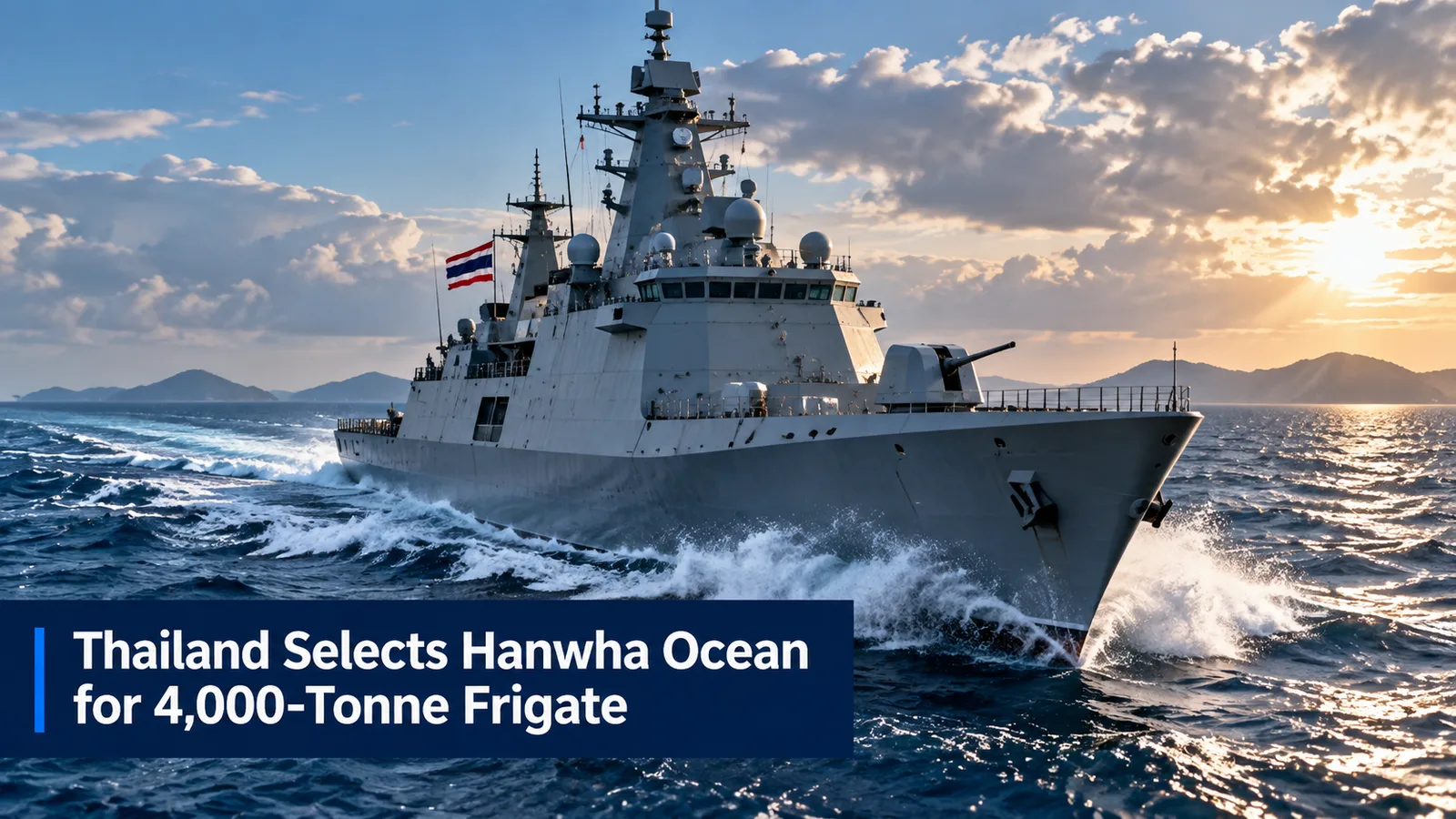
Hanwha Ocean has been selected as preferred bidder for the Royal Thai Navy’s next-generation frigate programme, positioning the South Korean shipbuilder to deliver a 4,000-tonne-class combatant with related equipment and integrated logistics support. Thailand’s bid notice put the programme at THB 16.73 billion, but the maturity language is important: preferred-bidder status opens detailed negotiations and should not yet be reported as a fully executed shipbuilding contract.
Preferred-bidder selection moves the procurement into negotiation
Hanwha Ocean said on 9 September 2026 that it had been selected as preferred bidder after competing against shipbuilders from Spain, Singapore and Türkiye. Specialist and Korean reporting describe the project as one 4,000-tonne-class frigate plus associated equipment, maintenance and logistics support. The Royal Thai Navy’s bid notice set the value at THB 16.73 billion, around US$509 million at the conversion used in contemporary reporting.
The next step is detailed negotiation toward a final contract. That is a material distinction because preferred-bidder announcements can still be followed by technical clarification, price and schedule negotiations, appeal procedures or changes in government approval. Defence Agenda therefore treats the selection as a procurement milestone, not as confirmation that construction has begun or that the full programme value has been contractually obligated.
OCEAN-40F builds on an existing Thai-Korean shipbuilding relationship
Hanwha Ocean is offering an OCEAN-40F design for the requirement. The company’s predecessor, Daewoo Shipbuilding & Marine Engineering, delivered HTMS Bhumibol Adulyadej to Thailand in 2018, giving the shipbuilder a direct reference with the Royal Thai Navy. That prior relationship can reduce some programme risk because the customer already has experience with the builder’s engineering, documentation and support practices.
However, the new frigate should not be treated as simply another copy of the existing ship. Final weapons, sensors, combat-management architecture, local-work content and support arrangements are contract-dependent. Public reporting establishes the ship class range and procurement framework, but it does not support filling in undisclosed equipment from earlier Thai ships or from Hanwha’s other export designs.
Selection reinforces South Korea’s naval-export push
South Korean shipbuilders are competing increasingly aggressively in the international naval market, combining modern designs with commercial shipbuilding scale and government-backed defence relationships. A Thai award would give Hanwha Ocean a high-profile Southeast Asian reference and could strengthen its position in future frigate and support-ship competitions.
For Thailand, the procurement is part of a longer-term effort to recapitalise surface combatants. Some reporting discusses a broader ambition for additional frigates, but those future ships should not be counted as orders under the current selection. The only defensible quantity at this stage is the single frigate covered by the present procurement. Follow-on vessels would require separate budget and contracting decisions.
Implications / Next
The decisive next milestone is signature of a final construction contract after detailed negotiations and completion of any challenge or approval process. That agreement should clarify schedule, configuration, combat systems, weapons, industrial participation and payment structure. Until then, Hanwha Ocean has a strong procurement position but not yet a completed delivery obligation. The programme will be especially important to watch for localisation terms, because those can determine whether a one-ship award becomes a longer industrial relationship.
The competition also illustrates why preferred-bidder announcements require careful maturity language. Selection can establish the negotiating lead and narrow the competitive field, but price, configuration and industrial obligations may still change before signature. For Thailand, the final package will determine whether the new frigate mainly extends an existing relationship with Hanwha Ocean or creates a broader domestic shipbuilding and sustainment footprint. Those terms will matter as much as the hull itself for lifecycle cost, upgrade sovereignty and the Royal Thai Navy's ability to support the ship over several decades.