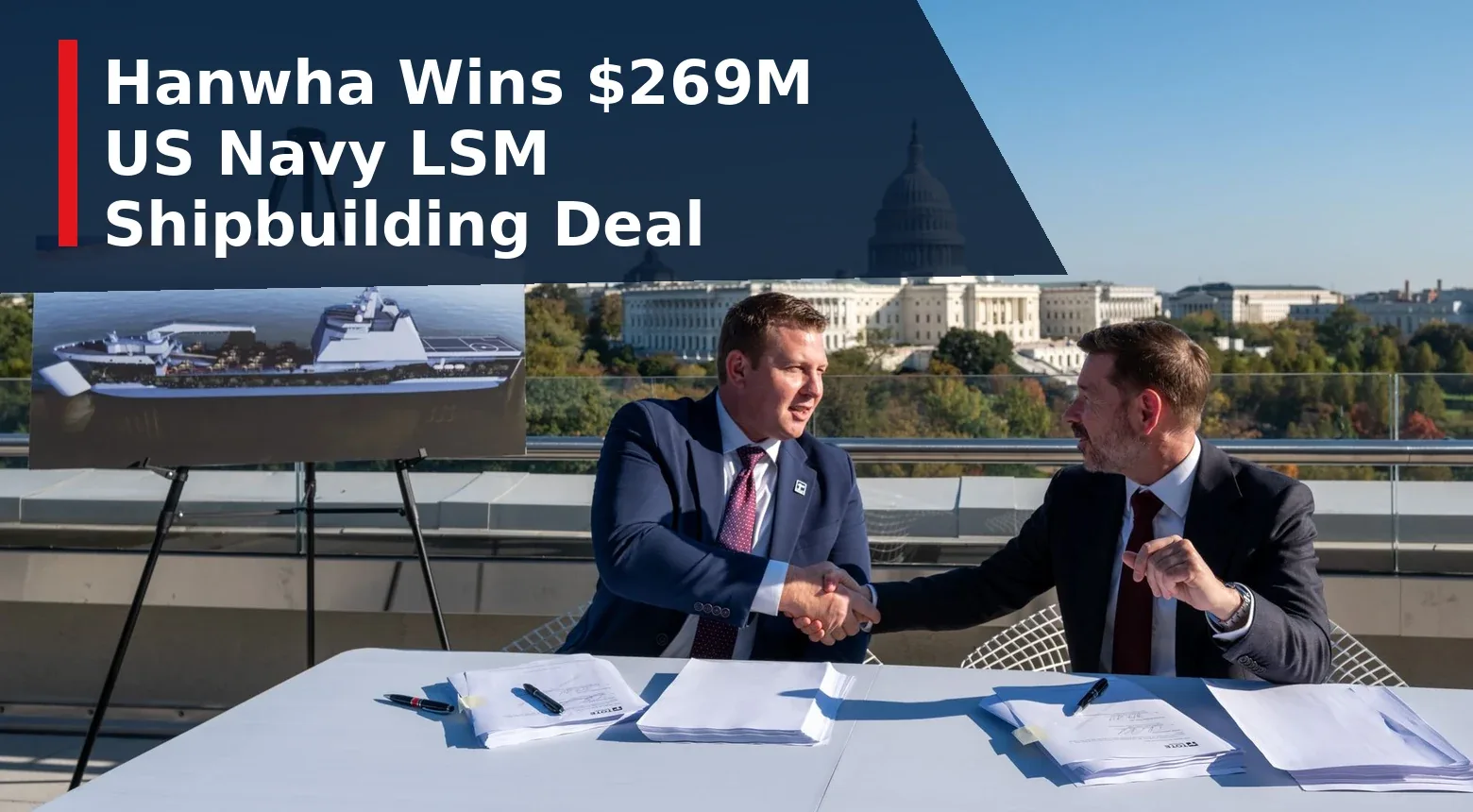
Hanwha Defense USA has secured a US$269 million Medium Landing Ship contract through TOTE Services to build one vessel for the US Navy and Marine Corps at Hanwha Philly Shipyard. The Hanwha LSM contract, disclosed on 29–30 October 2026, includes options for three more ships but confirms only one construction award. The decision gives the South Korean-owned Philadelphia yard its first US Navy new-build order and offers an early test of Washington's attempt to accelerate naval procurement through commercially managed shipbuilding.
Why the Hanwha LSM Award Matters
The selection is significant in two different ways. For Hanwha, it creates a contractual entry into new US Navy ship construction at a domestic yard acquired by the group in 2024. For the Navy and Marine Corps, it represents another shipbuilder participating in the Medium Landing Ship programme, which aims to support dispersed littoral operations and reduce reliance on a narrower pool of naval shipyards.
The distinction between an industrial milestone and delivered capability is essential. The award does not mean that a landing ship is already under construction, has passed acceptance trials, or has entered service. It commits the parties to an initial shipbuilding scope and provides a potential route to three further hulls only if the options are exercised.
In a 29 October announcement, Hanwha Defense USA described the selection as its first contract for US Navy ship construction. TOTE Services' 30 October statement confirmed the value, the one-ship scope and the optional vessels, while identifying the Philadelphia yard as the intended construction site.
How the Vessel Construction Manager Model Works
TOTE Services is not itself the shipyard constructing the Hanwha vessel. It serves as the Vessel Construction Manager (VCM), a contract-management intermediary responsible for coordinating acquisition, shipyard subcontracts, production standards, schedule oversight and government requirements. The model draws on commercial vessel procurement practices in an effort to improve cost and schedule discipline.
In a 13 July 2026 announcement, the US Navy awarded TOTE a US$2.2 billion VCM contract to oversee the initial LSM acquisition. That is a separate programme-management award: it is not the value of Hanwha's individual hull and should not be added to the US$269 million as though both amounts were ship construction revenue for the same contractor.
TOTE says it issued its competitive request for proposals to eligible US shipyards in July 2026. Hanwha was selected on pricing and acceptance of subcontract conditions. Under the base VCM framework, up to eight vessels are contemplated, with shipbuilding activities distributed among multiple domestic yards rather than exclusively awarded to Hanwha.
What Has Actually Been Ordered?
The announced Hanwha award concerns one LSM priced at US$269 million. Three further ships are contractual options. Their eventual exercise, pricing and production sequencing have not been established by the public statements, so reporting the news as a four-ship firm order would overstate the award.
The wider programme's first tranche encompasses up to eight LSMs, while Navy and Marine Corps force planning identifies a 35-ship longer-term fleet ambition. These are three separate scales: a one-ship subcontract, an initial acquisition framework and a fleet-level planning objective. None demonstrates that all 35 vessels have been funded or placed under construction contracts.
The US Naval Institute's reporting also records work involving Bollinger Shipyards and Fincantieri Marinette Marine. TOTE says it remains engaged in contract discussions with those firms. The presence of multiple yards can expand capacity, but it also requires common configuration, predictable sequencing and coordinated acceptance standards.
Operational Role: Moving Marines Across Contested Littorals
The Landing Ship Medium is intended to move Marine Corps personnel, vehicles and supplies between shore locations in support of distributed operations. Its strategic relevance lies in sustaining small and dispersed forces where large amphibious ships may be too scarce, costly or exposed to perform every transport task.
In the Indo-Pacific, such vessels could give commanders more options for repositioning equipment and resupplying units across islands and coastal areas. However, a new hull count alone does not establish operational usefulness: survivability, speed, payload arrangements, maintenance support, shore access and force-protection measures all affect the ship's suitability for a contested environment.
USNI News linked the programme to the LST-100 design family and noted years of requirements debate. This programme history matters because introducing an apparently mature parent design does not automatically remove risks from Navy-specific configuration, integration or certification. Public information associated with Hanwha's award does not specify that the first Philadelphia-built vessel has met detailed design review or naval acceptance thresholds.
Philadelphia Shipyard and the US Industrial Base
Hanwha's Philadelphia investment is part of a wider debate about how foreign-parent industrial groups can strengthen shipbuilding capacity within the United States. The facility is located in Pennsylvania and employs a US workforce. Its ownership history does not make the new LSM a foreign-built US Navy warship: the announced vessel will be constructed at the Philadelphia yard.
Hanwha Defense USA says the yard has already constructed and delivered four National Security Multi-Mission Vessels under TOTE Services' management model. That experience gives the companies a working relationship and a reference in government vessel construction, although it is not equivalent to delivering a Navy landing ship with the full set of military specifications.
The industrial context has been examined by Defence Agenda in its coverage of the US Navy shipbuilding overhaul and foreign-yard access and in its earlier analysis of domestic shipbuilding capacity and allied investment. Hanwha's new award is a concrete production commitment to an American yard rather than a general proposal to shift construction offshore.
Scaling up will depend on recruiting and retaining skilled trades, equipment investment, supplier qualification and sustaining a predictable sequence of vessels. One award creates an initial workload; it does not, by itself, prove that a new production line can deliver naval vessels at the scale or tempo implied by the long-term fleet target.
Construction Timing: 2027 Start and Conflicting Delivery Targets
Hanwha and TOTE expect construction to start in the fourth quarter of 2027. That is a programme target, not evidence that steel cutting or keel laying has already taken place. Yard readiness, final designs, material availability and integration plans must all support that timetable.
The published delivery statements also differ. The Navy's 13 July 2026 VCM announcement anticipated its first LSM in autumn 2029, whereas TOTE's later 30 October statement said the first programme vessel is expected in 2030. The latter is the more recent management target, but neither announcement established a firm delivery date for Hanwha's specific hull.
This distinction is important because the first vessel under the overall LSM initiative may be built at another participating shipyard. It would be misleading to describe the 2030 programme milestone as a confirmed contractual delivery date for the Philadelphia-built ship. Further programme records should clarify the allocation of hull numbers and construction slots.
Acquisition Risks, Competition and Counterarguments
The VCM approach may compress contracting cycles and make commercial procurement disciplines more visible. Its claimed advantages still require evidence through construction, testing and acceptance. Multi-yard coordination can generate competition and resilience, but it can also increase interface-management burden if drawings, material standards or ship configurations change after work begins.
The central counterargument to faster commercial-style acquisition is the Navy's history of schedule pressure caused by evolving requirements. If the LSM design changes substantially after subcontract awards, the apparent speed of initial contracting could be offset by rework, material substitutions or acceptance delays. Conversely, a stable common design and repeat purchases could give participating yards opportunities to improve throughput over time.
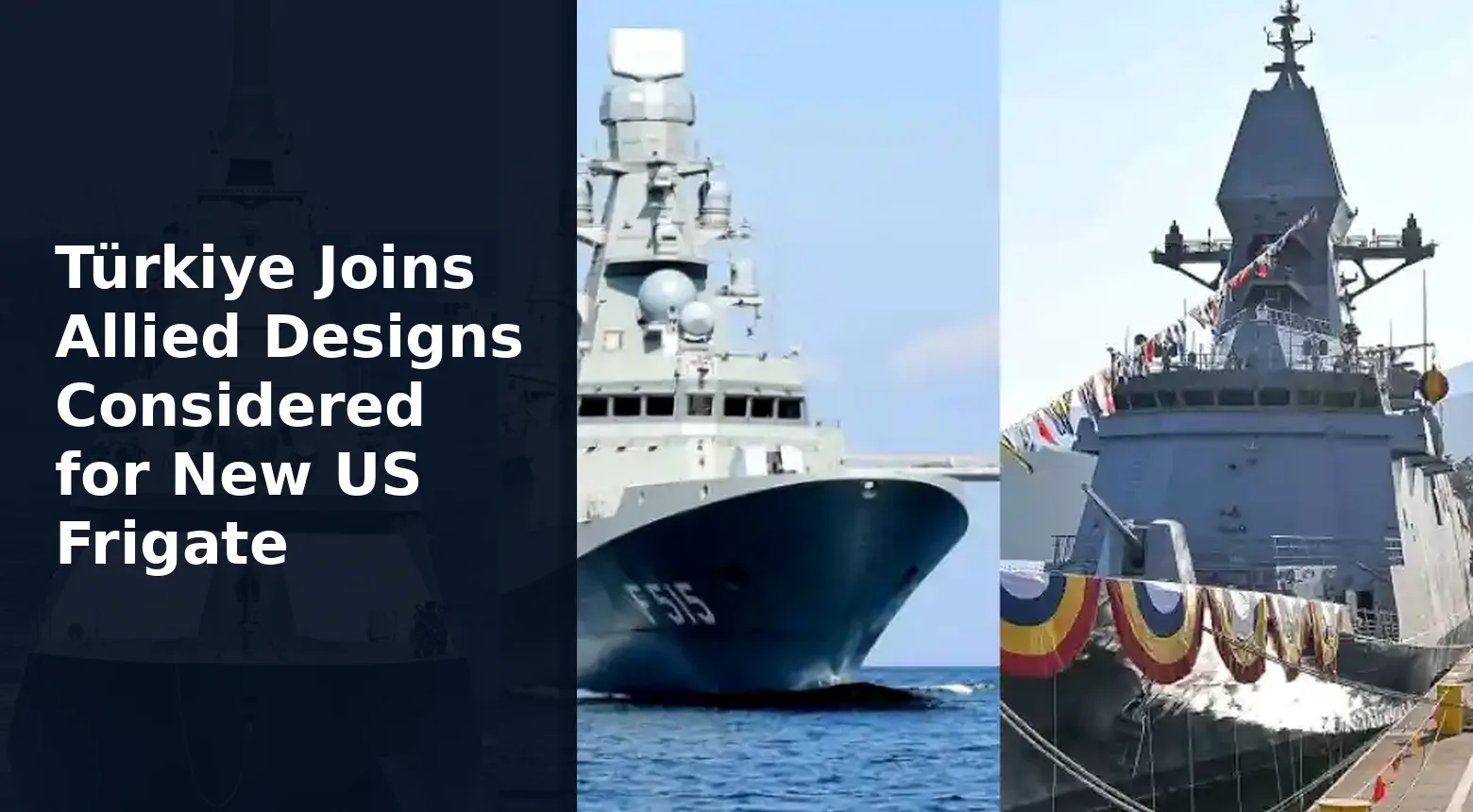
Industrial policy also poses a trade-off. Allied-owned investment may bring expertise and new capital into US yards, while legislators and suppliers remain attentive to domestic workshare, industrial security and long-term control of critical production capacity. Defence Agenda has also covered allied designs considered for future US naval programmes, a separate policy debate that should not be confused with this already awarded domestic-construction subcontract.
Neither the manufacturer nor TOTE has disclosed a detailed itemised cost breakdown for the US$269 million award. It would be inappropriate to treat the amount as a complete, comparable fleet-wide unit cost without knowing which government-furnished equipment, design costs, training, spares, testing and management activities are included or excluded.
Implications / Next
The next measurable milestones are detailed design and yard preparation, the planned fourth-quarter 2027 production start, decisions on the three optional Hanwha vessels and confirmation of the allocation of ships among the initial programme yards. The Navy and TOTE will also need to reconcile the 2029 and 2030 first-delivery outlooks in subsequent reporting.
For acquisition teams and suppliers, the principal test is whether a commercially managed contract can achieve stable specifications, predictable delivery schedules and accepted military capability. For Hanwha, the first vessel is a route into a longer US naval industrial relationship, but a single subcontract should not be extrapolated into guaranteed orders for the planned 35-ship fleet.
Further Reading
Hanwha Defense USA — original announcement, 29 October 2026
TOTE Services — shipyard selection, 30 October 2026
US Navy — VCM award and initial plans, 13 July 2026
USNI News — shipyard programme context, 30 October 2026
Defence Agenda — US Navy Shipbuilding Overhaul Opens Door to Foreign Yards
Defence Agenda — Why US Navy Shipbuilding Must Stay Domestic