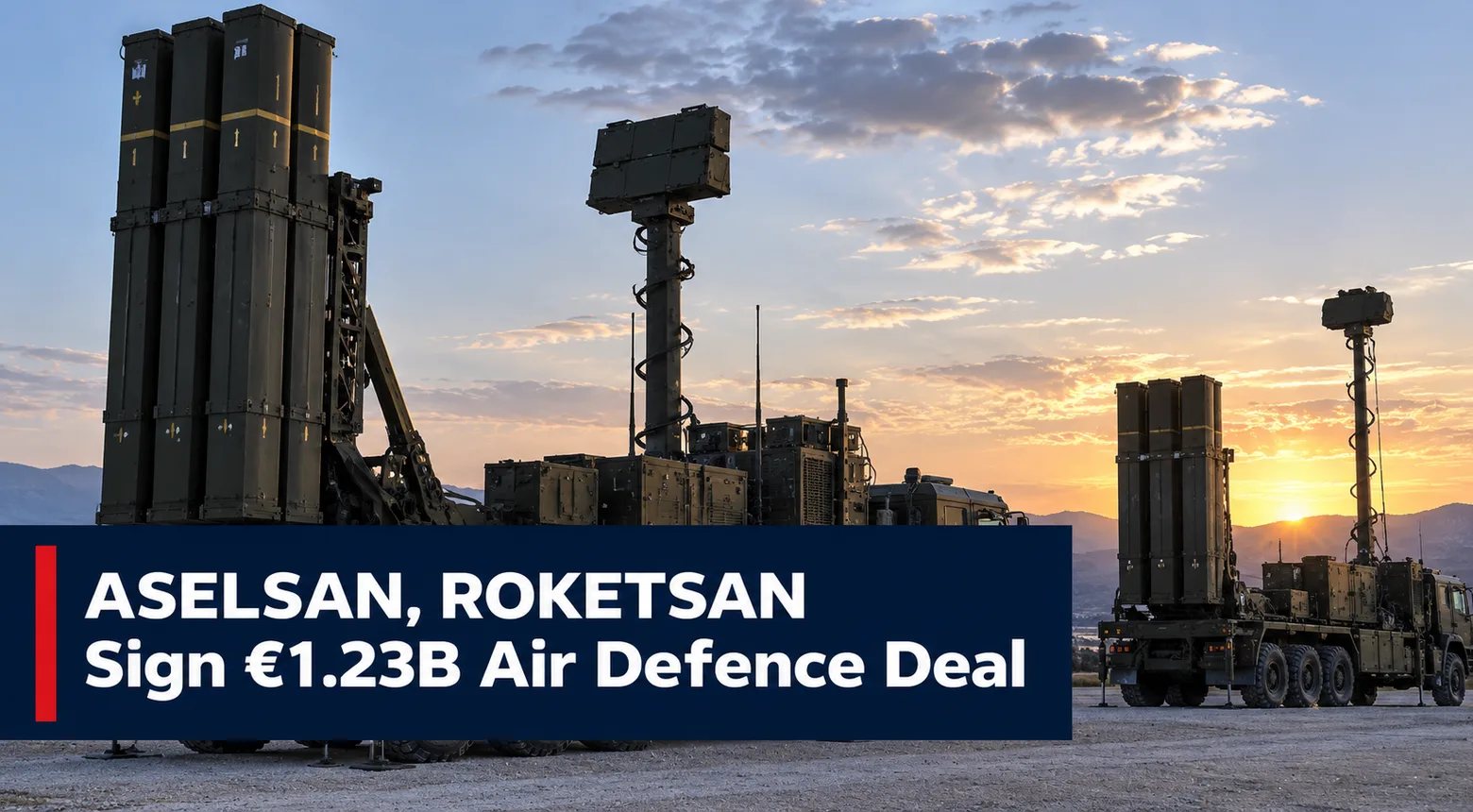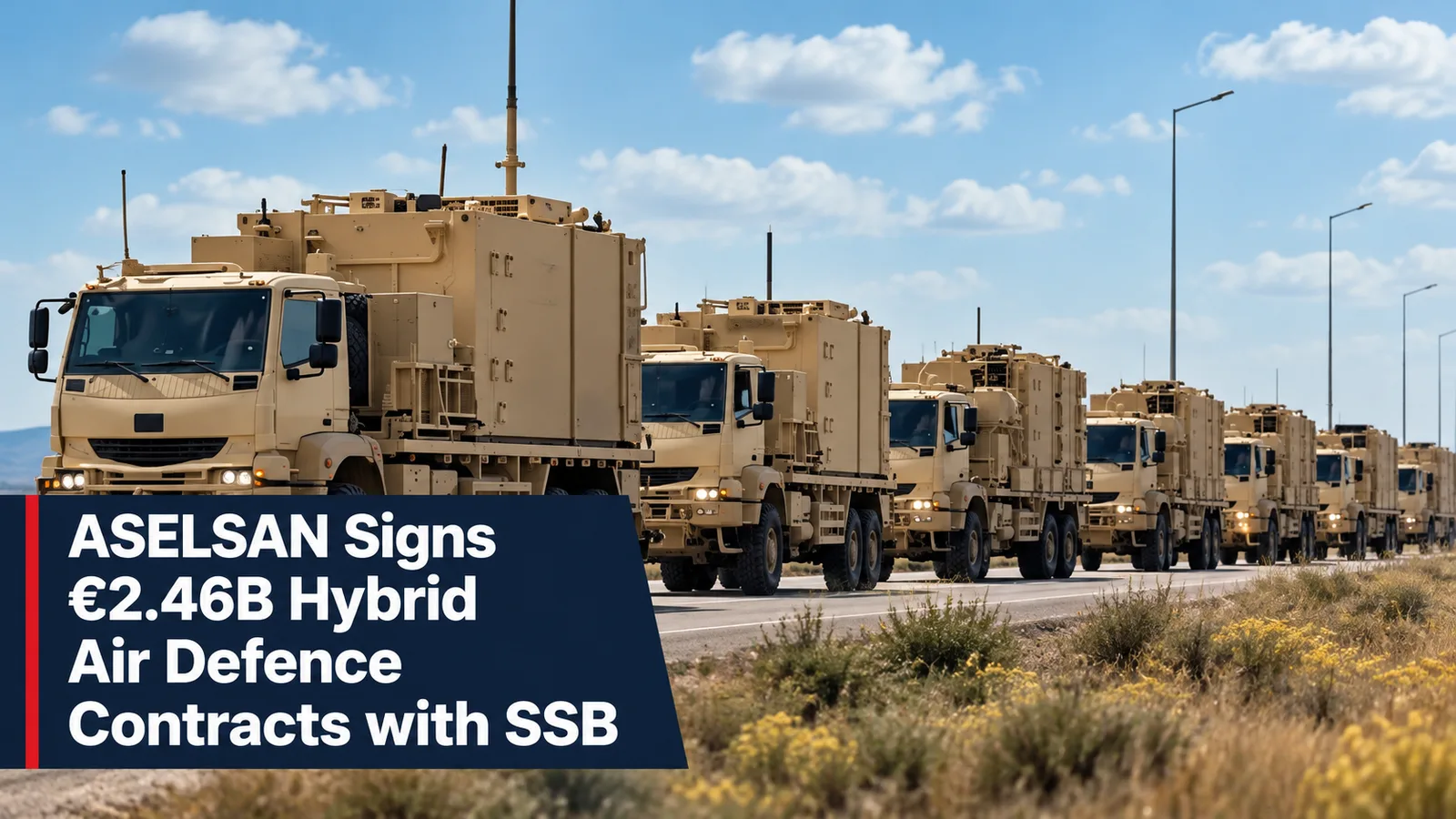
ASELSAN has signed contracts worth €2.46 billion with Türkiye’s Secretariat of Defence Industries (SSB) for the procurement of hybrid air defence systems. The contracts were disclosed through Türkiye’s Public Disclosure Platform on 5 October 2026, with ASELSAN stating that the new business relationship is expected to have a positive impact on company revenues.
The announcement represents another major domestic air-defence order for ASELSAN during a period of rapid production expansion across Türkiye’s layered air and missile defence architecture. The filing does not identify the systems covered, the number of units ordered or the delivery schedule, making those omissions central to how the contract should be interpreted.
The KAP Filing Confirms the Value, but Not the System Mix
ASELSAN’s official filing states that agreements valued at €2.46 billion were signed with SSB for the procurement of “Hybrid Air Defense Systems.” The filing lists 5 October 2026 as the expected start date of the business relationship and states that the contracts are expected to contribute positively to company revenues.
The disclosure does not define what ASELSAN means by “hybrid” in this procurement context. It also does not identify individual platforms, sensors, command-and-control elements, kinetic effectors, electronic-warfare systems or directed-energy systems. Defence Agenda therefore treats the exact system allocation as undisclosed rather than assigning the order to specific products without primary-source confirmation.
The Order Lands Inside a Rapid Air-Defence Contracting Cycle
The €2.46 billion announcement follows a series of large air-defence procurement disclosures involving ASELSAN. On 1 October 2026, SSB and ASELSAN announced additional contracts worth €1.0085 billion for the continuing serial production of long-range air-defence systems.
This sequence points to a procurement environment moving beyond development and isolated acquisition toward sustained production depth. Large multi-year orders can support supply-chain visibility and capacity investment, but the precise phasing of the new €2.46 billion package has not been disclosed.
Steel Dome Provides the Wider Architectural Context
ASELSAN CEO Ahmet Akyol linked the company’s ongoing serial-production activity to the strengthening of Türkiye’s Steel Dome architecture. Steel Dome is an integrated air and missile defence system-of-systems combining sensors, command-and-control, electronic warfare and effectors across different range and altitude bands.
The €2.46 billion contract is therefore strategically relevant to the wider national air-defence build-out even though the KAP filing does not specify which Steel Dome layers or subsystems it funds. Programme context explains why the order matters without turning an undisclosed procurement package into an unverified product list.
Industrial Impact Extends Beyond the Contract Headline
ASELSAN entered the second half of 2026 with a reported order backlog of $23.2 billion and sharply higher spending on capacity and serial production. The new domestic order reinforces that trajectory and adds visibility to future revenue, although actual financial impact will depend on delivery and revenue-recognition timing.
The filing also shows that SSB already represented 30.6% of ASELSAN’s latest disclosed net sales and 37.8% of trade receivables. The new contract therefore deepens an already material customer relationship rather than creating a new one.
What Is Still Unknown
The public disclosure does not provide a delivery calendar, contract duration, system quantities, industrial workshare or the split between hardware, software, integration and support. It also does not state whether the contracts cover entirely new systems, repeat production, upgrades or a combination of these elements.
The next meaningful disclosure would be identification of the systems covered, a delivery window, or programme-level announcements from SSB linking the order to specific air-defence layers. Until then, the verified headline remains the €2.46 billion value and the broad “hybrid air defence systems” scope.