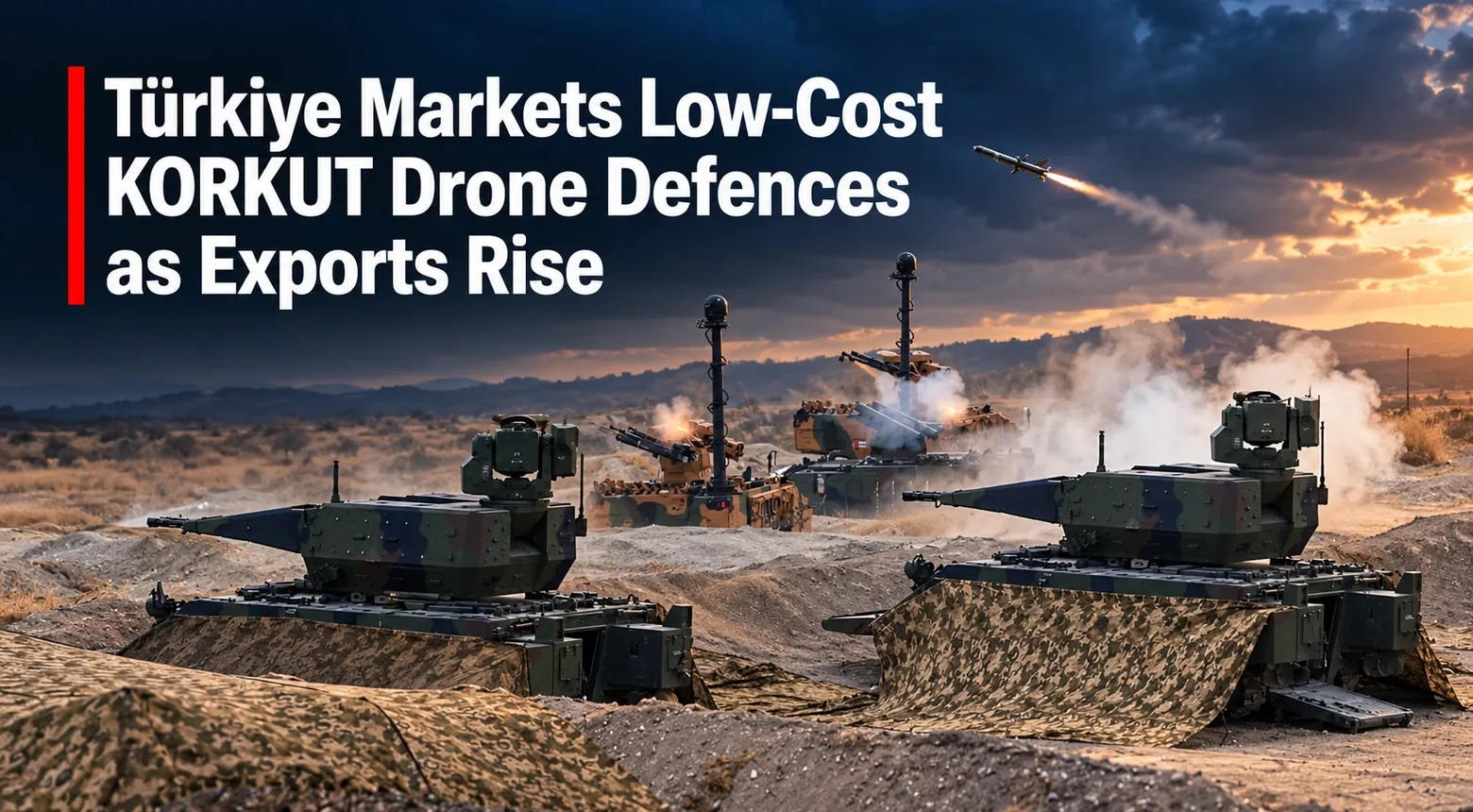
Türkiye is promoting ASELSAN's KORKUT gun-based air-defence systems as military buyers search for less expensive ways to counter drones. A Financial Times report published on 22 October 2026 describes international interest in these systems and cites company estimates for the cost of engaging attack drones. Those estimates are not independently audited. Public demonstrations and contracts indicate growing activity, but do not establish KORKUT-specific export volumes.
For buyers facing repeated UAV attacks, programmable ammunition offers a different engagement model from conventional missiles. Whether it delivers better value depends on reliable interception, ammunition consumption and sustainment costs—not demonstrations or headline prices alone.
KORKUT tests draw foreign attention, but orders are a separate question
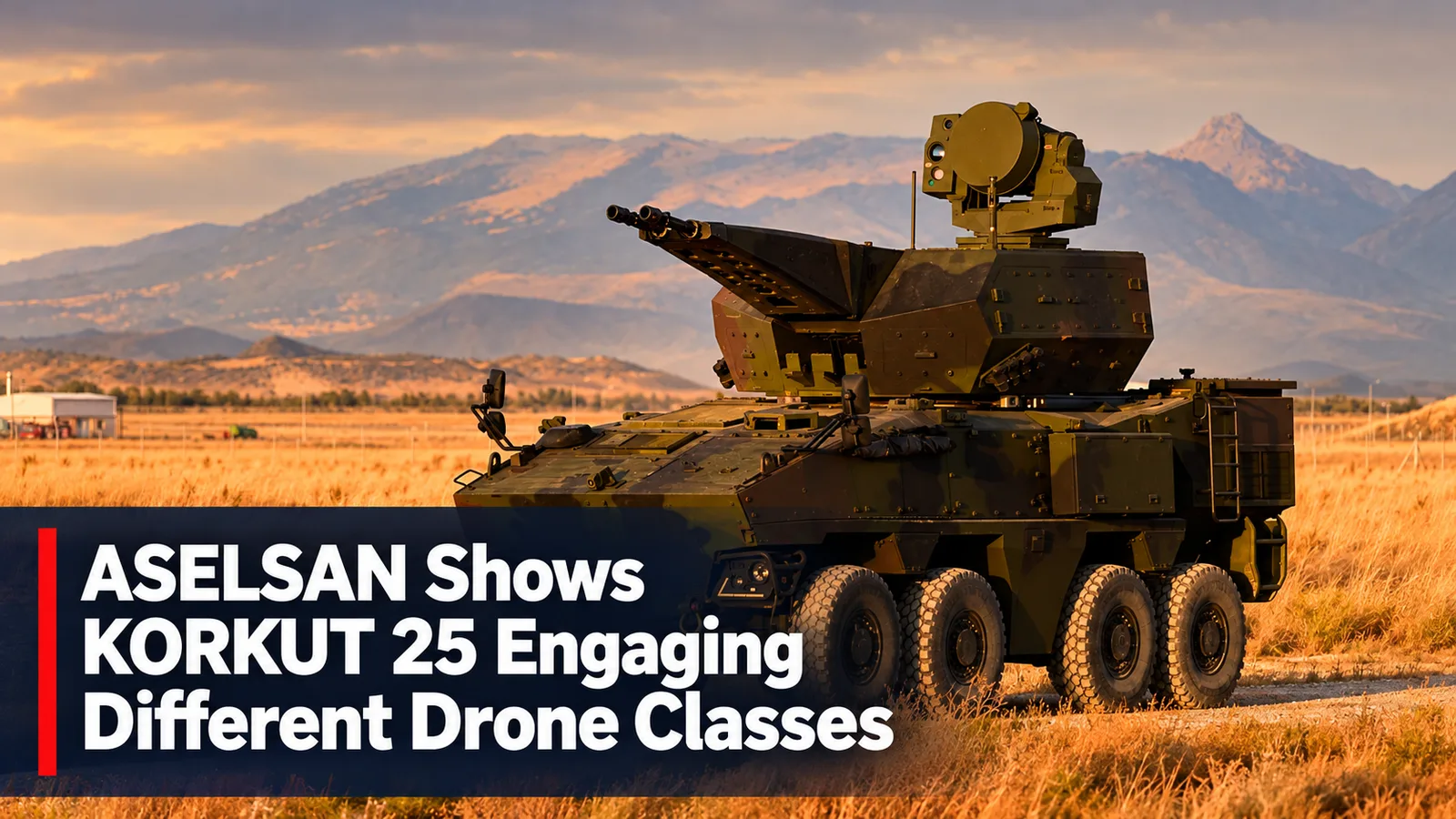
The Karapınar demonstration provided international observers with a live-fire presentation of KORKUT 35. ASELSAN's corporate account described target detection, tracking and gun engagements against multiple UAV configurations. It also described a separate firing-on-the-move scenario against a moving ground target using an 8×8 wheeled platform. These are useful demonstrations of the system's intended mobility and fire-control role, not measured evidence that it can defeat any quantity or type of incoming drones in operational service.
Interest from foreign delegations is a potential sales lead rather than an announced export order. The public description did not include a country-by-country buyer list, equipment quantities, delivery dates, magazine expenditure per intercepted target or independently assessed success rates. Those details are needed to move the story from technical demonstration to confirmed acquisition and deployable capacity.
KORKUT 35 and KORKUT 100/25 cover different layers
KORKUT 35 combines mobile short-range air defence with programmable airburst ammunition, designed to place fragments near a target rather than requiring a direct hit. Public test descriptions do not establish a standardised probability of kill across varying speeds, weather or simultaneous targets.
The KORKUT 100/25 SB addresses closer-range threats from mini and micro UAVs. Demonstrated on an EJDER YALÇIN 4×4 vehicle, its ATOM 25 programmable rounds, calibre and engagement role are distinct from those of KORKUT 35.
| System | Public evidence | What remains unconfirmed |
|---|---|---|
| KORKUT 35 | September 2026 multinational live-fire demonstration; varied UAV target profiles; 8×8 platform | Export orders by customer, audited cost per kill and saturation performance |
| KORKUT 100/25 SB | April 2026 4×4 vehicle tests and ATOM 25 counter-drone capability | Broad operational deployment, ammunition expenditure per engagement and customer volumes |
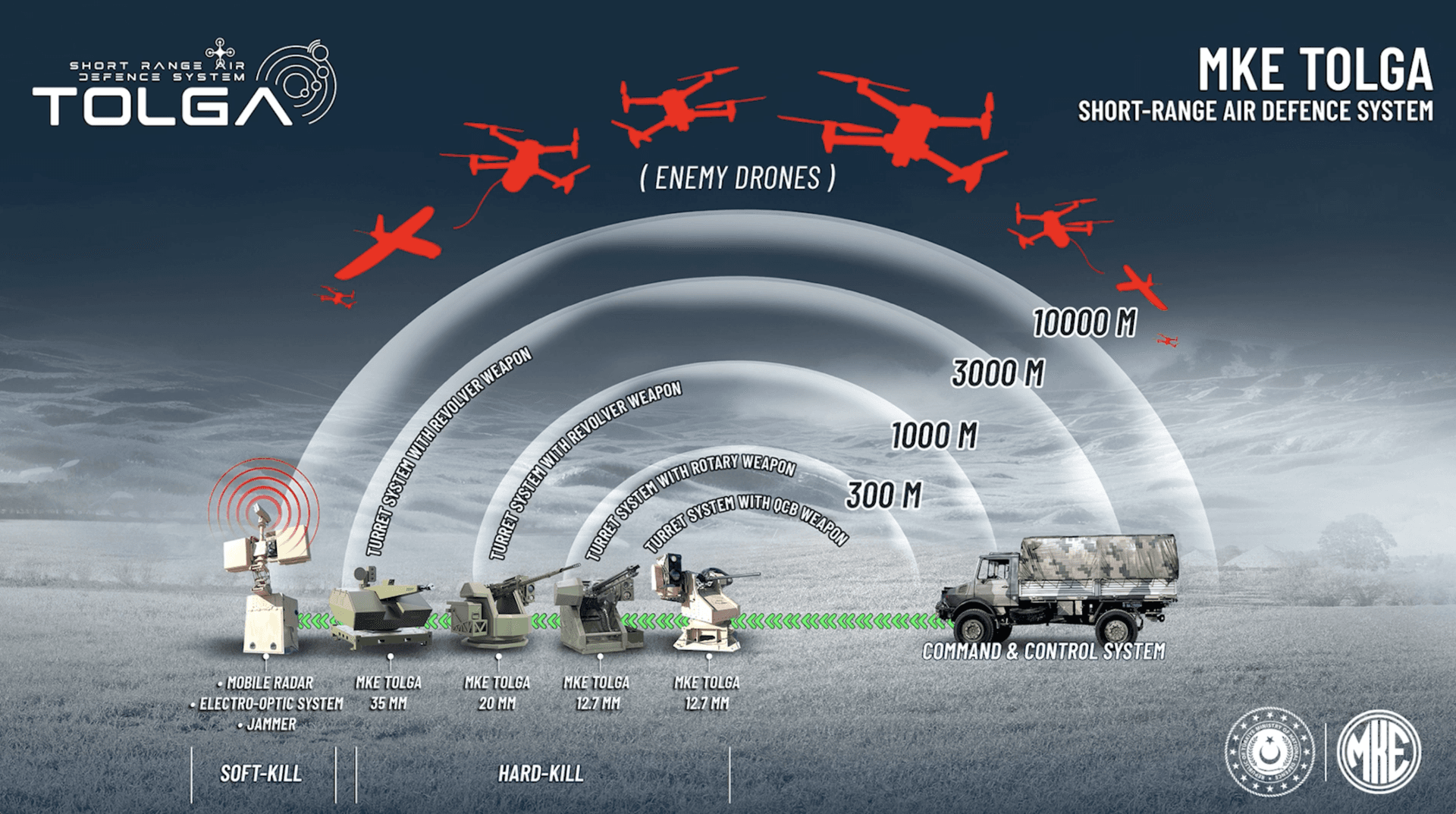
| DRONEDEF / Steel Dome layers | ASELSAN markets combined kinetic, electronic-warfare and directed-energy technologies | Whether any individual export contract includes each displayed component |
Defence Agenda separately covered KORKUT 35's demonstration and later KORKUT 25 engagements against different drone profiles. Those are separate evidence points, not a single combined operational qualification programme.
What the €488.5m export contract actually confirms
The strongest contract evidence comes from ASELSAN's 2 October stock-exchange disclosure: the company signed a €488.5 million agreement for the export of air-defence systems to an overseas end-user. The buyer and equipment list were not identified. It is therefore incorrect to call the full amount a KORKUT order, infer a number of delivered guns or count it as completed export revenue.
On 5 October, ASELSAN separately announced €2.46 billion in agreements with Türkiye's Secretariat of Defence Industries for hybrid air-defence procurement. That value concerns domestic procurement. It may be relevant to ASELSAN's production workload, but it must not be combined with the export contract to produce a headline total for foreign KORKUT sales.
A third example illustrates why product attribution matters. At MSPO 2026, ASELSAN announced a contract with Polish manufacturer AMZ Kutno for 24 ARSUS reconnaissance and surveillance sets. The company displayed its DRONEDEF portfolio, including KORKUT 100/25, at the same event, but the signed ARSUS contract was not a KORKUT purchase. Its earlier Polish electronic-warfare export agreement is also a distinct product category.
Is a drone interception really cheaper than $10,000?
The Financial Times reported management estimates of under $10,000 for a drone engagement and approximately $1,000 per 35 mm programmable round, alongside a claimed presence in nine countries, including Ukraine. These are attributed claims, not verified contract registers, audited engagement costs or confirmed customer-by-customer deliveries; access to the full FT text is subscription-restricted.
A round price is not a complete engagement cost. A defensible comparison needs the number of rounds fired per successful defeat, probabilities of detection and successful interception, maintenance and reload burden, fire-control infrastructure and the possibility of repeated or simultaneous attacks. An inexpensive round can be poor value if multiple failed engagements exhaust ammunition or leave the defended asset exposed. Conversely, a suitable gun system may reduce the need to use a costly missile against every slow, small UAV.
There is also a performance boundary. Demonstrated engagements against selected propeller-driven or delta-wing targets do not by themselves verify effectiveness against faster jet-powered drones, cruise missiles or coordinated saturation attacks. Missiles, guns, jamming, directed energy and interceptor drones remain complementary tools whose value depends on the threat, terrain, sensor network and rules of engagement.
Turkish defence exports are growing, but KORKUT totals remain opaque
Türkiye's Presidency of Defence Industries reported $6.9 billion in defence and aerospace exports for January–September 2026, an increase of 16% year on year. It reported $10.9 billion for the preceding 12 months, a different reporting period. These broad totals include numerous defence and aerospace product categories; neither represents ASELSAN's revenue or an independently established KORKUT export figure.
ASELSAN is promoting a wider integrated offering that can link gun-based systems to radar, command-and-control, electronic warfare and directed-energy effects. At Ateş Serbest 2026, the company displayed KORKUT and other Steel Dome components, including GÖKBERK, EJDERHA and sensors. Defence Agenda's Steel Dome coverage discusses those layers. A joint demonstration of different effectors does not show that they have all been purchased, delivered or integrated by one foreign customer.
For procurement teams, the next decisive evidence would be identifiable KORKUT orders, ammunition resupply plans, delivery milestones and repeatable engagement data. Until these are disclosed, Türkiye's counter-UAS export campaign should be assessed as a developing commercial opportunity rather than a quantified KORKUT export success.