Spain Adds a Dedicated Close-Range Missile Layer
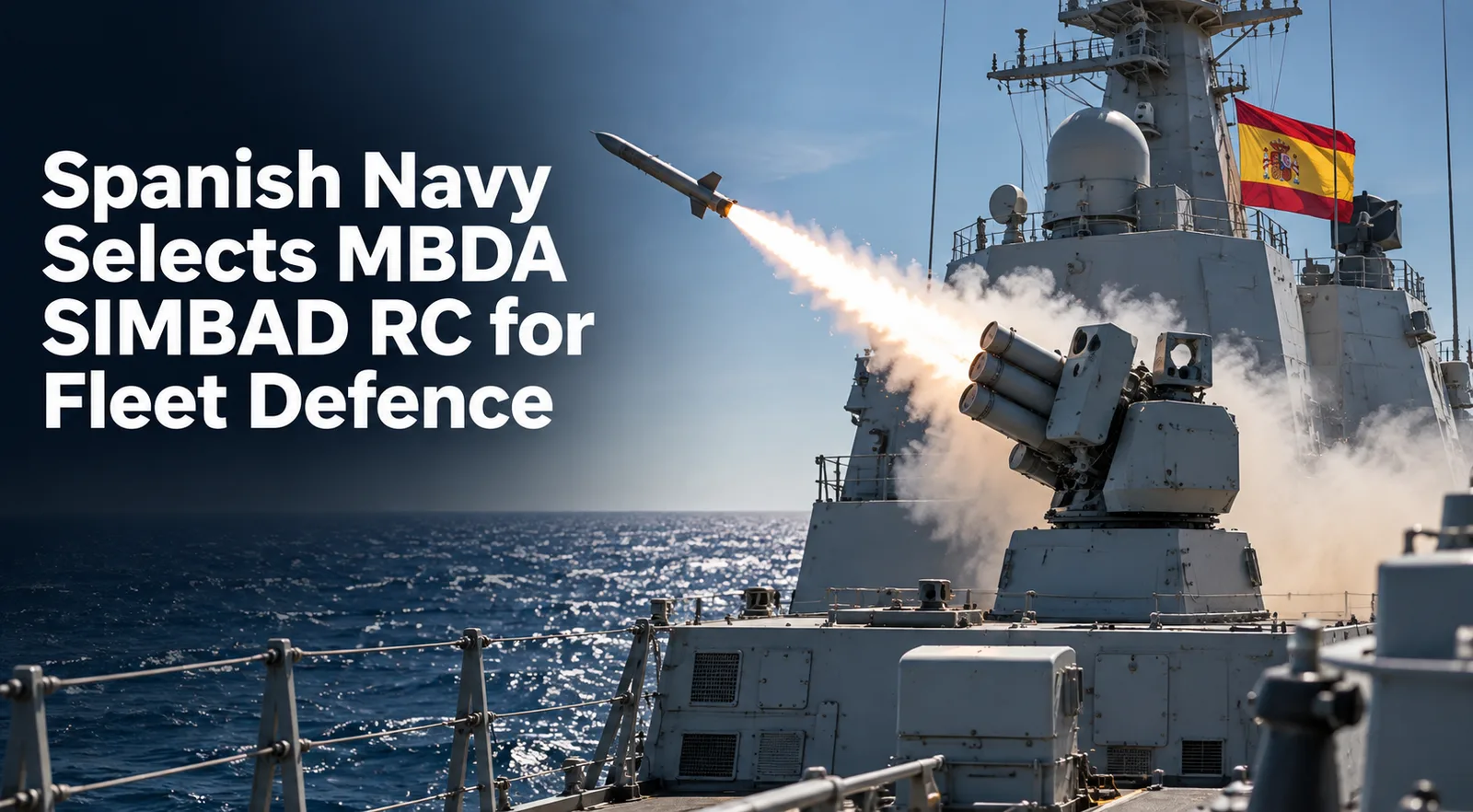
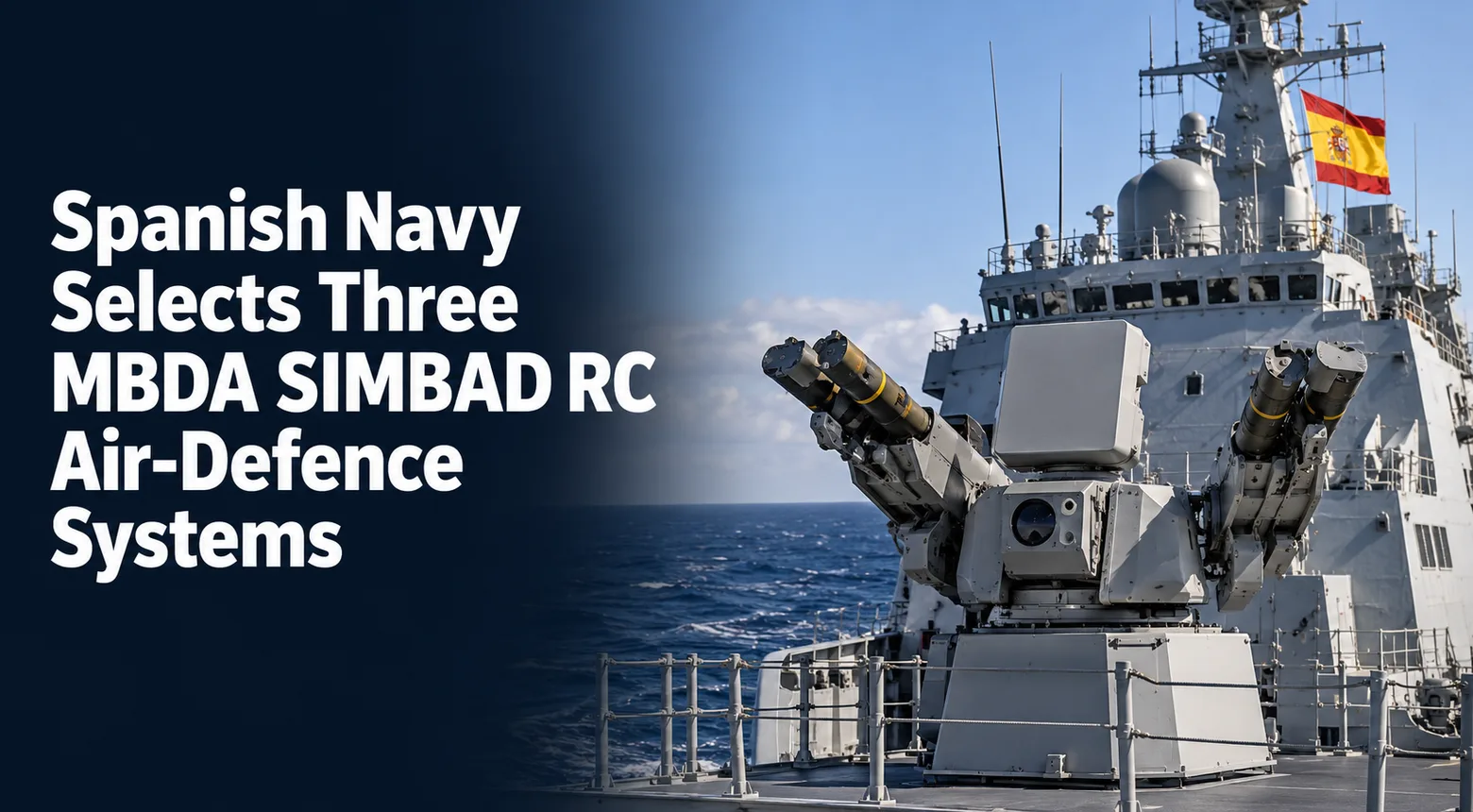
MBDA has signed a framework agreement with the Spanish Navy for three SIMBAD RC anti-missile systems, providing a dedicated close-range missile-defence capability that the company says the service does not currently possess. Announced on 8 September 2026, the agreement covers systems planned for integration on active naval units as part of Spain’s effort to strengthen ship self-defence against missile and aerial threats. The contract value was not disclosed, so the programme should be assessed through capability and integration scope rather than an inferred financial figure.
SIMBAD RC is built around the MISTRAL short-range missile and is intended either to provide a primary self-defence layer on smaller vessels or complement larger combatants’ existing air-defence systems. For the Spanish Navy, the acquisition fills the engagement space between guns, electronic countermeasures and longer-range missiles. That layer has become more important as warships face not only sea-skimming anti-ship missiles but also small drones and low-cost one-way air threats that can saturate traditional defences.
A Simple Launcher Can Still Change the Ship’s Defensive Architecture
MBDA describes SIMBAD RC as a remotely controlled system operated by a single sailor and capable of 24/7 use in all weather conditions. The underlying MISTRAL missile gives the launcher a mature interceptor family, while remote operation keeps the crew under armour rather than exposed on deck. The value of the system will depend on how well it is connected to ship sensors and command systems, because cueing and target identification determine whether a short-range interceptor can be employed quickly enough against a fast incoming threat.
Naval News reported additional detail on the first planned installations, indicating that the framework covers a small initial fleet set rather than immediate widespread deployment. That makes the programme a practical insertion of a new defensive layer rather than a complete fleet redesign. If early installations prove effective, the same architecture could be expanded to additional Spanish ships or used as a stepping stone toward deeper MBDA integration in the national naval market.
The Agreement Also Expands MBDA’s Direct Position in Spain
MBDA described the award as its first direct agreement with the Spanish Navy and linked it to a broader strategy of expanding its industrial footprint in Spain. That commercial dimension is relevant because European missile companies are increasingly pairing equipment sales with national industrial participation, local support and longer-term cooperation. Even a relatively small initial system order can therefore create a pathway into sustainment, future missile purchases and integration work across additional platforms.
For Spain, the procurement reflects a broader European emphasis on layered naval air defence after combat in the Red Sea and Ukraine demonstrated how inexpensive drones and cruise missiles can impose disproportionate defensive costs. Short-range systems based on mature interceptors offer one way to increase magazine depth without assigning a high-end area-defence missile to every target. They do not eliminate the need for guns, jammers or larger surface-to-air missiles; instead, they widen the commander’s set of available responses.
Implications / Next
The next milestones will be identification of the first host ships, physical installation, combat-system integration and firing or acceptance trials. A framework agreement establishes the procurement route, but operational capability will only be demonstrated when the launchers are integrated with ship sensors and crews complete training and live testing.
If the initial three systems perform well, follow-on orders would be the clearest indicator that Spain intends SIMBAD RC to become a standard close-in layer across a larger part of the fleet. The programme will also show whether MBDA can use a modest first naval award to deepen cooperation with Spanish industry and position other missile families for future requirements.