MKE is exploring MKE TOLGA merchant ship protection following live-fire activity involving the Turkish Navy corvette TCG Beykoz. Speaking at EURONAVAL 2026 in Paris, MKE international marketing and sales director Ali Hakan Şafak said the manufacturer had begun discussions aimed at regulatory changes that could permit the 20 mm close-in weapon system to be installed on commercial vessels. The prospect would extend a military counter-drone capability into maritime infrastructure protection, but no civilian installation, purchase agreement or authorisation has been announced.
Why MKE Wants TOLGA on Commercial Ships
Uncrewed aerial vehicles and explosive uncrewed surface craft have complicated the protection of ships that were not designed to carry military defensive systems. Offshore drilling platforms, seismic research vessels, cable-laying ships and floating power-generation vessels may remain in constrained areas for lengthy periods, while merchant shipping faces its own route-specific security requirements. Those operating profiles make the cost, weight and legal status of protection systems more consequential than for a commissioned warship.
At EURONAVAL, held from 3 to 6 November 2026 in the Paris region, Şafak told Anadolu Agency that MKE aimed to expand TOLGA beyond military platforms and had initiated contacts with relevant authorities concerning regulatory changes. This is a proposed application, not an indication that commercial operators already have legal approval to carry the equipment. A 6 November report by ShiftDelete.Net similarly identified the intended use on civilian vessels after the recent naval demonstration.
TCG Beykoz Firing Adds Evidence Beyond Earlier Integration
The most relevant new technical milestone is TOLGA's use aboard TCG Beykoz during the Turkish Navy's TURNAs-2026 unmanned maritime systems exercise. Şafak said the naval installation engaged and destroyed both aerial and surface targets. This is a manufacturer-reported result from a military exercise; independently published shot-by-shot test data, target profiles and a formal naval acceptance certificate were not identified in the reviewed sources.
The exercise follows an earlier integration announcement. On 21 August 2026, MKE general manager İlhami Keleş confirmed that stabilised TOLGA gun stations had been fitted to the corvette, as detailed in Defence Agenda's original TCG Beykoz integration coverage and Anadolu Agency's report. That August milestone concerned equipment integration; the later TURNAs demonstration adds a reported firing result. Treating those two events as interchangeable would obscure the programme's actual progress.
The distinction matters to potential shipowners and procurement officials. A weapon mounted on a ship is not automatically qualified for every sea state, operational profile or integration architecture. The exercise provides a more substantial test record than a static exhibition, while leaving additional verification and acceptance questions open.
TOLGA's 20 mm Rate of Fire and Engagement Envelope
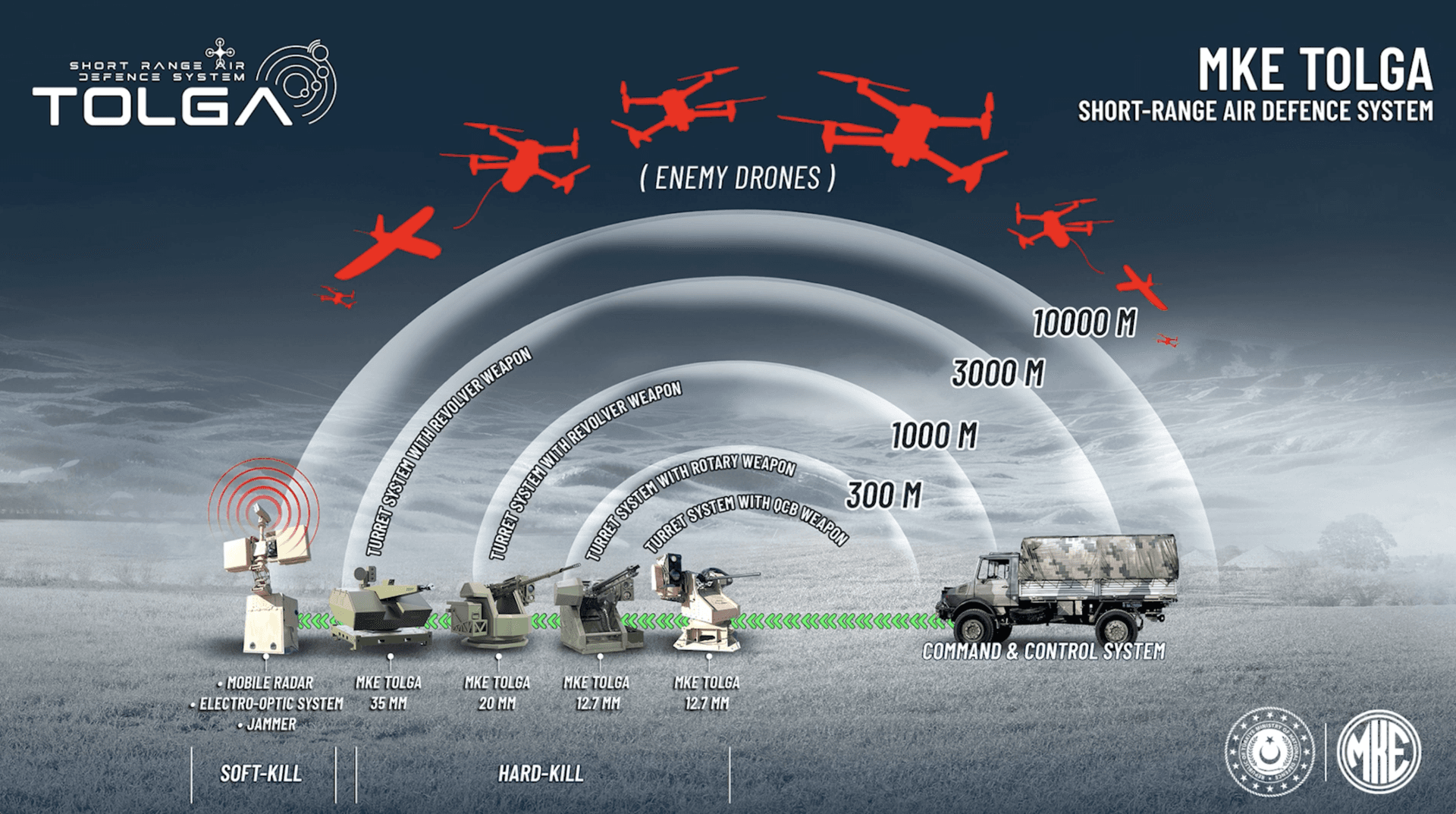
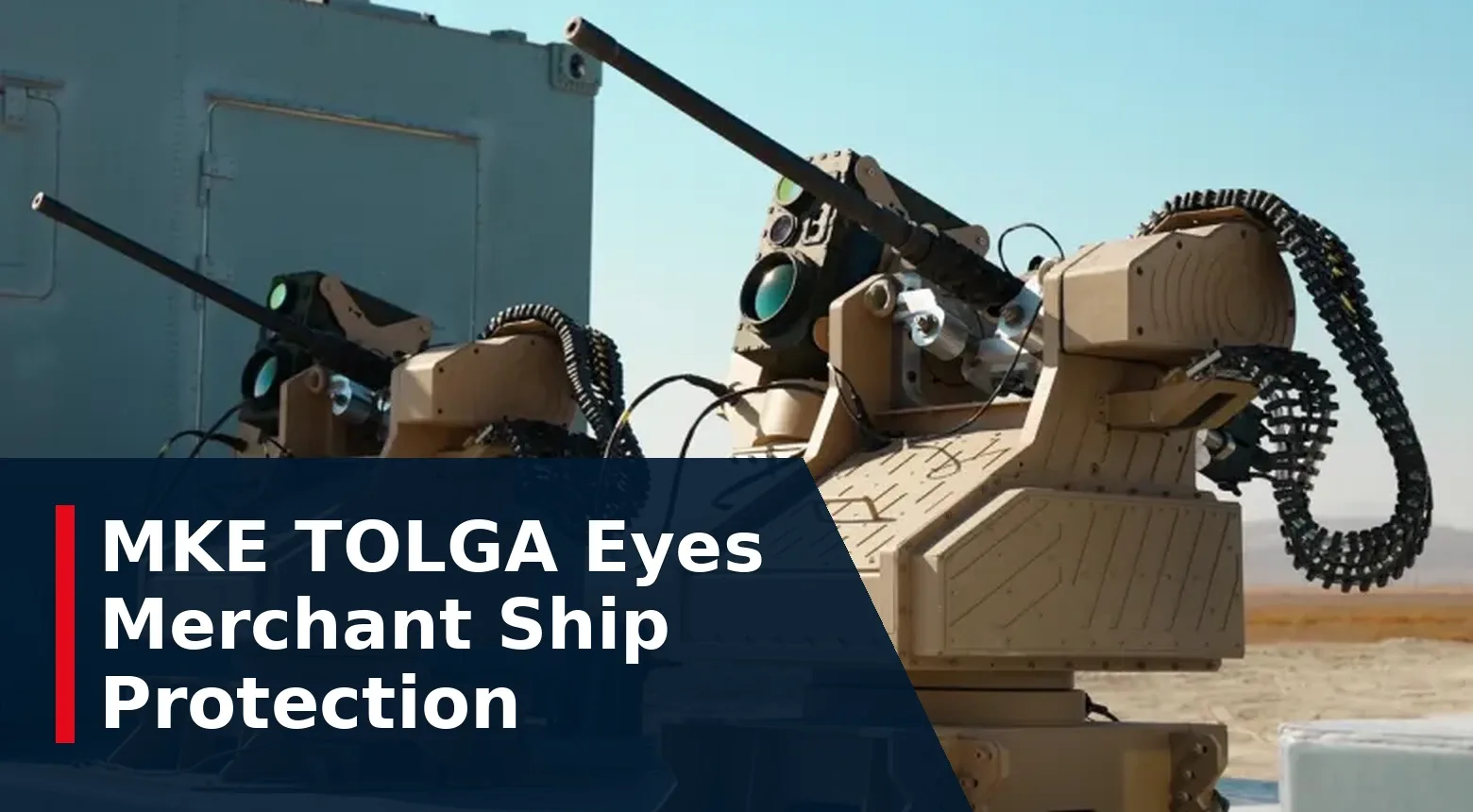
MKE describes the naval weapon as a dual 20 mm revolver configuration with an aggregate 3,200 rounds-per-minute rate of fire. Its specially developed fragmentation-based anti-drone ammunition is associated with a 1,000-metre effective engagement range, according to the manufacturer's official technical announcement. The 3,200 figure is a firing rate, not the number of rounds carried on the installation or a proven sustained rate over a prolonged engagement.
The company also claims that its rate of fire is about three times that of certain competing systems. That comparative marketing statement lacks a defined public comparison set, so it should not be presented as an independently established industry-wide ranking. Nor should the 1,000-metre published range be treated as a guaranteed kill distance across all targets, weather conditions or ship movements.
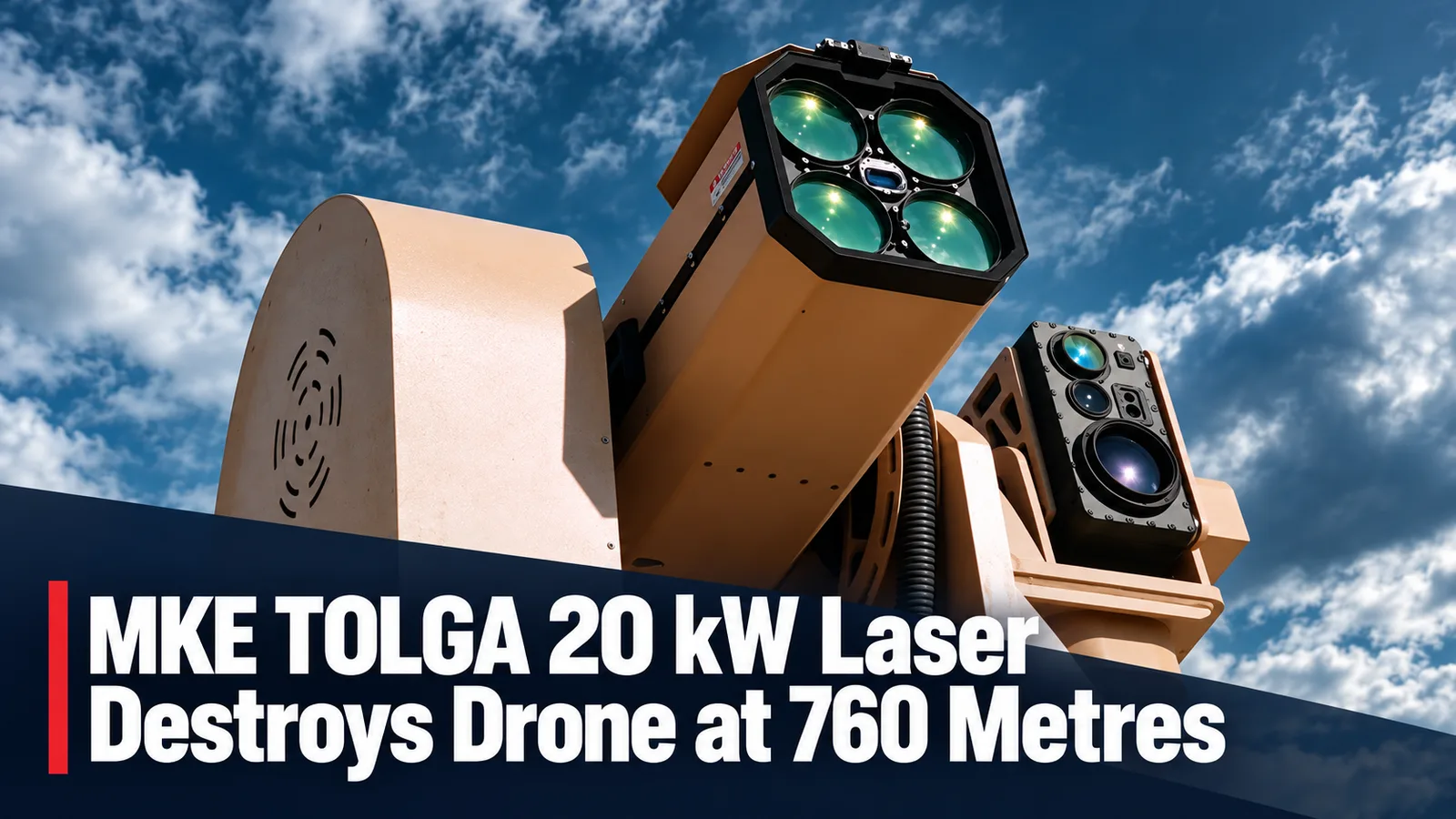
The larger TOLGA family includes gun-based layers, electro-optical detection, an AESA radar, electronic countermeasures and additional effectors. However, a product-family brochure is not proof that every component has been installed or qualified on TCG Beykoz. The 20 mm naval configuration and its demonstrated engagements should be evaluated separately from the company's other TOLGA technologies, including the 20 kW laser tested at Polatlı.
A Civilian Retrofit Requires More Than a Deck Mount
MKE has identified high-value industrial and utility shipping as prospective applications, but a civilian ship is not configured like a naval combatant. Any future adaptation would require an appropriate assessment of ship structure, weight and stability, electrical and communications interfaces, watchkeeping, maintenance support and crew safety. Those considerations could affect both technical feasibility and the commercial case for a retrofit.
Civilian operators may also have a different tolerance for false alarms and for the hazards of firing close to port facilities, other vessels or sensitive cargo. These issues cannot be resolved solely through the weapon's stated rate of fire. Formal design approval, operating procedures and insurance arrangements would matter alongside technical tests, especially for internationally trading vessels that enter multiple jurisdictions.
As of 6 November 2026, MKE has not publicly identified a merchant vessel fitted with TOLGA, a named civilian launch customer, a contract value, or a timetable for approved commercial deployment. Assertions that the system is already defending civilian shipping would therefore go beyond the available evidence.
Flag-State and International Maritime Rules Are the Gatekeeper
The principal immediate barrier is regulatory rather than ballistic. Keleş had already raised the issue in August, saying that MKE was discussing the concept with Türkiye's Ministry of Transport and Infrastructure and that international maritime rules would have to be considered. Şafak's November comments indicate that the company is still pursuing the legal pathway rather than announcing a completed authorisation.
The International Maritime Organization's guidance does not establish a universal blanket ban on all armed personnel aboard merchant ships. Instead, carriage of firearms and private armed security is governed by a combination of flag-state, port-state and coastal-state laws and policies. IMO guidance developed around armed guards and piracy does not by itself constitute approval for the installation of an automated 20 mm naval weapon on a merchant ship. That more demanding scenario would require its own legal assessment.
This distinction is central to evaluating the commercial opportunity. A national policy change might create one route for certain flag-state vessels, but international voyages could raise additional permissions, customs, liability and rules-of-engagement questions. Until authorities specify an applicable framework, market-size estimates and adoption schedules would be premature.
What the Naval Demonstration Does and Does Not Establish
A reported successful exercise engagement supports the maturity of the specific naval test configuration, but does not demonstrate broad performance against saturation attacks, extreme weather, electronic warfare or every category of fast-moving surface target. No independently verified interception probability, ammunition expenditure per target or full-life cost figure accompanied the latest commercial-shipping announcement.
There is also an important alternative to examine: merchant-vessel protection is not always best met by permanently arming each ship. Route planning, threat intelligence, escort arrangements, passive protection, detection systems and non-kinetic measures may be more practical in some operating environments. Even where a gun-based close-in layer proves legally feasible, it would be part of a wider defence and risk-management architecture rather than a complete solution on its own.
For wider context, Defence Agenda has reported the STM TUNGA-X interceptor's TURNAs-2026 test and MKE PİRANA surface-target live-warhead trial. Those programmes address different parts of the uncrewed maritime-threat environment. They do not validate the performance or civilian suitability of TOLGA by association.
Procurement, Export and Industrial Implications
The proposal could broaden the addressable market for an MKE product family that already spans land-based and naval counter-UAS applications. High-value energy and infrastructure vessels present a different customer group from defence ministries, potentially involving shipowners, operators, security managers, classification societies and insurers. Each would examine legal exposure, lifecycle costs and operational responsibility alongside the advertised system specification.
MKE displayed TOLGA alongside other maritime products, including PİRANA, MALAMAN and BALKIN, at EURONAVAL 2026. That exhibition presence provides an opportunity for industrial outreach but is not evidence of signed merchant-ship orders. Nor should the absence of a published price be filled with a notional cost-per-shot estimate, which would require ammunition, maintenance, training and integration data not supplied in the announcement.
If the project progresses, suppliers and operators will also need to clarify whether MKE offers a self-contained shipboard package, integration with existing ship sensors, or a broader contracted support model. No such definitive commercial package or procurement framework was confirmed in the available announcement.
Implications / Next: Approval, Qualification and First Customer
Three milestones will determine whether MKE's proposal becomes a deployable maritime-security offering. The first is a clearly defined authorisation route for the intended civil-vessel categories, including applicable flag and port restrictions. The second is technical and safety qualification for representative commercial platforms, rather than reliance exclusively on the TCG Beykoz military demonstration. The third is a transparent procurement decision from a named operator, including the number of installations, support obligations and expected service date.
A future civilian demonstration could provide additional evidence, but even a successful firing would not replace regulatory approval or prove that a weapon system is commercially suitable for every vessel type. The more immediate development is therefore MKE's intention to move from military naval testing towards a regulated civil-maritime application. The 6 November announcement opens that discussion; it does not close it.