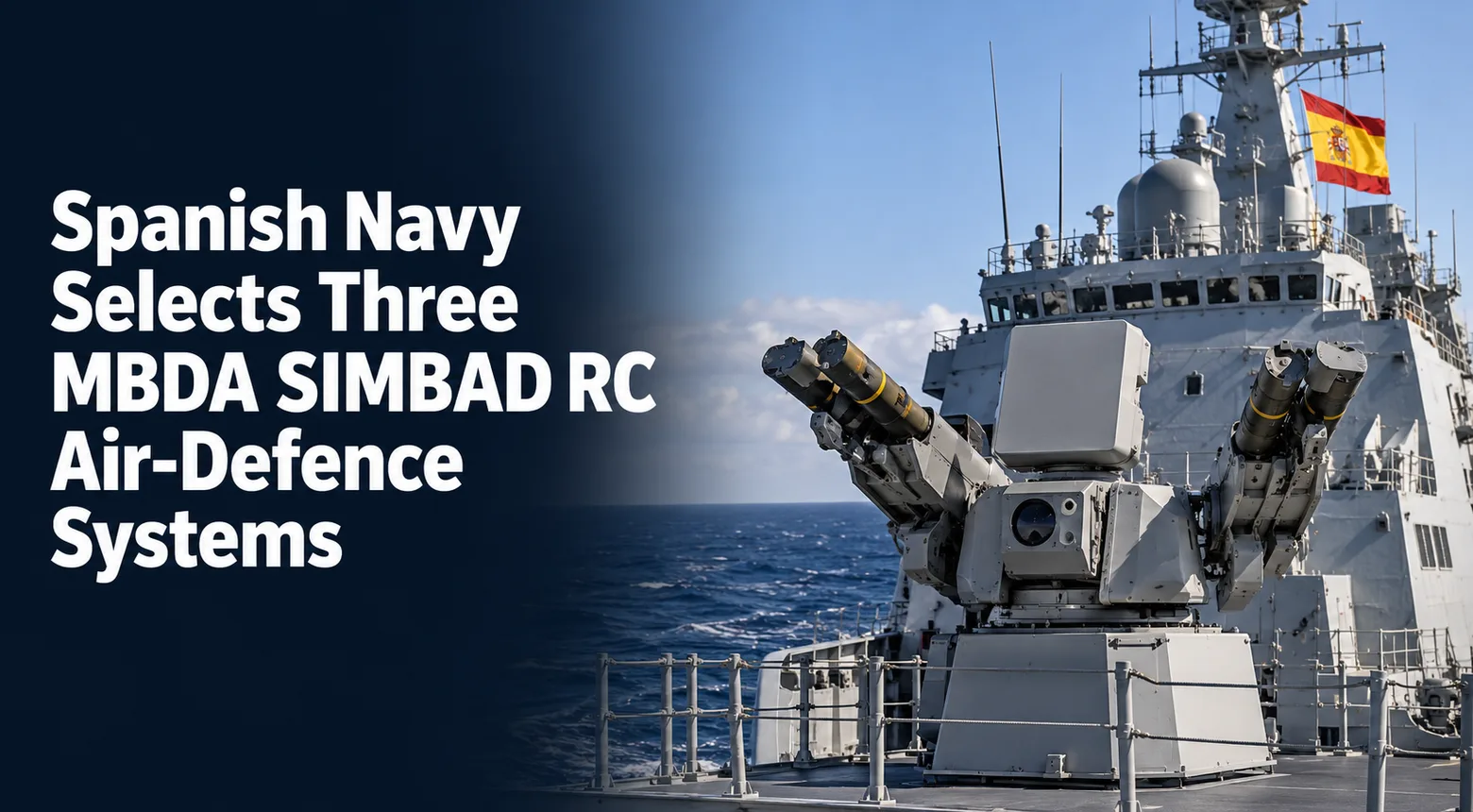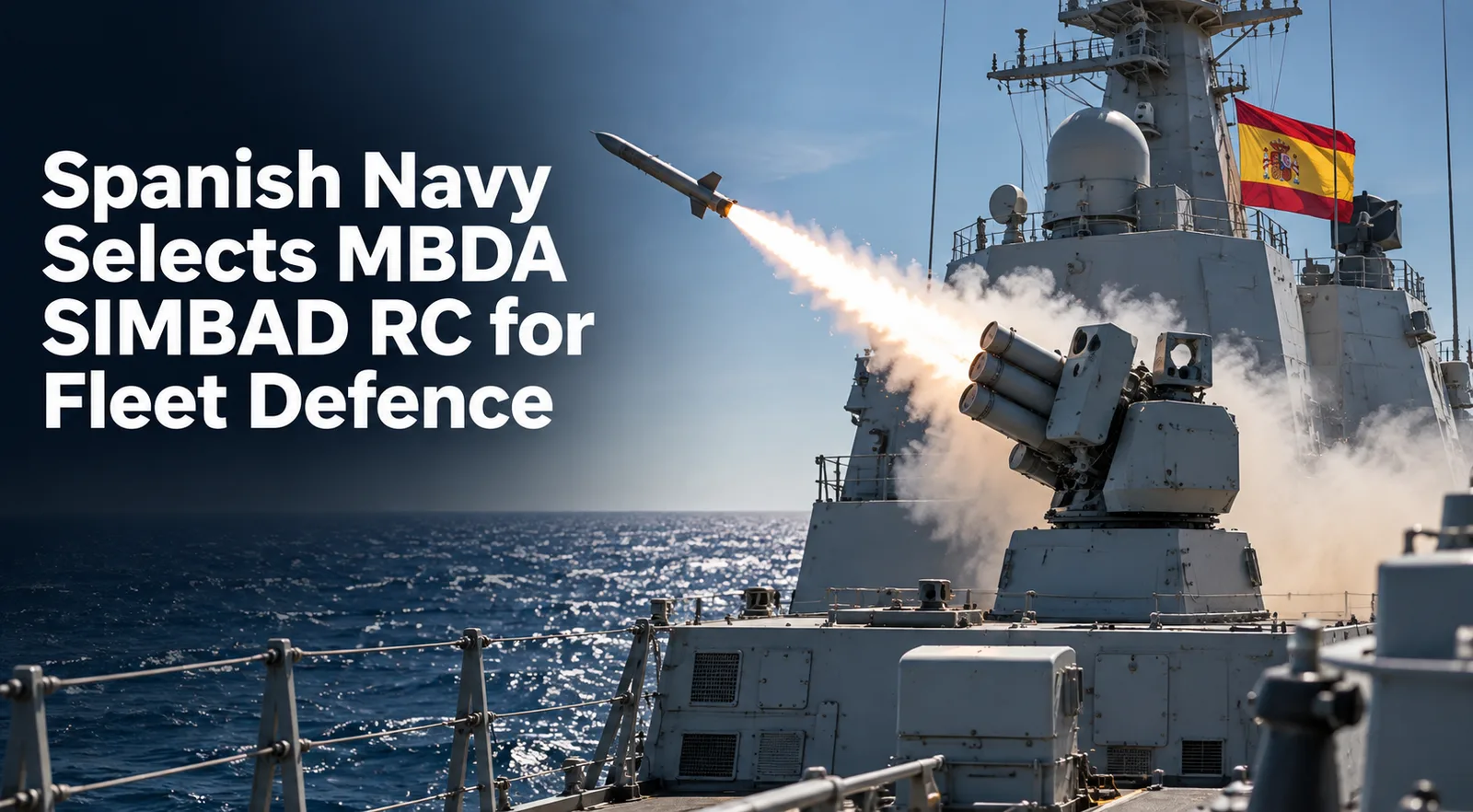
MBDA has signed a framework agreement with the Spanish Navy for three SIMBAD RC anti-missile and anti-aircraft systems, giving the service a dedicated capability it did not previously possess in this form. MBDA announced the agreement on 8 September 2026 and said the systems will be integrated into active naval units as part of Spain’s effort to improve self-defence against missile and aerial threats. The contract value was not disclosed.
Spain Adds a Dedicated Close-In Missile Layer
Naval News reports that the initial three systems comprise four launchers and are intended for different vessel types. That deployment detail illustrates the flexibility of the architecture, but the public framework should still be treated as an initial procurement step rather than evidence that every Spanish warship will receive the system.
MISTRAL Provides a Compact VSHORAD Effector at Sea
SIMBAD RC is based on the MISTRAL missile family and can be remotely operated by a single operator. MBDA positions it as either a primary self-defence system for smaller vessels or a complementary layer aboard larger combatants. The system is intended to engage threats including aircraft, drones and sea-skimming anti-ship missiles at short range.
That mission is becoming more important as naval forces face inexpensive uncrewed systems alongside conventional missile threats. Long-range surface-to-air missiles are valuable but economically inefficient against every small drone, while guns and electronic warfare may not cover every engagement geometry. A short-range missile layer provides another option between soft-kill measures and the ship’s more expensive area-defence interceptors.
The Framework Also Expands MBDA’s Direct Position in Spain
MBDA describes the agreement as its first direct contract with the Spanish Navy and a milestone in the company’s Spanish growth strategy. That industrial context matters because future naval air-defence work could involve integration, support and potentially broader cooperation with national defence companies. The first contract gives MBDA an operational reference inside the Armada rather than only a product demonstration.
For Spain, the procurement can also simplify introduction because MISTRAL is already an established European missile family with a mature support base. Nevertheless, ship integration requires combat-system interfaces, deck modifications, communications, power and crew procedures. A launcher that is mechanically installed is not automatically an operationally certified naval weapon.
Integration and Live-Fire Acceptance Are the Next Programme Gates
The next milestones will be assignment of launchers to specific ships, installation, harbour integration, crew training and live-fire or acceptance activity. Naval News has reported an initial vessel-allocation concept, but operational readiness should be tied to completed integration and Navy acceptance rather than planned fit. Those steps will show how quickly the framework turns into usable fleet capability.
Quantity expansion is another point to watch. Three systems create an initial capability but are not enough to equip the entire Spanish surface fleet. Future orders, if placed, would indicate whether SIMBAD RC becomes a broad VSHORAD standard or remains concentrated on selected platforms.
A further programme-management issue is the relationship between the announced milestone and the supporting infrastructure needed to turn it into repeatable capability. Training, maintenance, software configuration, supply-chain availability and acceptance standards can all become schedule drivers after the public announcement. For that reason, Defence Agenda will track follow-on evidence from the customer, supplier and relevant government authority rather than treating the initial milestone as the end of the acquisition cycle.
Implications / Next
The next Defence Agenda update should be tied to a dated, independently verifiable event that changes programme maturity: a delivery, exercised option, completed test, production milestone, operational acceptance or new contract action. Until that occurs, the current announcement should remain the baseline and should not be extrapolated into undisclosed quantities, performance or fielding status.