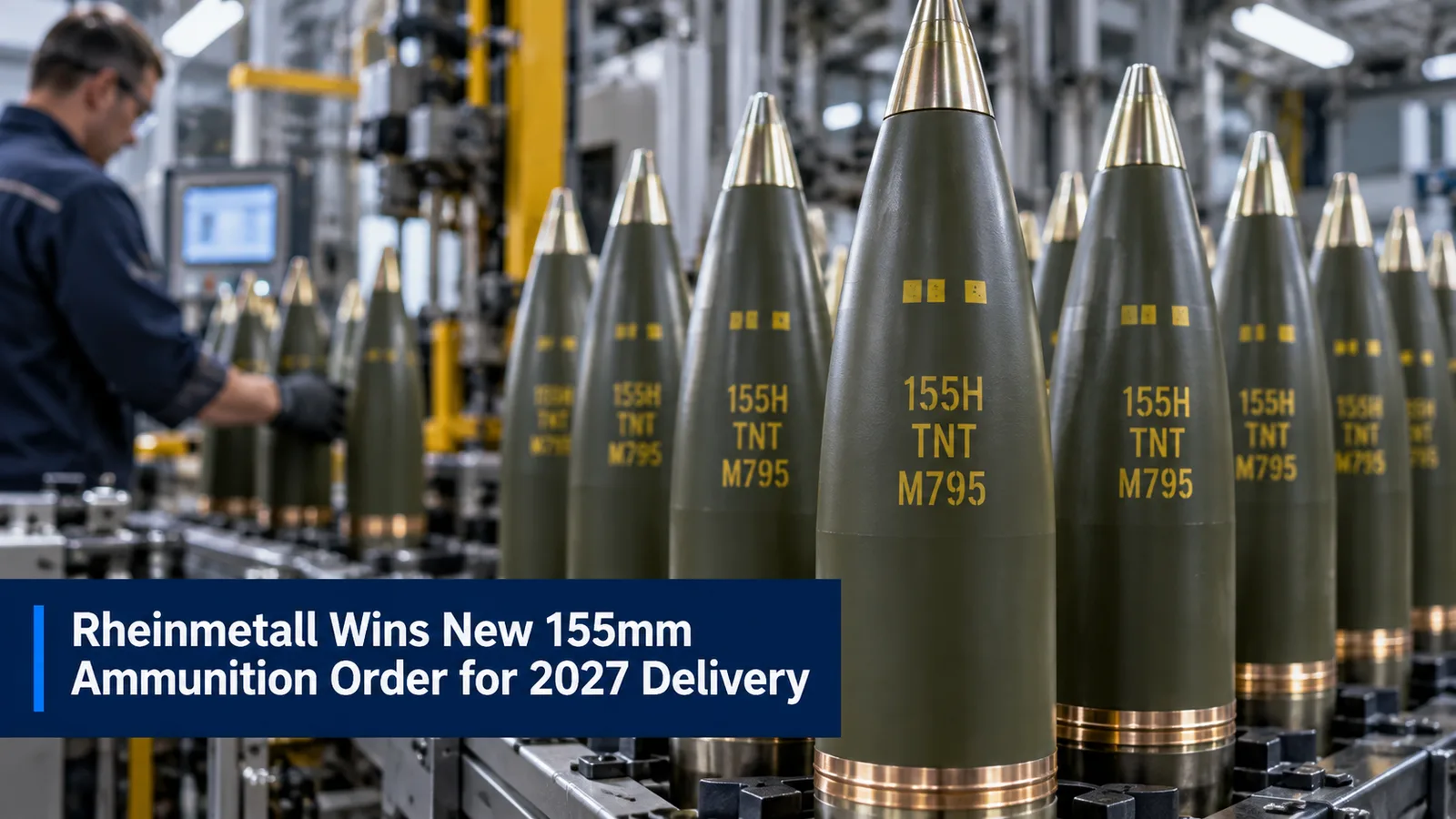
Rheinmetall has received a new order from an undisclosed international customer for a low five-figure quantity of 155 mm artillery projectiles, with a contract value in the low three-digit millions of euros. Production is already under way and the company expects to complete the order in 2027, adding another demand signal to a manufacturing network that Rheinmetall has been expanding since 2022.
Order adds a new block of 155 mm production
Rheinmetall disclosed the order on 14 September 2026. The company said the value was recognised in the third quarter of 2026 and placed the quantity only in the “low five-figure” range. It did not identify the customer in the release and did not publicly specify a particular projectile model, propellant package or delivery destination.
Those omissions matter editorially. The order should not be conflated with Rheinmetall’s separately announced Ukraine contracts, some of which identify projectile types, propellant charges and funding arrangements. The current award is a distinct international-customer order. Without a named end-user, it is not appropriate to infer that the ammunition is destined for Ukraine, a NATO country or any specific theatre.
Capacity expansion is the strategic backdrop
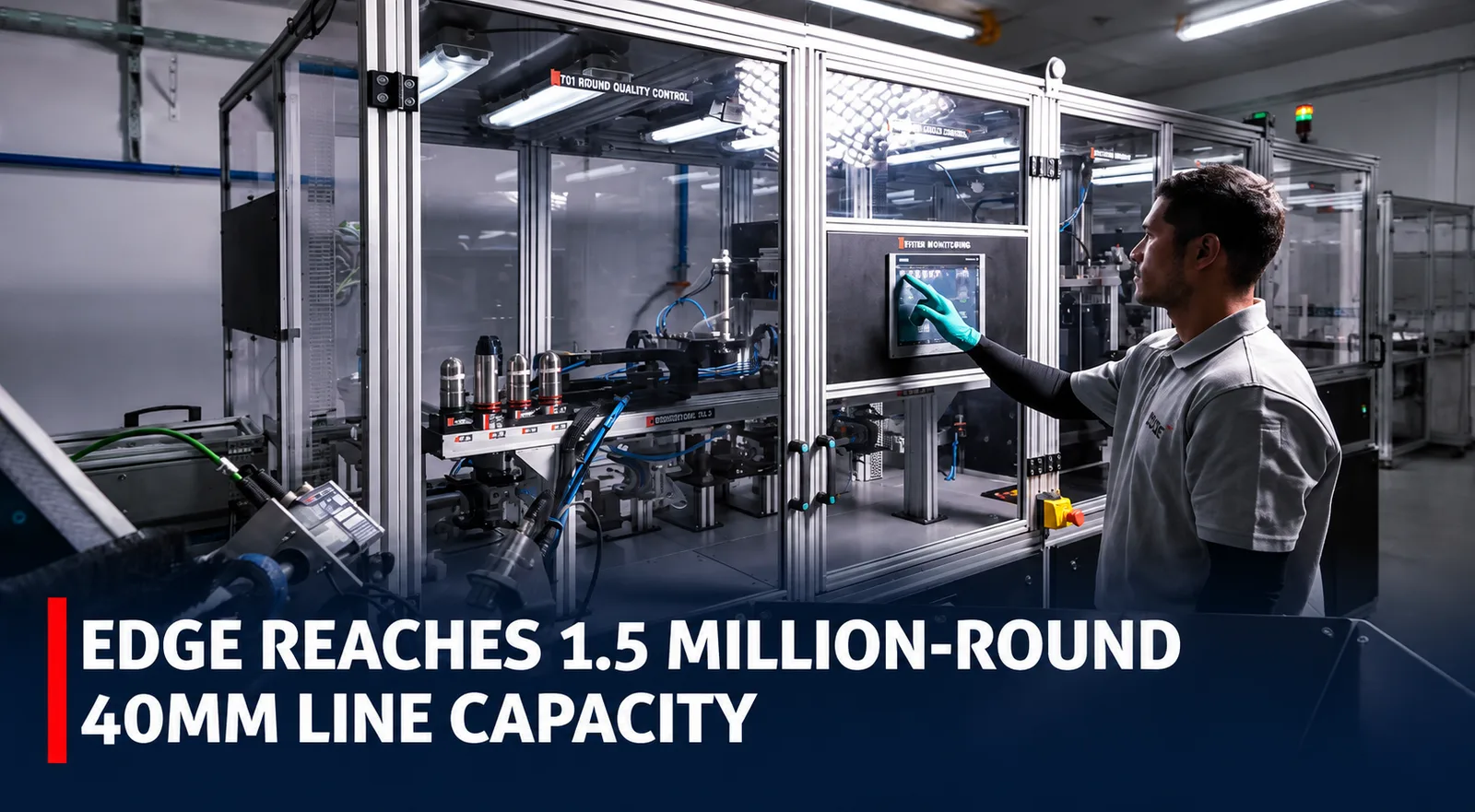
Rheinmetall has been expanding large-calibre ammunition capacity across several sites as European demand rises. In separate company releases, the group has set a target of producing around 1.5 million 155 mm artillery shells annually by 2030. The industrial programme includes investment in existing factories and new production infrastructure, giving the company room to execute parallel orders rather than treating each award as a one-off campaign.
The new contract is therefore important as a utilisation signal. A low five-figure order is modest compared with multiyear strategic stockpile requirements, but repeated orders keep production lines loaded, sustain supplier demand for explosives and metal components, and improve the economic basis for capacity investment. For procurement authorities, the key issue is not only nominal annual capacity but how much of that capacity is already committed to existing customers.
Order value should not be translated into a unit price
The disclosed value is in the low three-digit millions of euros, but it would be misleading to divide that figure by an assumed shell count and present the result as a projectile unit price. Defence ammunition contracts can include different projectile variants, packaging, documentation, qualification, logistics and other support elements, and Rheinmetall has not published the detailed line-item structure for this order.
Similarly, the company’s statement that production has begun does not identify which plant is executing the work. Rheinmetall’s broader 155 mm network spans multiple countries and product families. Until the company discloses more detail, the defensible conclusion is that another order has entered the production base and is scheduled for completion in 2027, not that a particular facility or projectile type has been confirmed.
Implications / Next
The next useful disclosures would be the customer identity, projectile configuration, production site and any option or follow-on quantity. Delivery completion in 2027 will be the principal execution milestone if no further details are released. For the wider European ammunition market, the contract reinforces a continuing pattern: governments are translating stockpile and readiness concerns into production orders, while suppliers are expanding capacity in anticipation of sustained demand rather than a short-term surge.
The disclosed order also provides a useful capacity signal without revealing the buyer. A low five-figure projectile quantity tied to a low three-digit-million-euro contract shows that ammunition replenishment remains a material industrial workload even when individual customers are not named. Because Rheinmetall said production has already started, this is more mature than a memorandum or framework ceiling: it is contracted production with a stated completion horizon. What remains unknown is how the order is distributed across Rheinmetall's expanding European manufacturing network and whether it includes ancillary charges beyond the projectiles themselves.