The Philippine Army has inducted FNSS KUNDUZ amphibious armoured combat earthmovers as part of a broader combat-engineering equipment handover to the 525th Combat Engineer Battalion. The milestone is a confirmed delivery and inventory event rather than a new contract announcement.
The Philippines milestone is a delivery and induction event
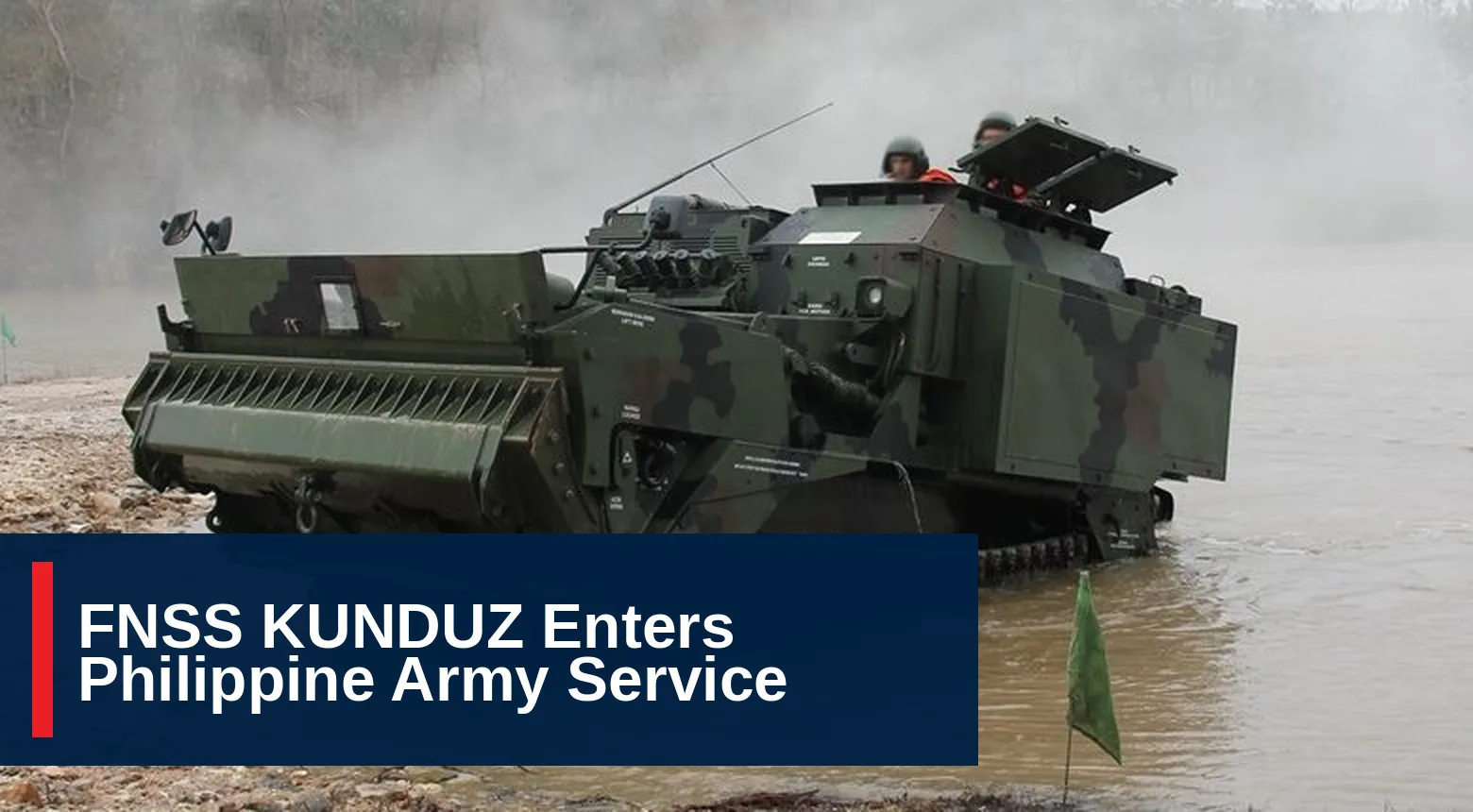
The Philippine Army has received FNSS KUNDUZ amphibious armoured combat earthmovers in a handover associated with the 525th Combat Engineer Battalion. Defence Turk reported that the equipment was presented at Fort Bonifacio in Taguig City alongside other combat-engineering systems. That makes the development materially different from an exhibition appearance or export offer: the verified milestone is that KUNDUZ vehicles have reached the customer and entered the Army’s equipment inventory.
The public reporting does not provide enough information to infer a larger fleet plan. The value of the procurement, the total programme ceiling, the number of additional vehicles that may be ordered and the detailed delivery schedule were not disclosed in the source material reviewed for this article. Defence Agenda therefore treats the event as a confirmed induction of the delivered vehicles, not as evidence of a wider follow-on order.
KUNDUZ is built for protected combat-engineering tasks
KUNDUZ is designed for battlefield engineering missions in which conventional construction equipment would be too exposed. FNSS positions the tracked platform for earthmoving, obstacle preparation and clearance, route support and amphibious engineering tasks while giving its crew armoured protection. The platform concept is particularly relevant for units that must support manoeuvre forces under fire or in areas where roads, bridges and crossing points are degraded.
Its amphibious character also fits the Philippine operating environment, where geography places a premium on mobility across water obstacles and littoral terrain. That does not mean every Philippine KUNDUZ mission will be amphibious; the more immediate value is that the Army gains a protected engineering vehicle able to work close to manoeuvre forces. The operational effect will depend on crew training, recovery support, spares and integration with the battalion’s wider engineer equipment.
The delivery broadens FNSS’s Southeast Asian reference base
FNSS already has a substantial industrial and programme presence in Southeast Asia, including cooperation with PT Pindad in Indonesia. The KUNDUZ induction adds a different class of capability to that regional track record. Instead of another troop carrier or combat vehicle, the Philippines is taking a specialist engineering platform whose value lies in enabling other units to move, breach, dig and recover under protection.
That matters commercially because specialist vehicles are often purchased in smaller numbers but can create long lifecycle relationships around training, spares, maintenance and future mission equipment. It also demonstrates that Turkish land-systems exports are not limited to headline combat platforms. Engineering, amphibious and support vehicles can form part of the same export ecosystem.
Implications / Next
The next items to watch are formal Philippine Army statements on unit allocation, training completion and any follow-on procurement. A future exercise in which KUNDUZ supports a Philippine combat-engineering scenario would provide more evidence about how the vehicle is being integrated operationally.
For FNSS, the induction is a useful customer reference, but it should not be extrapolated into undisclosed quantities or contract values. The confirmed story is straightforward: KUNDUZ has moved from export sale to customer inventory in the Philippines. Defence Agenda will continue to separate public demonstration evidence from procurement and fielding claims. Future reporting should be updated only when the responsible authority, end user or manufacturer discloses a concrete milestone with a date, quantity or contractual status that can be independently checked. This avoids turning marketing language or programme intent into an unsupported statement about operational capability.
For the Philippine Army, the practical measure of success will be whether the new engineering vehicles can be sustained with trained crews, recovery support, spare parts and mission-specific attachments over the full lifecycle. Combat-engineering fleets often accumulate hours in demanding low-speed work rather than long road movements, creating different maintenance loads from troop carriers. The induction also gives FNSS an opportunity to demonstrate support performance after delivery, which can influence future Philippine procurement decisions. Any follow-on sale, however, would require a separate announcement. Defence Agenda will therefore track unit training, exercise use and future contracting as distinct milestones rather than treating the present ceremony as evidence of a larger undisclosed programme.