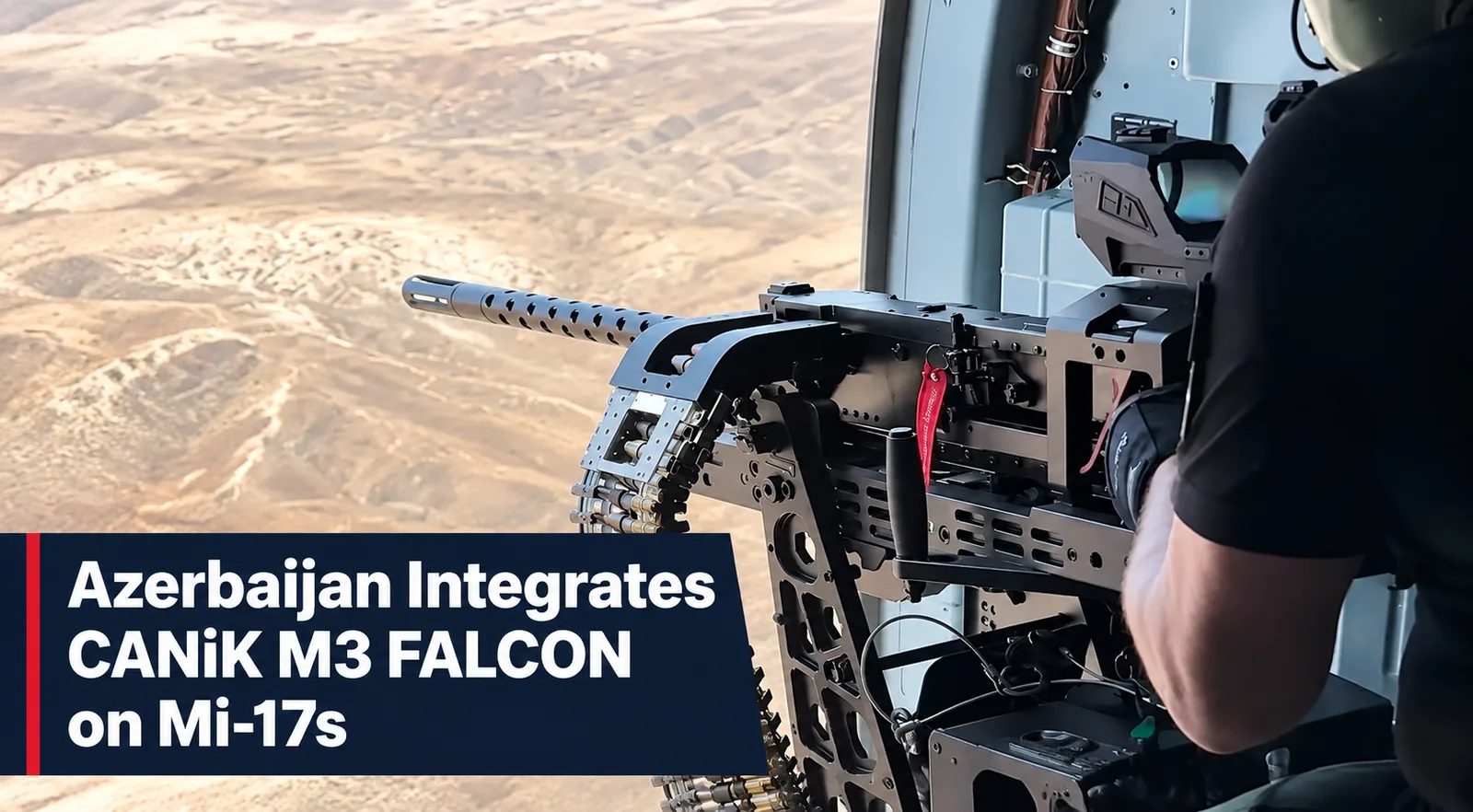
CANiK has confirmed the integration of its M3 FALCON heavy machine gun on Azerbaijani Mi-17 helicopters, adding a rotary-wing reference to the Turkish weapon family’s export portfolio. The verified milestone is platform integration; fleet-wide quantity and operational deployment details were not publicly disclosed.
The verified milestone is integration on an Azerbaijani rotary-wing platform
CANiK has confirmed that its M3 FALCON heavy machine gun has been successfully integrated on Azerbaijani Mi-17 helicopters. The company referenced the work in its current corporate reporting, and Anadolu Agency separately reported the Turkish weapon integration on Azerbaijani helicopters. The development moves the M3 FALCON export story beyond a stand-alone weapon sale into aircraft-level integration.
The public material does not identify how many helicopters have been modified, whether the configuration has been accepted across a wider fleet or the precise operational unit receiving the system. Those details should therefore remain undisclosed rather than being inferred. The defensible statement is that an M3 FALCON integration on Mi-17 helicopters in Azerbaijan has been completed successfully.
Airborne integration is a systems-engineering task, not simply a mount
Installing a heavy machine gun on a helicopter creates engineering requirements that extend beyond attaching a weapon. The integration must account for structural loads, recoil, vibration, fields of fire, ammunition feed, crew ergonomics and the effect of the installation on aircraft handling and safety. Qualification also needs to address how the weapon is employed from the specific aircraft and mounting position.
CANiK’s corporate material presents the Azerbaijani work as evidence of its wider aircraft-integration experience. That is commercially important because customers often want a complete solution rather than a gun delivered as a separate item. The industrial value can therefore include the weapon, mount, integration engineering, ammunition, training and lifecycle support.
Azerbaijan remains a significant reference market for Turkish defence products
Türkiye and Azerbaijan maintain unusually close defence-industrial and military ties, and Turkish systems are already visible across Azerbaijani land, air and unmanned capabilities. A helicopter integration gives CANiK another reference in a market where interoperability, training relationships and established government-to-government links can reduce some barriers to introducing new systems.
The integration also illustrates a wider Turkish export trend. As the industry matures, suppliers are increasingly selling subsystems and mission equipment into foreign platforms rather than exporting only complete Turkish-designed vehicles. That widens the addressable market and allows companies to build programme roles even where the customer retains a legacy aircraft or vehicle fleet.
Implications / Next
The next useful disclosures would include the number of Mi-17s modified, formal acceptance by the Azerbaijani user, the configuration of the mount and ammunition package, and whether the integration will be offered as an export solution to other Mi-8/17 operators. None of those points should be assumed from the current announcement.
For now, the story is a confirmed integration milestone with export significance. It demonstrates CANiK’s ability to move up the value chain from weapon manufacturing into platform-level integration while adding an operationally relevant rotary-wing reference. Defence Agenda will continue to separate public demonstration evidence from procurement and fielding claims. Future reporting should be updated only when the responsible authority, end user or manufacturer discloses a concrete milestone with a date, quantity or contractual status that can be independently checked. This avoids turning marketing language or programme intent into an unsupported statement about operational capability.
The Azerbaijani integration also creates a potentially reusable engineering reference for the large international Mi-8/17 family. Many operators continue to use these helicopters for transport, assault and utility missions, and some seek incremental upgrades rather than immediate fleet replacement. A proven Turkish weapon-and-mount package could therefore have export relevance beyond Azerbaijan if qualification data, support arrangements and customer approvals can be transferred. That remains a commercial possibility rather than a confirmed follow-on market. The current evidence supports only the Azerbaijani integration. Any claim about additional customers, quantities or operational deployments would require separate primary-source confirmation.