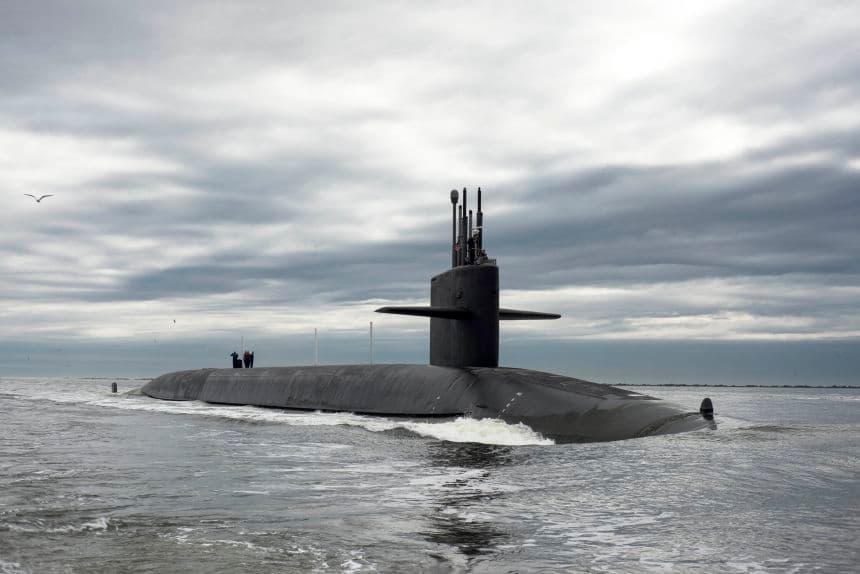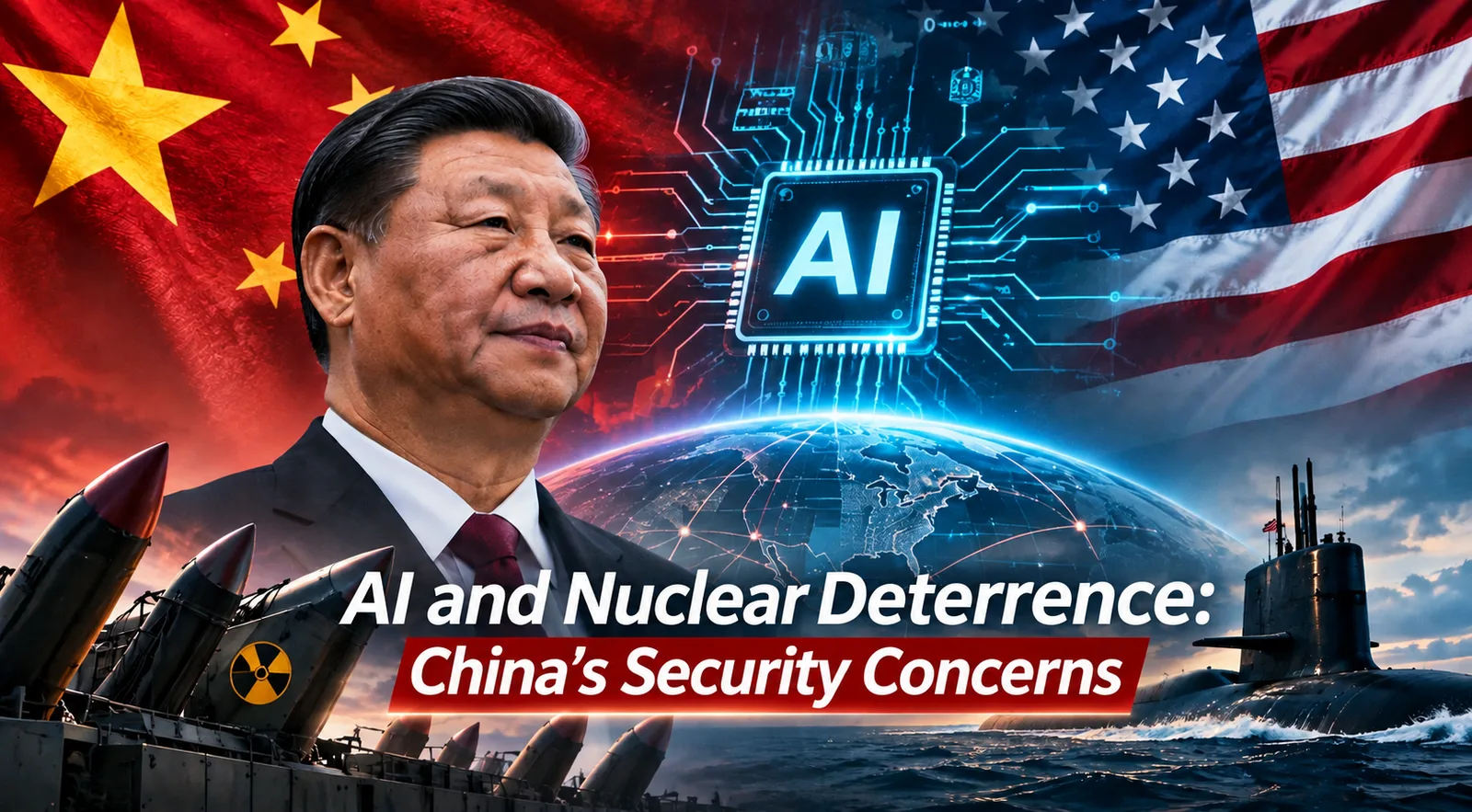
The relationship between AI and nuclear deterrence has drawn renewed attention following reporting on Chinese researchers’ concerns about US artificial intelligence capabilities on 23 November 2026. Their assessments, described in subsequent coverage of a New York Times report, raise questions about the stability of nuclear deterrence in an era of increasingly automated information processing. The reporting followed the 19 November summit in Shenzhen, where China, the United States and Russia agreed to pursue dialogue on nuclear risk reduction.
AI and nuclear deterrence: research concerns and strategic uncertainty
Reporting by The Next Web and Quartz attributes the concerns to a New York Times review of Chinese military and civilian research. The reported concern is that advances in US artificial intelligence could undermine confidence in the survivability of China's deterrent. The original New York Times article was not directly accessible for this report. The underlying studies have not been independently examined, and the secondary articles rely on the same investigation rather than separate confirmation of its findings.
Research assessments of possible future capabilities should not be confused with official policy or demonstrated military performance. A country's ability to develop advanced AI tools does not establish that those tools are reliable enough for the exceptionally demanding environment of nuclear decision-making. Nor does public discussion of the vulnerability of nuclear forces prove that an adversary can neutralise them. The distinction matters because perceptions of technological advantage can influence strategic behaviour even where the underlying capabilities remain uncertain.
Nuclear deterrence depends partly on confidence that an adversary cannot eliminate the possibility of retaliation. Uncertainty about that confidence can aggravate tensions. From a strategic stability perspective, the potential problem is not simply whether AI makes analysis faster, but whether the parties interpret that change in the same way. A capability perceived as defensive by one government may appear threatening to another, particularly during a crisis in which reliable information is scarce.
The wider nuclear environment adds context. In its 8 June 2026 yearbook announcement, the Stockholm International Peace Research Institute (SIPRI) estimated China's nuclear arsenal at around 620 warheads. This is an external estimate, not an official Chinese inventory. It also reflects a different question from the reliability of AI-supported decisions: the number of warheads alone cannot establish how secure a deterrent is or how governments would behave in a crisis.
Defence Agenda's earlier coverage of AI in nuclear command and control examines the relationship between automation, human judgement and strategic risk. The publication's review of Indo-Pacific extended deterrence provides broader regional context. These issues connect the policy debate to the requirements of responsible defence governance rather than to claims of a demonstrated technological breakthrough.
Human control, diplomatic commitments and next steps
The diplomatic context provides a separate, more directly documented development. The White House declaration of 19 November 2026 records the three countries’ agreement to open discussions on nuclear risk reduction and non-proliferation. The Chinese Foreign Ministry published the same declaration. These are two official versions of the same joint statement, not independent agreements.
These statements establish a political commitment to dialogue, not a binding treaty governing the role of AI in nuclear systems. No common implementation schedule, verification arrangement or technical standard was established by the cited public declaration. Consequently, the next substantive evidence of progress would be a published meeting agenda, jointly agreed risk-reduction measures or a formal instrument setting out responsibilities and procedures.
The issue of human authority predates the Shenzhen summit. According to the Chinese Foreign Ministry’s account of the 16 November 2024 Lima meeting, the US and Chinese presidents agreed that decisions on nuclear weapons use should remain under human control. The 2026 SIPRI study of Chinese, Indian and US nuclear postures also documents scholarly concerns about accountability and escalation. Public commitments are important evidence of stated policy, but do not by themselves establish how safeguards operate in practice.
For defence authorities and industrial programme managers, the issue illustrates why assurance, accountability and governance should be treated as core requirements rather than secondary considerations in AI adoption. Potential benefits in administrative analysis and information management do not remove the need for independent evaluation, meaningful human oversight and clear institutional accountability. Claims of improved speed should be considered alongside reliability, uncertainty and the consequences of error. The appropriate level of assurance depends on the sensitivity of the application.
Implications / Next. The November reporting highlights a strategic concern, while the Shenzhen declaration provides an identifiable diplomatic starting point. Whether the dialogue leads to concrete commitments remains uncertain. Further access to the original research and official statements from all participating governments would allow a more complete assessment. Until then, the public evidence supports a discussion of risk and governance, rather than a conclusion that any country has acquired a decisive AI-enabled nuclear advantage.
Further Reading
- Chinese Foreign Ministry — 2024 Lima human-control commitment
- Chinese Foreign Ministry — trilateral peace declaration
- White House — Shenzhen joint declaration
- SIPRI — 2026 nuclear inventory assessment
- The Next Web — reporting on Chinese AI research concerns
- Defence Agenda — AI in Nuclear Command and Control
- Defence Agenda — Indo-Pacific Extended Deterrence
- Defence Agenda — China’s Nuclear Arsenal Expansion