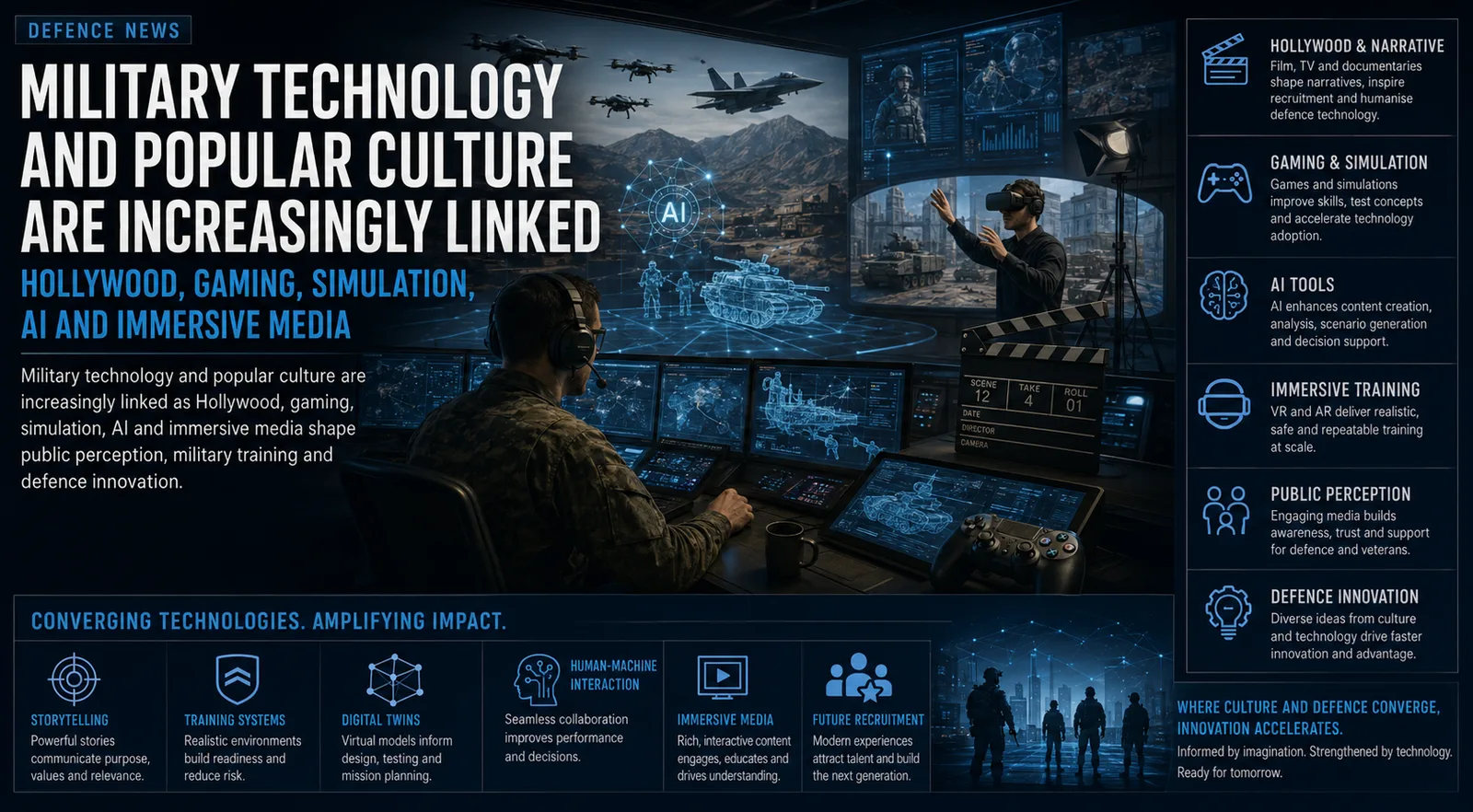
Military technology and popular culture are increasingly connected as Hollywood, gaming, simulation, artificial intelligence and immersive media shape how defence organisations imagine, test and communicate future capabilities.
A SAHA Blog analysis argues that the relationship between Hollywood and defence technology is not one-directional. Popular culture imagines future systems, while defence technology gives cinema and games new visual, narrative and technical material.
This matters because future defence concepts often begin as imagination before becoming engineering. Gesture interfaces, virtual command rooms, autonomous robots, wearable systems, immersive training and AI-enabled decision tools all appeared in popular culture before they became serious technology programmes.
However, the real value is not prediction. Popular culture rarely forecasts the future with precision. Its value is that it creates visual language, public familiarity and design imagination around technologies that may later become feasible.
Military Technology and Popular Culture Create Defence Foresight
The SAHA Blog article begins with technological foresight. It argues that foresight normally needs existing data, reference points and technical evidence. Yet some future technologies are too new to be predicted only through current systems.
This is where science fiction becomes useful. It allows engineers, commanders and the public to imagine systems before they exist. A fictional interface, autonomous vehicle or command environment can become a design prompt for future research.
In defence, this kind of imagination can influence capability thinking. It can help planners ask different questions: What if soldiers trained inside realistic virtual cities? What if commanders could control data through gestures? What if autonomous systems fought as teams? What if artificial intelligence could support wargaming?
Hollywood Helps Build Public Familiarity With Future Systems
Public acceptance is one of the most important themes in the SAHA Blog article. Technologies that appear strange in real life may become familiar after they appear repeatedly in cinema, television and games.
This does not mean Hollywood creates public approval automatically. Rather, it creates a shared visual vocabulary. Audiences learn what a drone swarm, command screen, robotic soldier, smart helmet or holographic interface might look like before they encounter similar ideas in news or procurement debates.
For defence organisations, that familiarity can matter. Advanced systems are not only bought by militaries. They are also debated by politicians, taxpayers, media and civil society. Popular culture can shape the mental frame through which these systems are understood.
Gesture Interfaces Show the Imagination-to-Engineering Cycle
Gesture-based computing is a strong example of how popular culture can influence technology imagination. After Minority Report, the idea of controlling digital information through gestures became one of the most recognisable images of future interfaces.
MIT News later described how the film helped capture public imagination around gesture-based computer interfaces. In this case, the film did not invent every underlying technical idea. However, it helped turn an interface concept into a cultural reference point.
For defence, this is relevant because future command systems will depend on human-machine interfaces. Commanders may need to manipulate maps, sensor feeds, AI recommendations, drone routes and battlefield data under pressure. Interface design is therefore not cosmetic. It is operational.
The U.S. Army Built a Hollywood–Gaming–Military Bridge
The clearest institutional example is the USC Institute for Creative Technologies. The institute says it was established in 1999 and works on military training through advanced simulation, AI, interactive digital storytelling, graphics, geospatial sciences, mixed reality, learning sciences and virtual humans.
Its importance lies in the combination. The institute connects military-domain expertise with Hollywood-style creativity, academic research and game-industry methods. That blend is exactly where popular culture becomes a defence innovation tool.
The objective is practical. Defence organisations need immersive environments that can prepare personnel for complex missions, cultural interaction, decision stress, urban operations and human performance challenges. Entertainment-industry techniques can make those environments more realistic and engaging.
Simulation Turns Entertainment Methods Into Training Power
Simulation is where the link between popular culture and defence becomes most operational. The entertainment industry builds convincing virtual worlds. Militaries need realistic training environments that can be repeated, measured and adapted.
The U.S. Army’s Synthetic Training Environment shows this direction. The Army describes it as a way to use digital simulation and virtual exercises to improve readiness. One World Terrain provides realistic 3D representations of operational environments for training.
This matters because modern missions are hard to rehearse with live training alone. Urban operations, cyber incidents, civilian interaction, drone threats and multi-domain coordination require flexible simulation environments that can change quickly.
Gaming Technology Is Becoming a Defence Development Platform
Gaming is not only a recruitment or morale tool. It is increasingly a development environment for training, experimentation and artificial intelligence.
Games and simulators allow defence users to test scenarios repeatedly, change variables quickly and observe human decisions under pressure. They can support command training, tactical experimentation, logistics planning, urban operations and human-machine teaming.
DARPA’s Gamebreaker programme reflects this logic. DARPA says the programme addresses AI and data analytics research gaps in wargaming and simulation by exploring game balance and imbalance. This shows how game environments can become laboratories for military thinking.
AI Wargaming Connects Strategy and Software
Artificial intelligence is changing military wargaming. Traditional wargames rely on human judgement, rules, adjudication and scenario design. AI can add pattern recognition, rapid iteration, automated opponents, decision support and post-game analysis.
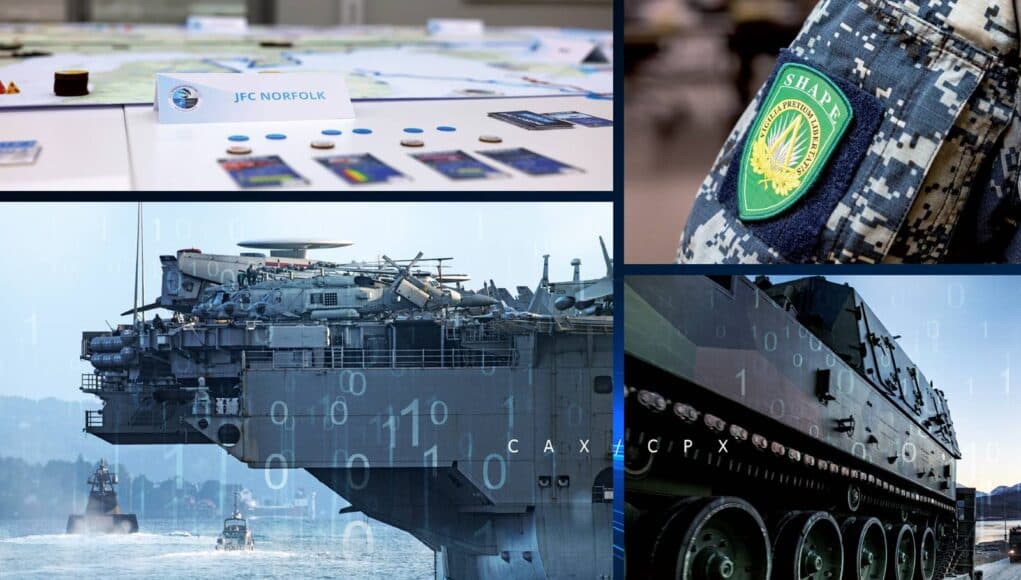
NATO’s Joint Warfare Centre held its first AI-enabled wargame experiment, Frontlines of Rasputitsa, to examine the viability of human-AI teaming in military wargaming. This is an important signal. AI is becoming part of how alliances train planners and test operational assumptions.
The popular-culture link remains relevant because modern strategy games have already familiarised millions of users with real-time resource allocation, imperfect information, fog of war, adversary adaptation and multi-unit command. Defence wargaming can borrow some interface lessons while applying far stricter military logic.
Hollywood Also Shapes Defence Communication
The SAHA Blog article highlights propaganda, marketing and public reaction. These themes are sensitive, but they are important. Defence capability is always communicated through images, stories and symbols.
The U.S. Department of Defense says it has a long-standing relationship with Hollywood and has coordinated with film productions through dedicated public-affairs channels. This relationship is partly about accuracy, access and public understanding. It is also about the way military institutions appear in public culture.
For defence companies, the lesson is clear. Advanced technologies need understandable narratives. A sensor, AI tool, drone or training simulator may be technically impressive, but decision-makers and the public need to understand what problem it solves.
The Risk Is Confusing Fiction With Capability
The main risk is exaggeration. Popular culture can inspire defence innovation, but it can also distort expectations. A film can make autonomous robots, laser weapons, exoskeletons or holographic command rooms look easier than they are.
Real defence systems face hard constraints: power, weight, reliability, cyber security, electronic warfare, safety, certification, cost, training and sustainment. A concept that looks effortless on screen may be extremely difficult in the field.
This is why defence foresight must separate imagination from engineering. Popular culture can provide the “what if.” Defence science must answer the “how,” “at what cost,” and “under what conditions.”
Ethics Become More Important as Fiction Becomes Real
Popular culture has also shaped public anxiety around military AI, killer robots, surveillance systems and autonomous weapons. These concerns cannot be dismissed. They influence public debate, regulation and procurement legitimacy.
As fictional systems move closer to technical reality, defence organisations must address ethics early. Autonomous systems, AI wargaming, immersive training and influence operations all require governance, auditability, human oversight and clear legal boundaries.
The defence sector should therefore treat popular culture as an early warning system. Films and games often reveal what societies fear before policymakers formalise those concerns.
Türkiye Can Use Popular Culture for Defence Foresight
Türkiye’s defence ecosystem can use this relationship more deliberately. The country already has strong capabilities in UAVs, C4ISR, simulation, software, electronics, naval systems, missiles and space-related technologies.
The next step is to connect defence engineering with creative industries, game studios, universities, simulation companies and digital storytellers. This can support training, public communication, concept design and talent attraction.
Türkiye does not need to copy Hollywood. It can build its own defence-innovation culture by combining engineering depth with visual storytelling, serious games, scenario design, immersive training and national technology narratives.
Defence Industry Needs Better Concept Communication
One practical lesson for defence industry is concept communication. Many advanced systems fail to gain attention because their value is not explained clearly. Popular culture succeeds because it turns complexity into memorable images and stories.
Defence companies can learn from this without becoming superficial. A good concept video, simulation, digital twin or interactive demonstration can help customers understand operational value faster than a static technical sheet.
This is especially important for emerging technologies such as AI decision support, autonomous teaming, electronic warfare, space-domain awareness and network-centric systems. These capabilities are often invisible unless they are visualised well.
The Future Is Serious Imagination
The future relationship between military technology and popular culture should be based on serious imagination. Defence institutions need imagination to think beyond current platforms. They also need engineering discipline to avoid fantasy.
The best model combines creative foresight, simulation, experimentation, ethics, user testing and operational feedback. Popular culture can open the question. Defence research must test the answer.
This is where Hollywood, gaming and military technology become strategically relevant. They help defence organisations visualise future problems before those problems arrive on the battlefield.
Conclusion
Military technology and popular culture are no longer separate worlds. Hollywood, gaming, simulation, AI and immersive media influence how societies imagine future war, how militaries train, how companies communicate and how engineers think about new interfaces and systems.
The relationship can create value when it supports foresight, training, public understanding and innovation. It becomes dangerous when fiction is mistaken for real capability or when communication turns into exaggeration.
The defence sector should therefore use popular culture carefully. It should borrow its imagination, visual power and scenario thinking, while keeping technology grounded in testing, ethics, doctrine and operational reality.
For further Defence Agenda coverage, read our defence technology, artificial intelligence and C4ISR sections. Related analysis includes future warfare technologies and military strategy, digital troops and battlefield command and drone swarm warfare and unmanned combat.
Further Reading
- SAHA Blog: Hollywood’dan Gerçeğe — Askeri Teknolojiler Popüler Kültüre Nasıl İlham Veriyor
- USC Institute for Creative Technologies: About us
- U.S. Department of Defense: How and why DoD works with Hollywood
- U.S. Army: Synthetic Training Environment
- DARPA: Gamebreaker programme
- NATO Joint Warfare Centre: AI-enabled wargaming
- MIT News: Gesture-based computing and Minority Report-style interfaces