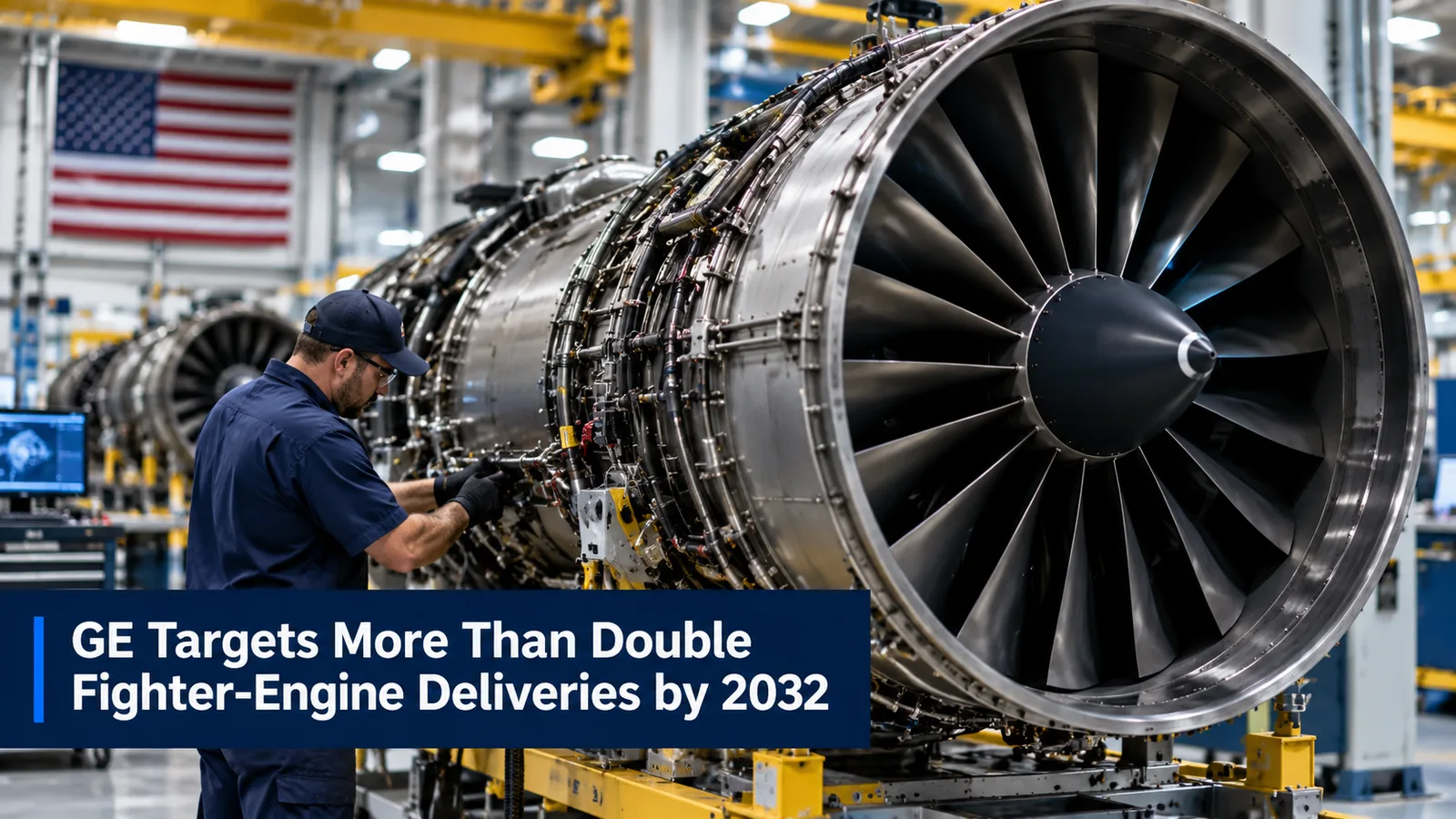
GE Aerospace plans to more than double deliveries of its F110 and F404/F414 fighter-engine families by 2032 as combat-aircraft demand rises across U.S. and international programmes. The target puts manufacturing throughput, supplier quality and component lead times at the centre of fighter recapitalisation, because an aircraft production line cannot accelerate faster than its propulsion supply chain can support.
GE is planning a broad fighter-engine production ramp
Aviation Week reports that GE intends to more than double combined deliveries of the F110 and F404/F414 families by 2032. The company has already been raising output: its broader engine-delivery rate increased by about 30% from 2024 to 2025, with further growth targeted in 2026. The U.S. Air Force has separately identified a future requirement for F110 production that could peak above 180 engines per year in the mid-2030s.
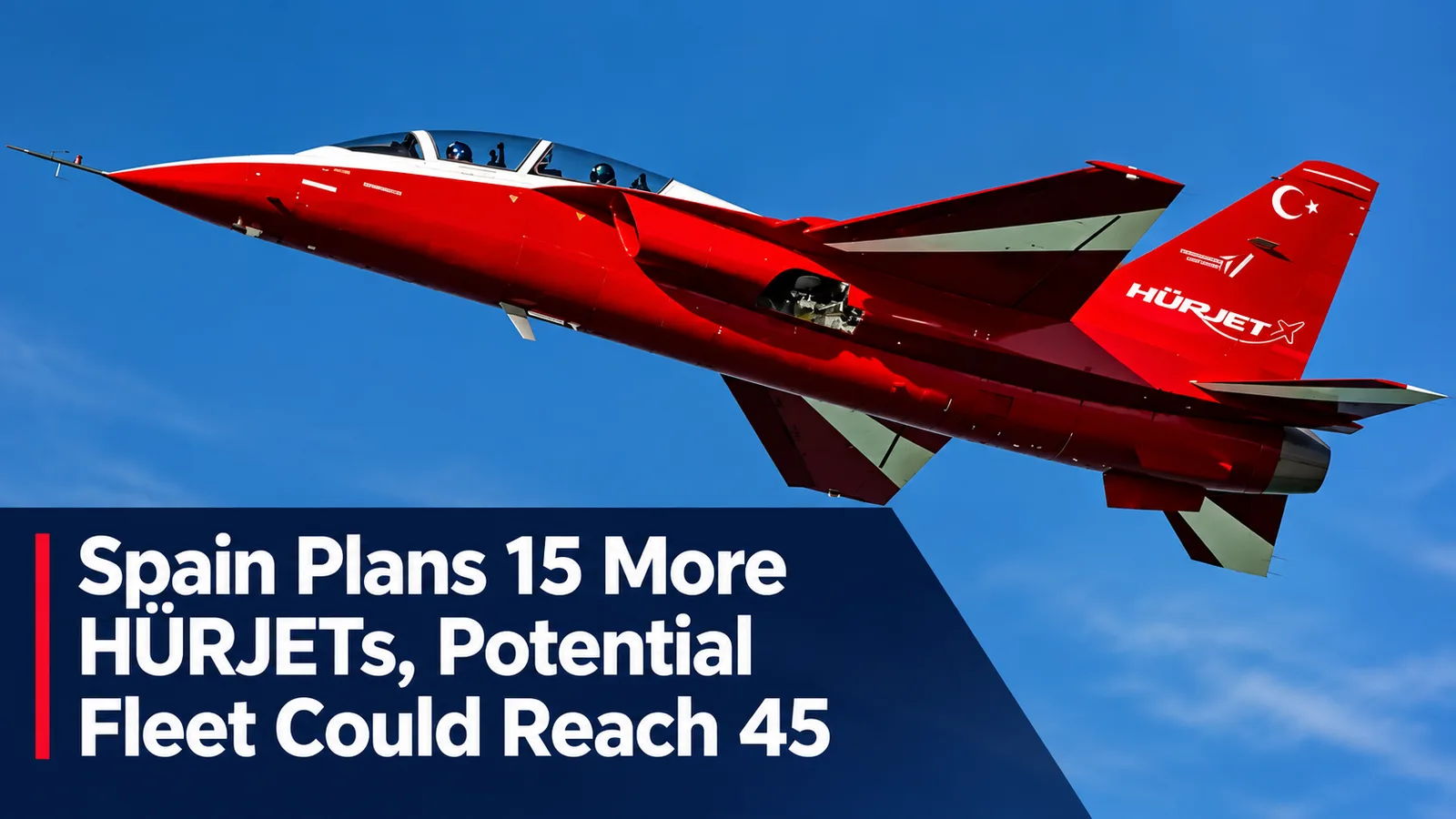
The demand base spans several aircraft. F110 engines support F-15 and F-16 variants and are part of Türkiye’s KAAN development pathway, while F404/F414 derivatives power or support programmes including T-7A, T-50, HÜRJET, Gripen, KF-21 and Tejas Mk2. Not every programme reaches peak production at the same time, but together they create a sustained requirement for hot-section components, castings, forgings and final assembly capacity.
Factory investment is aimed at throughput and lead-time reduction
GE has been investing hundreds of millions of dollars in its production system and has highlighted targeted spending at facilities such as Lynn, Massachusetts. The company’s “Flight Deck” operating approach is being used to reduce defects, shorten component lead times and improve flow through constrained processes. Aviation Week cited examples including major reductions in resolution time for material defects and shorter lead times for selected F110 and F404 components.
Those metrics are strategically relevant because fighter-engine supply chains contain specialised processes that cannot be expanded instantly. Turbine blades, disks, shafts, castings and advanced coatings require qualified tooling, materials and suppliers. A nominal assembly-line capacity increase is useful only if upstream suppliers can deliver conforming parts at the same pace.
F110, F404 and F414 demand comes from different programme cycles
The F110 has been in continuous production since the 1980s, but renewed F-15 and F-16 demand has given the engine family another production cycle. GE says the type has accumulated millions of flight hours and has evolved substantially over four decades. The F404/F414 line, meanwhile, has to balance mature programmes with newer growth customers as legacy F/A-18 production winds down and other fighter and trainer lines expand.
GE expects the F414 to become a larger share of combined F404/F414 output by 2032. That mix shift matters for suppliers because different engine variants have different component requirements and qualification baselines. The company has not publicly disclosed a complete 2032 unit-by-unit production plan, so percentage growth should not be converted into invented annual totals for each engine family.
Implications / Next
The main execution test will be whether GE can sustain higher delivery rates while improving quality and avoiding downstream aircraft delays. Supplier expansion, the planned acquisition of Consolidated Precision Products and additional factory investment could strengthen access to mission-critical castings, but those benefits will arrive over time and remain subject to transaction and integration timelines. For fighter programmes, the next several years will show whether propulsion industrial capacity can keep pace with orders that increasingly assume simultaneous U.S. and export production.