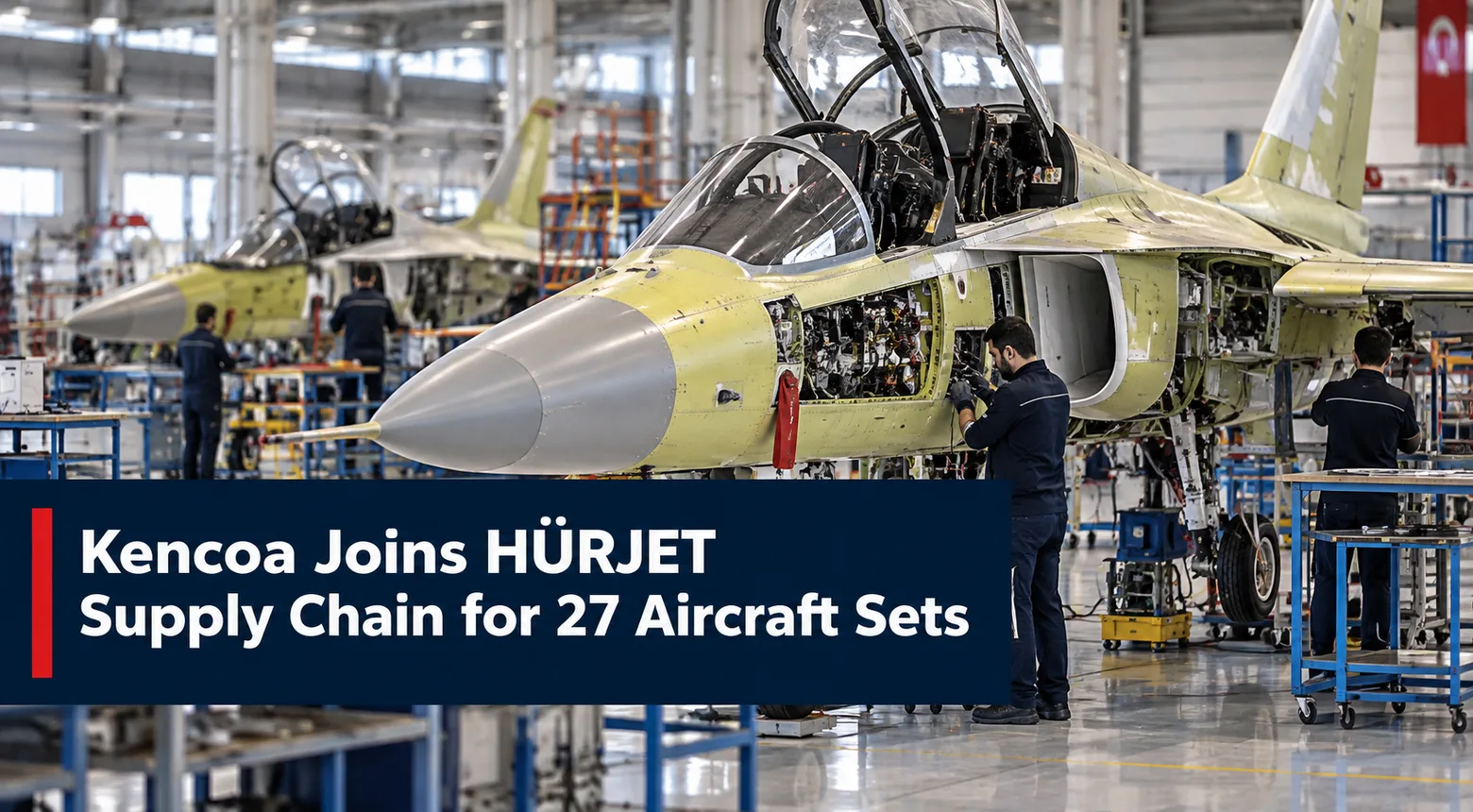
South Korea’s Kencoa Aerospace has joined the HÜRJET production supply chain under a contract with Turkish Aerospace covering 34 types of precision-machined structural parts for 27 aircraft sets. Kencoa says deliveries will run from 2026 through 2028, while the financial value of the agreement has not been disclosed.
The contract defines both the part count and aircraft-set quantity
Kencoa announced on 21 September 2026 that it had signed a structural-component supply agreement for the HÜRJET Training Jet Project. Under the arrangement, the company will supply 34 different types of machined aircraft structural components corresponding to 27 HÜRJET aircraft sets.
The delivery period is also defined: supply is scheduled to begin in 2026 and continue through 2028. Reporting based on Kencoa’s announcement says the South Korean company will provide the full set of the contracted 34 machined-part types to Turkish Aerospace. No contract value has been released.
This is a production-supply milestone, not an aircraft order
The number “27” requires careful handling. It refers to the quantity of component sets Kencoa is contracted to supply, not to a newly disclosed procurement of 27 additional aircraft by the Turkish Air Force or another customer. Aircraft-set quantities can support an existing production plan, spares or phased manufacturing requirements without representing a separate end-user order.
For that reason, the agreement should be described as a supply-chain contract tied to 27 HÜRJET sets. Any attempt to convert the component quantity into a new aircraft procurement would go beyond the public evidence.
Kencoa brings precision machining into HÜRJET’s international supplier base
Kencoa says the parts are precision-machined structural components used in HÜRJET airframe production, an area where manufacturing tolerances, repeatability and quality assurance are central. The company presented the award as evidence of its aerospace machining and quality-management capability and said it intends to use the programme as a basis for further business with Turkish and other international aircraft manufacturers.
The company’s chief executive, Lee Min-gyu, said in the Korean announcement that participation in HÜRJET provides an opportunity to expand Kencoa’s accumulated structural-part precision-machining and quality-control capability in the global aerospace and defence market. The commercial implication is therefore wider than the immediate part package: Kencoa is positioning the HÜRJET work as a reference programme for future international business.
HÜRJET is moving deeper into serial-production industrialisation
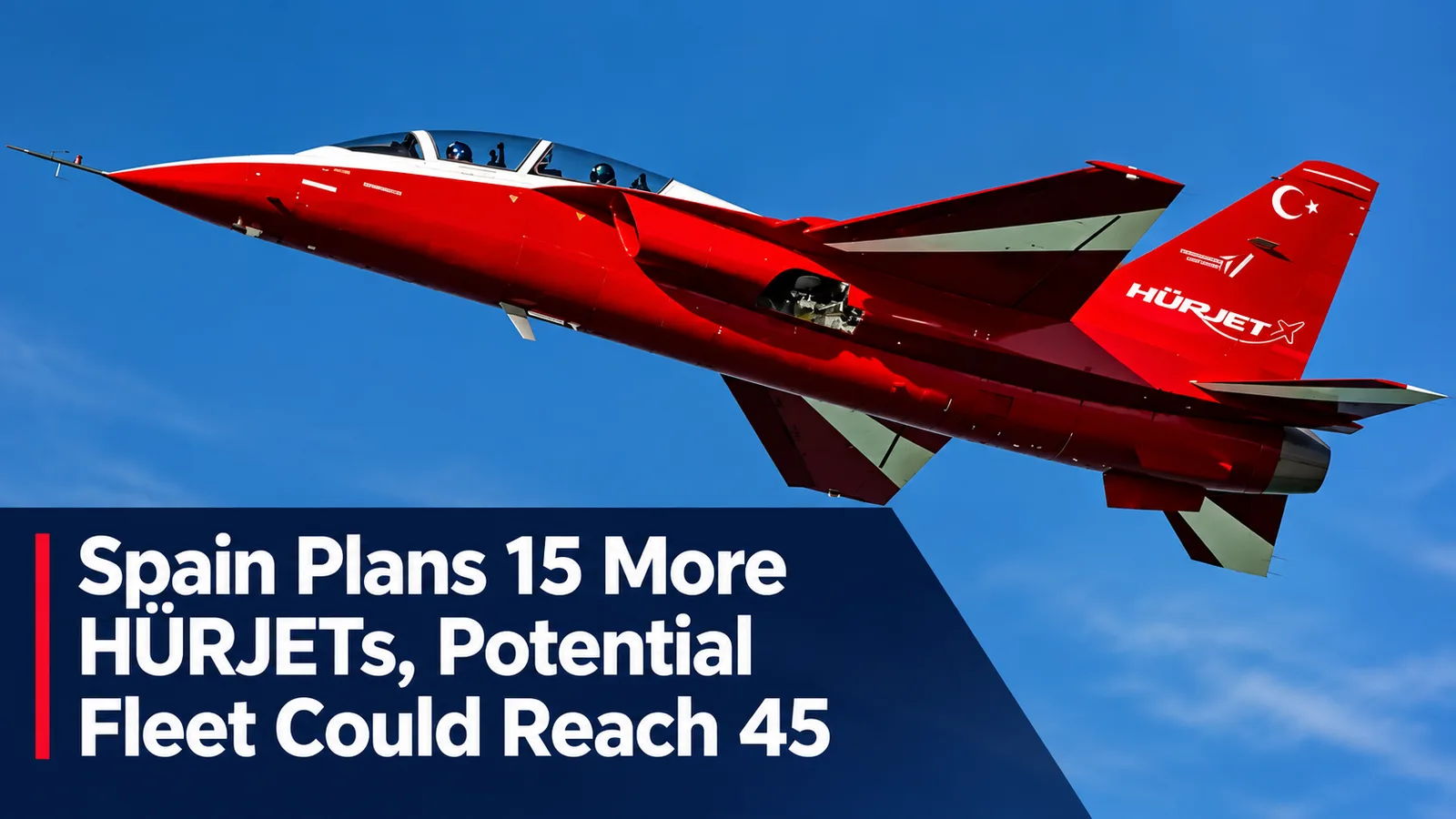
HÜRJET is Turkish Aerospace’s supersonic advanced trainer programme, intended to support next-generation training and light-attack requirements. As a programme moves from prototype and flight-test activity into repeat production, the supplier network becomes a critical part of delivery performance. Structural machining is one of the industrial work packages that must be stabilised if assembly tempo is to increase.
Bringing a South Korean supplier into that chain also adds an international dimension to HÜRJET production. It can diversify capacity and deepen industrial links between Türkiye and South Korea, although the contract itself is commercial and does not amount to a government-to-government production partnership.
Delivery discipline will be a programme-level indicator
The 2026–2028 schedule makes supplier performance measurable over the next two years. Structural components have to arrive in the right configuration and sequence to avoid disrupting downstream assembly, and qualification problems can propagate quickly when an aircraft programme is increasing build tempo. Kencoa’s role therefore matters beyond the monetary size of the undisclosed contract. Stable delivery of all 34 part types across 27 sets would demonstrate that Turkish Aerospace can absorb an international machining supplier into the production system without creating a new bottleneck. Any later extension beyond the initial package would provide evidence that the relationship has moved from an introductory work share into a longer-term production role.
Implications / Next
The first milestone to watch is the start of component deliveries in 2026 and whether Kencoa or Turkish Aerospace reports successful qualification and acceptance of the parts. A second will be continuity through the 2028 delivery window and any follow-on award beyond the initial 27 aircraft sets.
The contract value remains undisclosed, and there is no public evidence that Kencoa’s award changes HÜRJET’s customer order book. The correct reading is therefore straightforward: HÜRJET’s production chain has gained a South Korean structural-part supplier under a defined 34-part, 27-aircraft-set package running from 2026 to 2028.