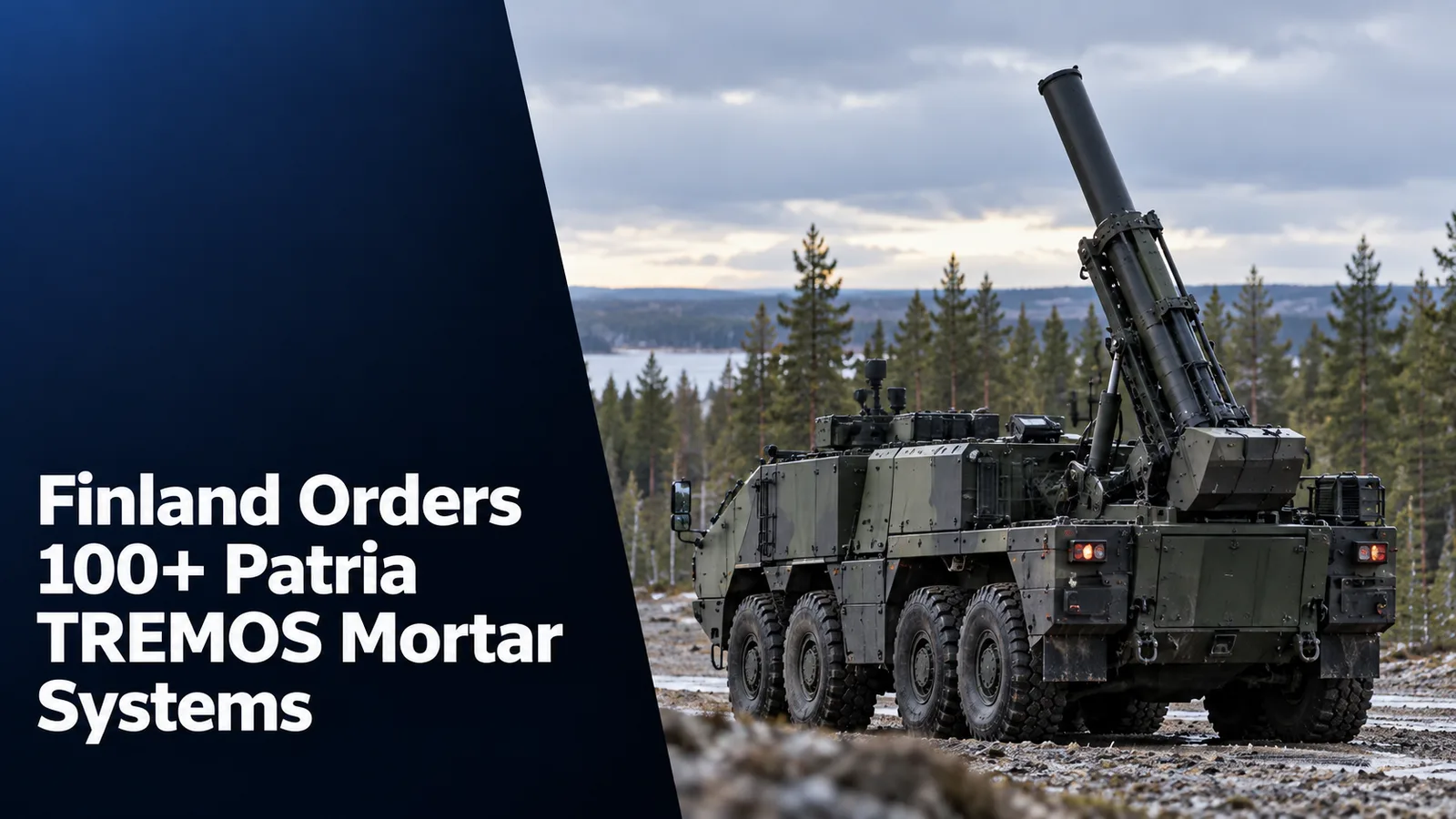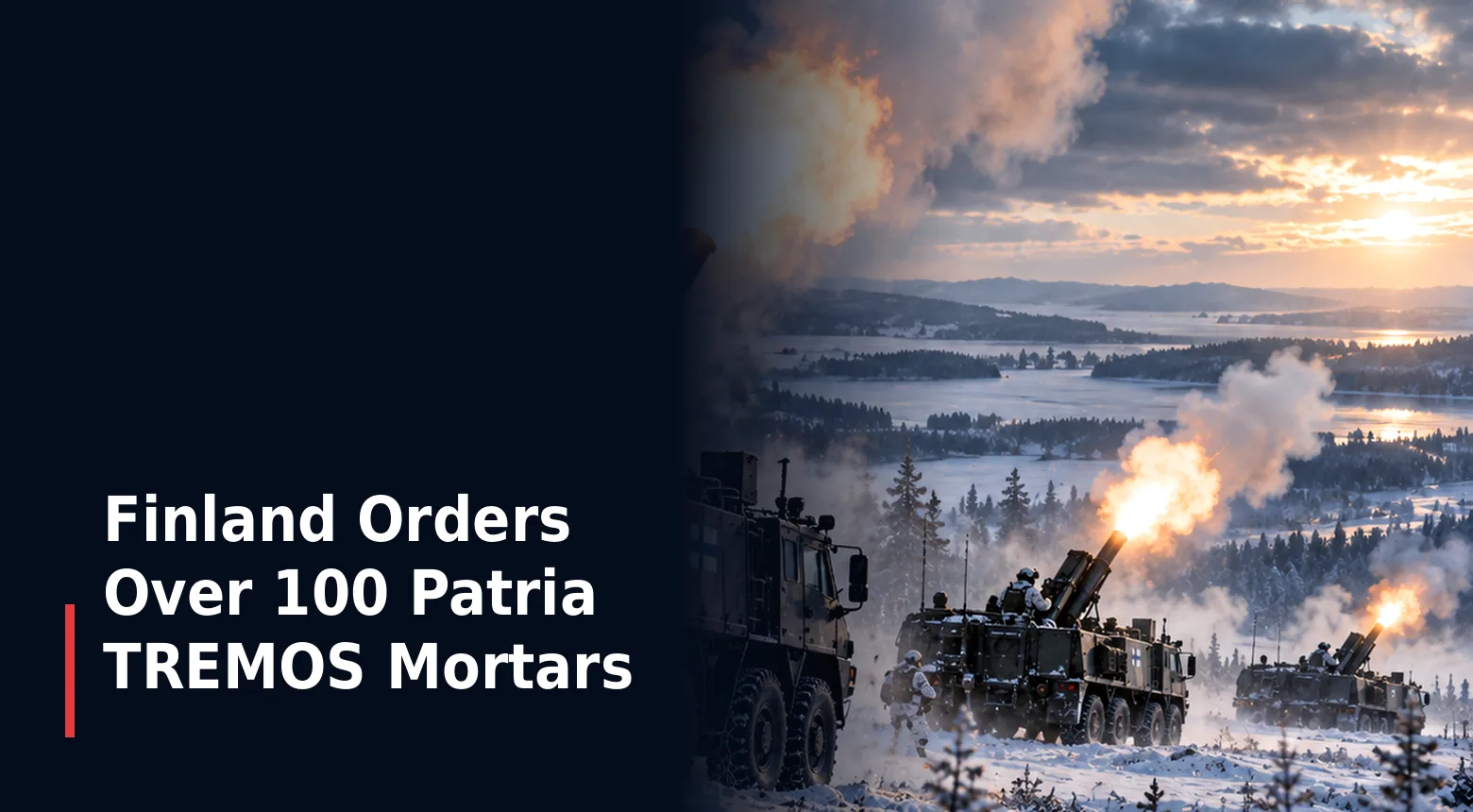
Finland authorised the procurement of more than 100 Patria TREMOS mobile 120 mm mortar systems under a €49.9 million agreement announced on 8 September 2026. The package includes options for additional systems, while deliveries are planned from 2026 through 2028, marking a move from pre-series equipment into serial procurement for mobile indirect fire.
Finland moves from pre-series testing to serial procurement
Patria and the Finnish Defence Forces announced an agreement covering more than 100 TREMOS mobile mortar systems. Finland's Ministry of Defence reported a value of €49.9 million excluding VAT for the purchase and described the system as the 120 mm Modular Mobile Mortar, or M3. The procurement follows a pre-series batch supplied in 2025 and subsequent Army training activity, giving the programme a more substantial production foundation than a single technology demonstrator.
Patria expects deliveries to start in 2026 and run through 2028. The agreement contains options for hundreds more systems, but those potential quantities must be separated from the confirmed baseline. Public reporting has not provided a detailed annual delivery schedule or universal configuration for every vehicle that may eventually carry the system. An option extends the customer's procurement flexibility; it is not proof of funded future production.
A mobile weapon built around existing heavy mortar components
TREMOS is intended to mobilise a conventional heavy mortar without necessarily replacing the entire supporting ammunition and training system. Patria highlights a recoil-management architecture suitable for integration with different vehicle platforms, together with potential reuse of in-service barrels and breeches. Retaining ammunition and ballistic tables can ease transition and simplify supply chains, although full vehicle integration still needs engineering and acceptance work.
Mortar crews are vulnerable when they must set up, fire and pack equipment in locations visible to enemy sensors. A vehicle-integrated system may reduce some of that exposure and help units shift quickly between positions. The tactical benefit depends on real crew training, ammunition handling, command connectivity and the vehicle's mobility characteristics. The procurement announcement by itself does not validate a specific counter-battery survival probability or rate of fire under all conditions.
Domestic manufacturing is part of Finland's defence logic
Patria says the systems will be manufactured in Finland with participation from dozens of domestic suppliers. The company and ministry estimate an employment impact of approximately 130 person-years. Those industrial details matter because Finland places considerable emphasis on keeping vital defence support capabilities available during disruptions to cross-border transport or industrial supply chains.
A domestic production line can improve access to spares, repairs, engineering changes and follow-on orders. However, local manufacture still depends on qualified components, production capacity and stable quality assurance. Moving from pre-series work to more than 100 systems creates opportunities for standardisation while also placing new demands on training establishments, fleet integration and acceptance inspection.
Performance depends on the wider fires network
Mobile mortars gain value when units can receive timely target information and move between firing positions without losing command connectivity. Navigation, communications and digital fire-control interfaces are therefore as important as mechanical recoil performance. The Finnish Army must integrate the new systems into an indirect-fire network with forward observers, logistics assets and rules for operating in contested electromagnetic conditions.
Finland's confirmed investment gives Patria a national launch customer and a useful reference for potential exports. International adoption, however, will require testing on each customer's vehicle, support model and ammunition arrangements. The September 2026 order is a serial-procurement milestone, not evidence that hundreds of optioned systems have already been ordered or that every Finnish unit is equipped.
Implications / Next
Monitor delivery and acceptance of the first serial-production systems, confirmation of host-vehicle configurations and any exercised options. Report the confirmed €49.9 million award separately from optional future expenditure. The practical fielding timetable may also depend on instructor capacity, crew certification, repair parts and how the new equipment fits existing mortar fire-control practices. Those factors seldom appear in the headline contract quantity, but they affect when commanders can employ systems reliably. The announced order improves visibility for the Finnish supplier while leaving operational acceptance and any follow-on option exercises as separate events to document.