Auterion and SkyFall announced on 20 November 2026 that they intend to form a joint venture to manufacture drones for Ukraine at a new factory in Germany, following the delivery of more than 50,000 Shrike strike drones to Ukrainian forces. The planned Skyfall x Auterion operation is being developed under the bilateral Build with Ukraine framework and is intended to combine German-backed manufacturing with Ukrainian airframes and Auterion software. The move is significant for European defence procurement because it could create additional production capacity outside Ukraine while maintaining a design-feedback loop with frontline users. An intention to establish a factory is not confirmation that the site is operating or that new deliveries have begun.
German Production Proposal Builds on 50,000 Shrike Deliveries
The partners disclosed the plan in a 20 November 2026 company announcement, stating that an agreement was signed in the presence of German Federal Minister for Economic Affairs and Energy Katherina Reiche at the ninth German-Ukrainian Economic Forum. German Chancellor Friedrich Merz and Ukrainian Prime Minister Serhii Koretskyi attended the forum. The German federal government’s account of the meeting independently confirms the wider economic forum and official participation; it does not, by itself, establish the proposed factory’s operational status or funding amount.
The two firms said they had jointly delivered over 50,000 Shrike drones to Ukrainian military units. That is an important change from their 13 July 2026 announcement, which said deliveries of a 50,000-unit programme had begun and would be completed over the following months. In its 20 November reporting, Reuters said Germany had funded a previous 50,000-unit contract worth about €90 million. That historical contract figure should not be confused with the cost of the proposed new facility or any subsequent procurement commitment, for which the companies did not publish a value.
According to the subsequent Defence Industry Europe report dated 21 November, the venture would begin with Shrike first-person-view strike drones, before considering SkyFall interceptor designs and medium- and longer-range strike systems. The companies describe a common product architecture combining a SkyFall airframe with Auterion avionics and the AuterionOS operating environment. A shared software baseline could simplify training, configuration control and maintenance across successive designs, although the announcement does not publish a specific interoperability standard, factory configuration or qualification plan.
The companies also say battlefield feedback from Ukrainian units reaches SkyFall engineers each week and is intended to influence production in Germany. That approach could shorten the interval between changes requested by end users and revised hardware or software entering a production cycle. But it would require disciplined testing, configuration tracking and safety procedures to prevent frequent changes from degrading reliability or spare-parts compatibility. Neither a comparative time-to-update figure nor independently verified production yield was provided for the future German line.
Auterion chief executive Lorenz Meier linked the proposed plant both to continued Ukrainian supply and to a potential domestic source for Germany’s armed forces. The distinction is important: near-term manufacturing is intended to support Ukraine, while German military purchases remain a longer-term possibility. The announcement did not identify a Bundeswehr contract, an approved German military requirement or a minimum off-take quantity for the new venture. Similarly, the companies attributed a strong performance showing in the Pentagon’s Drone Dominance Program to a Shrike variant, but published no independent evaluation report in the release.
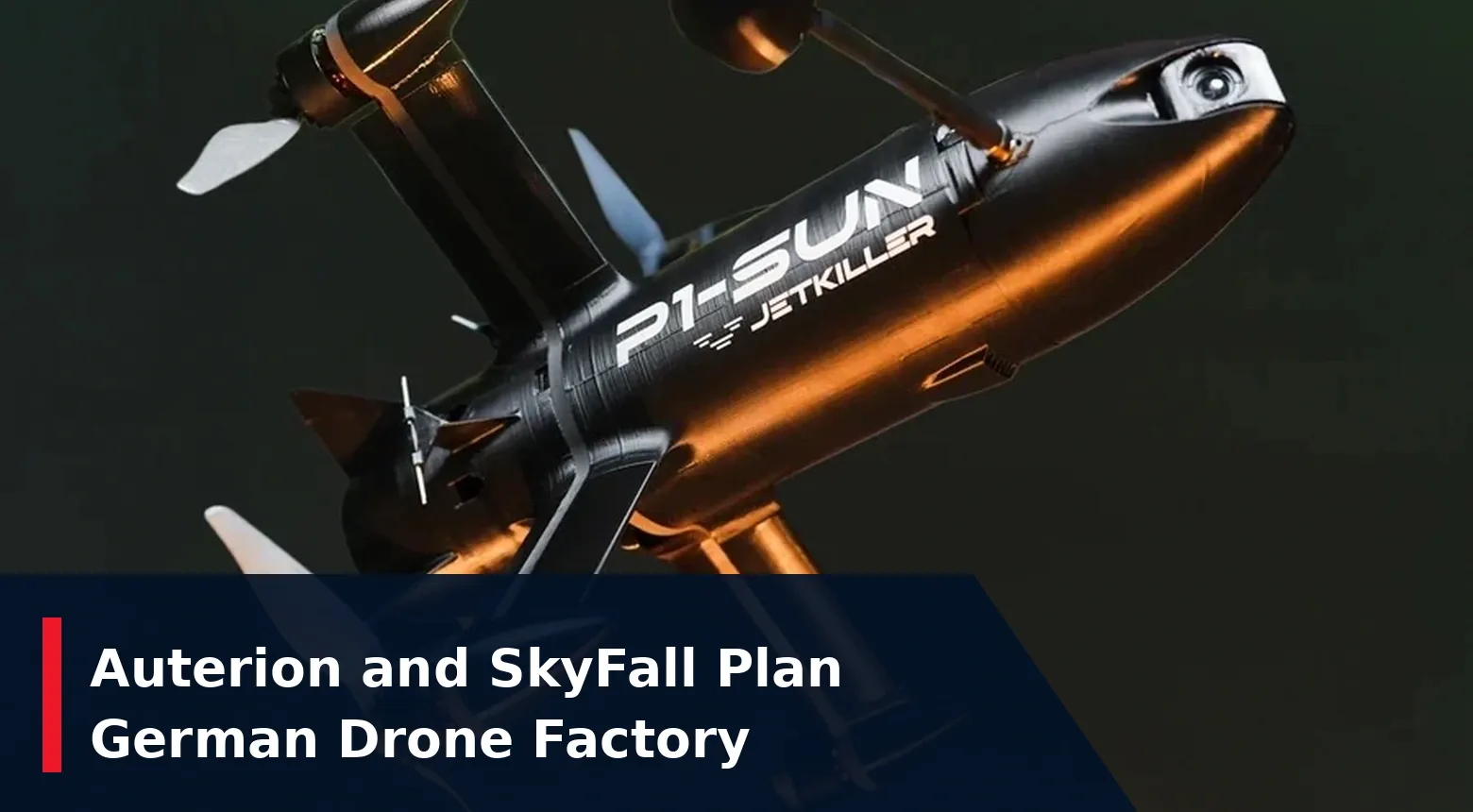
The photograph accompanying this editorial package depicts a SkyFall P1-SUN JetKiller interceptor with its identifying markings visible. It is a relevant image of the manufacturer’s wider unmanned-system portfolio, not a photograph of the Shrike delivery fleet, the new factory or an already commissioned German production line. That distinction prevents a marketing illustration from being mistaken for confirmation of a programme milestone.
Joint Venture Status, Funding and Procurement Implications
The Build with Ukraine framework provides the policy setting for the agreement. In an earlier Ukrainian presidential announcement, Kyiv described plans to manufacture Ukrainian-designed drones in Germany and reported agreements intended to support localised production. Those broader policy commitments help explain the industrial logic behind Skyfall x Auterion, but they do not establish that this particular joint venture has completed incorporation, obtained a site or begun serial assembly.
The proposed German operation should not be confused with Auterion’s separate venture with Ukrainian company Airlogix. Auterion announced on 21 September 2026 that the Auterion–Airlogix company had started serial production of Anubis and Seth X systems in Germany under a German-funded order for more than 5,000 units. That is an existing production milestone associated with a different Ukrainian partner, distinct products and its own contract. Importing its delivery status or production figures into the new SkyFall proposal would overstate what the 20 November announcement actually confirms.
For German programme managers, potential benefits include domestic assembly capacity, local quality control, supplier diversification and the option of placing future orders under German procurement arrangements. Ukrainian partners would contribute designs informed by combat experience and operational feedback. However, the division of responsibilities for intellectual property, export approvals, production tooling, software configuration, cyber assurance and through-life support has not been published. These matters can affect lead times and contracting risk as much as factory floor space.
Funding should be read with similar care. Reuters reported, citing an industry source, that the German government would help finance the factory and provide commitments relating to drone orders. Auterion’s statement described German support and anticipated future domestic industrial benefits. The material available on 23 November did not disclose a contract award covering construction, a factory address, annual capacity, unit pricing or a start-of-production date. The announced backing therefore supports an industrial plan; it is not a public accounting of all committed project expenditure.
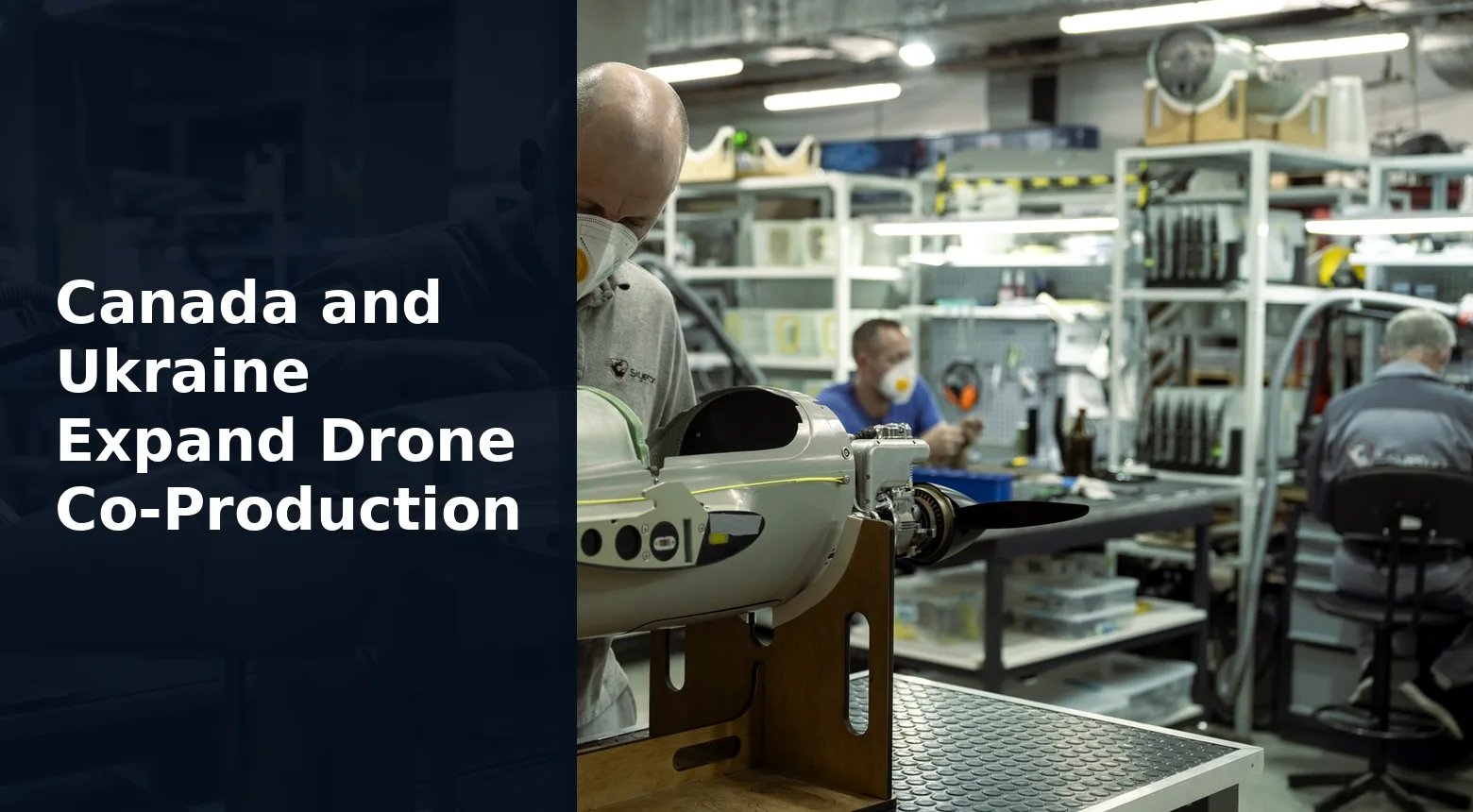
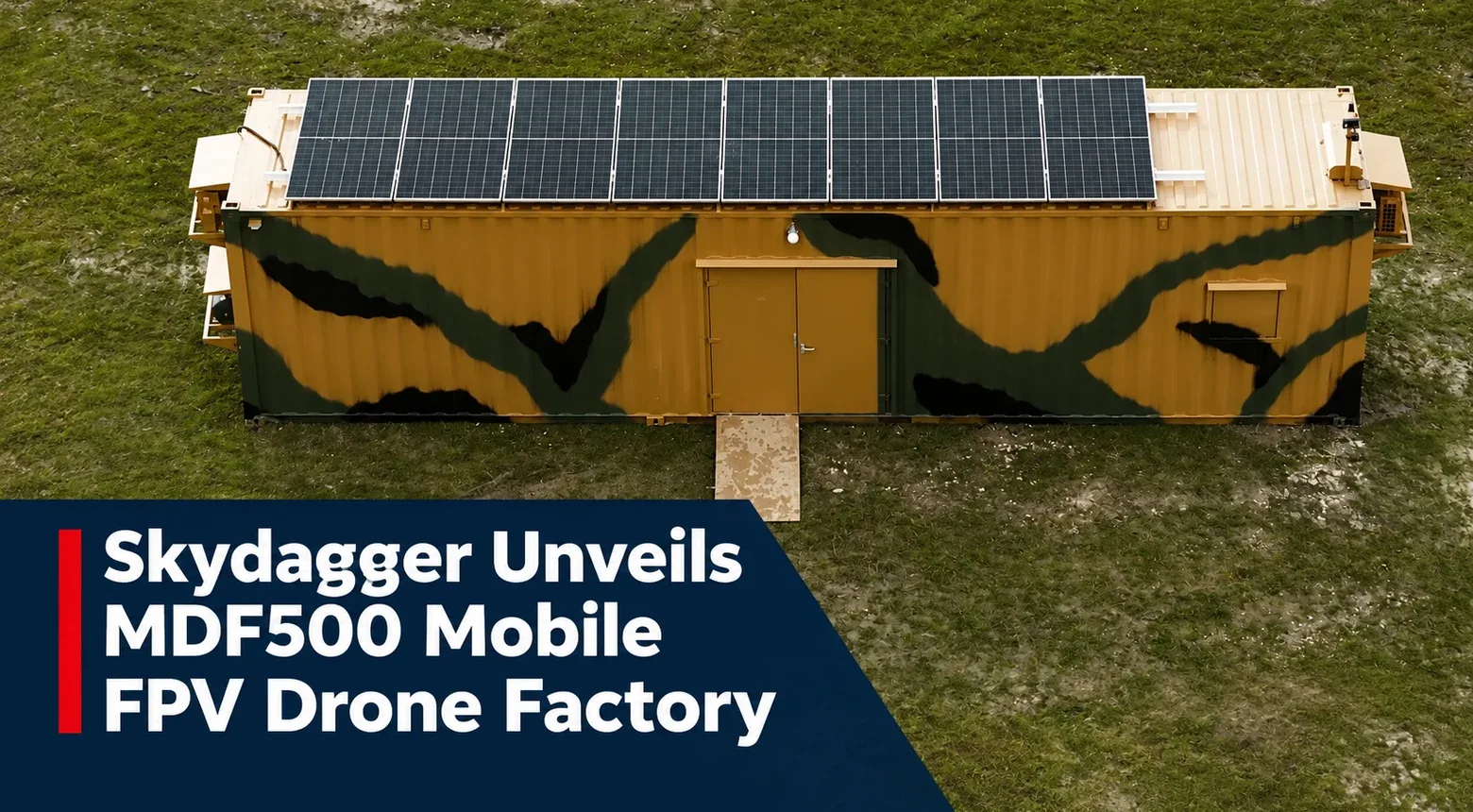
The plan fits a wider trend towards cross-border drone production for Ukraine. Defence Agenda has covered BARS jet-drone manufacturing moving into European production and Canada–Ukraine drone co-production initiatives. A different business model, the Skydagger MDF500 mobile FPV factory, aims to bring smaller-scale assembly capacity closer to users. These cases should not be treated as directly comparable production rates: different platforms, sourcing arrangements, factory maturities and customer contracts produce materially different cost and output profiles.
Industrial dispersal reduces reliance on a single production geography, but it does not remove supply-chain concentration. Drone programmes depend on the consistent availability of electronic components, propulsion units, sensors, airframe materials, batteries, control software, trained technicians and acceptance testing. Cross-border production also introduces logistical and regulatory friction. A well-funded factory can still face delays if critical components are unavailable, software versions diverge or export authorisations take longer than expected. The competitive advantage would come from reliable, repeatable delivery rather than announced volume alone.
The counterargument is that replicating Ukrainian drone production in higher-cost Western European facilities could reduce some of the unit-cost advantages gained from domestic Ukrainian manufacturing. The response may depend on automation, purchasing scale, German public support and the value placed on assured supply outside Russian strike range. There is not enough public data to calculate a credible comparative cost curve for Skyfall x Auterion. As discussed in Defence Agenda’s overview of autonomous drone swarms and supply-chain demands, hardware volumes are only one element of a sustainable, software-intensive unmanned force.
Implications / Next: The next independently verifiable milestones are formal incorporation of Skyfall x Auterion, confirmation of a German production site, a funded order attached to the new venture, the first completed airframes and accepted deliveries. These should be tracked separately from the 50,000-plus Shrike drones already delivered under the earlier arrangement. As of 23 November 2026, the reported announcement is a factory and joint-venture plan, not evidence of serial output at the proposed German facility or a signed Bundeswehr purchase.
Further Reading
- Auterion — SkyFall joint venture announcement, 20 November 2026
- Defence Industry Europe — German factory proposal, 21 November 2026
- Reuters — Germany backs drone production venture, 20 November 2026
- Auterion — Initial 50,000 Shrike delivery programme, 13 July 2026
- Auterion — Separate Airlogix German production, 21 September 2026
- German Federal Government — German-Ukrainian Economic Forum, 20 November 2026
- Office of the President of Ukraine — Build with Ukraine industrial framework, 14 April 2026
- Defence Agenda — BARS Jet Drone Production Moves to Europe
- Defence Agenda — Skydagger MDF500 Mobile FPV Factory
- Defence Agenda — Canada and Ukraine Expand Drone Co-Production
- Defence Agenda — Autonomous Drone Swarms in Warfare