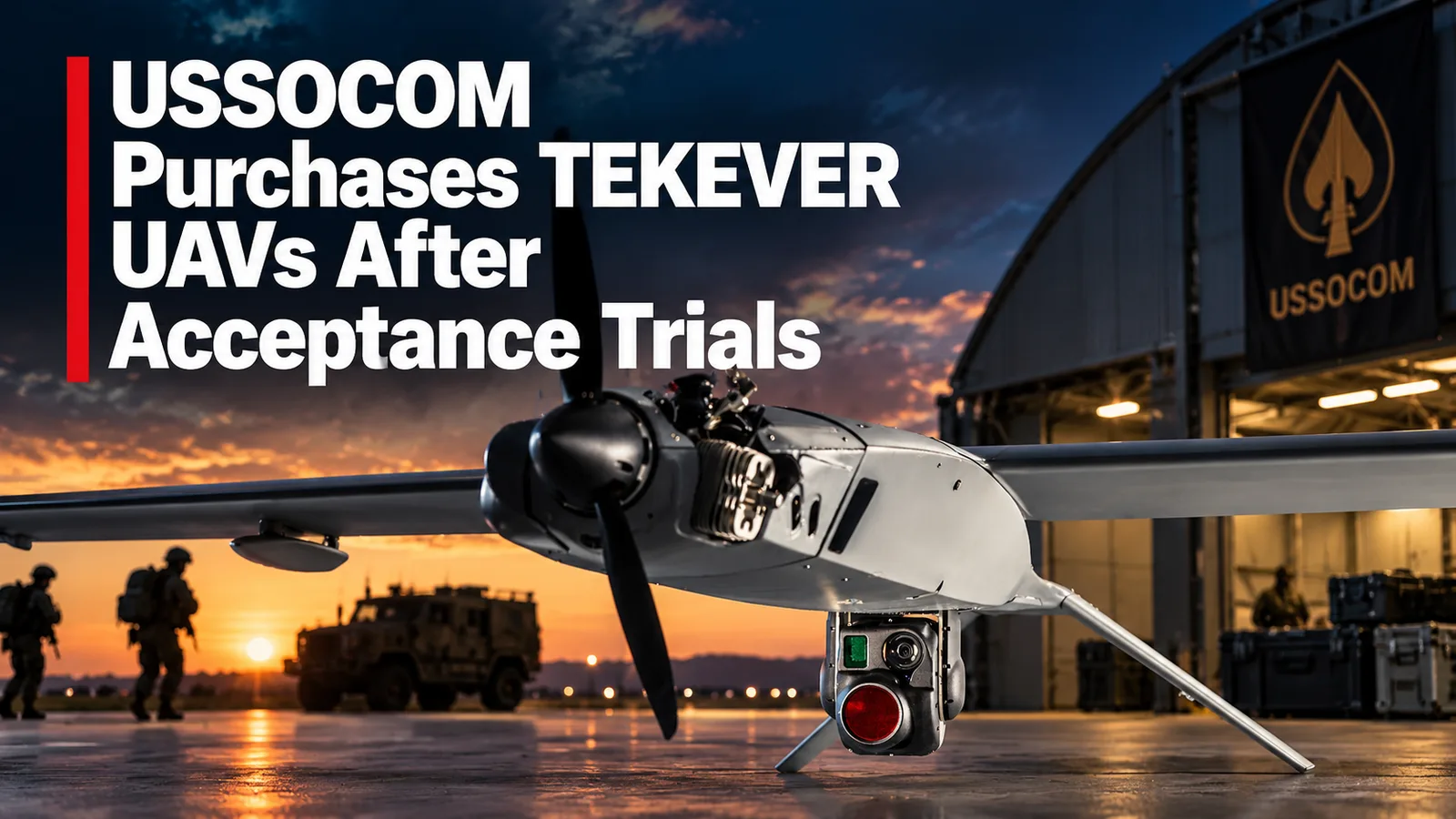
TEKEVER announced a US Special Operations Command purchase of uncrewed aerial systems following validation, acceptance flights and training. The company did not disclose the aircraft model, number of systems, specific configuration or contract value. The acquisition indicates special operations interest in flexible autonomous intelligence platforms, but its operational scale cannot be inferred without order quantities and mission architecture.
A procurement announcement after flight validation
TEKEVER announced that US Special Operations Command purchased some of its uncrewed aerial systems after an extensive validation-and-acceptance process that included flights at more than one location and supporting training. This is stronger evidence than a trade-show proposal because a named customer is associated with a purchase. However, the manufacturer has withheld the aircraft type, quantity, configuration and value, preventing a credible calculation of programme scale. The company’s website lists the report under 26 October; its body retains an unfilled publication-date placeholder, so an exact first-release hour should not be invented. Nor does acceptance testing alone prove every system is deployed on operational missions.
Why ISR integration matters more than the airframe label
The company describes a modular intelligence, surveillance and reconnaissance architecture in which the aircraft, sensors, communications and AI-enabled software operate as one system. For special operations missions, value depends on whether imagery and other sensor data can be moved quickly to commanders without exposing a sensitive location or overburdening operators. Mission payload choice, electromagnetic protection, runway requirements and endurance cannot be defined for this purchase because the configuration is undisclosed. TEKEVER has a wider unmanned aircraft portfolio, but assigning a familiar model to this order without explicit confirmation would be speculative. The announced testing programme suggests customer evaluation of mission utility, but not a published operational-effectiveness score.
Industrial and support implications
TEKEVER highlights its vertically integrated approach spanning engineering, manufacturing, software and field support. The company also has a presence in Fayetteville, North Carolina, near the US special-operations community. Such a footprint can help customer engagement, maintenance response and continuing configuration development, although the announcement does not set out an industrial workshare or a local-content commitment for the purchase. An ISR system’s sustainment burden includes sensor calibration, secure software updates, spare components, ground stations and operator certification. Procurement authorities will be interested in the lifetime cost of that system rather than only in the aircraft itself.
What remains unknown after acceptance
A future authoritative release might identify delivered airframes, a unit, a procurement vehicle or operational use. None of those details should be backfilled now. The programme could involve small numbers supporting specialised tasks or a broader force-wide requirement; the evidence does not decide between those scenarios. Published information also does not establish whether later modification or repeat orders are planned. The clean procurement description is therefore a completed purchase announcement preceded by customer validation, with unspecified model and scale. Subsequent evidence of in-service use would be a separate operational milestone rather than an automatic consequence of the 26 October statement.
Industrial and programme assessment
For procurement officers, the unknown model and quantity are particularly consequential. They prevent assessment of unit cost, endurance, communications performance, sensor mix and how much operational coverage the purchase provides. Although the supplier highlights its autonomy software and modular design, there is no public basis to describe a specific payload or weapons fit for the USSOCOM systems. Reporting should instead emphasise the verified procurement and evaluation milestones and the likely need for ongoing training, sustainment and security assurance.
The announcement identifies USSOCOM as the buyer, giving the story more substance than a speculative market pitch. Nevertheless, it does not tell readers the strength of the resulting fleet or its deployment schedule. The company’s claims about modularity and accelerated iteration should be attributed to TEKEVER rather than treated as a US government operational assessment. Precise unit equipment and deployed missions should remain unreported until an authoritative source discloses them.
Implications / Next
For procurement and industry stakeholders, the critical future evidence will be primary-source confirmation of funded work, validated technical progress and a demonstrable transition to delivered or operational capability. In this case the immediate checkpoint is specific: further customer disclosures on type, quantity or operational acceptance. The disclosed milestone should be updated only when those events occur, not assumed from the present announcement.
Further Reading
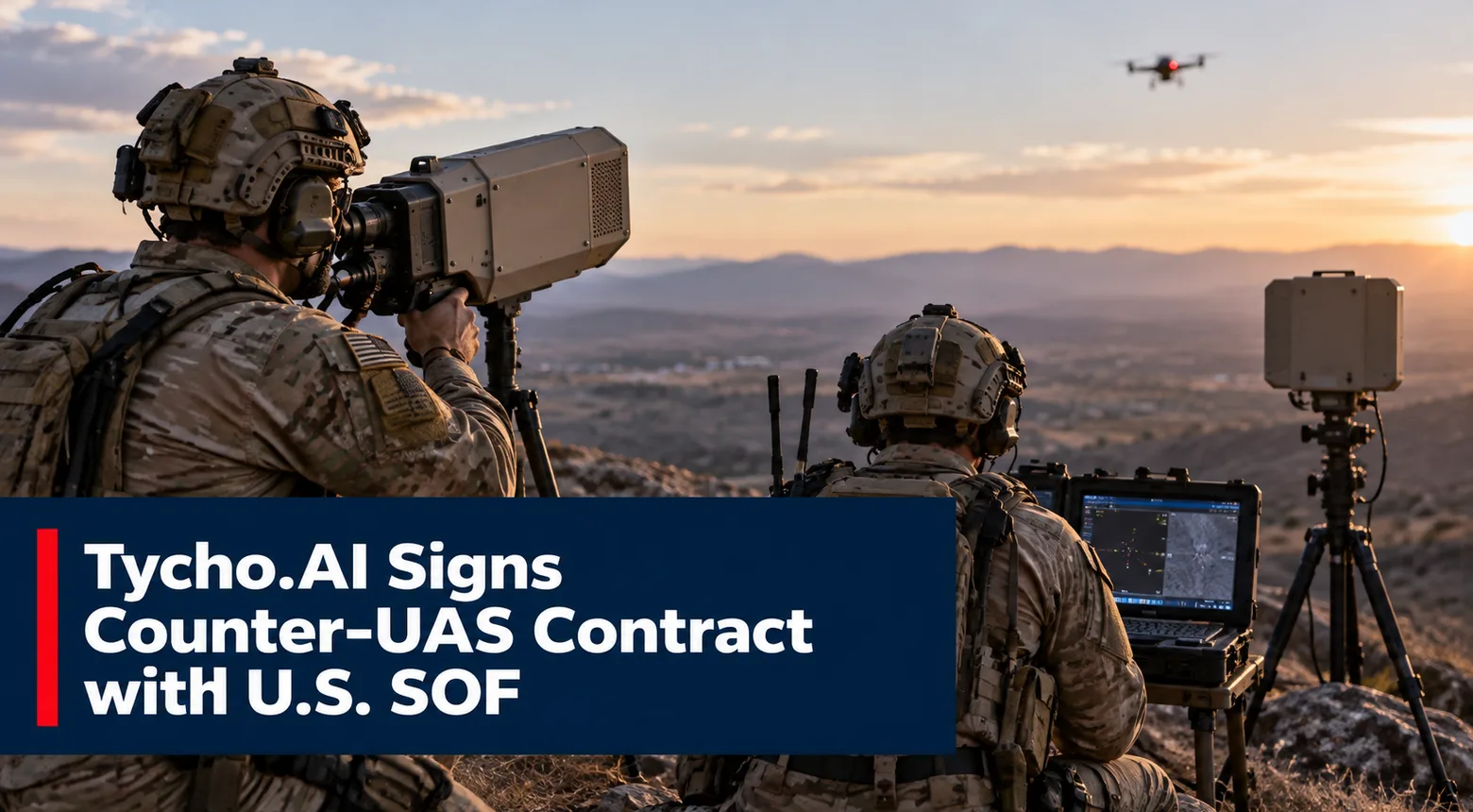
USSOCOM Tycho.AI counter-UAS prototype award
Europe’s autonomous wingman market