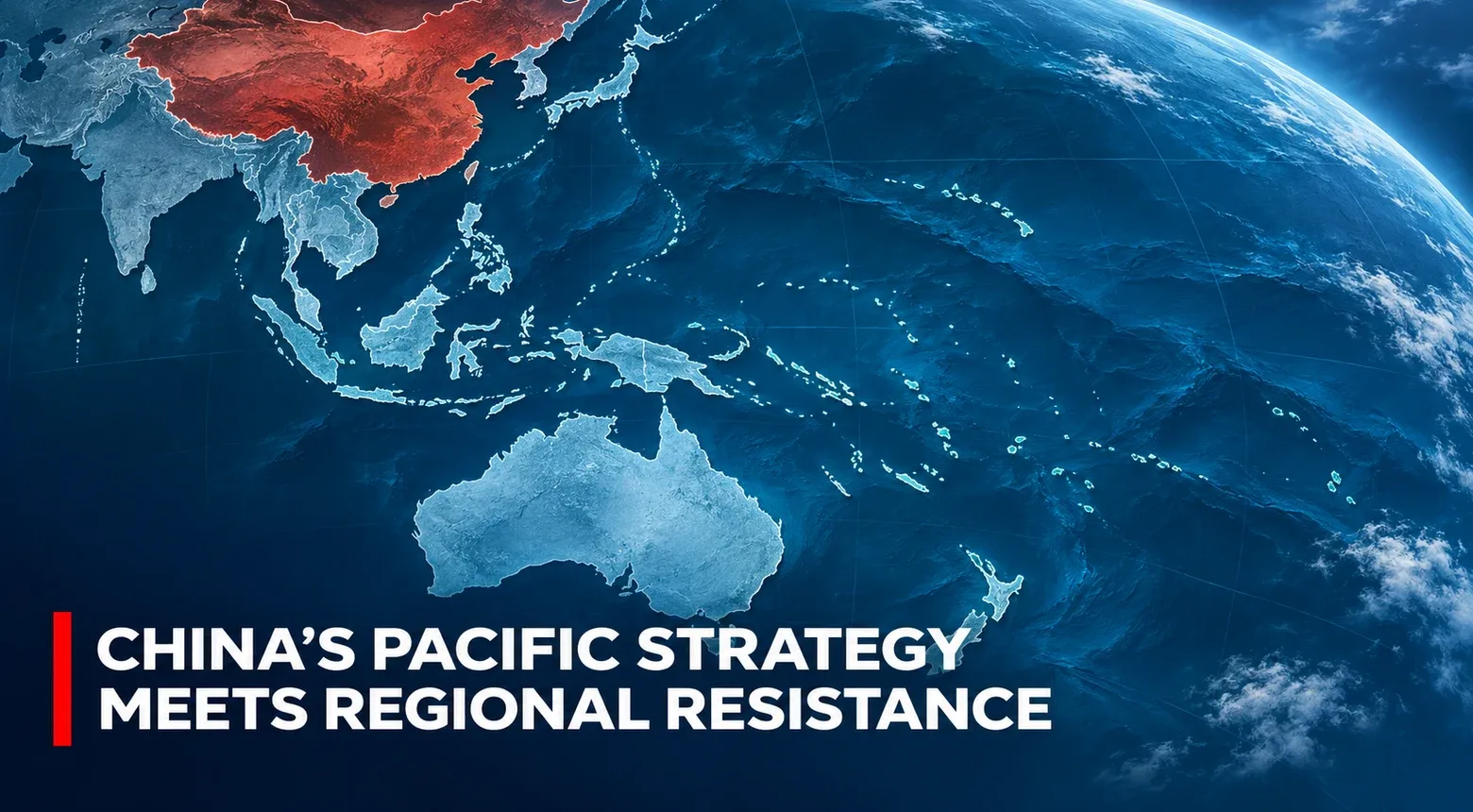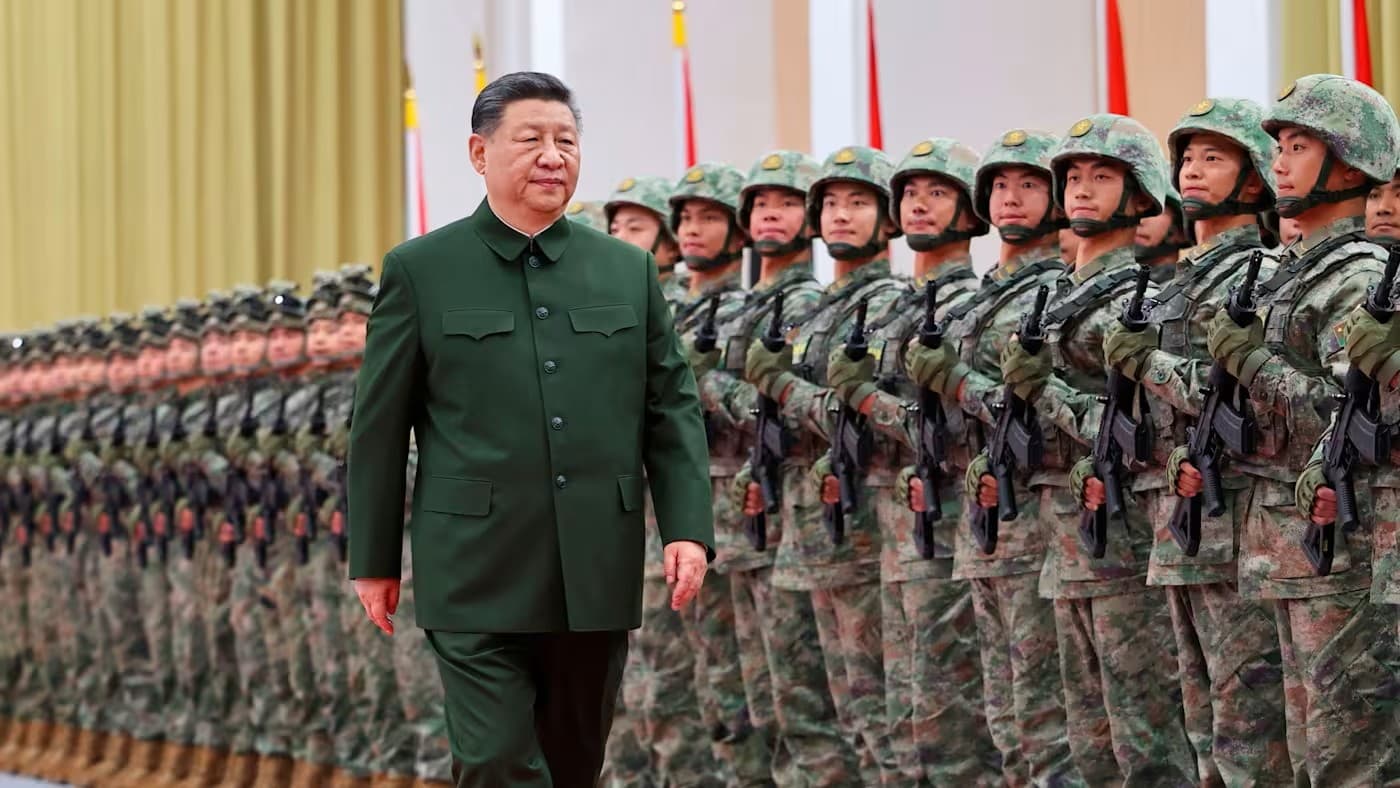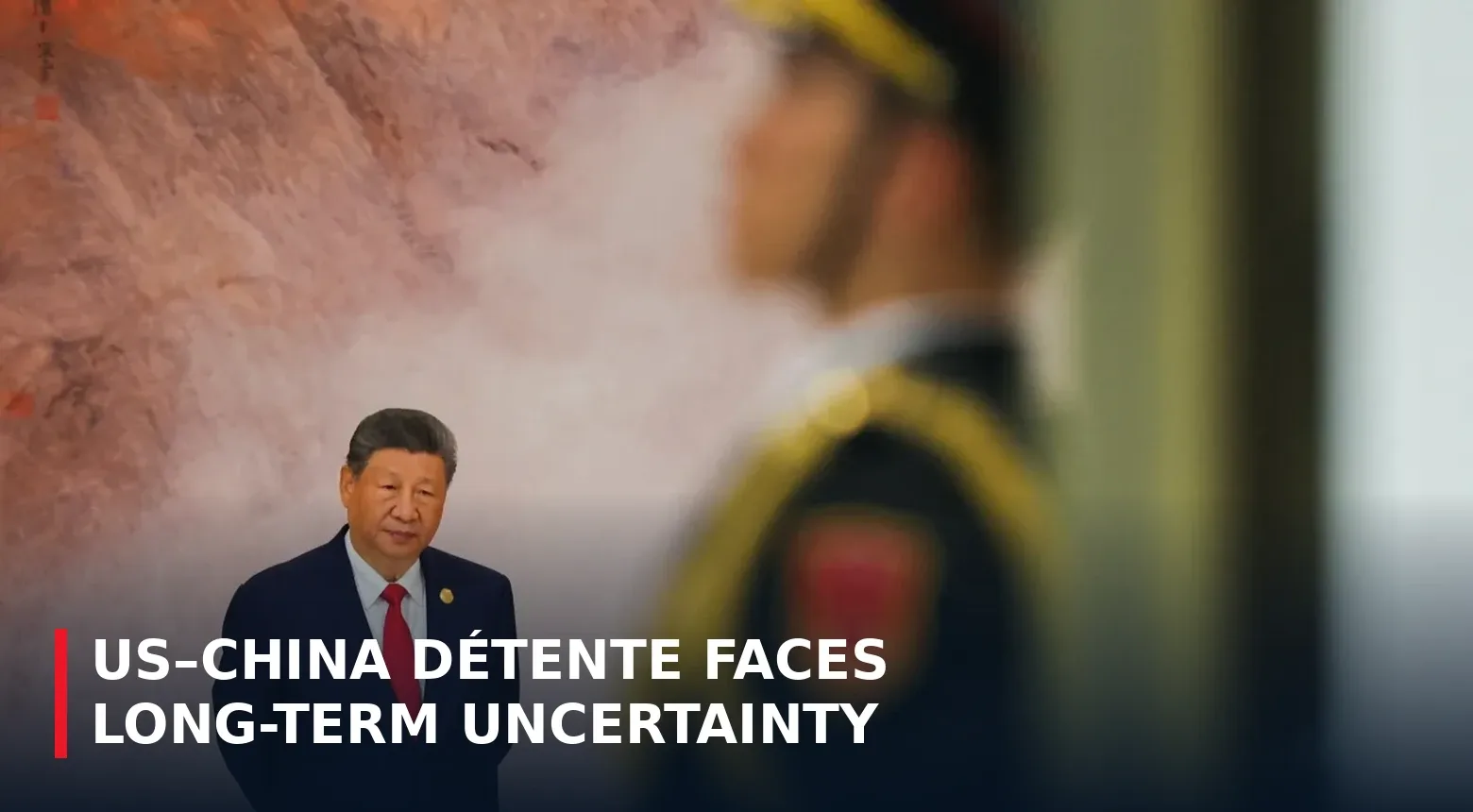
US–China détente is under renewed scrutiny following the November 2026 meetings in Shenzhen. In a recent Foreign Affairs assessment, Yun Sun, director of the China programme at the Stimson Center, argues that the current improvement in relations may not survive the end of Donald Trump's presidency. The argument is a forecast, not an announced Chinese policy. Official statements meanwhile document ongoing diplomatic engagement, even as Washington considers additional trade restrictions. For defence and aerospace stakeholders, the distinction between a temporary reduction in tension and a durable change in the policy environment is particularly important.
US–China détente: diplomacy and persistent disagreements
Sun's assessment questions the longevity of the present thaw. In the accessible portions of her essay, she describes a Chinese policy community that remains concerned about the future of bilateral relations despite positive public messaging. She expects Beijing to pursue economic opportunities while maintaining its positions on Taiwan and responding more firmly to regional disagreements. These are the author's interpretations of Chinese priorities; the available evidence does not establish a consensus among Chinese policymakers or prove that future US administrations will adopt a particular approach.
The official record establishes a more limited set of facts. On 19 November 2026, the Chinese Ministry of Foreign Affairs published its account of the bilateral meeting in Shenzhen. It said the two presidents had agreed to develop an action plan for their relationship and to manage unresolved disagreements through dialogue. The statement also referred to Taiwan, economic relations and artificial intelligence. It reflects Beijing's account of the meeting and does not demonstrate that every point has been translated into an enforceable agreement.
Washington's earlier account provides a complementary reference. The White House fact sheet of 25 September 2026 reported that the two governments had put their trade and investment boards into operation following the May summit. It described recommendations for preferential treatment of $30 billion of non-sensitive goods in each direction and work on supply concerns involving critical minerals. Those recommendations should not be interpreted as completed purchases or a blanket exemption from controls on sensitive technologies.
There was also a multilateral dimension to the November meetings. The China–Russia–US declaration of 19 November 2026 recorded a commitment to strategic stability and international security. This diplomatic statement is relevant to the management of major-power tensions, but does not establish a new arms-control treaty or a verified change in nuclear force posture. Defence Agenda has separately covered the debate over AI and nuclear deterrence in China and the United States.
A further indication of the distinction between diplomacy and implementation emerged on 25 November 2026. The Office of the United States Trade Representative (USTR) announced Section 301 determinations and proposed actions covering 14 economies, including China. The proposed measures concern manufacturing overcapacity and include additional tariffs on categories of Chinese goods. The notice opens a consultation process, with comments due on 5 January 2027 and hearings scheduled for 25 January 2027. A proposal is not a final tariff decision.
China has disputed the US description of its industrial capacity. Reporting on 26 November by The Guardian describes Beijing's rejection of the overcapacity allegations and its preference for resolving the dispute through talks. The disagreement illustrates how the governments can continue official engagement while maintaining incompatible assessments of industrial policy. Neither position by itself establishes the economic consequences of the proposed measures.
There are competing interpretations of the wider relationship. A separate Foreign Affairs essay on the emerging US–China détente presents a more optimistic view of the prospects for pragmatic accommodation. The disagreement between analysts concerns the durability of incentives for cooperation, rather than the existence of current diplomatic contact. Political leadership, institutional processes and commercial interests may all affect the outcome. No single meeting establishes which interpretation will ultimately prove correct.
Defence and aerospace implications: three possible pathways
For industry, the most immediate issue is the planning horizon. Aerospace and defence investment commonly involves commitments extending beyond a single budget year or diplomatic cycle. Supplier qualification, regulatory approval and the maintenance of long-term customer relationships cannot be assessed solely against a favourable political announcement. The existence of dialogue may reduce uncertainty in some commercial areas without resolving restrictions in others. It is therefore useful to distinguish the political signal from the legal and contractual position.
Trade and technology policy are related but not interchangeable. A reduction in general tariffs would not, by itself, amend an export-control licence, a security condition attached to a public contract or a restriction on the transfer of intellectual property. Equally, a new trade investigation does not automatically prevent every commercial transaction involving the economies under review. The actual scope of each measure and the relevant legal jurisdiction determine its effect. This distinction is especially important for businesses operating in both civil aerospace and regulated defence markets.
Three qualitative scenarios help frame the uncertainty. They are analytical possibilities, not predictions or recommendations for a particular government policy. No probability is assigned because the available sources do not support a defensible quantitative forecast.
| Scenario | Observable indicators | Potential industrial implications |
|---|---|---|
| Managed competition | Trade and investment bodies continue meeting; consultation processes lead to limited, defined measures. | Some commercial predictability improves, while sensitive technology remains subject to separate regulatory requirements. |
| Selective deterioration | New trade measures take effect or individual diplomatic disputes interrupt particular workstreams. | Greater uncertainty for affected commercial contracts, pricing assumptions and cross-border approvals. |
| Broader diplomatic breakdown | Formal dialogue is suspended and multiple policy disagreements escalate together. | Higher uncertainty across investment, market access and international industrial cooperation. |
In the first scenario, established mechanisms could create a degree of predictability without resolving underlying disagreements. The trade boards provide an example of a forum through which specific commercial issues can be discussed. Their effectiveness would depend on the decisions that follow, not simply the fact that meetings are held. A sustained improvement would be more credible if agreements were implemented, maintained and publicly documented over time.
In the second scenario, restrictions may develop in one policy area while cooperation continues elsewhere. The juxtaposition of the Shenzhen meeting and the subsequent Section 301 announcement demonstrates that these processes need not move in the same direction. For analysts, it is important to avoid treating each announcement as evidence of either a comprehensive rapprochement or its definitive collapse. Each measure has its own scope and procedural status.
In the third scenario, a wider deterioration could affect expectations about international demand, investment and the organisation of industrial relationships. The scale of any effect would depend on the precise measures introduced and how other governments and companies respond. Available evidence does not establish that such a breakdown is imminent. Defence Agenda's wider coverage of US–China military technology competition and Indo-Pacific extended deterrence provides separate background for understanding the regional security debate.
There is also a countervailing consideration. Businesses, governments and consumers can have material interests in continuity, even when strategic disagreements remain substantial. Economic ties do not guarantee peace, but institutional communication can provide a means of addressing specific disputes. A framework that recognises both incentives for engagement and persistent disagreements is more informative than assuming that diplomatic warmth or confrontation will necessarily dominate the relationship.
Implications / Next: The immediate documented milestones are the US trade consultation deadline on 5 January 2027 and the planned hearings on 25 January 2027. Further public information about the bilateral action plan and the functioning of the trade and investment boards will help clarify whether current commitments are translating into practice. Sun's warning remains one interpretation of the longer-term outlook; its significance should be assessed against subsequent evidence. The available record establishes active diplomacy alongside ongoing competition, rather than a confirmed end to détente.
Further Reading
- Foreign Affairs — China Is Preparing for the End of Détente
- Chinese Ministry of Foreign Affairs — Shenzhen bilateral meeting
- White House — September 2026 bilateral fact sheet
- USTR — November 2026 Section 301 proposed actions
- Foreign Affairs — The Emerging U.S.–China Détente
- Defence Agenda — AI and Nuclear Deterrence: China’s Security Concerns
- Defence Agenda — China vs US Military Technology
- Defence Agenda — Indo-Pacific Extended Deterrence