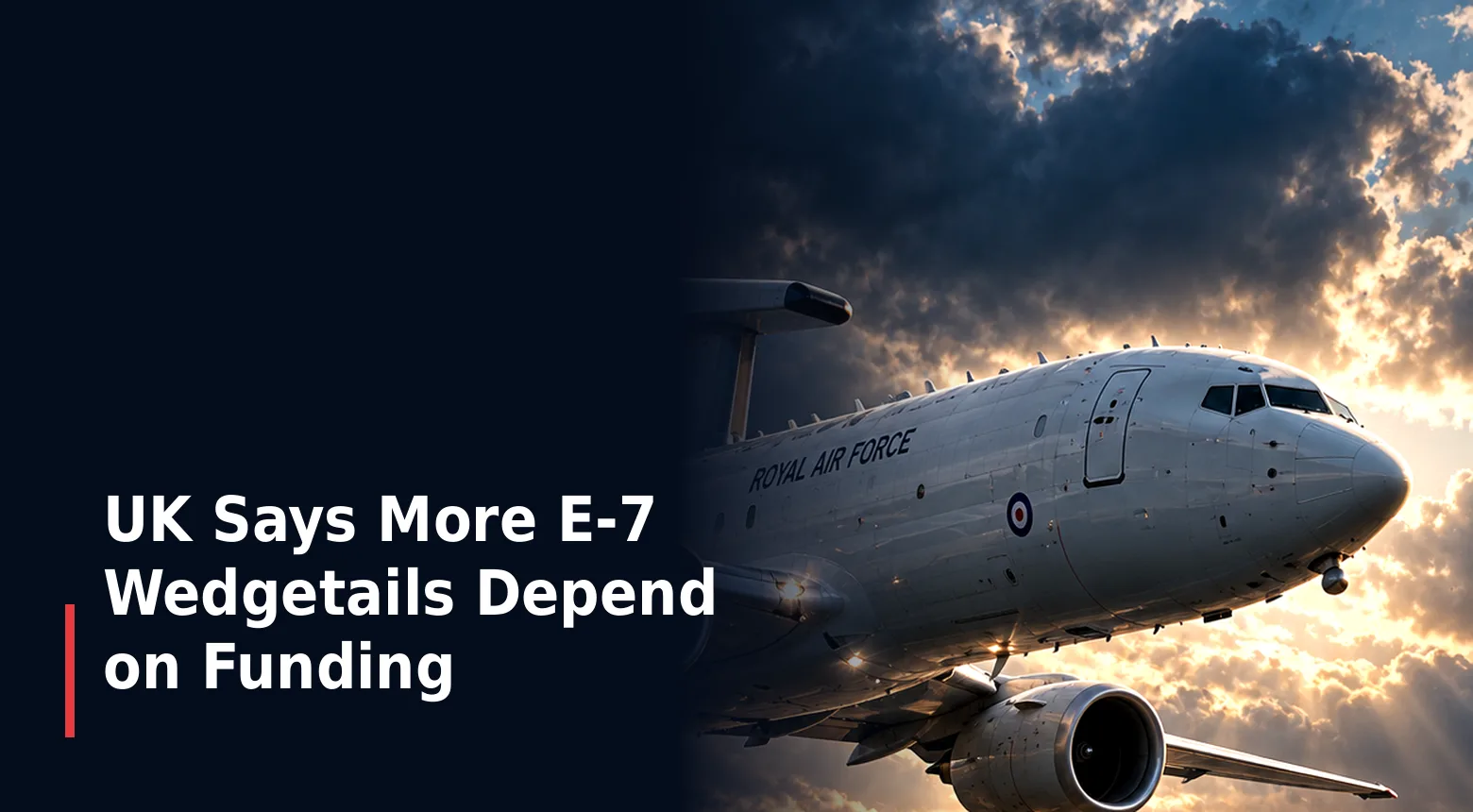
The United Kingdom remains open to buying additional Boeing E-7 Wedgetail airborne early warning aircraft, but any such procurement depends on funding, Defence Minister Luke Pollard said in a written parliamentary answer on 8 September 2026. The government also confirmed preparations to sustain the initial fleet, making readiness and affordability separate issues from an uncommitted expansion.
Parliament confirms an option, not a purchase
In a written answer to Ben Obese-Jecty MP, Luke Pollard said the Ministry of Defence remained open to examining opportunities for future E-7 acquisitions subject to the availability of funding. The response addressed a recommendation from the 2025 Strategic Defence Review to maintain the existing Wedgetail capability and examine possible expansion, including cost-sharing with NATO allies. It did not disclose an additional aircraft quantity, contract negotiation or procurement award.
The wording matters because an open policy position is different from a funded programme. A government can acknowledge a military requirement and consider partnership models without committing to a purchase. Aircraft unit costs are only part of the decision: training, basing, mission-system support and long-term operating expenses must also be covered. Those costs shape whether more E-7s would be sustainable rather than simply desirable.
The first fleet still requires sustainment preparation
Pollard also confirmed that the MOD will assume responsibility for maintaining the aircraft once they are accepted into service. He said personnel training was already underway to support the wider UK E-7 enterprise ahead of initial operating capability. That statement confirms preparatory activity but should not be rewritten as an announcement that the fleet had already achieved IOC.
The E-7 combines a modified airliner with a large airborne radar and mission systems intended to detect, track and help manage threats across broad areas. Its value depends on reliable aircraft availability and crews able to interpret and distribute a recognised tactical picture. Airborne early warning is an enabling function: fighters, surface-based air defence and command centres can all benefit from its tracks, provided communications and procedures are interoperable.
Fleet size and readiness form one investment problem
The United Kingdom's Wedgetail programme has faced scrutiny because its planned order was reduced from five aircraft to three. Parliamentary and specialist analysis has questioned whether such a small fleet can provide sufficient training, maintenance and operational resilience. Adding aircraft could increase available coverage, but procurement without enough trained specialists or serviceable mission equipment would not automatically create a proportionate increase in tasking hours.
The MOD also reported programme complexity in related written answers, including equipment redesign, recertification and skilled-workforce retention issues. These are relevant because production completion and formal acceptance do not remove in-service sustainment risk. An air force must be able to maintain its modified aircraft, update mission systems and sustain crews before it can exploit fleet expansion fully.
NATO cooperation could alter the financial case
The Strategic Defence Review suggested that sharing costs with allies could accelerate additional E-7 acquisition. In principle, such arrangements can distribute capital and support costs across several users while improving collective surveillance capacity. They also create practical decisions about ownership, basing, national tasking authority and access to mission data. The 8 September 2026 parliamentary reply did not confirm that any NATO cost-sharing deal had been agreed.
Future programme reporting should track whether the UK publishes an actual funding allocation, an agreed acquisition model or a revised aircraft quantity. For now, the correct status is a possible follow-on purchase under consideration, with preparatory work on the existing fleet and its maintenance infrastructure continuing separately.
Implications / Next
Watch formal MOD acceptance statements, IOC evidence, parliamentary budget allocations and any signed NATO cost-sharing proposal. Do not describe the ministerial statement as a new E-7 order. A decision to purchase extra aircraft would also need a defensible assessment of operating cost, basing arrangements, trained crews and spare-parts resilience across the proposed fleet life. Parliamentary openness to reviewing numbers is a policy position, not a signed order. The next useful evidence would be a funded procurement line, a contract amendment and a specified delivery sequence rather than repeated statements that a larger fleet remains possible.