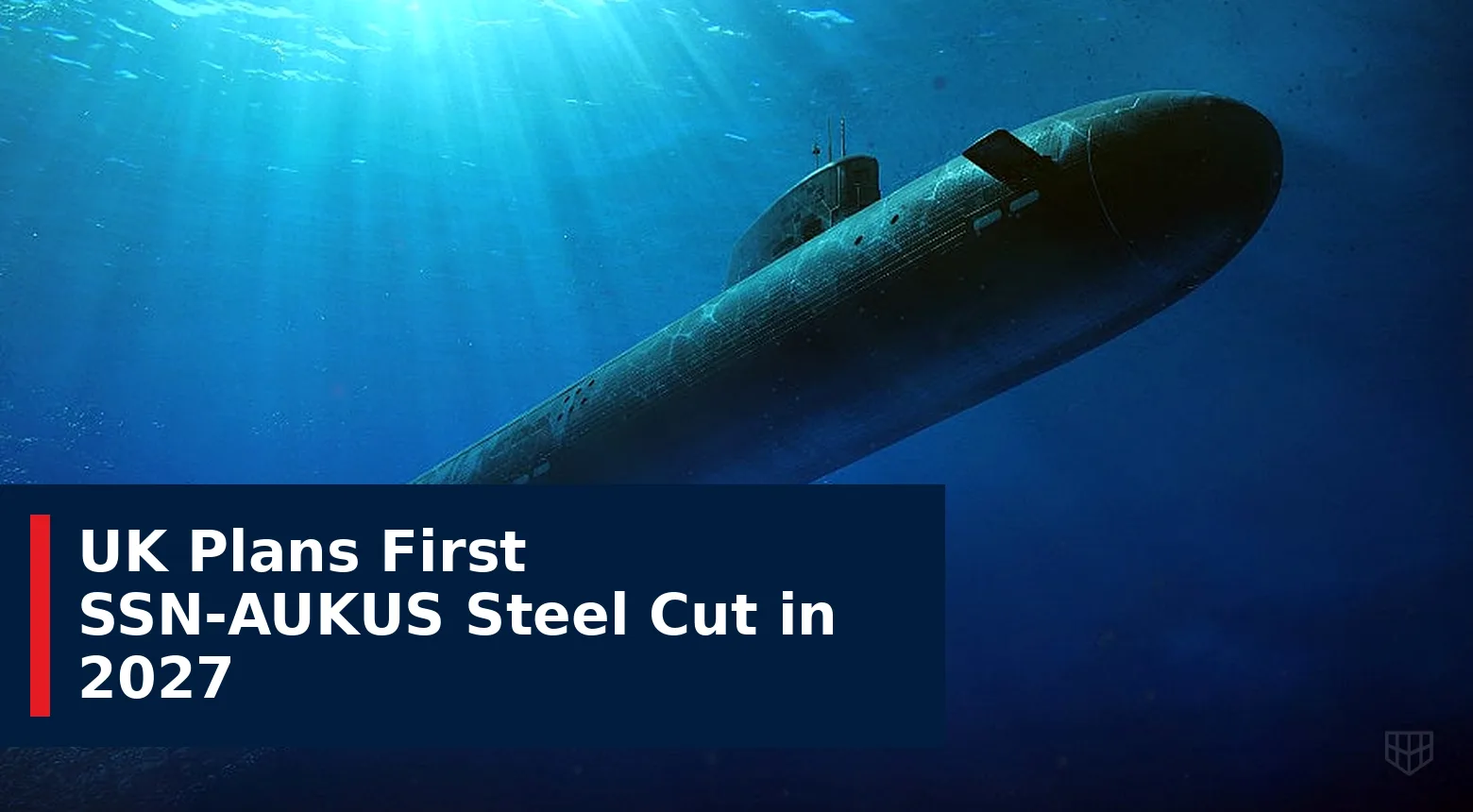
The UK says it plans to cut steel for its first SSN-AUKUS attack submarine in 2027, marking the start of physical production.
Production is planned to begin next year
The United Kingdom plans to cut steel for its first SSN-AUKUS nuclear-powered attack submarine in 2027. The date appears in the government’s annual update to Parliament on the future nuclear deterrent, published on 15 September 2026. A steel-cutting ceremony normally marks the start of physical manufacture for major hull sections and is therefore a more concrete milestone than design studies or facility construction.
It will not mean that a complete submarine is close to delivery. Nuclear submarines require years of module construction, outfitting, integration, testing and sea trials. Current planning places the first British SSN-AUKUS in service in the late 2030s. That remains a target rather than a guaranteed date, and the official update does not remove the schedule and cost risks inherent in a new class.
From design contracts to metal
The UK has committed roughly £4 billion in design and development contracts since 2023, supporting BAE Systems, Rolls-Royce and the wider submarine enterprise. Work includes detailed design, reactor development, long-lead procurement, workforce growth and expansion at Barrow-in-Furness and Derby. The 2027 steel cut would demonstrate that these preparatory investments have produced a buildable baseline for the first boat.
Early production can begin while some design work continues, but excessive concurrency creates rework if drawings, equipment or interfaces change. Submarine programmes must control weight, acoustic performance, shock standards and nuclear safety across millions of parts. The quality of design release and supplier readiness at steel cut will therefore matter as much as the ceremony itself.
A shared AUKUS design
SSN-AUKUS is being developed by the United Kingdom and Australia with technology support from the United States under the AUKUS partnership. Britain will build submarines for the Royal Navy, while Australia plans domestic construction after operating US Virginia-class boats during its transition. Common design work is intended to improve interoperability and support a larger combined industrial base.
The partners will not have identical production environments. National regulations, combat systems, supply chains and construction learning can create divergence even from a shared design. Export-control arrangements, protection of nuclear technology and access to US components remain enabling conditions. Decisions made for the first British boat may shape the configuration and build sequence available to Australia later.
Fleet ambition and industrial constraints
The UK has stated an ambition for a fleet of up to 12 attack submarines, larger than the current Astute-class force, but the final number and build profile depend on future spending decisions. An ambition is not the same as an order for 12 boats. Sustaining the design requires a drumbeat that keeps shipyard labour, reactor production and specialist suppliers active without creating unaffordable peaks.
Barrow’s workforce and facilities are being expanded while the yard continues Astute and Dreadnought work. Rolls-Royce must deliver reactor plant capacity, and hundreds of suppliers must qualify components whose failure could affect safety or quieting. Recruiting welders, nuclear engineers and systems specialists is a multi-year task; schedule pressure cannot be solved simply by adding general labour late in the build.
The next evidence will be confirmation that first steel was cut on the planned date, followed by keel or module milestones, reactor delivery and progress against the late-2030s service target. The 2027 plan is strategically significant because it sets a near-term test of whether the AUKUS industrial programme has moved from mobilisation to construction. It should still be reported as a planned start of production, not as delivery of an operational submarine or a final commitment to a 12-boat fleet. Annual parliamentary updates will remain important for tracking cost, workforce and schedule movement against that baseline.