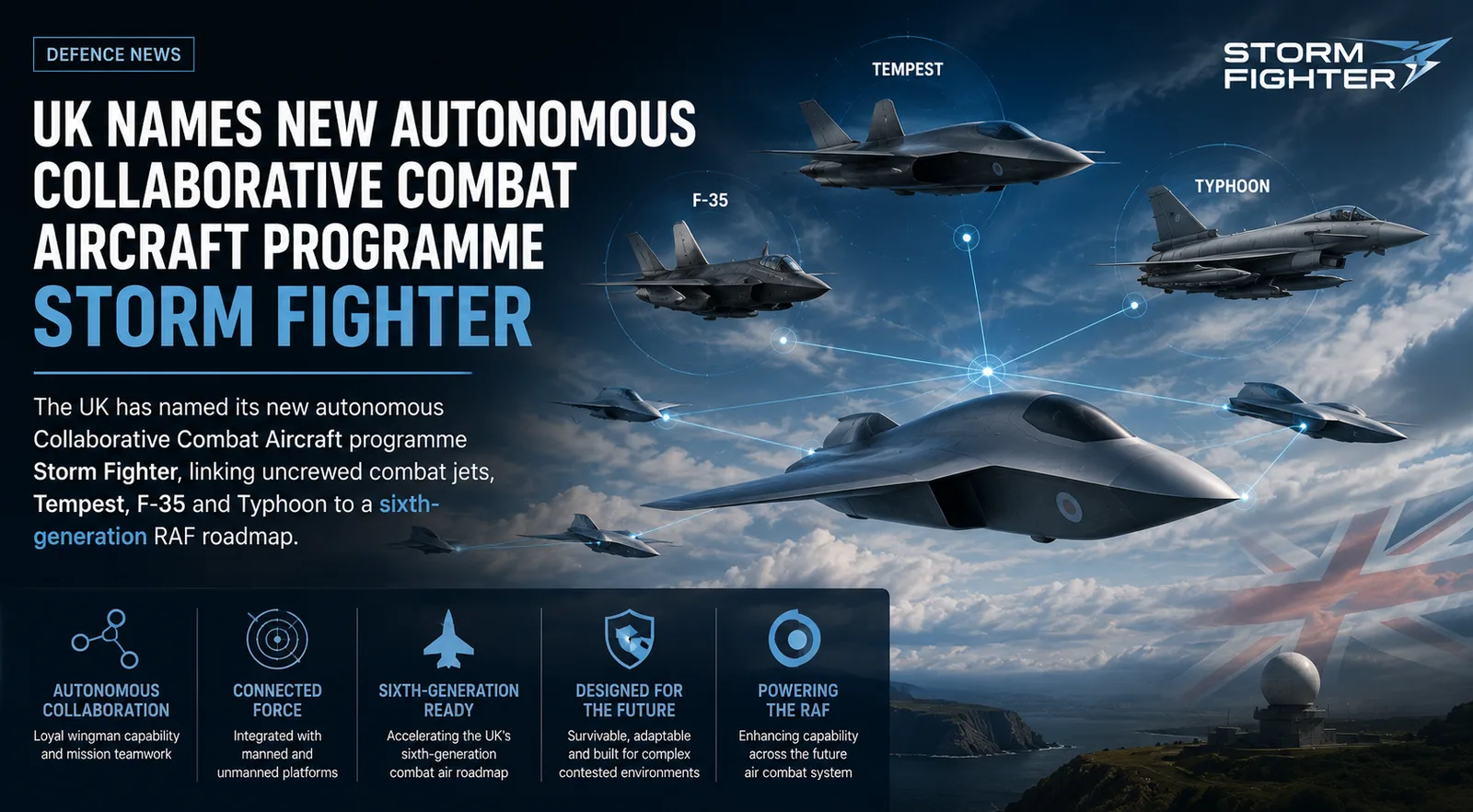
Storm Fighter CCA programme plans have been revealed by the United Kingdom as part of a wider push to build Europe’s first sixth-generation air force.
Minister for Defence Readiness and Industry Luke Pollard MP announced the name during a keynote speech at the Global Air and Space Chiefs’ Conference in London. According to GOV.UK, the new autonomous Collaborative Combat Aircraft programme will develop uncrewed jets designed to operate alongside Typhoon, F-35 and future Tempest aircraft.
The announcement links Storm Fighter to the UK’s Defence Investment Plan, which allocates £31 billion for air and space and raises investment in drones and advanced uncrewed systems to £5 billion. Pollard said the wider airpower package would help transform the Royal Air Force into Europe’s first sixth-generation air force.
The programme reflects a major shift in air combat. Future air forces will not rely only on crewed combat aircraft. They will combine fighters, autonomous wingmen, electronic warfare, space-based support, sensors, secure data links and AI-enabled mission systems.
Storm Fighter CCA Programme Adds Autonomous Mass
The Storm Fighter CCA programme is designed to add autonomous mass to the RAF’s combat air fleet. Collaborative combat aircraft can increase the number of assets available in contested airspace without requiring a pilot in every platform.
This matters because future air warfare will be shaped by dense air defences, electronic warfare, drones, long-range missiles and high-tempo targeting cycles. Crewed aircraft will still be essential, but they will need autonomous partners to expand reach, survivability and tactical options.
Storm Fighter is therefore not a replacement for Typhoon, F-35 or Tempest. It is intended to operate with them. That makes the programme part of a broader systems-of-systems approach to airpower.
RAF Roadmap Connects Tempest, F-35 and Typhoon
The UK’s future combat air roadmap is built around three major combat air platforms: F-35, Typhoon and Tempest. Storm Fighter adds an autonomous layer to that structure.
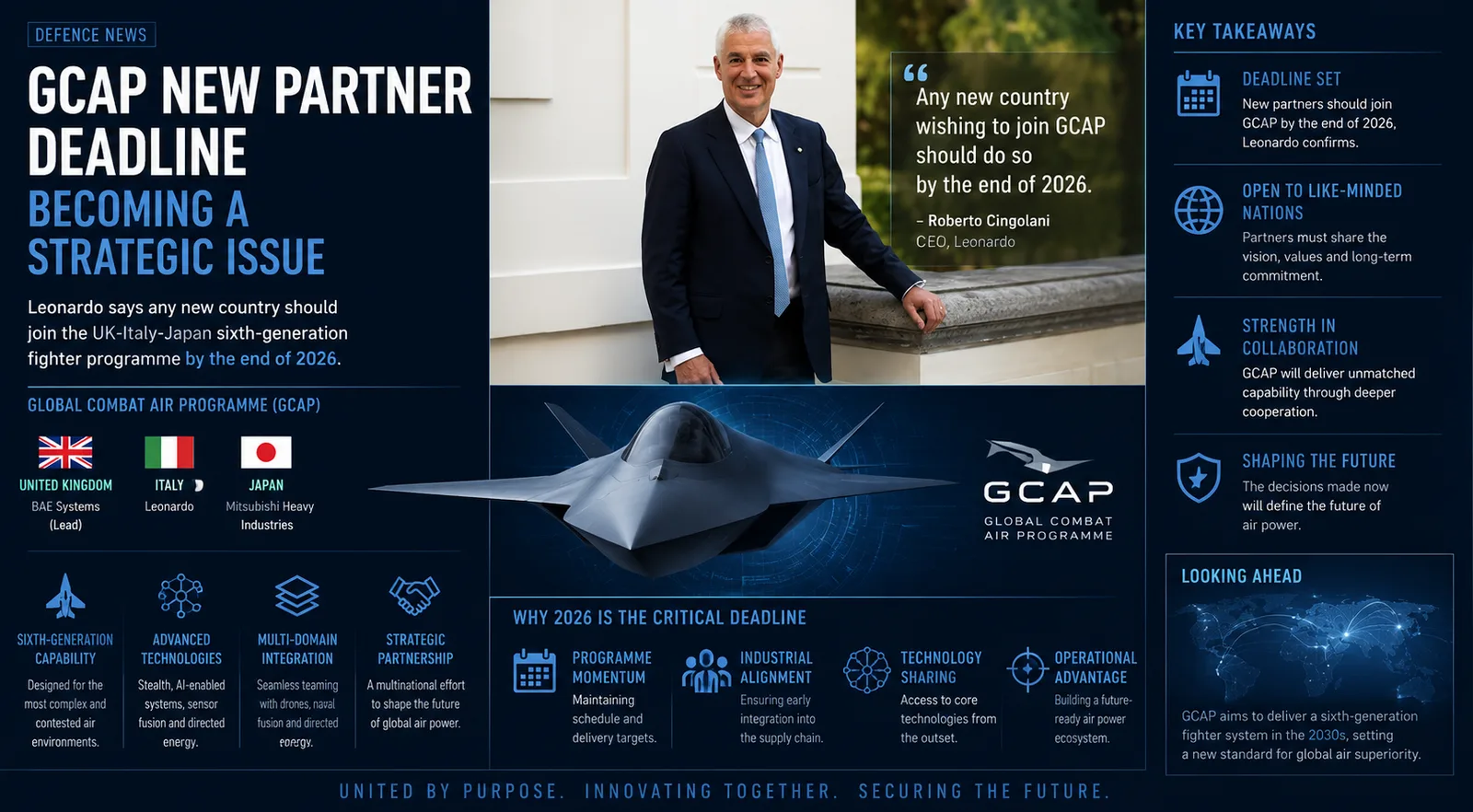
Tempest remains the sovereign sixth-generation fighter at the centre of the UK’s future combat air ambition. The aircraft is being developed through the Global Combat Air Programme with Italy and Japan. The UK recently moved into the design and test phase with a £4.6 billion contract awarded to the Edgewing consortium.
Typhoon will also remain important. The Defence Investment Plan includes £1.1 billion to upgrade and sustain the Typhoon combat force into the 2040s. Meanwhile, more than £2 billion is being invested to prepare the UK’s first F-35A aircraft, enabling the RAF to join NATO’s tactical nuclear mission.
Storm Fighter Builds on the Drone Investment Surge
The Storm Fighter CCA programme is part of a larger £5 billion UK investment in drones and advanced uncrewed systems. This investment covers multiple domains, including air, land and maritime operations.
The UK has also highlighted Project Vanquish, a jet-powered drone trial intended to operate alongside F-35B aircraft. In addition, Storm Shroud is being brought into service as an uncrewed electronic warfare capability.
Together, these programmes show that the UK is not treating drones as a single capability area. Instead, London is building an uncrewed ecosystem that includes autonomous combat aircraft, electronic warfare, testing infrastructure and industrial partnerships.
Sixth-Generation Airpower Requires More Than a New Fighter
The sixth-generation airpower concept is broader than a new aircraft. It requires advanced sensors, secure networks, electronic warfare, AI-enabled mission planning, autonomous teaming and resilient command-and-control.
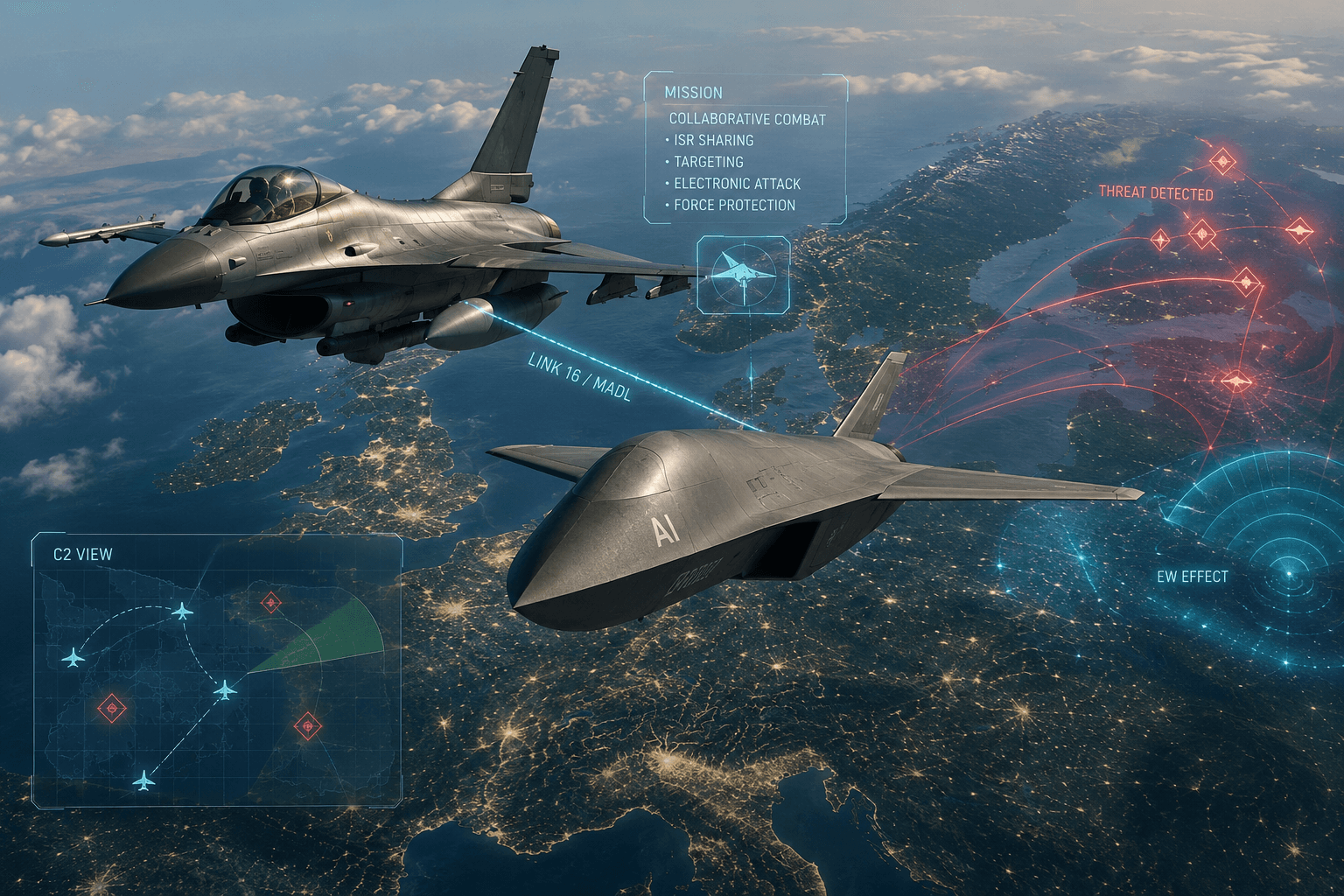
This is why Storm Fighter is strategically important. A future fighter such as Tempest will be more effective if it can direct, support or coordinate autonomous assets. Collaborative aircraft can carry sensors, weapons or electronic warfare payloads while extending the combat air formation.
The challenge will be integration. Storm Fighter must connect with crewed aircraft, ground stations, air-defence networks and space-enabled systems. It must also operate under electronic attack and in contested communications environments.
Space and Air Defence Become Part of the Same Architecture
Pollard’s speech also linked airpower transformation to space and integrated defence. The UK is establishing a new integrated air, space and missile defence operations centre as part of its homeland protection architecture.
The speech also highlighted Borealis, the UK’s space awareness system, and the Noctis One military space telescope. These systems support the UK’s ability to monitor and protect critical space infrastructure.
This reflects the direction of modern warfare. Air operations depend on space-enabled communications, navigation, intelligence and warning. At the same time, space assets depend on air and missile defence to protect ground infrastructure and national command systems.
UK Defence Industry Gets a Combat Air Growth Signal
The Storm Fighter CCA programme also sends an industrial signal. Autonomous combat aircraft could create new demand for propulsion, mission systems, sensors, software, electronic warfare, datalinks, weapons integration and advanced manufacturing.
The UK wants this investment to strengthen its defence and aerospace industrial base. The Defence Investment Plan includes large commitments for GCAP, Typhoon, F-35, transport aircraft, drones and training systems.
Skills are also part of the package. Pollard highlighted a £182 million skills programme, including new Defence Technical Excellence Colleges in aerospace heartlands such as Yeovil and Blackpool.
Ukraine Shapes the Lesson, But Does Not Replace Crewed Airpower
Ukraine has demonstrated the operational value of drones, low-cost systems and rapid adaptation. However, the UK is drawing a mixed lesson from the war. It is investing heavily in uncrewed systems, but it is not replacing crewed aircraft entirely.
That distinction matters. The UK argues that its global responsibilities, NATO role and need for deep strike still require combat jets. Autonomous aircraft are therefore being positioned as partners to crewed platforms rather than substitutes for them.
This approach aligns with wider allied thinking. Future airpower will likely combine high-end crewed fighters with lower-cost autonomous platforms, large drone fleets and networked effects across multiple domains.
Storm Fighter Could Define Europe’s CCA Race
Storm Fighter places the UK inside the emerging race for collaborative combat aircraft. The United States, Europe and several Indo-Pacific partners are all exploring autonomous wingman concepts.
The UK’s advantage is that Storm Fighter can be developed alongside Tempest and GCAP from an early stage. This could allow crewed and uncrewed systems to mature together rather than being integrated later as separate projects.
The risk is execution. Autonomous combat aircraft require demanding software, safety, certification, command authority and rules-of-engagement frameworks. The UK will also need to produce systems at a cost that allows meaningful fleet scale.
Conclusion
The Storm Fighter CCA programme marks a major step in the UK’s airpower transformation. By naming and advancing its autonomous combat aircraft effort, London is connecting drones, Tempest, F-35, Typhoon, space systems and missile defence into a single sixth-generation roadmap.
The programme’s success will depend on speed, integration and industrial capacity. If the UK can combine autonomous aircraft with crewed platforms and space-enabled command networks, Storm Fighter could become one of the defining European combat air programmes of the next decade.
For further Defence Agenda coverage, read our air warfare, drones and aerospace sections. Related analysis includes wingman aircraft in Europe’s rearmament debate, Farnborough Airshow 2026 and defence demand and Europe’s deep precision strike initiative.