NATO defence industry suppliers face renewed pressure to accelerate output after Secretary General Mark Rutte told the Atlantic Future Forum in Oslo, Norway, on 11 November 2026 that Allied production was expanding but demand still exceeded supply. Delivering his keynote aboard the Royal Navy aircraft carrier HMS Prince of Wales, Rutte linked industrial capacity to North Atlantic reinforcement routes, Arctic security and the Alliance’s planned investment increase. The speech was a political and operational demand signal, not a new NATO-wide contract award or a verified delivery milestone. Its significance for defence manufacturers lies in whether growing budgets can be converted into deployable capability, maintenance capacity and assured replenishment.
NATO’s North Atlantic and High North Security Priorities
Rutte’s remarks, recorded in the official NATO speech transcript, brought together two issues often treated separately: securing the sea lines between North America and Europe, and producing sufficient equipment to sustain the forces using them. The event was hosted aboard HMS Prince of Wales with representatives from the United Kingdom, Norway and other Allies. NATO’s 12 November account confirmed the location and the emphasis on Allied maritime service, increased spending and readiness. A carrier strike group demonstrates interoperability, but sustained operations also depend on escorts, aircraft, spares, fuel, port access and shore-based repair.
The North Atlantic is more than a maritime patrol area. It carries commercial goods, energy and transatlantic communications, and provides a reinforcement route for Allied forces. Rutte pointed to NATO Joint Force Command Norfolk and its responsibility for strategic sea lines of communication. He also referred to Russian submarine activity associated with the Kola Peninsula, threats to undersea cables in the Baltic region, maritime disruption and Russia’s so-called shadow fleet. These references describe the security environment cited by the Secretary General; they are not a public confirmation of a new specific incident or operational engagement during the forum.
In the High North, Rutte said seven of the eight Arctic states are now NATO Allies, reflecting Finland’s and Sweden’s accession. He highlighted the launch of Arctic Sentry earlier in 2026 as part of the effort to increase NATO visibility, exercises and deployed assets across the region. The relevant military problem is not simply to detect activity but to sustain credible surveillance, presence, reinforcement and response across vast distances. More ships and aircraft can improve coverage, but readiness also depends on trained crews, maintenance availability, resilient sensors and communications links.
A United Kingdom–Nordic-Baltic joint statement following meetings at the same forum reinforced the maritime theme. Officials from the United Kingdom and Nordic-Baltic partners committed to improving maritime domain awareness, cooperation on critical underwater infrastructure, information sharing and recovery after subsea incidents. That statement is a separate multilateral document, not a procurement decision made in Rutte’s keynote. It nevertheless identifies measurable areas in which industrial suppliers, network providers and military users may need to work together.
Defence Production, Spending Targets and Next Steps
The industrial request was unusually explicit. Rutte thanked companies for expanding production but maintained that demand outstripped supply and called for more output, innovation and collaboration. Reporting by National Defense independently covered the industry appeal. Potential constraints extend beyond final assembly to propulsion units, guided-missile components, energetics, electronics, shipyard slots, qualified labour and the availability of test and acceptance facilities. A higher budget appropriation may support orders, but it does not remove these bottlenecks immediately.
For the 2025–2026 period combined, Rutte said European Allies and Canada were increasing defence investment by more than $250 billion. He also said five Allies were projected to reach or exceed the full 5% of GDP defence investment benchmark in 2026. The key words are combined and projected: the first figure is not a single-year procurement fund, while the second is an expected national spending result, not evidence that every NATO member has achieved the target. NATO’s defence-industrial policy overview describes the 2035 framework as at least 3.5% of GDP for core defence and up to 1.5% for defence- and security-related expenditure.
The Secretary General additionally welcomed the United Kingdom’s stated course towards 3% of GDP in 2030 and a credible path to 3.5% in core defence expenditure by 2035, while acknowledging Norway’s proposed path to the same core benchmark. Those timelines matter to programme managers because budgets typically flow through multiyear national processes, differing acquisition authorities and industrial contracts that are not automatically synchronised. NATO’s collective investment objectives should therefore not be confused with a central procurement account or a uniform national spending schedule.
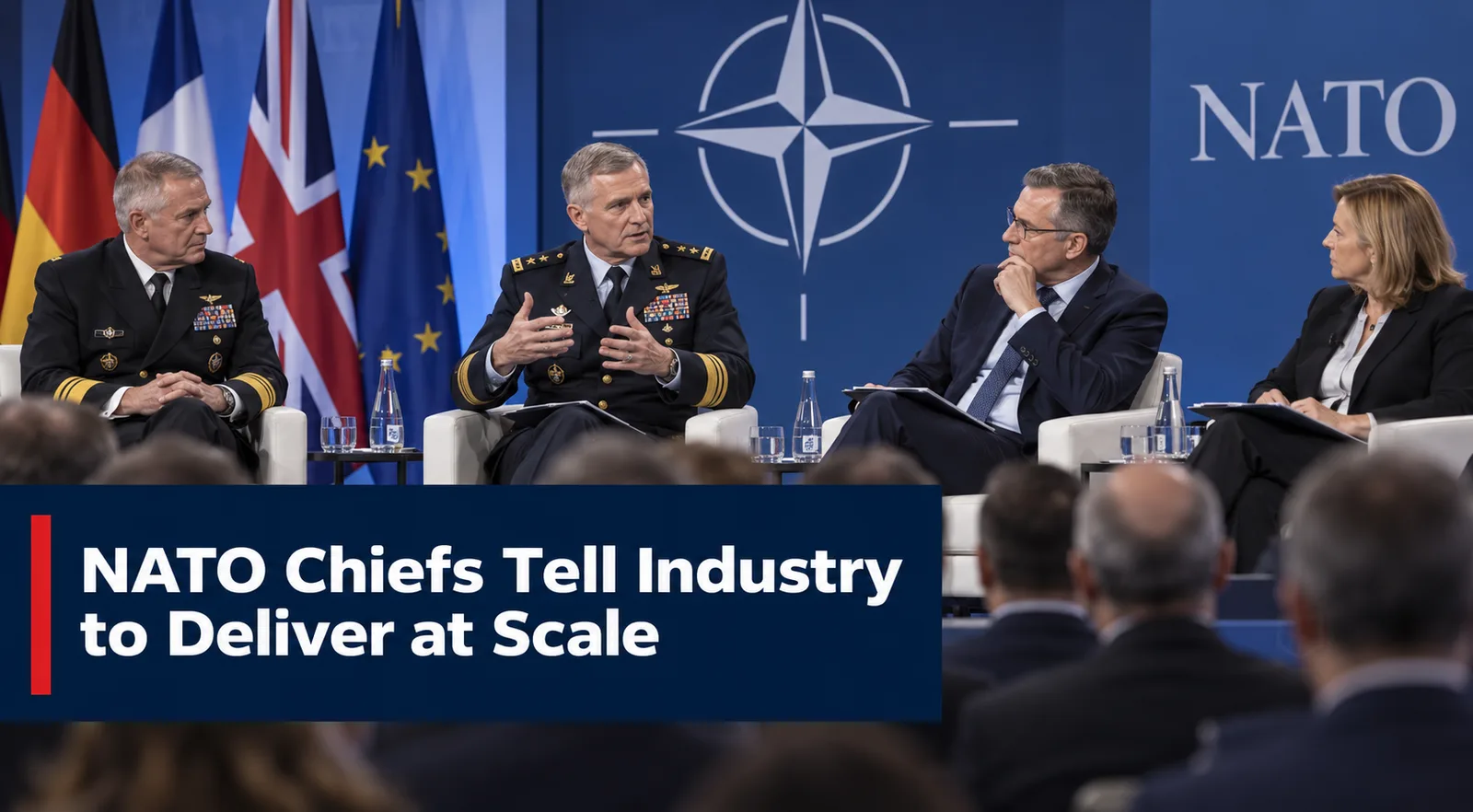
NATO’s wider industrial work supplies a route from political commitments towards implementation. Its industry-production overview describes an industry-cooperation strategy, consultation structures and the NATO Engine framework intended to connect manufacturing capacity and support cross-border scale-up. These mechanisms may help demand signals reach suppliers earlier, including smaller companies, but their practical value depends on funded requirements, contracting rules, intellectual-property arrangements, export approvals and sustainable production rates. Defence Agenda previously examined Rutte’s June call for greater firepower production and NATO military leaders’ subsequent demand for industrial scale; the Oslo remarks add a specific maritime and High North context.
The procurement question is how much of the planned spending becomes fielded capability and how quickly. For air and missile defence, the useful indicators are interceptor availability, launch-system integration, training rounds, repair throughput and replenishment stocks. For maritime defence they include ship availability, sortie generation, submarine-tracking coverage, anti-submarine support and protected communications. The UK’s separately announced Atlantic Net undersea-surveillance initiative illustrates one national effort in the wider operational area, but its initial investment framework cannot be counted as spending newly authorised by NATO at the Atlantic Future Forum.
A central counterargument is that expanding defence-industrial capacity too quickly can raise unit costs, create short-lived overcapacity or lock buyers into systems that do not integrate with other Allied inventories. Fragmented national specifications can dilute economies of scale, while longer framework contracts may not always align with rapidly changing operational needs. Interoperability standards, realistic testing, transparent delivery milestones and repairability therefore matter alongside headline production volumes. A supplier that delivers equipment on time but cannot support it during repeated deployment cycles may not solve the readiness problem Rutte described.
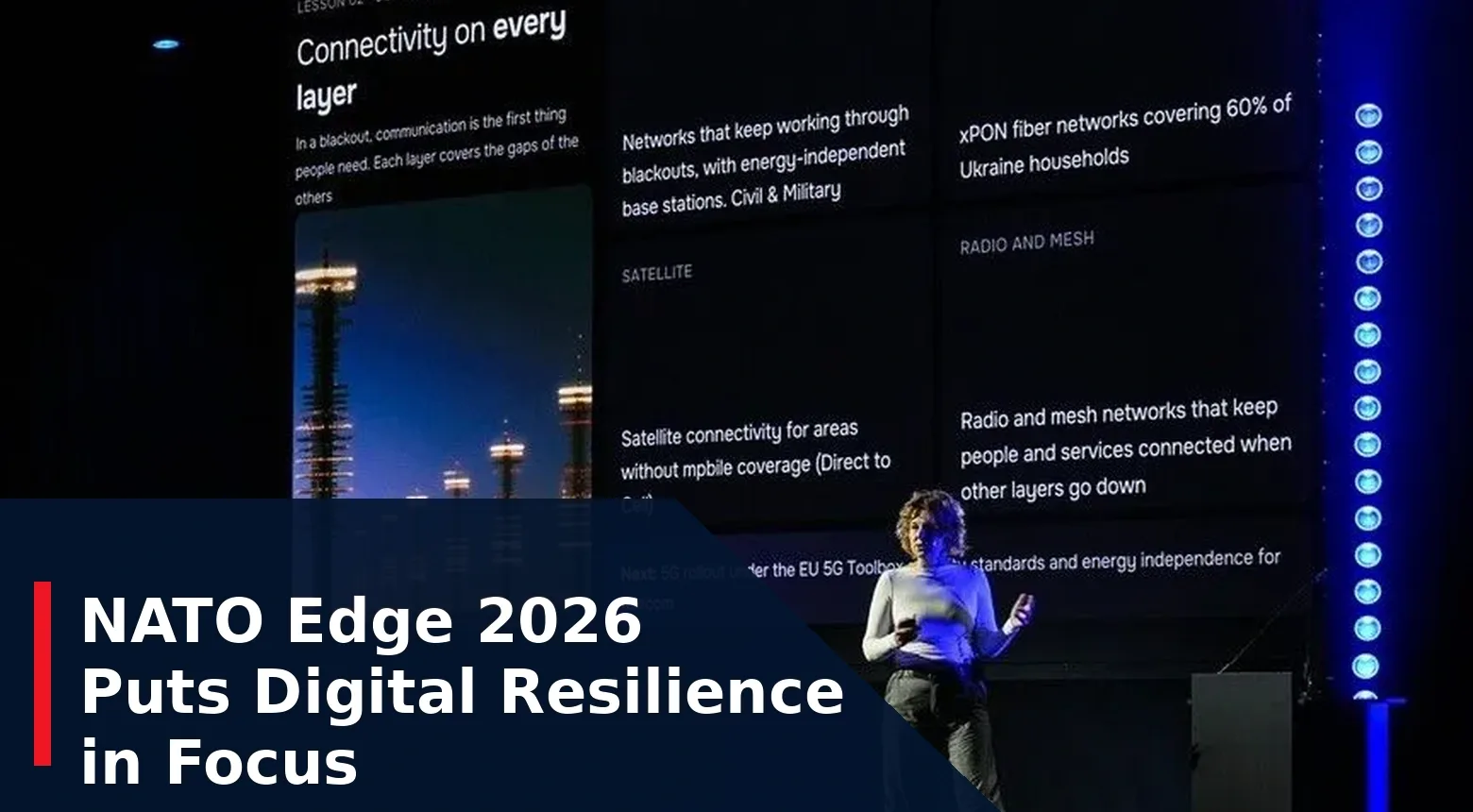
Rutte’s discussion of Ukraine and hybrid threats reinforced that distinction. He cited Russian strikes on Ukrainian infrastructure and hostile activity across Europe as pressures on deterrence, public resilience and sustainment. Claims about particular Russian casualty levels in the address are the Secretary General’s estimates and are not independently verified in this article. His call for governments, industry and civil organisations to improve resilience should also be separated from any new cyber procurement decision. Defence Agenda’s coverage of NATO Edge 2026 examines the related digital-readiness agenda at a different event and date.
Implications / Next: The next verifiable tests will be national contract awards tied to the defence investment plans, documented expansion of production and repair throughput, deliveries accepted by military customers and evidence that Arctic and North Atlantic readiness can be sustained in exercises and operations. Analysts should also track whether common standards and industry-cooperation mechanisms produce interoperable systems rather than parallel national solutions. As of 18 November 2026, Rutte’s Oslo address provides a clear statement of strategic priorities; it does not disclose a new centrally funded NATO shipbuilding programme, a single contract value or a fixed quantity of new equipment.
Further Reading
- NATO — Full keynote transcript, 11 November 2026
- NATO — Rutte aboard HMS Prince of Wales, 12 November 2026
- NATO — Increasing defence industrial production and NATO Engine
- UK Government — Atlantic Future Forum UK–Nordic-Baltic statement
- National Defense — NATO chief urges industrial expansion, 11 November 2026
- Defence Agenda — NATO pushes defence industry to deliver more firepower
- Defence Agenda — NATO chiefs tell industry to deliver at scale
- Defence Agenda — UK Atlantic Net undersea surveillance
- Defence Agenda — NATO Edge 2026 digital resilience