Brontanax uncrewed fighter has entered the global Collaborative Combat Aircraft race, giving BAE Systems and the United Kingdom a sovereign contender in one of the fastest-moving areas of future air combat.
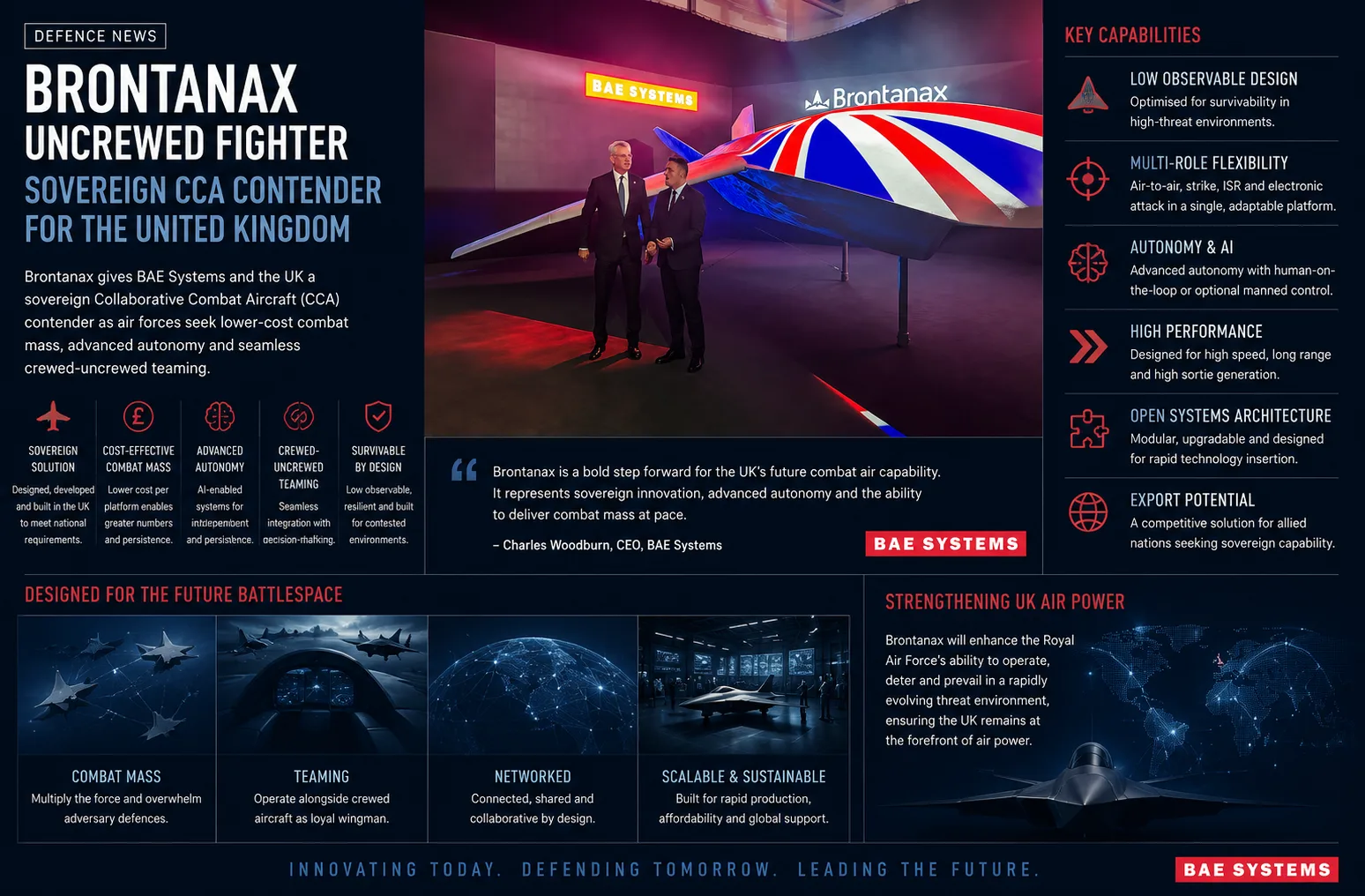
BAE Systems unveiled Brontanax at the Farnborough Airshow, positioning the aircraft as an autonomous uncrewed fighter designed to fly alongside crewed combat aircraft. Reuters reported that Brontanax is about the size of a Hawk trainer, is ready to begin flight testing in 2027 and could enter service by 2030.
The development matters because air forces are looking for ways to add combat mass without buying only expensive crewed fighters. Collaborative Combat Aircraft, or CCAs, are designed to work with piloted aircraft, extend reach, absorb risk, support electronic effects and strike targets at lower cost.
Brontanax Uncrewed Fighter Gives the UK a Sovereign CCA Option
BAE Systems describes Brontanax as the UK’s first British-designed uncrewed autonomous Collaborative Combat Aircraft. That framing is important. The aircraft is not only a company demonstrator. It is also a statement about UK sovereign capability in autonomous combat aviation.
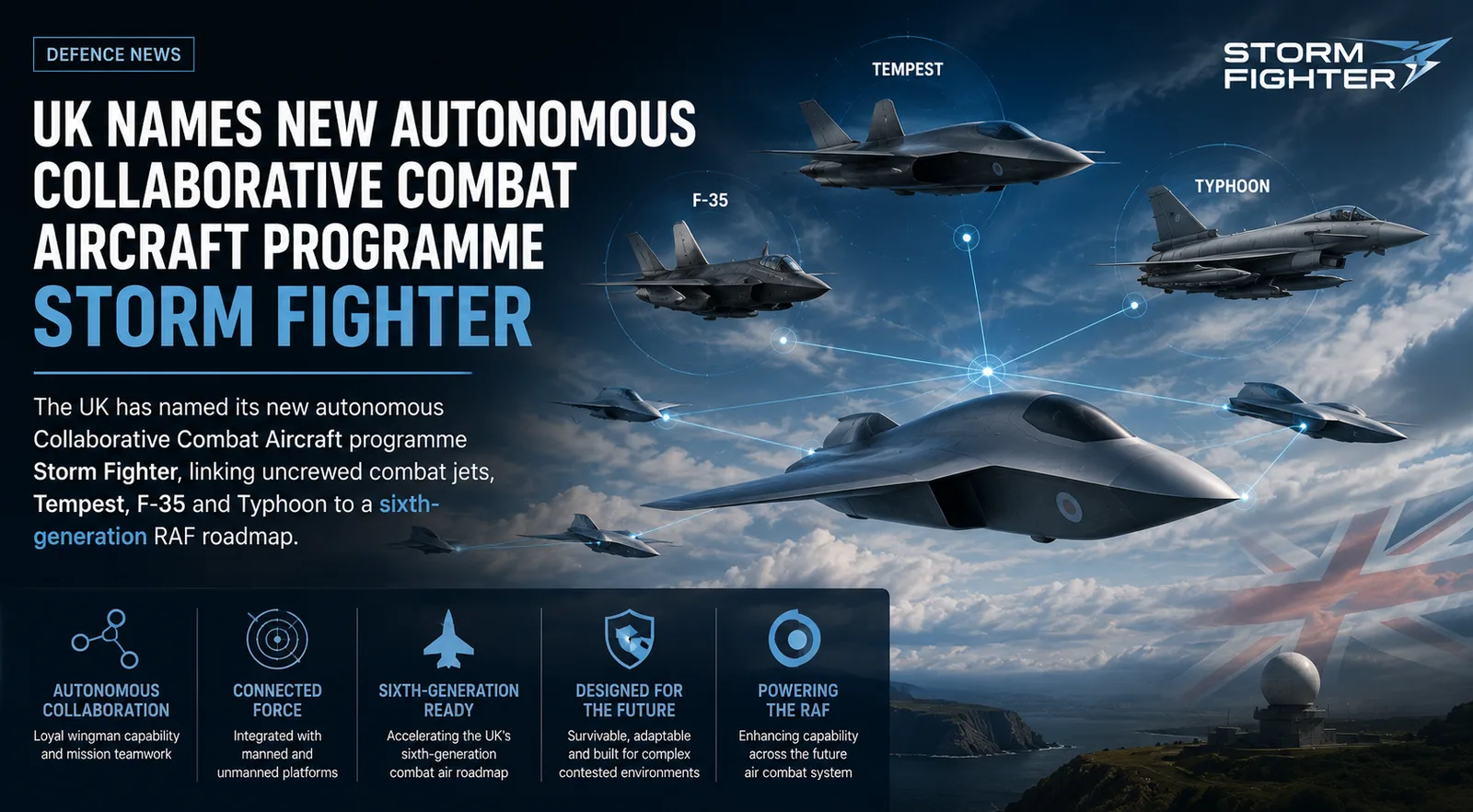
The UK has already announced a national Collaborative Combat Air programme, named Storm Fighter, as part of its wider push toward sixth-generation airpower. Brontanax now gives BAE a domestic platform that can compete for that requirement.
For the Royal Air Force, a sovereign CCA could reduce dependence on foreign uncrewed combat-air solutions while preserving national control over software, mission systems, upgrades, electronic warfare and operational doctrine.
BAE Is Targeting Lower-Cost Combat Mass
The core value proposition is cost. Reuters reported that BAE is aiming for Brontanax to offer 70% to 80% of the capabilities of a fighter jet at under 25% of the cost, with a possible price point around $25 million.
This reflects the central logic of the CCA market. Air forces do not want to replace crewed fighters completely. They want to multiply the effect of those fighters with lower-cost uncrewed aircraft that can perform selected missions at scale.
That model could change force planning. Instead of relying only on a small number of high-end crewed platforms, air forces could deploy mixed formations where crewed fighters command or coordinate several autonomous aircraft.
Crewed-Uncrewed Teaming Is the Operational Core
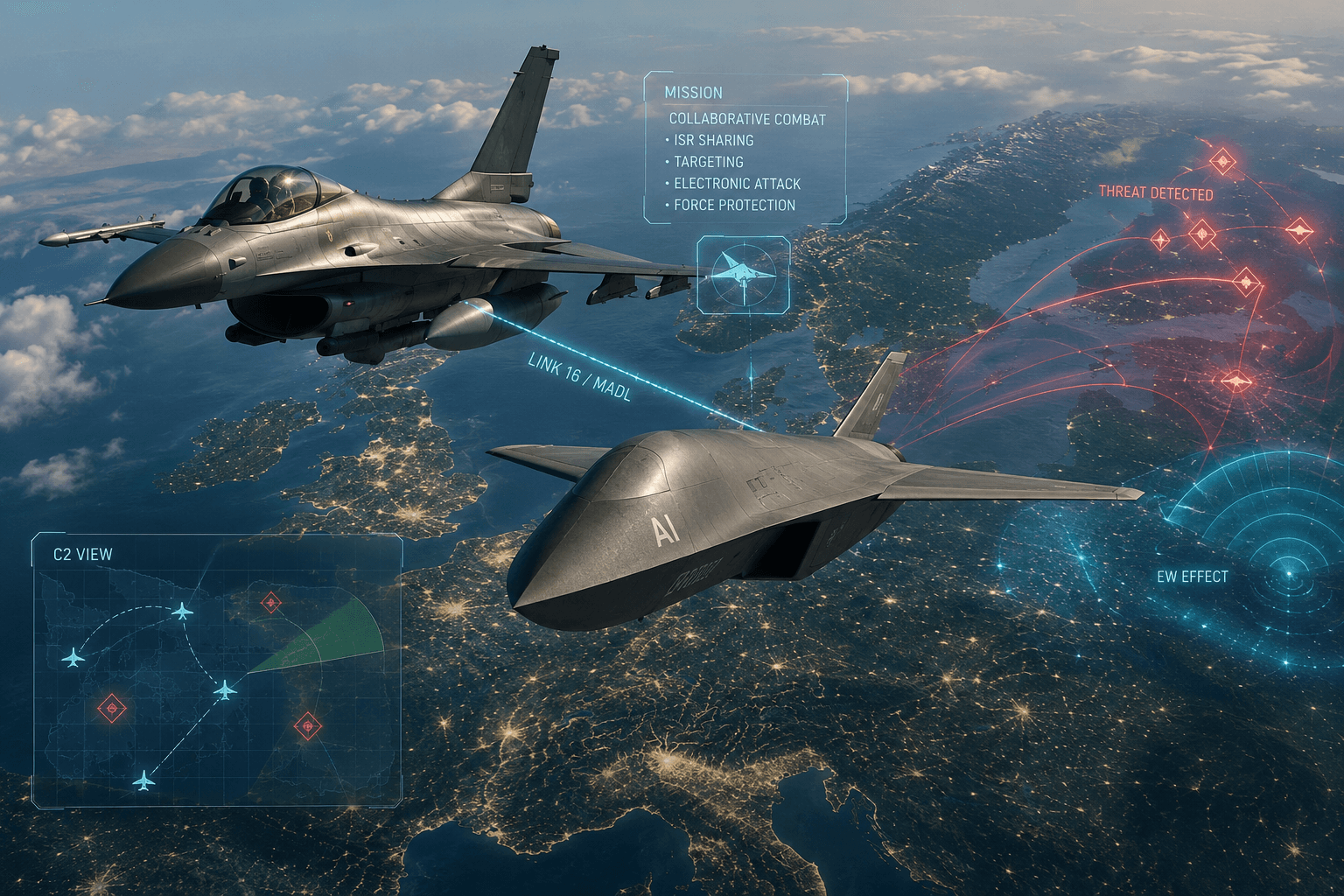
BAE says Brontanax is built for crewed-uncrewed teaming. A Typhoon pilot or mission commander can operate the aircraft from range, allowing crewed and uncrewed platforms to work as one team.
This has major operational implications. A CCA can fly ahead of a crewed aircraft, carry sensors, support electronic effects, strike targets, draw enemy attention or extend the reach of the force. This can keep pilots farther from danger while increasing the number of assets inside the battlespace.
The most important capability is not just autonomy. It is controlled autonomy inside a wider mission network. Pilots and commanders must be able to trust the aircraft, redirect it and use its data without being overloaded.
Open Architecture Could Define the Aircraft’s Long-Term Value
BAE highlights Brontanax’s open and modular architecture. That is a key feature because CCA requirements are likely to change quickly as threats evolve.
An open architecture allows software upgrades, payload changes and mission-system updates without redesigning the whole platform. This is essential for aircraft that must operate in contested electronic-warfare environments and adapt to new sensors, datalinks and weapons.
For customers, modularity also supports export flexibility. Different air forces may want different payloads, weapons, radios, national mission software or electronic-warfare packages. A rigid platform would be harder to adapt.
Electronic Effects and Strike Missions Are Central
BAE says Brontanax is built to deliver electronic effects and strike targets in the air and on the ground. This indicates that the aircraft is not being positioned only as an ISR drone.
Electronic effects are especially important because future air combat will depend on spectrum control. A CCA that can jam, deceive, sense or disrupt enemy systems could increase the survivability of crewed fighters and other assets.
Strike capability adds another layer. A lower-cost uncrewed aircraft could be used against high-risk targets where sending a crewed aircraft would be more dangerous or politically costly.
BAE Is Investing Ahead of Government Orders
Reuters reported that BAE has invested hundreds of millions of pounds in its CCA effort without the kind of government co-investment that often supports new platform development.
This is a notable industrial signal. BAE is moving early because it believes the CCA market will grow quickly. The company is also trying to position itself before procurement decisions lock in around rival designs.
The strategy carries risk. If the UK or export customers choose competing systems, BAE may not recover the full investment. However, early development also gives the company a stronger chance to shape requirements and demonstrate hardware before rivals dominate the market.
The CCA Market Is Becoming Crowded
Brontanax enters a crowded and fast-growing field. Reuters reported that Boeing, Airbus, Anduril and General Atomics are among the companies competing for Collaborative Combat Aircraft opportunities at Farnborough.
Boeing’s MQ-28 Ghost Bat is one of the most mature examples, with flight testing already underway. U.S. competitors are also moving quickly as the U.S. Air Force advances its CCA programme and prepares for larger-scale procurement.
Europe is now responding with its own projects. Brontanax gives the UK an industrial answer to both American and European competition.
Storm Fighter Creates the Domestic Demand Signal
The UK’s Storm Fighter programme gives Brontanax a potential domestic demand path. The Defence Investment Plan committed £300 million to begin developing a new UK autonomous combat aircraft, while the wider airpower roadmap includes GCAP, Typhoon upgrades and F-35 expansion.
This is important because CCA development needs a customer. A sovereign UK programme can help create a baseline requirement, test environment, doctrine and industrial pull for Brontanax or competing designs.
However, Brontanax will still need to prove that it can meet RAF needs on performance, autonomy, safety, survivability, integration and cost.
Brontanax Could Complement GCAP
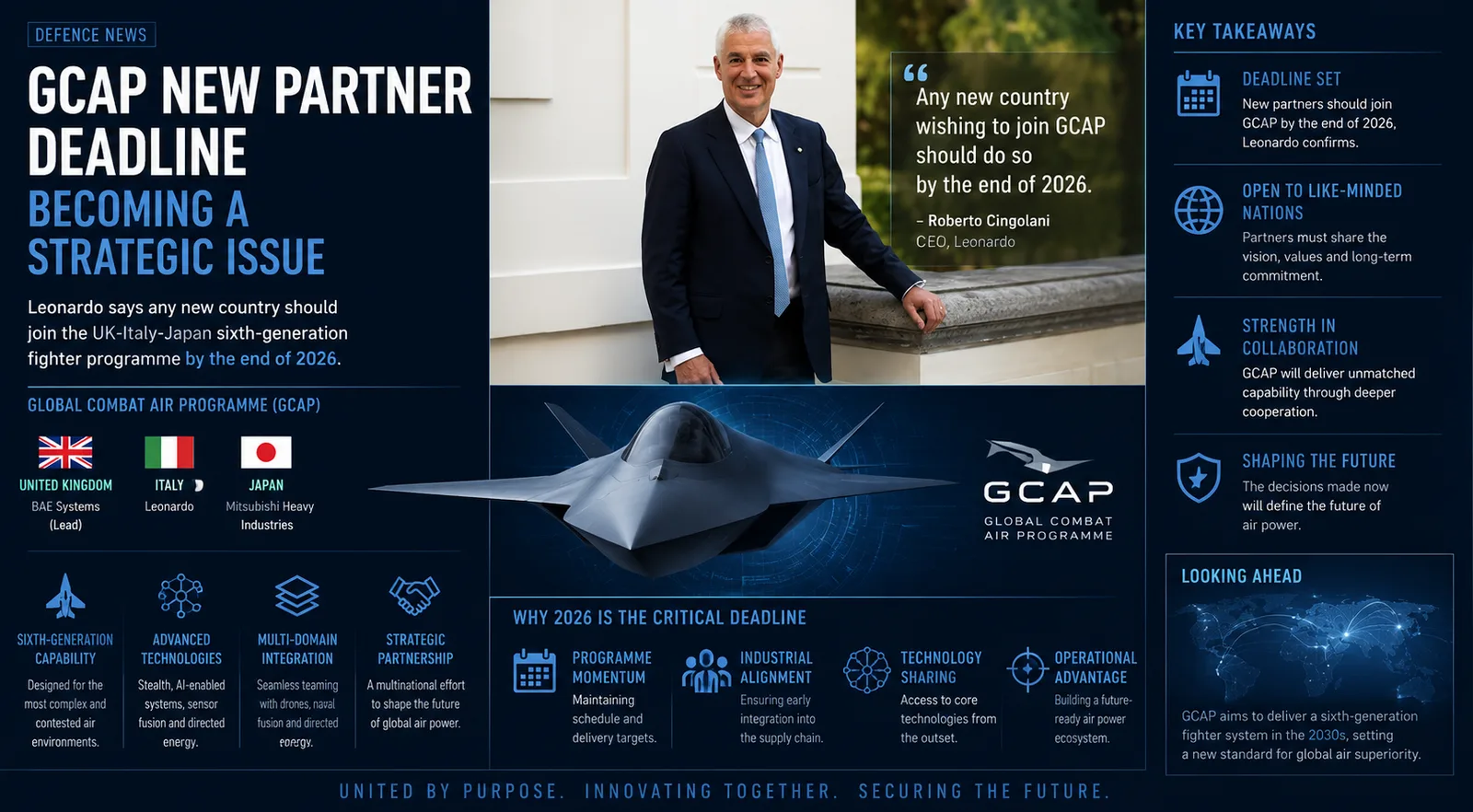
Brontanax also connects to the UK’s broader sixth-generation airpower agenda. GCAP is focused on the future crewed combat aircraft being developed with Italy and Japan. CCAs such as Brontanax could become part of the wider force mix around future fighters.
This relationship matters because next-generation combat aircraft will not operate alone. They will depend on sensors, autonomous wingmen, electronic warfare assets, weapons networks, simulation and secure datalinks.
If Brontanax matures, it could help the UK bridge the period between current Typhoon/F-35 operations and the longer-term GCAP ecosystem.
The Industrial Base Is a Major Part of the Story
BAE says more than 75 UK suppliers are engaged on the programme and more than 500 BAE Systems employees are working on it. This shows that Brontanax is already being framed as an industrial-sovereignty project, not only an air vehicle.
That matters politically. Defence programmes must increasingly justify their value through jobs, supply-chain resilience, exports and national technology depth.
For the UK, Brontanax could support skills in autonomy, software, mission systems, airframe design, manufacturing, testing, electronic warfare and systems integration.
The Main Challenge Is Moving From Model to Flight
The main test for Brontanax will be execution. A model at Farnborough creates market attention, but flight testing will determine whether BAE can validate the aircraft’s aerodynamic design, autonomy stack, mission systems and safety architecture.
The 2027 flight-test target is ambitious. The CCA market rewards speed, but military customers will still demand credible test data, reliability, cyber resilience and integration evidence.
BAE already has an assembled aircraft at its Warton facility, according to Reuters. That gives the programme credibility, but the aircraft must now move through a demanding test and demonstration path.
Export Markets Could Follow the UK
Reuters reported that BAE hopes to secure a UK order and that countries in Europe and the Middle East could follow, with some already showing interest.
Export prospects will depend on several factors. Customers will assess price, delivery speed, payload flexibility, sovereign control, interoperability with existing fighters and the ability to integrate national weapons or mission systems.
Brontanax’s open architecture could help in this area. However, exports will also require technology-protection decisions, airworthiness pathways and alignment with UK foreign policy.
The Cost-Effectiveness Question Will Be Decisive
CCA programmes are attractive because they promise lower-cost mass. But that promise must survive real acquisition and sustainment costs.
The aircraft itself is only part of the cost. Operators also need ground control systems, training, simulators, mission software, datalinks, cyber protection, weapons integration, maintenance, spares and upgrades.
Therefore, Brontanax must prove not only that it is cheaper than a crewed fighter, but that it can deliver meaningful operational effect at a sustainable fleet cost.
Autonomy Assurance Will Shape Adoption
Autonomy is central to the CCA concept, but it is also one of the hardest areas to certify and trust. A combat aircraft operating near crewed platforms must behave predictably, safely and securely under pressure.
That means Brontanax will need strong autonomy assurance, human oversight, cyber resilience and mission-level testing. Air forces will want to know how the aircraft behaves when communications degrade, sensors are jammed or the battlespace changes quickly.
This is why the most successful CCAs will be judged by software, safety cases and operational trust as much as airframe performance.
Conclusion
Brontanax uncrewed fighter gives BAE Systems and the UK a serious entry into the Collaborative Combat Aircraft market. The aircraft is designed to fly with crewed fighters, add lower-cost combat mass, support electronic effects and strike missions, and reduce risk to pilots.
The timing is important. The UK is launching its Storm Fighter CCA effort, Europe is accelerating autonomous air-combat programmes, and U.S. competitors are moving quickly toward production and flight testing.
The decisive question is whether Brontanax can move from unveiling to credible flight-test data fast enough. If BAE can demonstrate performance, autonomy, integration and cost discipline, Brontanax could become a key part of the UK’s sixth-generation airpower transition.
For further Defence Agenda coverage, read our air warfare, unmanned systems and aerospace sections. Related analysis includes Storm Fighter and the RAF’s sixth-generation airpower shift, wingman aircraft and European rearmament and GCAP new partner deadline and the sixth-generation fighter programme.