STM has run a field-test series covering counter-UAS, persistent surveillance and signal-intelligence missions across TUNGA-X, TOGAN, NEST, TOGAN-M and SpecDrone systems. The demonstrations matter because they show multiple autonomous products operating as parts of a wider mission architecture, although field-test validation should not be conflated with formal acceptance, serial procurement or operational fielding by a named customer.
Field tests covered counter-UAS, ISR and SIGINT functions
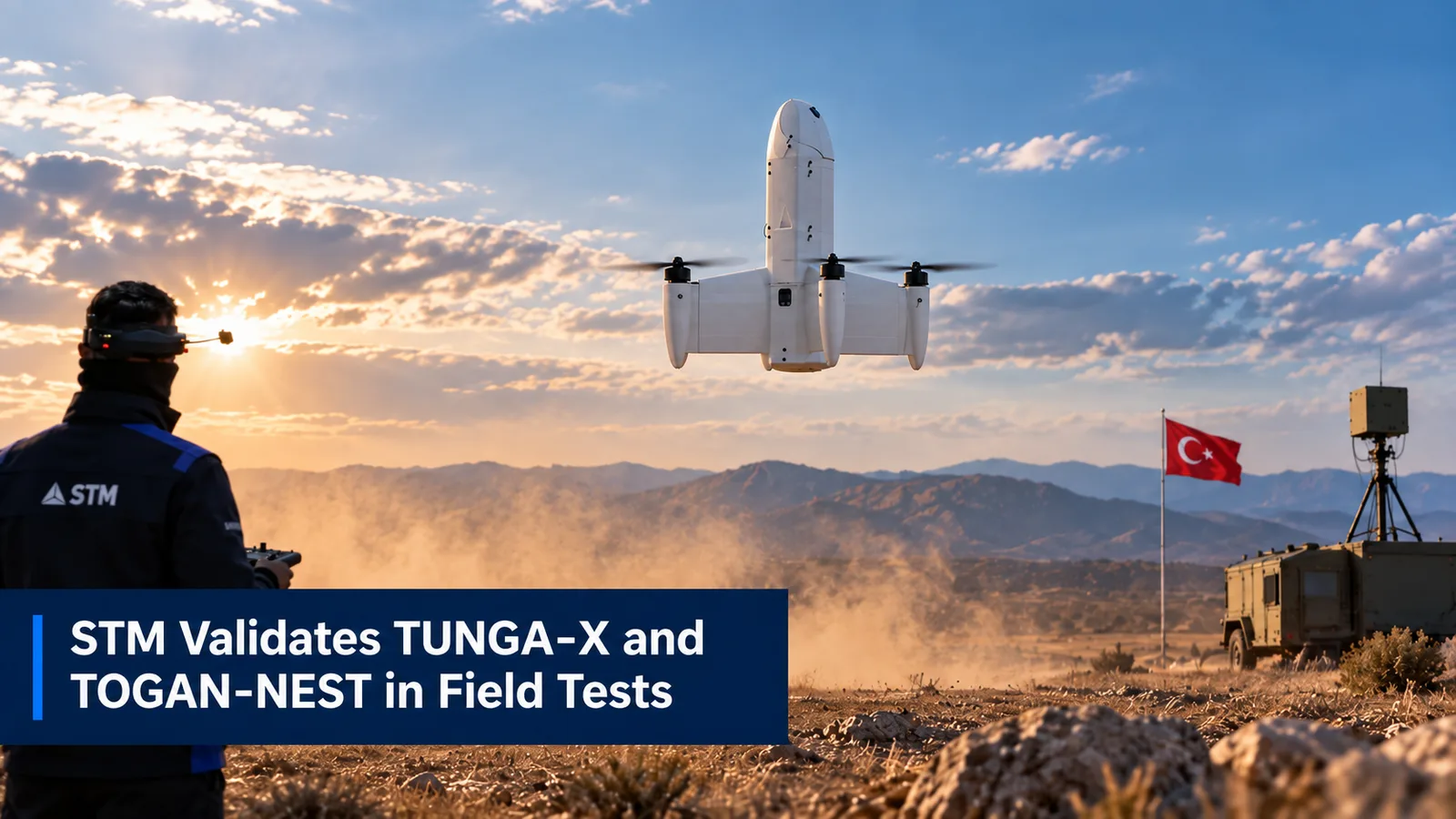
Anadolu Ajansı reported on 12 September 2026 that STM demonstrated several mission chains in field conditions. TUNGA-X was used in a radar-supported sequence for detection, tracking and defeat activity against an aerial target. TOGAN and the NEST smart nesting system were used to demonstrate remotely managed, persistent critical-site surveillance, while TOGAN-M was shown with its own smart-nest concept.
A further test paired TOGAN with SpecDrone for signal-intelligence activity, illustrating how a tactical UAV can be used as part of a sensing and geolocation chain rather than only as an electro-optical observation platform. Taken together, the events point to software, autonomy and cross-system integration as the main programme story.
NEST is designed to reduce the manpower burden of persistent surveillance
STM has previously described NEST as an automatic take-off, landing and charging solution integrated with TOGAN. The company says the architecture is intended to keep the UAV ready for repeated missions and enable continuous remote surveillance with less hands-on intervention. STM also states that TOGAN has been in active service for more than four years, providing a mature air vehicle around which automated basing concepts can be developed.
For users, the value of a smart nest is operational persistence. A small UAV with a limited battery endurance can still support continuous coverage if launch, recovery, charging and handover are automated across repeated sorties. That changes the system from a manually deployed squad-level sensor into a more infrastructure-like surveillance node for bases, borders or critical facilities.
TUNGA-X points toward an integrated counter-UAS mission chain
STM publicly introduced TUNGA-X as a new autonomous system during SAHA 2026. The September field activity provides a subsequent test milestone by showing radar-supported detection and engagement functions outside the exhibition environment. That is a meaningful progression from unveiling to demonstration, but the maturity language still matters: the company has not publicly tied the test to a named procurement quantity or declared broad operational fielding.
Counter-UAS performance depends on more than the interceptor or air vehicle itself. Detection quality, track continuity, target classification, command-and-control latency and rules for engagement all influence whether a system can defeat a threat reliably. By showing radar cueing and multiple autonomous subsystems together, STM is signalling that it intends to compete at the system-of-systems level rather than only with individual drones.
Implications / Next
The next meaningful steps would be user trials, disclosed procurement decisions, serial-production awards and operational deployments of the integrated architecture. For NEST and TOGAN, further evidence of multi-node persistence and harsh-environment performance would be useful. For TUNGA-X, repeated counter-UAS trials against different target types and electronic conditions will be more informative than a single demonstration. The September activity nevertheless strengthens the evidence that STM is moving its tactical-UAS portfolio toward persistent, networked and lower-workload operations.
The demonstrations also point to a broader architectural shift in small-UAS operations. Smart nesting, automated launch and recovery, persistent surveillance and radar-supported counter-UAS functions can reduce the number of manual tasks imposed on operators, but the benefit depends on networking reliability and repeated performance outside controlled test conditions. In procurement terms, these field activities are evidence of system integration rather than proof of adoption by a named customer. The next step is therefore not another product reveal, but user-backed trials or awards that establish how the architecture will be fielded and sustained.