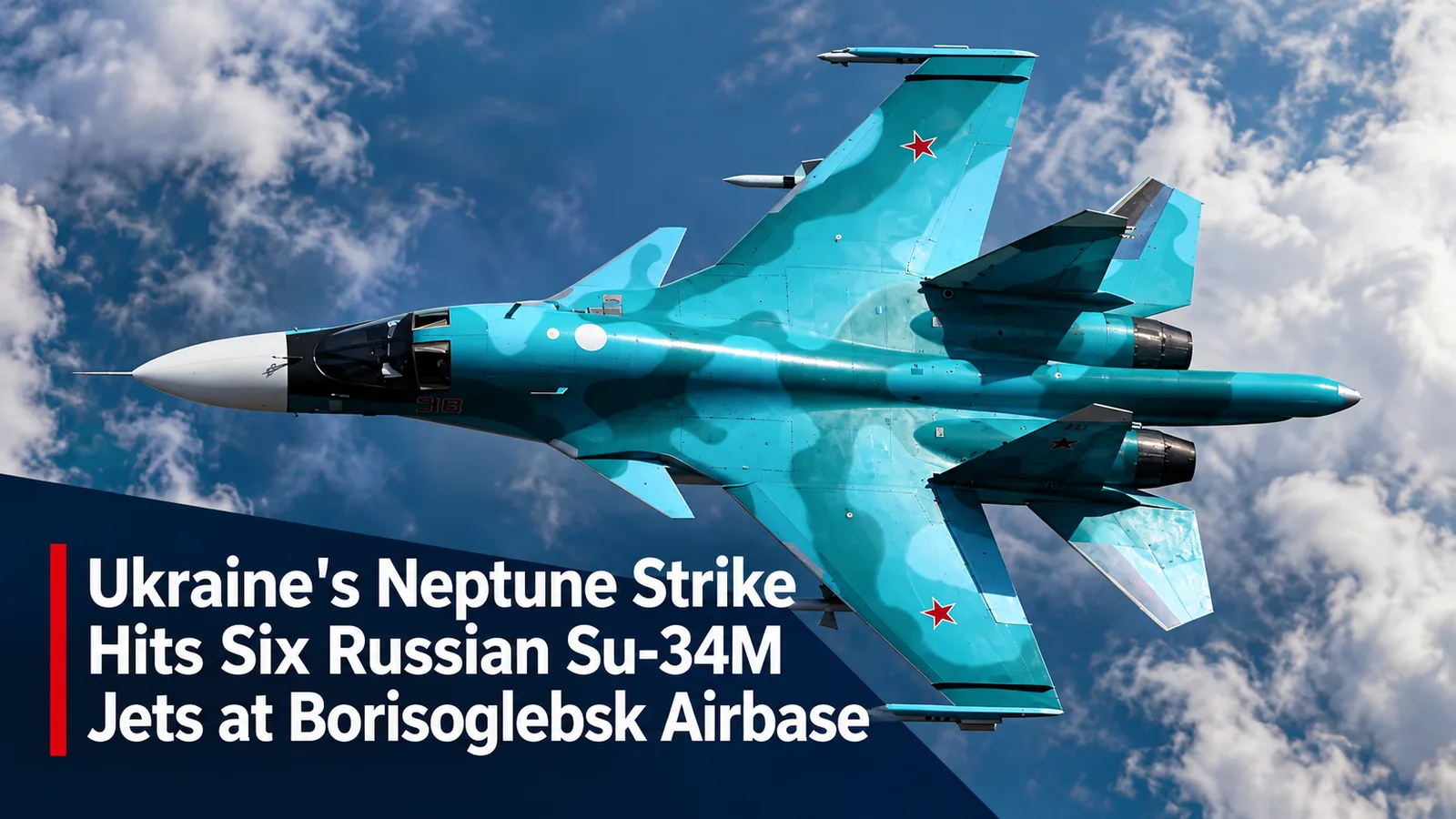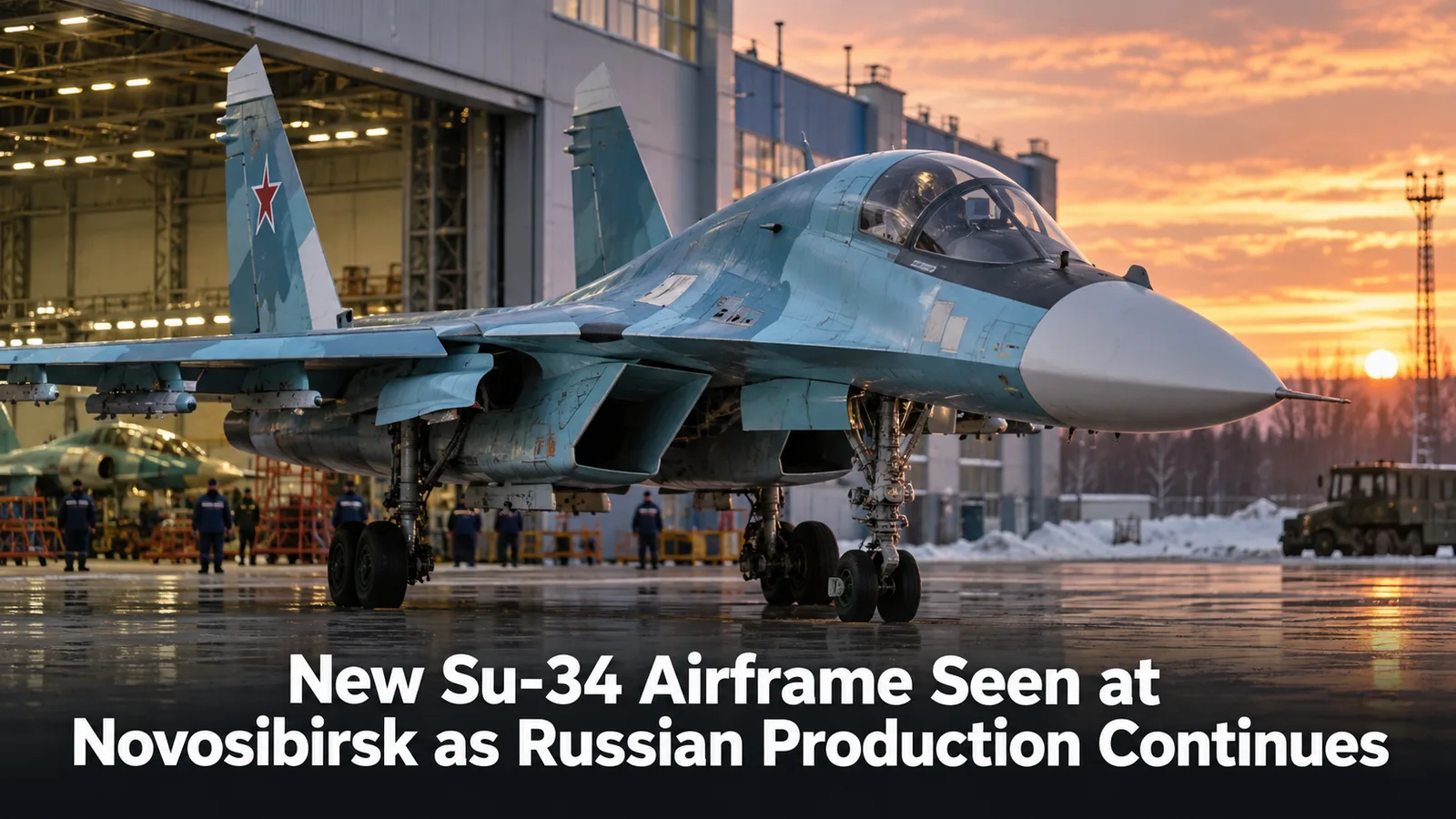
A Su-34 fighter-bomber in factory primer was photographed at an August aviation festival in Novosibirsk, providing fresh open-source evidence that Russia’s only Su-34 production line remains active during the war in Ukraine.
The sighting is not an official delivery announcement. The strongest government-linked production evidence remains United Aircraft Corporation’s July 9 statement that another batch of Su-34s and Su-30SM2s had been manufactured, factory-tested and transferred to the Russian Ministry of Defence.
Fresh Airframe Evidence and Official Production Baseline
A Su-34 airframe in factory primer was photographed at an August aviation festival in Novosibirsk, providing fresh open-source evidence that Russia’s sole Su-34 production site remains active during the war in Ukraine. The sighting is not an official delivery announcement and does not reveal the aircraft’s serial number, completion status or intended handover date. The strongest government-linked baseline remains United Aircraft Corporation’s 9 July statement that another batch of Su-34s and Su-30SM2s had been manufactured, factory-tested and transferred to the Russian Ministry of Defence without published quantities.
That official July delivery confirms the production line is still delivering aircraft in 2026 without relying on speculative monthly output estimates. The primer airframe adds visual evidence of continuing assembly activity at Novosibirsk Aviation Plant between formal announcements, but one photographed aircraft cannot establish a batch size or annual production rate. Defence Agenda therefore uses the image as a continuity indicator rather than a production-total data point.
Combat Demand, Industrial Resilience and Modernisation
Russia has used the Su-34 extensively for standoff glide-bomb and strike missions over Ukraine, making replacement and fleet sustainment strategically important as combat losses and airframe wear accumulate. Continued output shows that Russian tactical-aircraft final assembly has not stopped under sanctions, but it does not prove that every imported subsystem has been replaced domestically or that the supply chain is unconstrained. The larger industrial story is sustained delivery capacity under pressure, not evidence of unlimited production growth.
Russian reporting has also linked later production to upgraded avionics, electronic warfare and precision-weapon integration under the Su-34M evolution. Public UAC releases usually avoid detailed configuration disclosure, so a photographed aircraft should not automatically be labelled Su-34M unless identifiable features or official statements support that designation. Modernisation is part of the programme roadmap, but configuration-specific claims need stronger evidence than factory location or production date alone.
Data Caution and Open-Source Estimates
Defence Blog cites an open-source estimate of 212 Su-34s received by early 2026 and discusses annual output, but Russia does not routinely publish precise batch sizes or cumulative production totals. Such estimates can help identify trends when their methodology is transparent, yet they should not be converted into official figures or used to infer exact factory cadence. Combat-loss databases have a similar limitation because they depend on visual confirmation and naturally miss aircraft for which no reliable imagery exists.
Limitations and Counterpoint
The August photograph does not establish a new delivery batch, production rate or completion timeline for the airframe shown. Sanctions resilience at final assembly also does not demonstrate that the programme is free from component shortages, substitution costs or maintenance pressures elsewhere in the fleet. The most defensible conclusion is that Su-34 production continues, while exact output and the configuration of individual aircraft remain uncertain.
Implications / Next
The next official UAC batch delivery will provide the strongest near-term confirmation of production continuity. Satellite imagery, factory photography and serial evidence can help refine cadence estimates, while configuration details may show how later aircraft differ from earlier Su-34s. Any reliable disclosure of annual production or contract quantities would materially improve the current open-source picture.