Current status
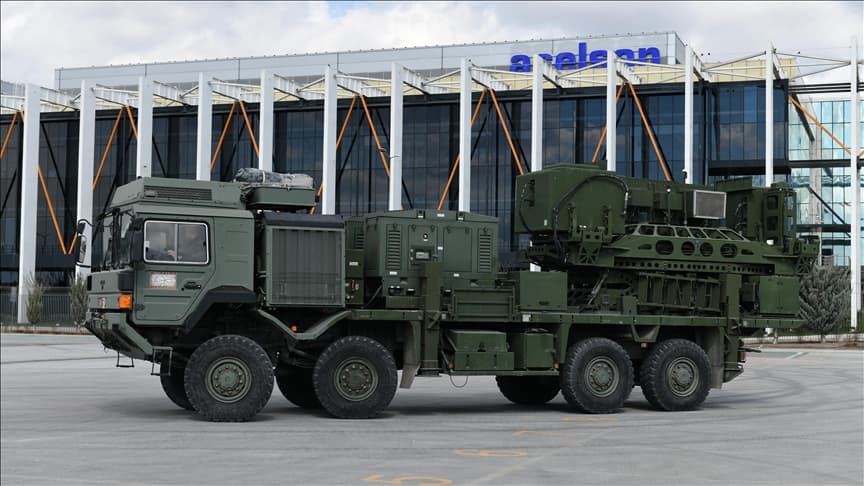
KORAL-2 is the next-generation development of Türkiye’s land-based stand-off radar electronic-warfare capability. Unlike HAVA SOJ, whose current SSB project description remains centred on integration and future delivery, SSB explicitly classifies KORAL-2 as a serial-production programme.
SSB states that KORAL-2 is intended to degrade the detection, identification and tracking capability of adversary early-warning and air-defence radars, creating a reduced-risk environment for friendly attack, defence and support elements. The programme builds on experience from the original KORAL system but uses redesigned units to address evolving technologies and a broader threat set.
ASELSAN’s published KORAL-II material describes a mobile Radar Electronic Warfare System consisting of Electronic Support and Electronic Attack functions. The company lists phased-array architecture, wideband operation, digital RF memory-based techniques, direction finding/positioning, multiple jamming and deception techniques, mission planning and analysis, and a NATO-standard operator environment among its capabilities.
Those are manufacturer-published capability descriptions. Defence Agenda should avoid inferring classified effective radiated power, operational jamming range, threat-library content or real-world performance beyond publicly verified data.
Why it matters
KORAL-2 is important because modern integrated air defence depends heavily on the electromagnetic spectrum. A mobile system able to detect, classify and attack radar emitters can support suppression or degradation of enemy air defences without relying solely on kinetic weapons.
The programme also forms the ground-based side of a wider Turkish electronic-warfare architecture. HAVA SOJ, aircraft self-protection, escort-jamming pods, UAV-based EW and KORAL-family systems can potentially create complementary stand-off, escort and ground-support effects.
From an industrial perspective, serial production also matters. The programme is a test of whether Türkiye can manufacture and continuously update high-power RF systems, receivers, arrays, processors and software at operational scale rather than only demonstrate prototypes.