Current status
GÖKDOĞAN and BOZDOĞAN are Türkiye’s indigenous air-to-air missiles developed by TÜBİTAK SAGE under the GÖKTUĞ programme lineage.
The two weapons address different engagement zones. GÖKDOĞAN is the radar-guided beyond-visual-range weapon, while BOZDOĞAN is the highly manoeuvrable infrared-guided within-visual-range missile.
Programme status has materially advanced. On 5 May 2026, the Ministry of Industry and Technology stated that qualification of both missiles had been completed. On 28 May 2026, Minister Mehmet Fatih Kacır stated that the missiles had completed their latest live-warhead verification tests with direct hits and that serial-production processes had started.
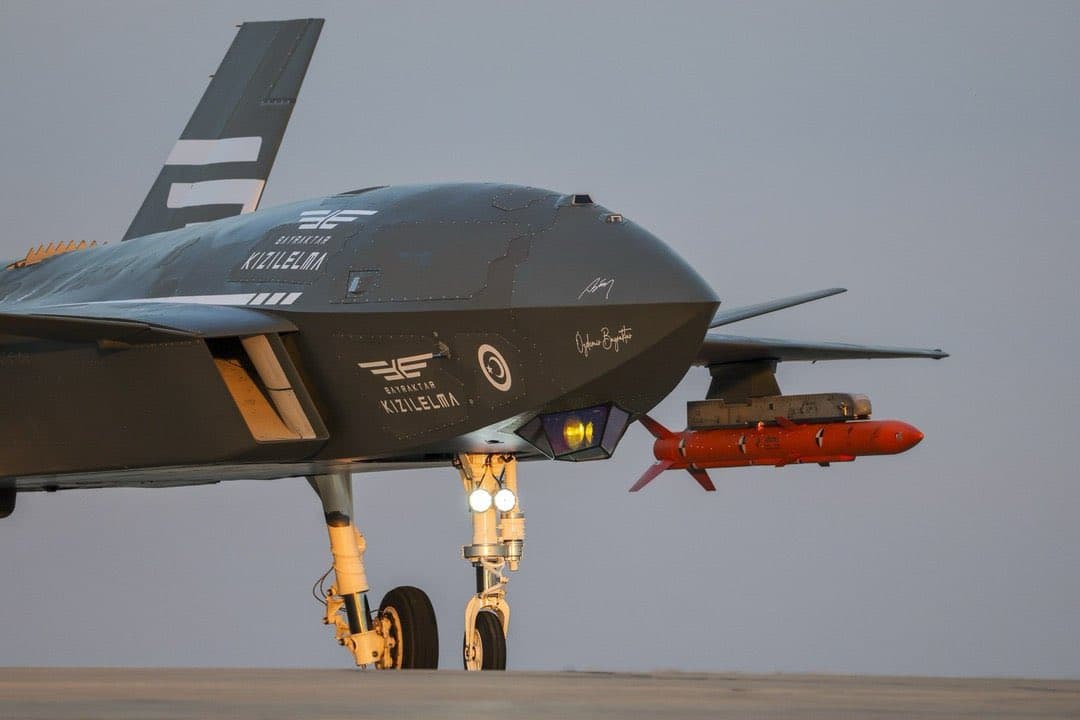
The missiles are also moving into a multi-platform integration phase. TÜBİTAK’s 2025 reporting states that GÖKDOĞAN was fired from an ÖZGÜR F-16 using AESA-radar datalink guidance and hit an air target. It also records work to integrate GÖKDOĞAN and BOZDOĞAN with KAAN, and describes air-to-air capability work involving KIZILELMA, AKINCI and ANKA III.
A key editorial distinction is necessary: a successful firing from one platform is evidence of that integration milestone, not proof that every named platform has operationally fielded both weapons.
Why it matters
Air-to-air weapons are among the most integration-intensive elements of combat aviation because they depend on radar, datalinks, mission computers, aircraft software, launchers, target-quality tracks and rules for safe separation and engagement.
GÖKDOĞAN and BOZDOĞAN therefore provide more than indigenous missiles. They give Türkiye greater control over the sensor-to-shooter chain of its combat-aircraft fleet.
That control is increasingly important as the country develops multiple national platforms. The same missile family can potentially support F-16 ÖZGÜR, KAAN, KIZILELMA, AKINCI, ANKA III and future aircraft, creating commonality across crewed and uncrewed combat aviation.
The programme also forms a technology bridge to the longer-range ramjet-powered GÖKHAN programme.