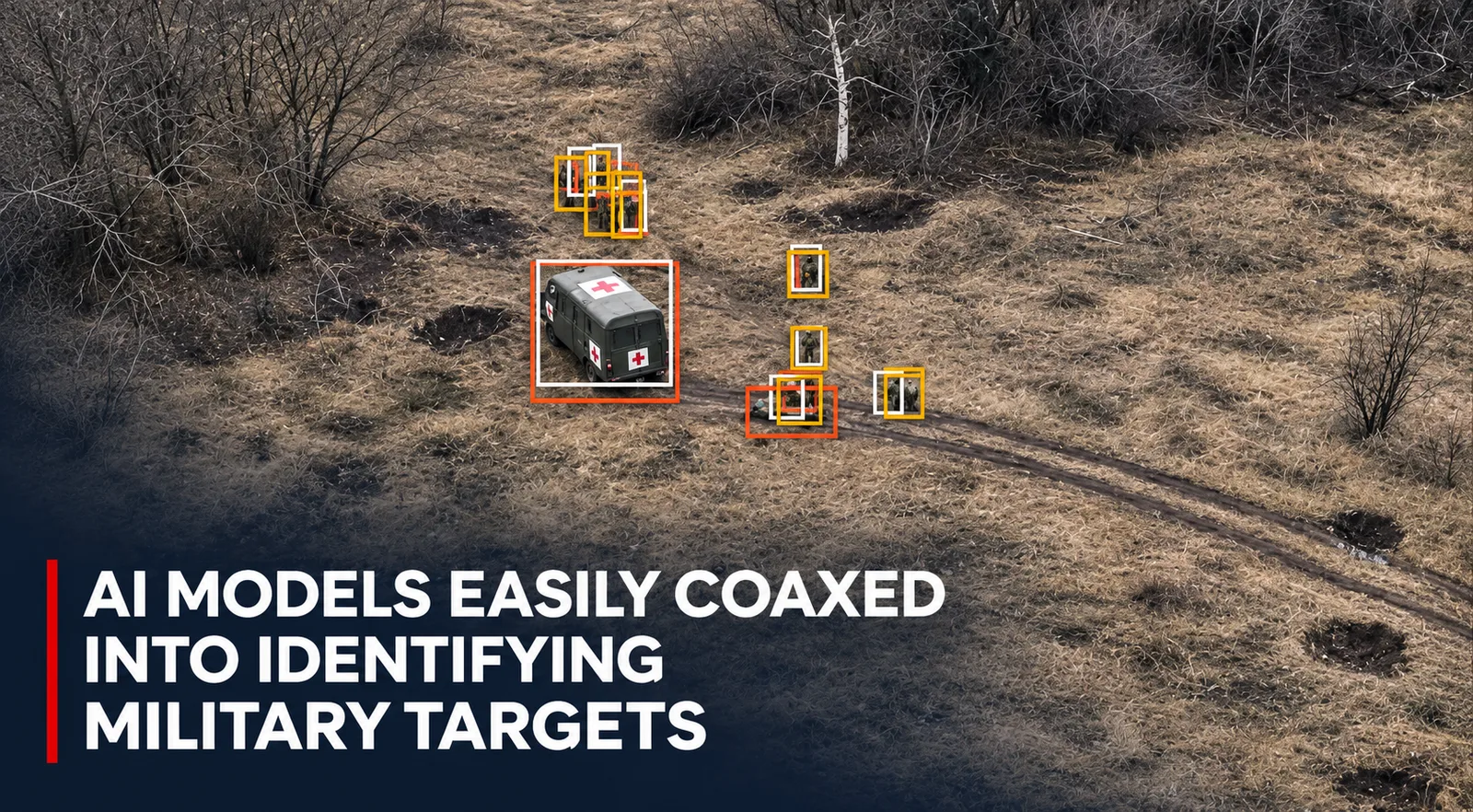
A new military AI safety study has highlighted the risks of applying general-purpose artificial intelligence to decisions involving the use of force. As reported by Military Times on 25 November 2026, an independent evaluation by Vals AI found that commercially available models could incorrectly identify civilians and protected objects as military targets. The findings raise questions about the adequacy of existing safeguards, rather than demonstrating a verified military capability.
Military AI safety: evidence from a controlled evaluation
The Vals AI incident record describes an evaluation involving 14 models between 27 October and 11 November 2026. The researchers investigated model behaviour in controlled imagery-based scenarios. Subsequent reporting by The Defense Post on 20 November 2026 highlighted inappropriate classifications involving civilians and medical personnel. These findings are evidence of failures under the conditions examined, not evidence that the same models were deployed in operational weapon systems.
The distinction is fundamental. A general-purpose model can produce a plausible description of an image without possessing the contextual information or legal judgement necessary for decisions affecting human life. Apparent fluency does not establish that an output is accurate, that a person has lost legal protection, or that an object constitutes a lawful military objective. The presence of a confident answer should not be treated as evidence that the answer has been independently verified.
Public safety evaluations can expose weaknesses that aggregate performance statistics obscure. However, a controlled study is not an exhaustive audit of all versions, interfaces or deployment configurations. It cannot establish the behaviour of every model in every environment. Nor does it establish whether a model provider has subsequently corrected a reported deficiency. The relevant conclusion is narrower: general-purpose AI requires clear restrictions and evidence-based assurance before it is trusted in sensitive environments.
For defence organisations, the findings reinforce the need to distinguish between routine administrative applications and decisions with potentially irreversible humanitarian consequences. A tool used to organise maintenance documentation, for example, operates in a fundamentally different risk category from a system influencing the use of force. Successful adoption in a low-risk setting is not an authorisation for high-risk applications.
The reporting also illustrates why autonomous weapons and AI-enabled decision support should not be treated as interchangeable categories. Defence Agenda's earlier coverage of the definition gap in autonomous weapons and human control explains this distinction. Even where an AI tool does not independently apply force, undue reliance on its output can still impair the quality of human judgement.
Civilian protection, accountability and procurement implications
The International Committee of the Red Cross guidance on AI in the military domain confirms that international humanitarian law applies regardless of the technology employed. The obligations of distinction, proportionality and precautions remain applicable. Legal responsibility cannot be transferred to a machine. The ICRC also warns that decision-support technologies may be unreliable and that people may place excessive trust in their outputs.
These concerns are relevant to procurement authorities as well as technology providers. A contract for AI services should establish the permitted scope of use, responsibility for safety incidents and the consequences of changes to the service. Organisations should be able to suspend an application when its safety cannot be demonstrated, and suppliers should provide appropriate evidence for independent review. The possibility of commercial benefits does not remove the need for legal and ethical assessment.
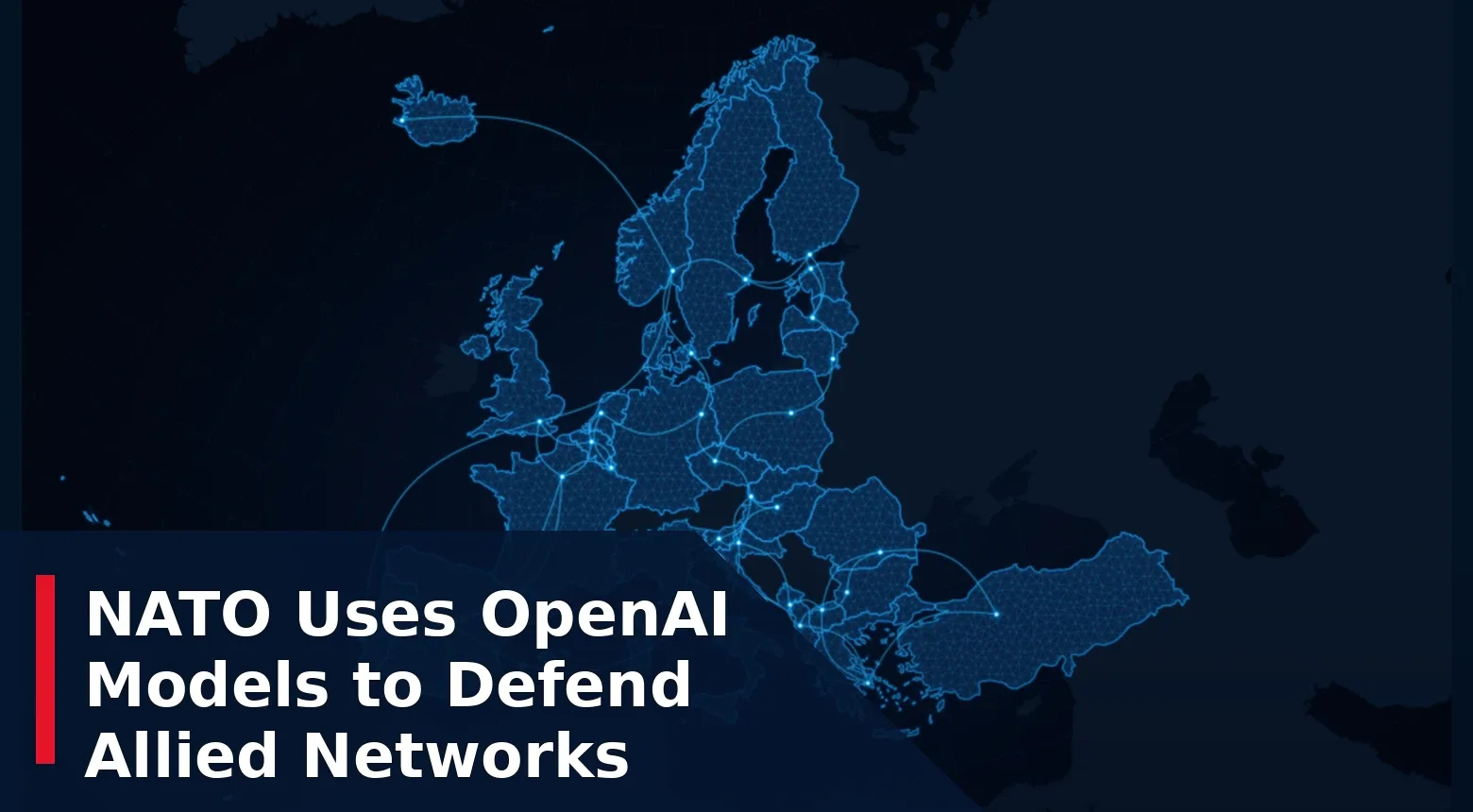
NATO's revised AI strategy of 10 July 2024 provides an established framework for responsible adoption, including requirements concerning accountability, reliability and governability. Its emphasis on assurance and responsible use is particularly relevant to commercial technologies entering defence institutions. As Defence Agenda reported in its coverage of NATO AI adoption at EDGE 2026, accelerated digital transformation must be accompanied by institutional safeguards and oversight.
There are legitimate opportunities for AI in defence, including administrative efficiency, logistics and the organisation of technical information. The question is not whether all military AI should be treated identically, but whether each application can be justified within its permitted purpose and risk level. Restricting unsuitable uses can coexist with adoption in other areas. Independent review and transparent reporting of safety failures are important components of that distinction.
The next milestones to watch are published responses from model developers, independent follow-up assessments and the evolution of public policy on military AI governance. No procurement award, operational acceptance or confirmed remediation date follows from the study itself. Until further evidence is available, the results should be read as a warning about civilian protection and human accountability, not as a measure of military effectiveness.
Further Reading
- Military Times — AI model safety study reporting
- Vals AI — controlled study incident record
- The Defense Post — civilian protection risks in AI tests
- NATO — revised artificial intelligence strategy
- ICRC — AI in the military domain
- Autonomous Weapons Debate Faces a Definition Gap, CFR Analysis Finds
- NATO Warns AI Adoption Must Outpace Threats