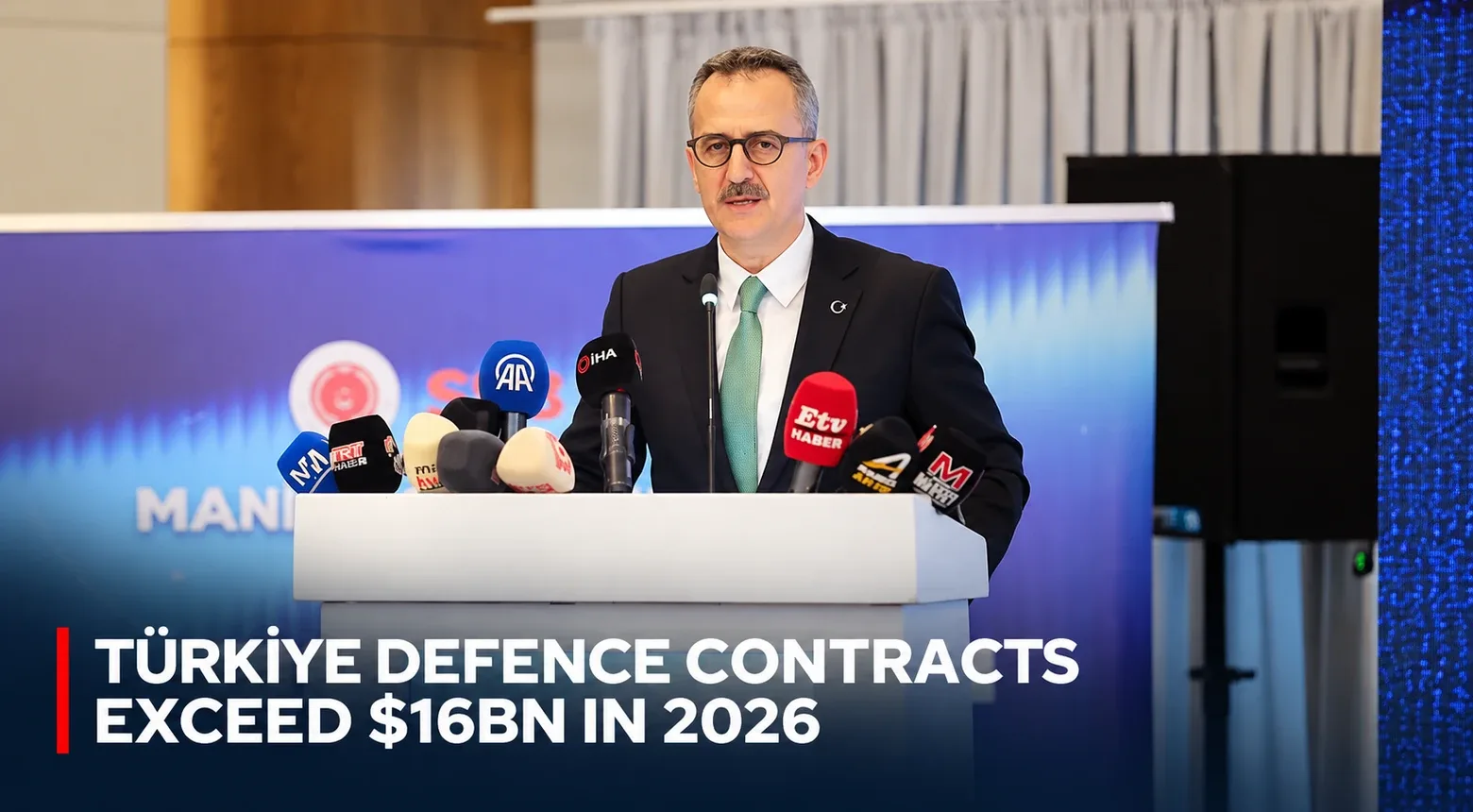
Türkiye defence contracts exceeded US$16 billion in signed value between the beginning of 2026 and 17 November, according to Haluk Görgün, president of Türkiye’s Secretariat of Defence Industries (SSB). Speaking at an industrial meeting in Manisa, Görgün projected that the annual total could reach US$20 billion by year-end. The announcement highlights the importance of converting contractual commitments into funded industrial work, completed deliveries and sustainable supplier demand.
Türkiye defence contracts: order intake and export performance
Anadolu Agency’s report of the Manisa meeting records the aggregate contract figure and year-end expectation. Görgün also put exports over the preceding 12 months at approximately US$11 billion. The two figures measure different aspects of the industry: agreements signed within a reporting period and exports recorded over a rolling period. The announcement does not provide a contract-by-contract schedule, a domestic-versus-export breakdown or the delivery dates underlying the aggregate value.
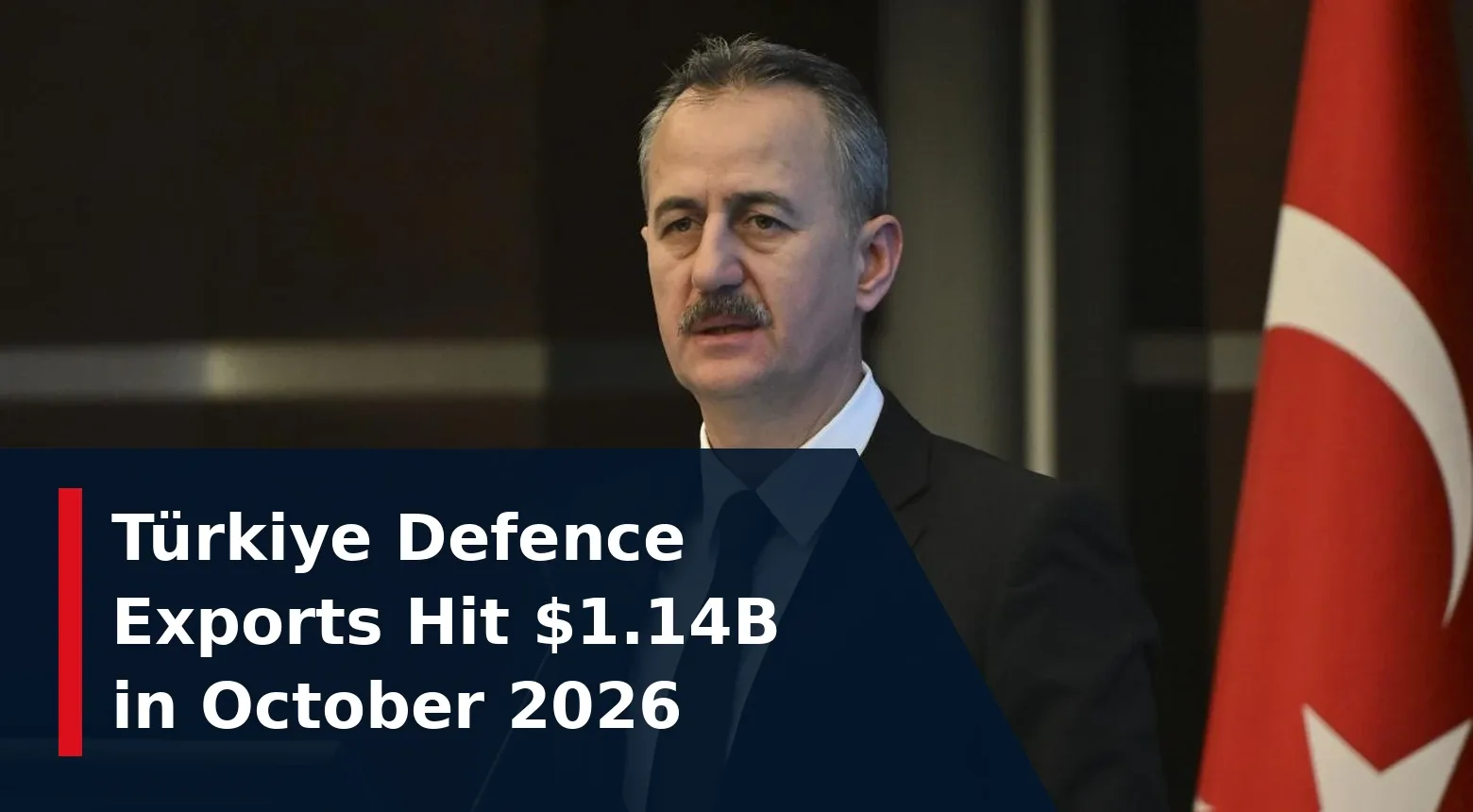
In a separate 3 November export announcement reported by Anadolu Agency, defence and aerospace exports for October were put at US$1.14 billion, approximately 61% above the corresponding month of 2025. January–October exports reached US$8.05 billion. The earlier reporting period is important: those figures cannot be directly reconciled with the calendar-year contract total from 17 November. Defence Agenda’s October 2026 export review also records a more precise rolling 12-month total of US$11.357 billion, consistent with the approximate magnitude of the later remarks.
Signed order value is a useful forward-looking indicator, but it is not a statement of current cash receipts or recognised revenue. Depending on contractual terms, a multi-year agreement may include engineering work, equipment, training, maintenance and other services. Payment milestones and customer acceptance can occur at different points in the programme. Currency exposure, contractual options and the treatment of transactions between domestic manufacturers can also affect the interpretation of sector-wide statistics.
The US$20 billion expectation should therefore be read as a forecast rather than an achieved result. The announcement does not identify the agreements expected to close during the remaining weeks of the year, nor the financial conditions attached to them. An evaluation of the final figure will require the same reporting definition to be maintained across the two dates. In particular, an increase in reported contract value does not establish an equivalent increase in export shipments or industrial output.
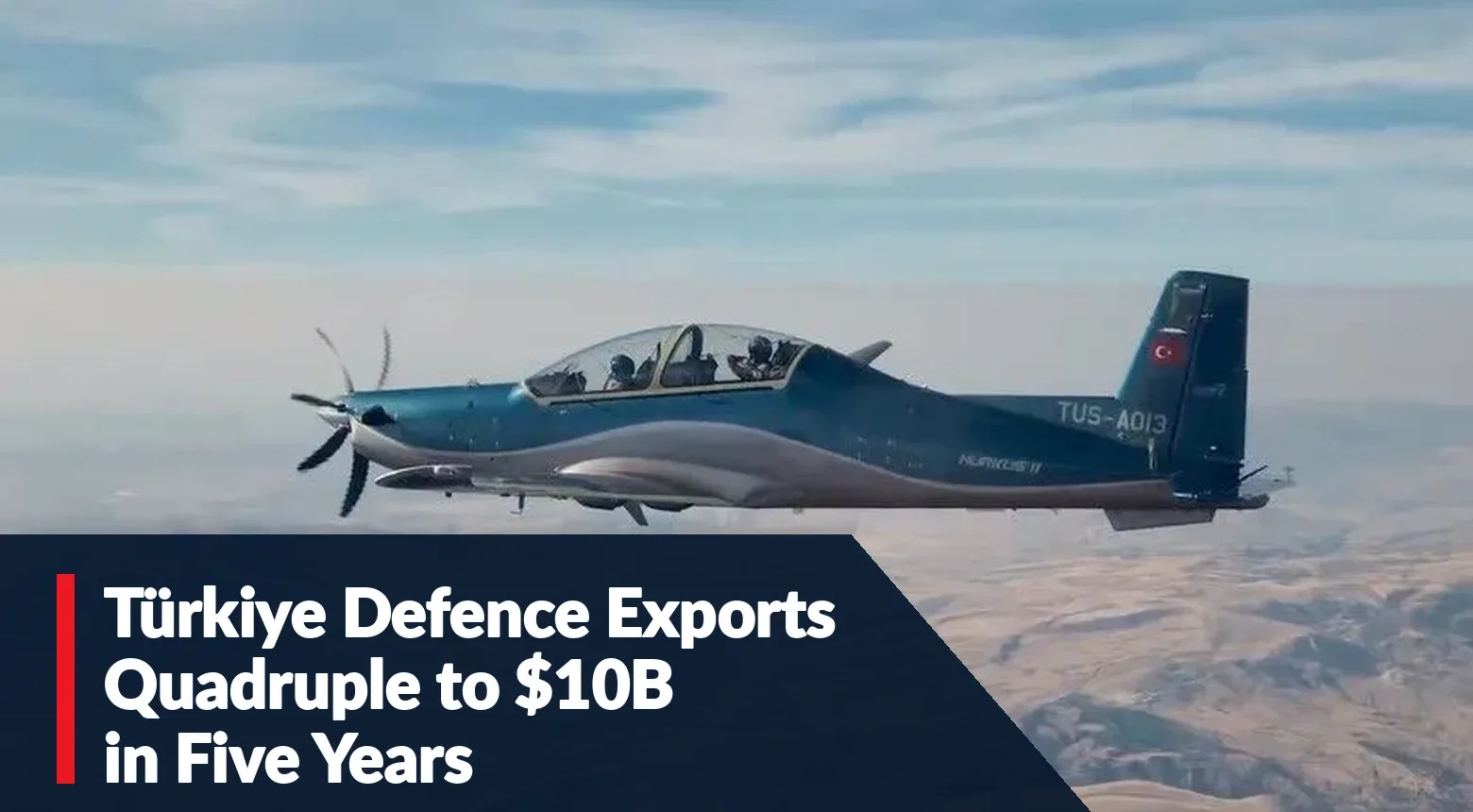
The historical context is substantial. Reuters reported in June 2026 that Türkiye’s defence exports had more than tripled since 2021 to approximately US$10 billion in 2025. Defence Agenda’s five-year export review provides a separate overview of the underlying trade series. These historical figures describe exports, not order intake, and are included to explain the expansion of the sector rather than to calculate a conversion rate from the newly announced contracts.
Manisa supplier integration and procurement implications
The regional industrial setting provides additional context for the announcement. According to the event invitation published by Akhisar Organised Industrial Zone, the meeting was organised by the Manisa Defence and Aerospace Cluster Association (MANSA) under SSB leadership. Its programme sought to connect regional manufacturers with established defence companies through business meetings and discussions about supplier capabilities and qualification requirements. SSB’s weekly industry update dated 23 November subsequently confirmed that the Manisa engagement had taken place.
Reporting carried by Habertürk also cited Görgün’s description of the local industrial base: 95 Manisa companies already work with major defence manufacturers, representing approximately US$153 million in business volume. The reporting does not specify the accounting period for that local value. It is consequently inappropriate to treat it as an annual sales figure or to add it to the national contract total. The meeting itself was a supplier-development activity, not a separately disclosed package of new procurement awards.
For industrial planners, a larger order pipeline increases the importance of matching contractual schedules with available engineering and manufacturing resources. Supplier qualification, quality management, workforce development and financing can all influence whether future demand translates into sustainable business for smaller enterprises. A regional meeting can help identify potential suppliers, but participation does not establish qualification, an awarded subcontract or a guaranteed purchase commitment.
For customers and analysts, the next useful disclosures would be a consistent breakdown of new orders by customer type, delivery period and contract scope. Comparable year-end export data would provide a distinct measure of trade performance. Neither indicator alone establishes the financial health of individual contractors, which also depends on margins, working capital, execution risks and the distribution of contractual obligations.
Implications / Next: The next milestone is the publication of the full-year 2026 contract figure after the close of the reporting period. Until that update is available, the defensible conclusion is that SSB reported signed contracts above US$16 billion as of 17 November and expected a US$20 billion total by year-end. Neither the forecast nor the local supplier-development activity should be presented as completed deliveries.
Further Reading
- Anadolu Agency — Manisa contract announcement, 17 November 2026
- SSB — weekly industry update, 23 November 2026
- Akhisar Organised Industrial Zone — MANSA meeting programme
- Habertürk — Manisa industrial figures
- Anadolu Agency — October 2026 export figures
- Reuters — Türkiye’s defence export expansion
- Defence Agenda — October 2026 export performance
- Defence Agenda — five-year export growth