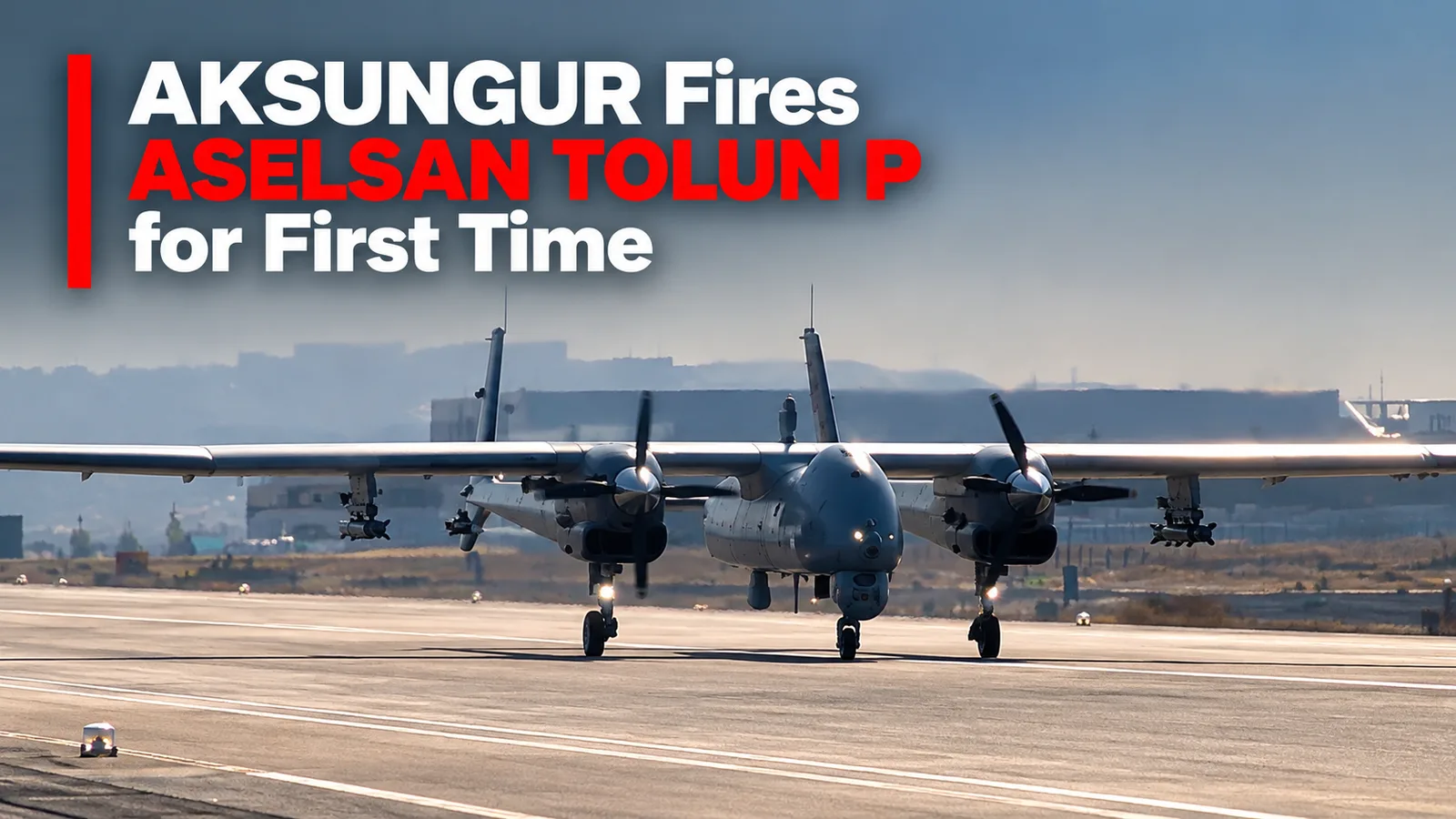
Turkish Aerospace's AKSUNGUR unmanned aircraft has fired ASELSAN's TOLUN P guided penetrator for the first time, with both companies reporting a successful strike on the designated target on 14 October 2026. The firing adds another launch platform to Türkiye's TOLUN family but should be treated as an integration and live-fire test, not evidence that every AKSUNGUR configuration has been cleared for operational use with the weapon.
A New Aircraft Joins the TOLUN P Test Programme
Anadolu Agency reported the first AKSUNGUR release after Turkish Aerospace shared footage of the test. ASELSAN separately stated that TOLUN P had struck the target and that its guided-munition family had gained another compatible platform. The two manufacturer statements establish the companies' description of the event; the public summaries do not provide a complete instrumented test report or the full flight-clearance envelope.
AKSUNGUR is a twin-engine, medium-altitude long-endurance unmanned aircraft designed for intelligence, surveillance, reconnaissance and precision-strike missions. Integration of an additional guided weapon matters because aircraft utility depends on compatible sensors, carriage interfaces, fire-control software and mission planning as well as the weapon itself. A successful release and impact is an essential milestone, but repeatability across release conditions and operating configurations remains a separate qualification question.
What the Penetrator Changes in the Strike Portfolio
TOLUN P is the penetrator variant of ASELSAN's compact TOLUN family. It is intended for hardened as well as other ground targets and employs a specialised terminal-effect architecture rather than the fragmentation effects used by other members of the family. This gives operators a different mission choice from weapons optimised primarily for exposed personnel, equipment or area targets.
The munition's multi-carriage concept also has implications for sortie planning. A compatible rack can make it possible to carry several compact guided weapons rather than dedicating a hardpoint to a single larger store, subject to the launch aircraft's cleared configuration. However, no publicly verified source for this firing specifies the number carried, target construction, actual release distance, impact speed or penetration conditions. Published product capabilities should not be presented as measurements from this particular shot.
Why Platform Integration Is an Industrial Milestone
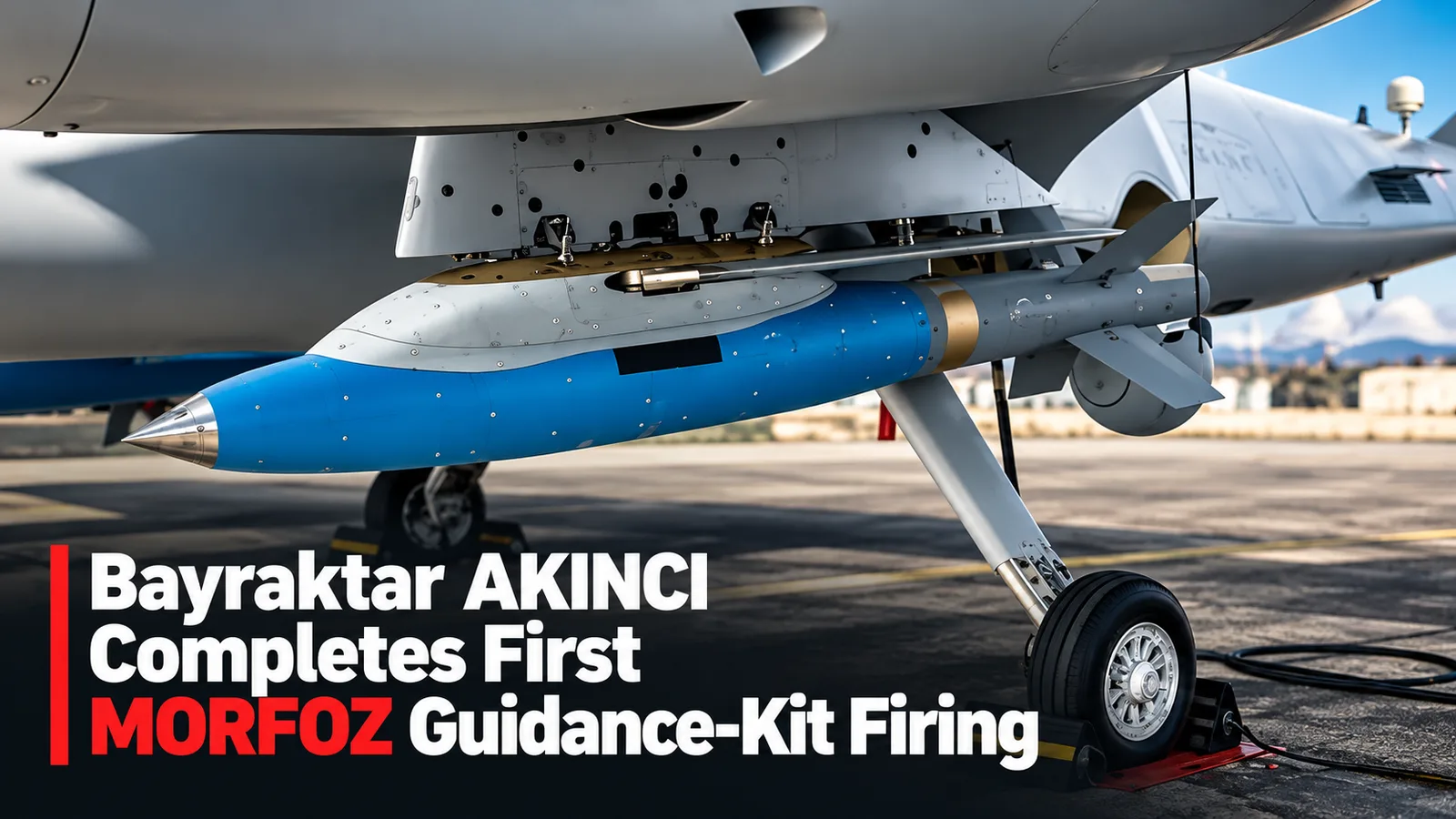
ASELSAN had already demonstrated TOLUN P from Bayraktar AKINCI, including hardened-target activity in August and multi-variant firings in September 2026. The AKSUNGUR result is therefore not the weapon's first public firing; its significance is the expansion of compatible aircraft and the associated integration effort. That distinction matters for production planning because compatibility across multiple platforms can broaden prospective demand and reduce dependence on one aircraft programme.
For Turkish Aerospace, the test adds to AKSUNGUR's evolving weapons options and creates the possibility of a more flexible mission mix. For ASELSAN, another aircraft integration can support standardisation of weapon software, test procedures, support equipment and customer training, provided those elements are actually common. Neither company has disclosed a new procurement quantity, export customer or service-wide weapon loadout associated with the announcement.
Limits of the Public Test Record
A video of a weapon reaching its intended target cannot establish the full accuracy distribution, adverse-weather performance, electronic-warfare resilience or separation safety of an air-to-ground store. Certification may require additional carriage, separation, fuze, guidance, environmental and electromagnetic compatibility evaluations. The present public evidence confirms a claimed successful firing from AKSUNGUR, not completion of those entire processes.
It is equally important not to transfer figures from a different TOLUN variant or from an AKINCI test to AKSUNGUR. Aircraft altitude, airspeed, release geometry and software configuration affect weapon employment. No source reviewed here identifies an AKSUNGUR operational unit receiving a new TOLUN P inventory, and there is no disclosed schedule for a wider fleet roll-out.
Implications / Next
The next verifiable steps are follow-on releases under different conditions, a manufacturer or military statement on integration qualification, confirmation of approved carriage arrangements and any formal customer acceptance. Additional testing could establish whether the aircraft can support multi-store engagements, different terminal-effect settings or a wider target set. Until those records are made public, the October result is best described as a successful first AKSUNGUR–TOLUN P firing and a useful integration milestone in Türkiye's precision-weapons ecosystem.