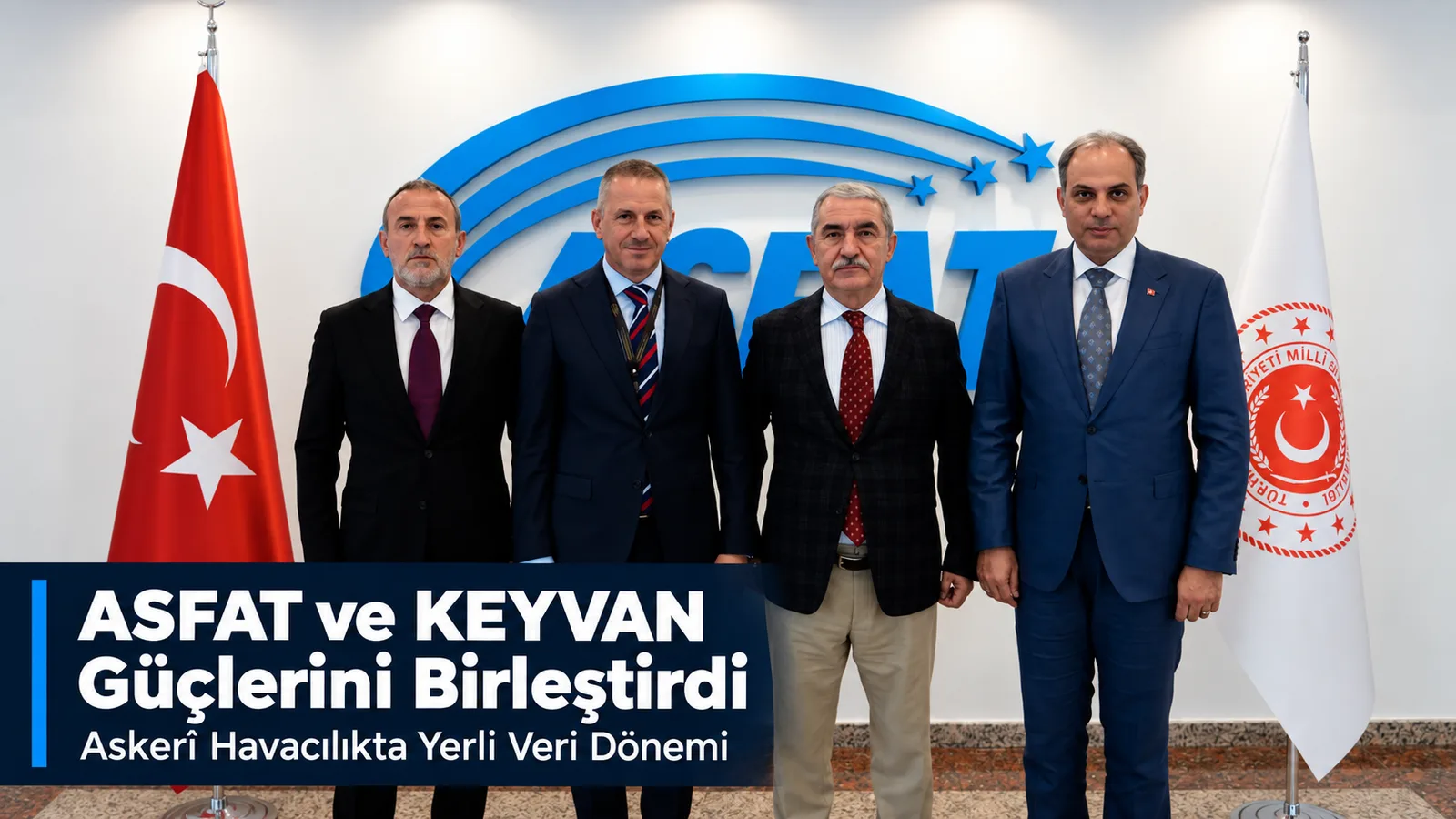
ASFAT and KEYVAN Aviation have signed a cooperation protocol to meet military aviation data requirements with domestic capabilities and to develop joint defence and aerospace projects in Türkiye and international markets. The agreement was signed in Istanbul on 7 September 2026, according to a KEYVAN press bulletin dated 15 September 2026.
The partnership combines ASFAT’s defence project-management, procurement and international business-development capabilities with KEYVAN’s specialist aeronautical and navigation data production. The stated objective is to increase the use of indigenous aviation data in military operations and strengthen Türkiye’s strategic data infrastructure.
Why It Matters
Military aviation depends on regularly updated, quality-controlled navigation and aeronautical data for mission planning, avionics, flight-management systems and operational safety. In military use, control over that data layer can also affect availability, customisation and sovereignty, especially where tailored procedures, special routes or sensitive operational requirements are involved.
The ASFAT–KEYVAN agreement therefore addresses a capability that is less visible than an aircraft, radar or weapon system but remains central to how those platforms are planned, navigated and supported. If implemented through concrete programmes, a domestic data chain could reduce dependence on foreign providers while giving Turkish defence projects greater control over integration and update cycles.
ASFAT and KEYVAN Bring Complementary Capabilities
ASFAT is a wholly state-owned company established within Türkiye’s Ministry of National Defence and is authorised to develop, manage and export defence solutions using the capabilities of military factories and shipyards. Its role in the new partnership is expected to centre on programme management, procurement, customer access and international business development.
KEYVAN Aviation provides aeronautical and navigation databases for civil, governmental and military operations. The company states that its database production is conducted under an EASA Type 1 DAT Provider certificate and supports ARINC 424-formatted data, special procedures, military airspace information and customised datasets for aircraft, avionics, simulators and flight-planning applications.
The Protocol Extends Beyond Domestic Substitution
The press bulletin says ASFAT and KEYVAN will act jointly in defence and aviation projects in Türkiye and abroad, combining technical know-how and resources to develop common solutions and manage related business-development activities. This gives the agreement an export dimension in addition to its domestic localisation objective.
That distinction is important. A sovereign aviation-data capability has value not only for Turkish military users but also for export packages that may require navigation databases, mission-planning support, simulator data, avionics integration or long-term sustainment. The protocol could therefore become an enabling layer within wider Turkish aerospace and defence offers if it is tied to specific platforms or customer programmes.
Local Data Could Strengthen Operational and Industrial Sovereignty
The source material explicitly links the partnership to reducing foreign dependence in critical data and strengthening the strategic data infrastructure required by military aviation. This aligns with Türkiye’s broader defence-industrial approach of localising enabling capabilities around major platforms, including sustainment, software, electronics, mission systems and support infrastructure.
In this case, the enabling capability is data. The operational value will depend on how the cooperation is translated into certified datasets, platform integration, update processes and customer support, but the industrial logic is clear: retain more of the aviation-data lifecycle inside the national defence ecosystem while making that capability available to international projects.
Limitations and Next
The announcement does not identify a first aircraft, customer or programme that will use the joint capability. It also provides no contract value, delivery schedule, workshare breakdown or technical integration roadmap, and it does not state whether the cooperation will extend beyond data provision into avionics or mission-planning integration.
The next significant milestone will be a concrete implementation: for example, the selection of KEYVAN data for a military aircraft programme, a joint export project, or integration with an ASFAT-led aviation support package. Until such a milestone is disclosed, the protocol should be treated as an industrial-cooperation framework rather than a fielded military capability.