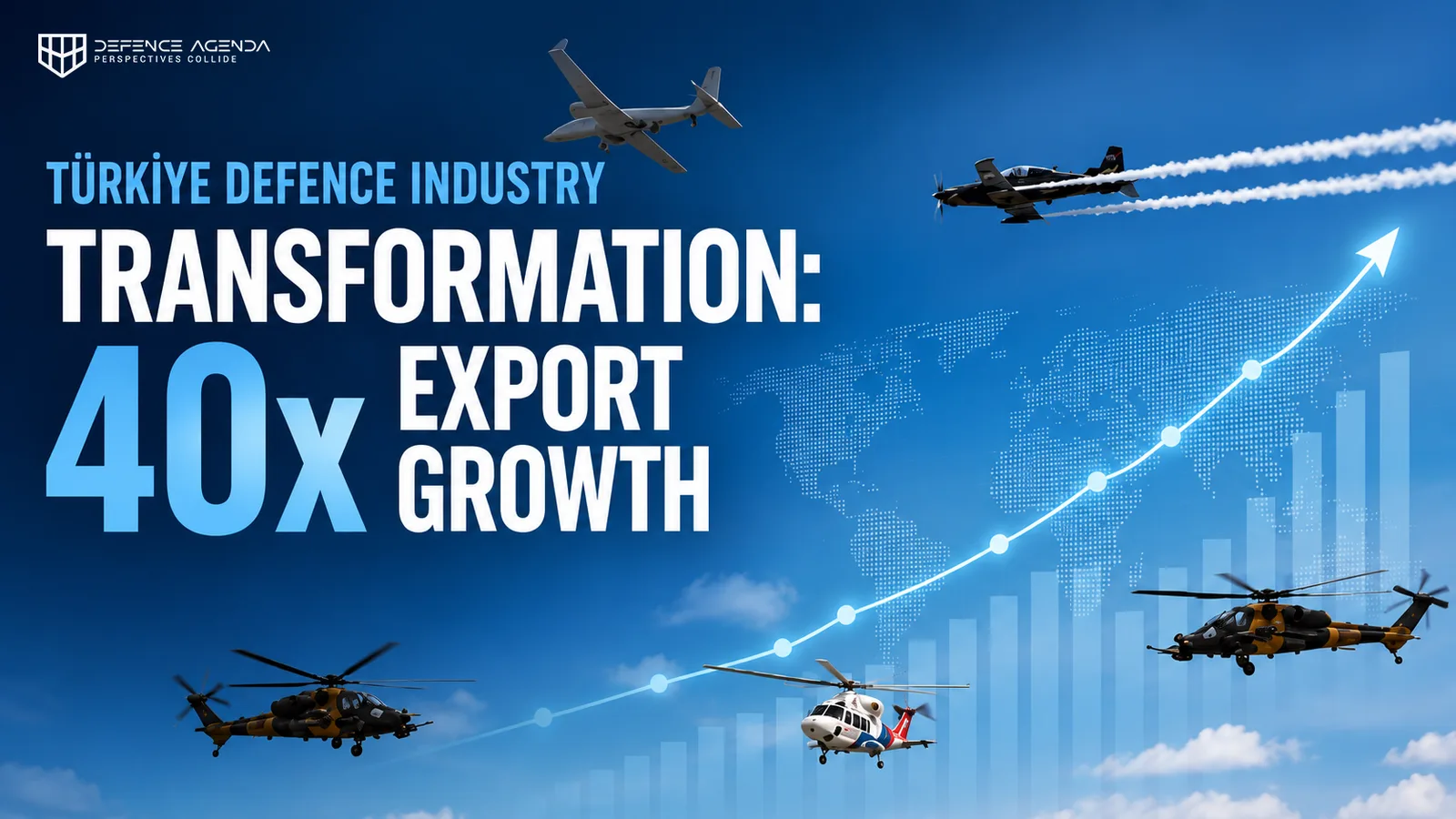
Türkiye defence industry transformation has produced one of the sharpest expansions in the global defence market over the past quarter-century, with defence and aerospace exports rising from just $248 million in 2002 to $10.054 billion in 2025.
The transformation highlighted by Anadolu Agency and subsequently reported by 24 TV goes beyond export growth. Türkiye has simultaneously expanded its project portfolio, industrial workforce, supplier base, R&D capability and ability to deliver complete weapon systems rather than mainly importing them.
The strategic significance is increasingly international. Türkiye is no longer positioning its defence industry primarily around reducing import dependence. The next phase is centred on export scale, multinational programmes, NATO integration and long-term participation in allied supply chains.
Key Facts
- 2002 defence and aerospace exports: $248 million.
- 2025 defence and aerospace exports: $10.054 billion — more than 40 times the 2002 level.
- Defence projects: Increased from 62 in 2002 to more than 1,400 today.
- Project volume: Expanded from approximately $5.5 billion in 2002 to more than $100 billion including projects under procurement.
- Industry scale: SSB currently reports more than 3,500 companies, over 100,000 employees and total defence and aerospace turnover above $20 billion.
- Global position: Five Turkish companies appeared in the 2025 Defense News Top 100 — ASELSAN, TUSAŞ, ROKETSAN, ASFAT and MKE.
- 2026 momentum: January–June exports reached $4.6657 billion, while trailing 12-month exports exceeded $11 billion for the first time.
Türkiye Defence Industry Transformation in Numbers
The clearest evidence of Türkiye’s structural defence-industrial shift is the difference between the sector’s 2002 baseline and its current scale.
According to the Presidency of Defence Industries’ current industry indicators, defence and aerospace exports stood at only $248 million in 2002.
By 2025, the figure had reached $10.054 billion.
That represents an increase of roughly 40.5 times in nominal dollar terms.
The project portfolio expanded almost as dramatically. Türkiye was managing 62 defence projects in 2002. The current portfolio exceeds 1,400 projects.
The financial scale of those programmes increased from approximately $5.5 billion to more than $100 billion when projects still in the procurement process are included.
From Procurement Dependence to System-Level Production
The transformation cannot be explained by export growth alone.
Türkiye has progressively moved from licensed production, imported subsystems and foreign platform procurement toward domestic design authority across increasingly complex systems.
The current portfolio spans unmanned aircraft, combat aircraft, helicopters, armoured vehicles, frigates and corvettes, precision-guided weapons, long-range missiles, electronic warfare, radars, air-defence systems, naval combat systems and command-and-control technologies.
This matters because industrial sovereignty in defence depends less on whether a product carries a domestic label than on whether the country controls design, integration, software, testing, production and lifecycle support.
Türkiye has progressively developed capability in each of those layers, although dependency remains in selected propulsion, semiconductor, material and subsystem categories.
The Industrial Ecosystem Has Become Much Deeper
The supplier ecosystem has expanded alongside the major platforms.
The SSB homepage currently reports more than 3,500 companies operating in Türkiye’s defence and aerospace sector, supported by more than 100,000 direct employees and annual turnover exceeding $20 billion.
Separate remarks by SSB President Haluk Görgün earlier in 2026 referred to more than 4,000 companies. The difference appears to reflect reporting scope or timing rather than a contraction, and the current public SSB dashboard provides the more conservative figure.
This expansion is strategically important because major defence companies cannot scale production on their own.
Platforms such as aircraft, missiles, warships and air-defence systems depend on hundreds or thousands of suppliers covering machining, electronics, software, composites, optics, energetic materials, propulsion and specialised manufacturing.
The strength of the industrial base therefore increasingly depends on the depth of the supplier network rather than the revenue of the largest contractors alone.
Exports Crossed the $10 Billion Threshold in 2025
2025 represented a particularly important inflection point.
Türkiye’s defence and aerospace exports reached $10.054 billion, up approximately 48% from 2024.
Defence Agenda previously analysed the milestone in Türkiye Defence Exports Hit $10B Record in 2025, noting that the result reflected a broader shift from isolated export contracts toward a diversified international customer base.
The sector also secured approximately $17.9 billion in new export contracts during 2025, giving future deliveries a substantial order pipeline beyond recognised annual export revenue.
This distinction matters. Annual exports measure deliveries and recognised cross-border sales, while newly signed contracts provide an indication of future workload.
2026 Data Shows the Export Cycle Is Continuing
The 2025 result has not been followed by an immediate slowdown.
On 3 July 2026, SSB President Haluk Görgün announced that defence and aerospace exports reached $802.8 million in June alone.
January–June exports consequently rose to $4.6657 billion, an increase of 29.5% from the same period of 2025.
More significantly, trailing 12-month defence and aerospace exports exceeded $11 billion for the first time.
The data suggests that the sector is moving beyond the $10 billion milestone rather than treating it as an exceptional one-year peak.
Five Turkish Companies Are Now in the Global Top 100
The industrial transformation is also visible in international company rankings.
In the 2025 Defense News Top 100, ASELSAN ranked 43rd, TUSAŞ 47th, ROKETSAN 71st, ASFAT 78th and MKE 80th.
In 2002, Türkiye had no company in the ranking.
Defence Agenda analysed the development in Defense News Top 100: Five Turkish Companies.
The rankings are important not merely for prestige. Defence revenue scale is closely linked to the ability to finance R&D, sustain export organisations, invest in production facilities and participate in multinational programmes.
Unmanned Systems Became the First Global Breakthrough
Unmanned aviation became the most internationally visible element of Türkiye’s defence-industrial expansion.
Bayraktar TB2 exports demonstrated that a Turkish-designed platform could compete internationally not simply on price but through operational availability, rapid delivery, integrated munitions and battlefield experience.
The ecosystem has since moved toward heavier and more sophisticated systems including AKINCI, ANKA, AKSUNGUR, ANKA III and Bayraktar KIZILELMA.
The strategic transition is from remotely piloted reconnaissance and strike aircraft toward increasingly autonomous, networked and combat-air roles.
KAAN Moves the Industry Into a Different Technology Tier
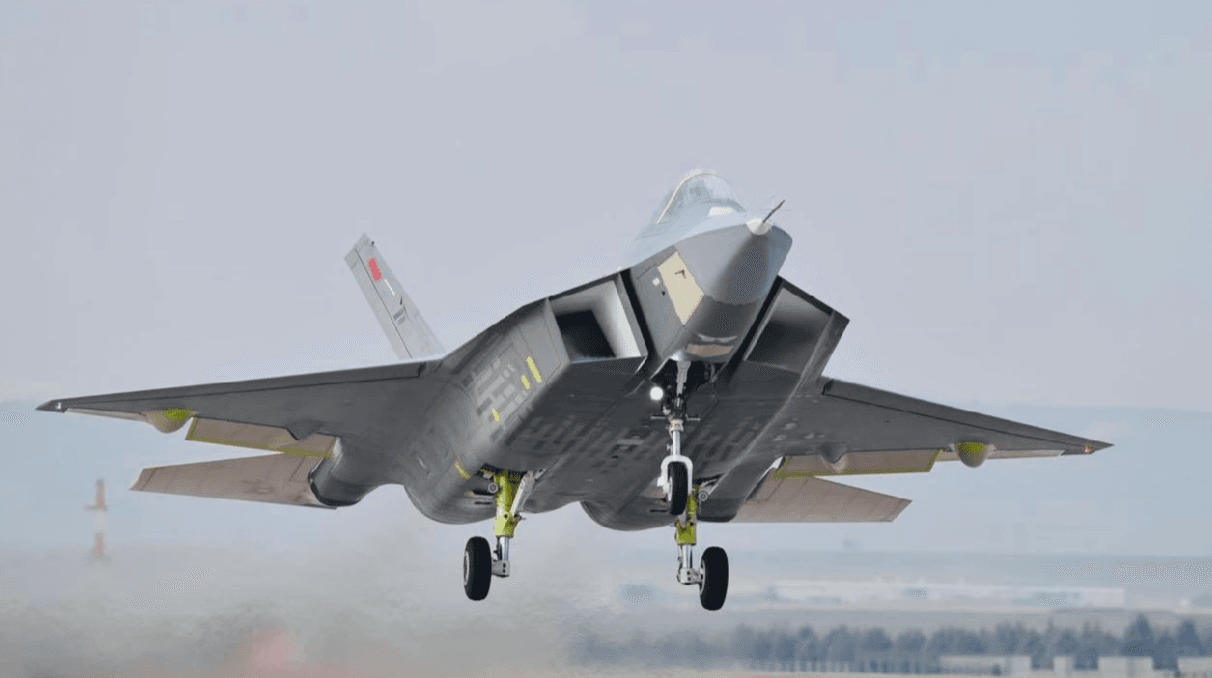
KAAN represents another level of industrial complexity.
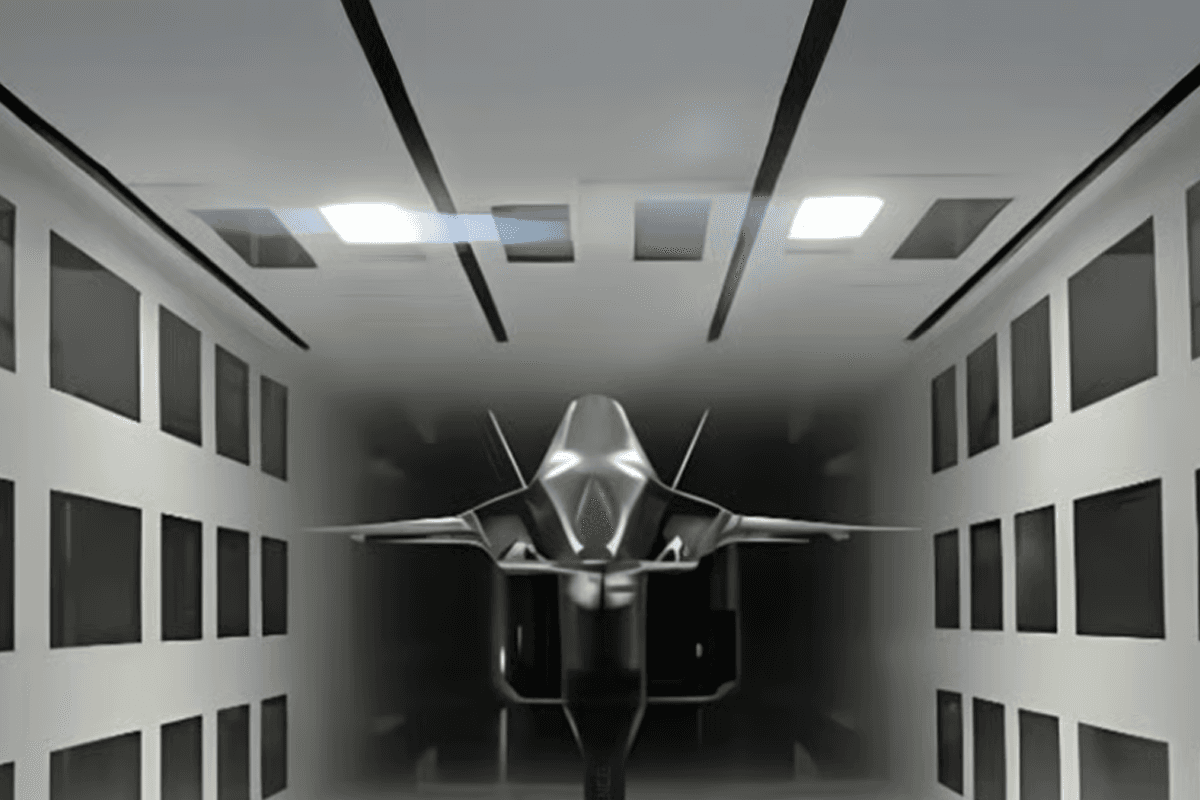
A combat-aircraft programme requires advanced aerostructures, flight controls, mission computers, radar, electronic warfare, weapons integration, software, manufacturing and eventually propulsion capability to mature within one programme architecture.
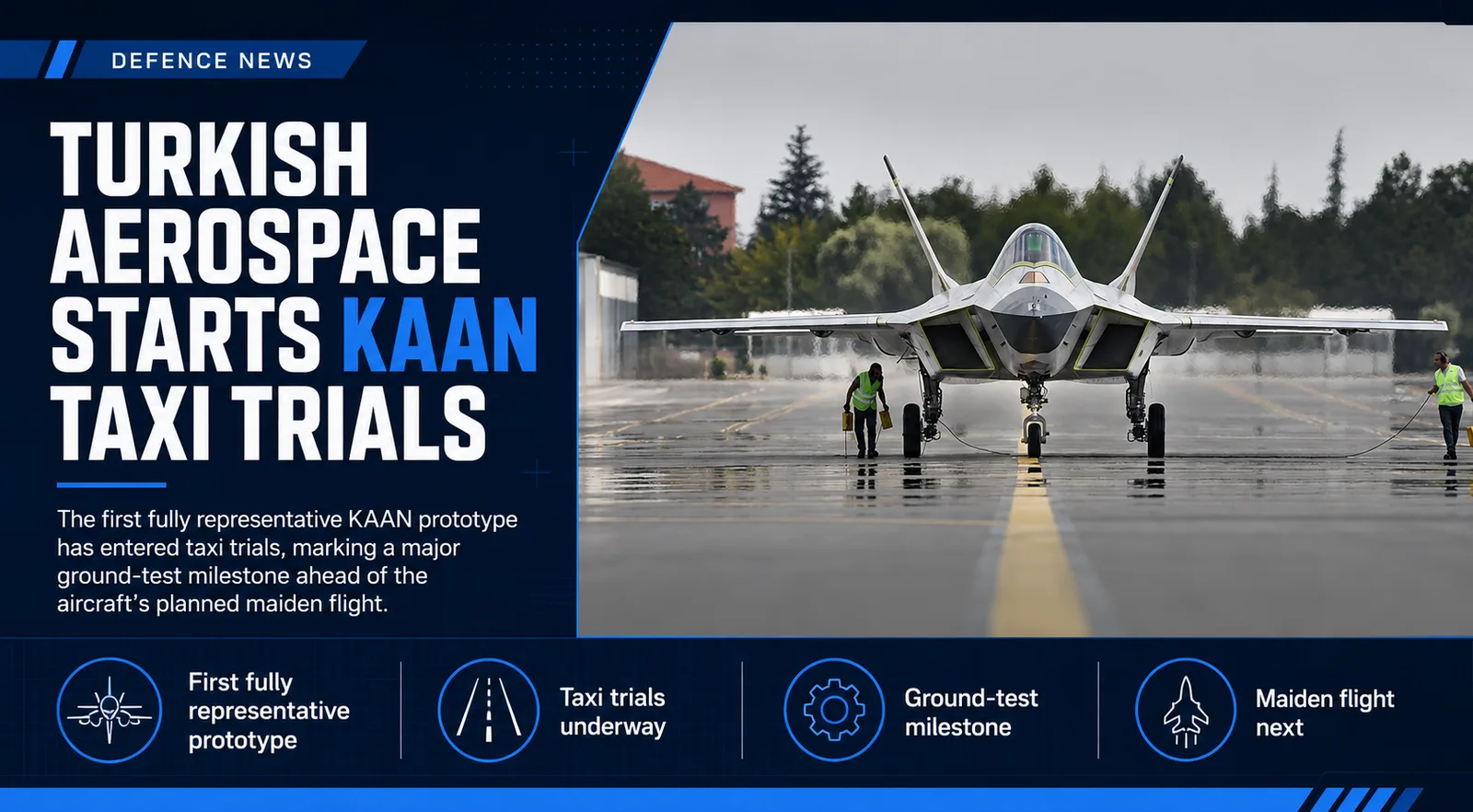
Türkiye signed a new procurement contract for KAAN during May 2026, while international interest has moved beyond preliminary marketing discussions.
The programme is therefore strategically significant even before full operational maturity because it forces large parts of the domestic aerospace ecosystem into higher technology tiers.
Missiles and Air Defence Add Industrial Depth
Another structural change has occurred in missiles, guided munitions and air defence.
Türkiye now operates or develops domestic systems across short-, medium- and long-range air defence, anti-ship missiles, stand-off weapons, ballistic missiles, cruise missiles, anti-tank systems and precision-guided munitions.
The ÇELİK KUBBE architecture is particularly important because it integrates sensors, command-and-control and multiple effectors rather than treating individual missiles as stand-alone products.
This reflects a wider industrial transition from component substitution toward system-of-systems integration.
Naval Exports Demonstrate a Different Competitive Model
Türkiye’s naval sector provides another indication of export maturity.
MİLGEM-derived vessels and other Turkish naval programmes have moved into international markets through complete ship exports, design cooperation, local construction and technology-transfer models.
Naval programmes are strategically valuable because they create long-duration industrial relationships covering shipbuilding, combat management systems, radars, weapons, training, maintenance and modernisation.
That generates a more persistent customer relationship than a one-time equipment sale.
Europe and NATO Are Becoming More Important Markets
The geography of Turkish defence exports is also changing.
Earlier export expansion was associated heavily with markets in the Middle East, Africa and Asia where Turkish companies could offer competitive prices, flexible procurement structures and relatively fast delivery.
Europe and NATO members are now taking a larger role.
Official data for the 1 June 2025–31 May 2026 period showed Türkiye exporting defence and aerospace products to 178 countries, with NATO markets forming an increasingly important part of total sales.
Türkiye has also entered NATO-level industrial initiatives covering strike capabilities, integrated air and missile defence, space and surveillance, critical raw materials and unmanned-aircraft capability.
This moves Turkish industry from the role of external equipment supplier toward participation in shared allied capability development.
Industrial Scale Is Becoming the Next Competitive Advantage
The next phase of competition will increasingly be determined by production capacity.
Recent conflicts have shown that technically sophisticated systems offer limited strategic value if production volumes cannot replace battlefield consumption.
This is driving new investment across Türkiye’s ammunition, missile, UAV, electronic and air-defence manufacturing infrastructure.
MKE’s recently announced expansion is a clear example. Defence Agenda reported that MKE plans a 5,400% increase in 155 mm ammunition capacity as part of a broader $1.5 billion industrial investment programme.
The competitive question is therefore shifting from whether Türkiye can design a defence product to whether it can manufacture enough of it, quickly enough, for both domestic and export customers.
The Transformation Is Not Complete
The growth figures should not obscure remaining industrial dependencies.
Türkiye continues to face external constraints in selected areas including propulsion, specialised materials, semiconductor technologies and certain high-end aerospace subsystems.
Localisation figures also require careful interpretation because domestic content varies significantly between platforms and subsystems. A high sector-wide localisation rate does not mean every critical component is domestically controlled.
Export growth creates another challenge: production must simultaneously meet Turkish Armed Forces requirements and increasingly large international order books.
The next phase of industrial policy therefore needs to focus as much on suppliers, skilled labour, testing capacity, materials and manufacturing throughput as on new platform announcements.
R&D Is Moving Toward Enabling Technologies
The technology agenda is also moving beyond individual weapon systems.
SSB President Haluk Görgün said Türkiye has identified 18 critical technology priority areas and expanded cooperation with 127 universities and 334 research groups.
The R&D portfolio reached approximately $920 million, while the number of completed and ongoing research projects reached 205.
Future competitive advantage is likely to depend increasingly on artificial intelligence, autonomy, advanced materials, microelectronics, quantum technologies, propulsion and networked warfare rather than simply developing additional platform variants.
The Strategic Model Is Shifting From Localisation to Exportability
The most important change in Türkiye’s industrial strategy may be conceptual.
For much of the past 25 years, the central policy objective was localisation: replacing imported systems and reducing foreign dependency.
That objective remains relevant, particularly for critical technologies.
But the commercial and strategic objective is increasingly exportability.
A sustainable defence industry needs production volumes larger than the domestic customer alone can support. Exports extend production runs, distribute development costs and create revenue for further R&D.
They also build long-term political and military relationships through training, logistics, maintenance and future upgrades.
Implications / Next
The first metric to watch is whether trailing 12-month exports continue to move materially above the $11 billion level reached in 2026.
The second is conversion of the approximately $17.9 billion in 2025 export contracts into deliveries, revenue and repeat orders.
The third is international programme execution. KAAN export commitments, European defence partnerships, NATO industrial projects and naval programmes will show whether Türkiye can manage increasingly complex multinational contracts at scale.
The fourth is industrial capacity. New investments in ammunition, propulsion, missiles, electronics and production automation must grow quickly enough to support both Turkish requirements and export demand.
Finally, the most important long-term metric will be critical-technology depth: whether Türkiye can reduce remaining dependencies in engines, microelectronics, materials and other technologies that determine the strategic autonomy of advanced platforms.
Conclusion
Türkiye’s defence-industrial transformation over the past quarter-century is now measurable across virtually every major sector indicator.
Exports increased from $248 million to more than $10 billion. The project portfolio expanded from 62 programmes to more than 1,400. Project volume rose from about $5.5 billion to more than $100 billion. Five Turkish companies now sit inside the Defense News Top 100.
Those numbers mark a transition from procurement dependence to a broad domestic defence and aerospace ecosystem.
But the next 10 years will require a different type of transformation.
Türkiye must now turn platform maturity into production scale, export contracts into long-term international programmes and localisation into control of the most difficult enabling technologies.
The 2026 export trajectory suggests that the industry has not yet reached a plateau. The strategic question is increasingly whether Türkiye can convert rapid growth into a durable position among the world’s largest defence-industrial exporters.
For further Defence Agenda coverage, read Türkiye Defence Exports Hit $10B Record in 2025, Defense News Top 100: Five Turkish Companies, SAHA 2026 Signals Türkiye’s Geopolitical Reach and Turkish Defence Industry Powers Europe’s Rearmament.
Further Reading
- Anadolu Agency: Türkiye’s defence industry records strategic transformation over 25 years
- Presidency of Defence Industries: Turkish Defence Industry in Figures
- Anadolu Agency: Türkiye defence industry 2025 performance and 2026 targets
- Anadolu Agency: Defence and aerospace exports cross the $11 billion trailing threshold
- Defence Agenda: Türkiye Defence Exports Hit $10B Record in 2025
- Defence Agenda: Five Turkish Companies in Defense News Top 100
- Defence Agenda: SAHA 2026 Signals Türkiye’s Geopolitical Reach
- Defence Agenda: MKE Plans 5,400% Increase in 155 mm Ammunition Capacity