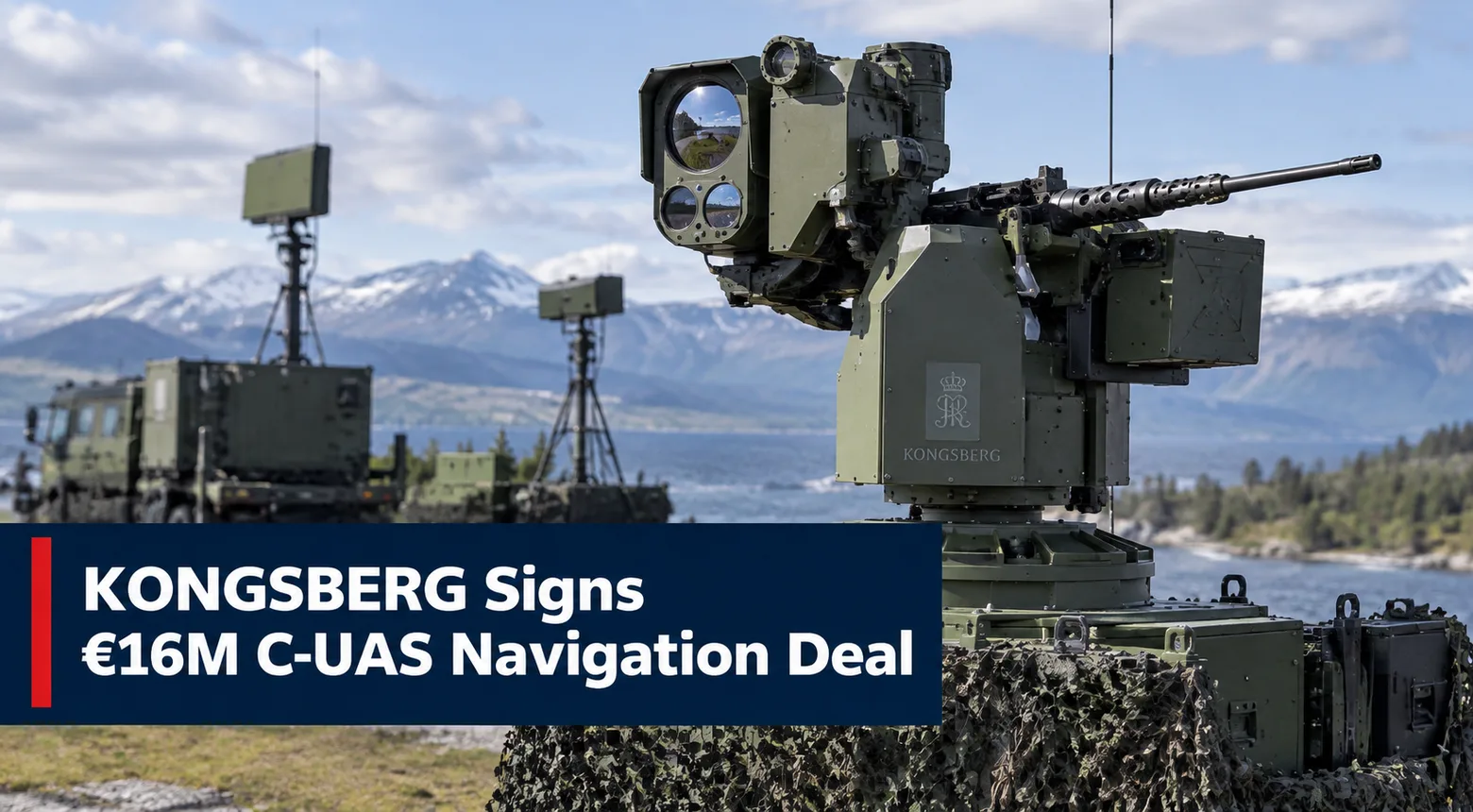
Advanced Navigation has secured a €16 million supply agreement with KONGSBERG for hundreds of Boreas fibre-optic gyroscope inertial-navigation systems to be integrated into PROTECTOR C-UAS platforms. The deal is aimed at maintaining accurate orientation and positioning when satellite navigation is jammed, spoofed or unavailable.
KONGSBERG is adding assured navigation to the C-UAS kill chain
Advanced Navigation has signed a €16 million supply agreement with KONGSBERG to provide hundreds of Boreas fibre-optic gyroscope inertial-navigation systems for PROTECTOR counter-UAS platforms. The Australian navigation company announced the agreement on 22 September 2026, framing it around the need to preserve accurate positioning, orientation and heading when satellite navigation is degraded or denied.
The contract is a subsystem award rather than a disclosed purchase of complete C-UAS batteries. Advanced Navigation will supply navigation units for integration into KONGSBERG platforms; the reviewed sources do not identify the final military customer, the exact number of finished C-UAS stations or a full-system delivery timetable. That maturity distinction prevents a supplier agreement from being overstated as an end-user procurement.
FOG inertial systems reduce dependence on satellite navigation
Counter-drone systems typically combine sensors, command software and effectors that must know their own orientation and position accurately. When GPS is jammed or spoofed, errors in navigation or pointing data can degrade track quality and weapon alignment. Fibre-optic gyroscope inertial systems measure motion and orientation without depending on external satellite signals, giving the platform a resilient reference when the electromagnetic environment is contested.
Advanced Navigation says Boreas is intended to support precise detection, tracking and engagement functions under those conditions. An inertial system does not replace every external navigation source indefinitely because inertial error can accumulate over time, but it can provide continuity through periods of disruption and can be combined with other aiding sources in a resilient PNT architecture.
The agreement reflects C-UAS industrialisation, not just experimentation
The number of units is significant even though the exact quantity is described only as hundreds. Component orders at that scale indicate preparation for repeatable production integration rather than a one-off demonstration vehicle. For KONGSBERG, a qualified navigation component can reduce technical risk across multiple platform builds if the same configuration is standardised.
This is increasingly important in C-UAS procurement, where users are asking systems to operate against low-cost drones while also surviving jamming, spoofing and other electronic-warfare effects. The result is that navigation resilience, previously treated as a background subsystem issue, is becoming a visible procurement criterion alongside radar performance, electro-optical tracking and effector cost.
End-user and schedule details remain undisclosed
The public announcement does not identify which country or military will receive the integrated platforms. It also does not disclose complete-system value, delivery batches, production rate or operational fielding date. EDR Magazine reported the agreement at approximately $18.5 million, while Advanced Navigation states the primary contract value as €16 million. Defence Agenda uses the supplier’s euro figure as the governing value.
Those gaps matter because a large component order can support several acquisition pathways: new-build systems, upgrades, spares or a mix of customer programmes. Until KONGSBERG or an end user provides programme-level detail, the safest description is a production-scale navigation supply agreement supporting PROTECTOR C-UAS integration.
Programme maturity and verification
For acquisition and programme-management teams, the milestone is most useful when separated from the claims that usually surround it. The confirmed event establishes technical or contractual progress, while production scale, operational availability, unit adoption and future performance still require their own evidence. That distinction keeps the programme baseline stable as new announcements arrive.
Implications / Next
Watch for KONGSBERG confirmation of the receiving programme, first integrated deliveries and any operational test showing the Boreas-equipped C-UAS configuration in GPS-denied conditions. Those milestones will connect the component contract to a defined fielded capability.