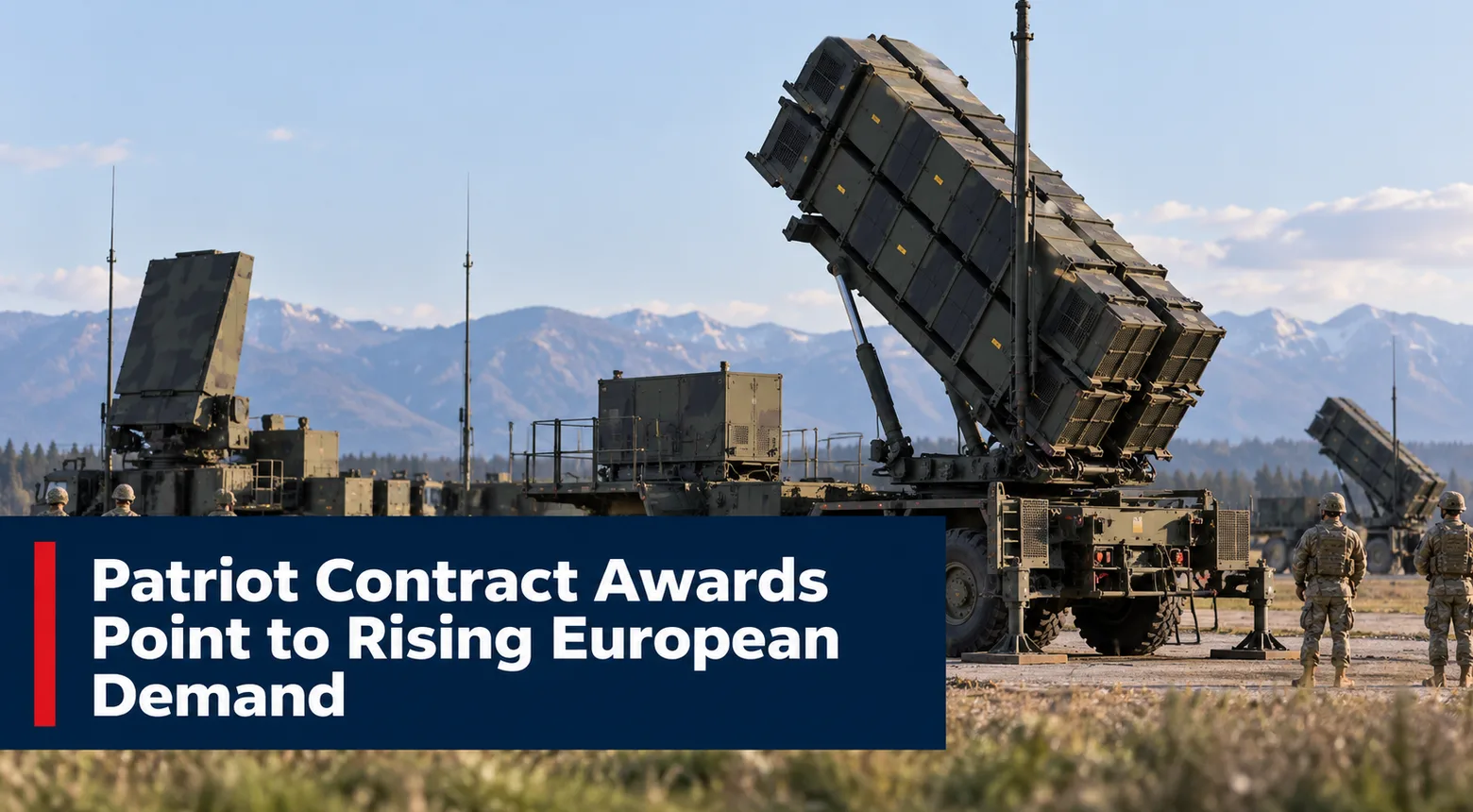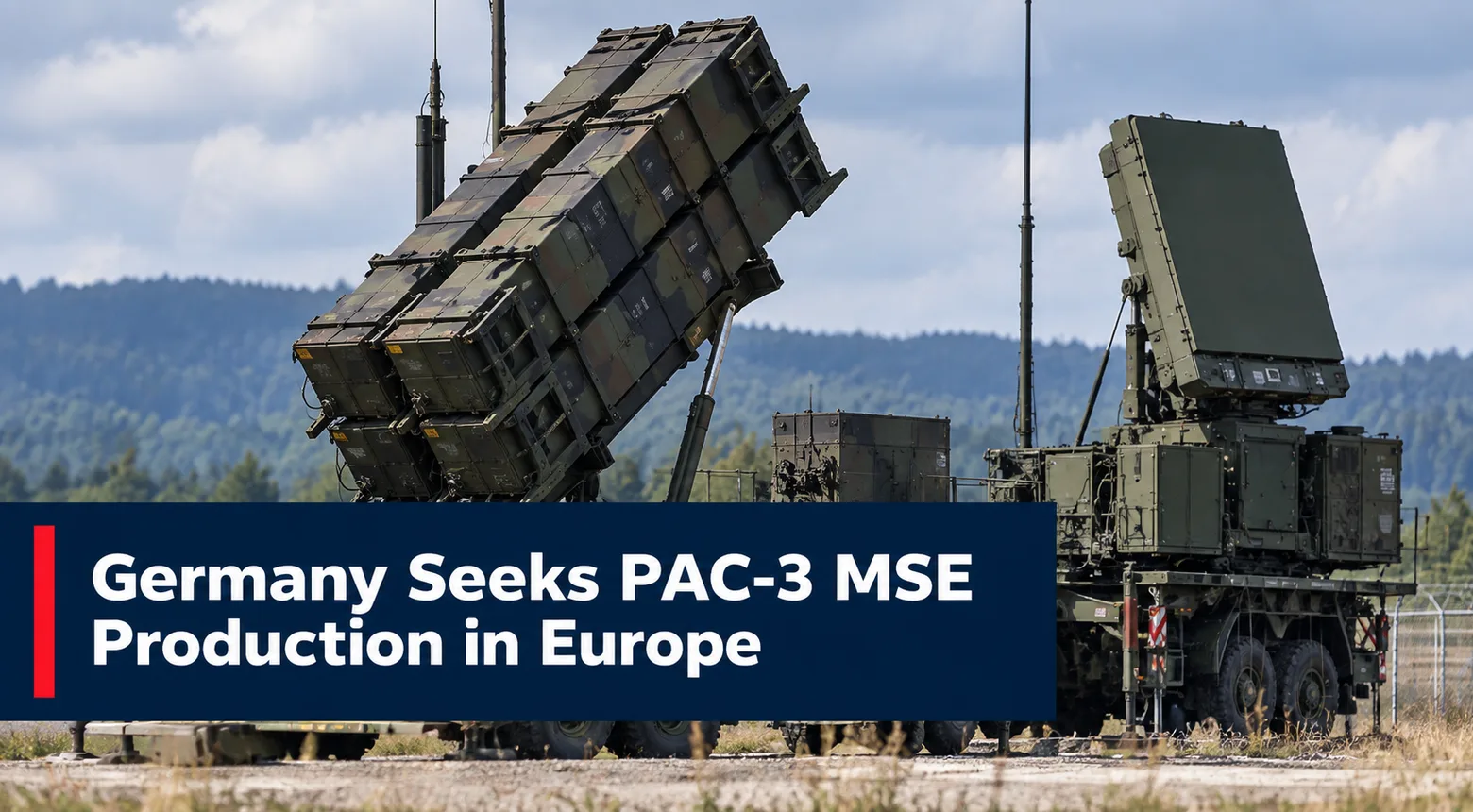
Germany is seeking U.S. approval to manufacture PAC-3 MSE interceptors domestically as part of a broader effort to expand Patriot capacity in Europe. Defence Minister Boris Pistorius has described the objective publicly, but no production licence, industrial workshare or binding manufacturing contract for PAC-3 MSE in Germany has been announced.
Berlin is asking to localise the most constrained Patriot layer
Germany is pressing the United States to permit domestic production of the PAC-3 Missile Segment Enhancement interceptor, expanding Berlin’s ambition from buying Patriot capacity to participating directly in the high-end interceptor supply chain. Defence News reported on 23 September 2026 that Defence Minister Boris Pistorius has raised the proposal with U.S. counterparts and framed it as part of Germany’s willingness to manufacture more of the Patriot value chain on European soil.
The request is notable because Germany already has industrial participation in Patriot. MBDA produces PAC-2-related equipment in Europe, while PAC-3 MSE remains a Lockheed Martin product built around a different interceptor architecture and a tightly controlled U.S. technology base. Moving PAC-3 MSE work to Germany would therefore require decisions on licensing, security, export controls, qualification and workshare rather than simply adding floor space to an existing missile plant.
The proposal is not yet a production agreement
Public reporting does not show that Lockheed Martin or the U.S. government has authorised a German PAC-3 MSE line. There is no announced contract value, production start date, annual output, site, German prime contractor or division of manufacturing tasks. Those omissions are material. Defence Agenda therefore classifies the development as a localisation and industrial-capacity proposal, not as a production award.
That distinction matters because European governments increasingly announce intent before detailed industrial arrangements are settled. Missile production requires qualified energetics, seekers, guidance electronics, propulsion, warhead components, test infrastructure and controlled supply chains. Even with political agreement, establishing a second source can take years unless substantial work is transferred from an existing qualified line.
Demand pressure is already reshaping the PAC-3 supply chain
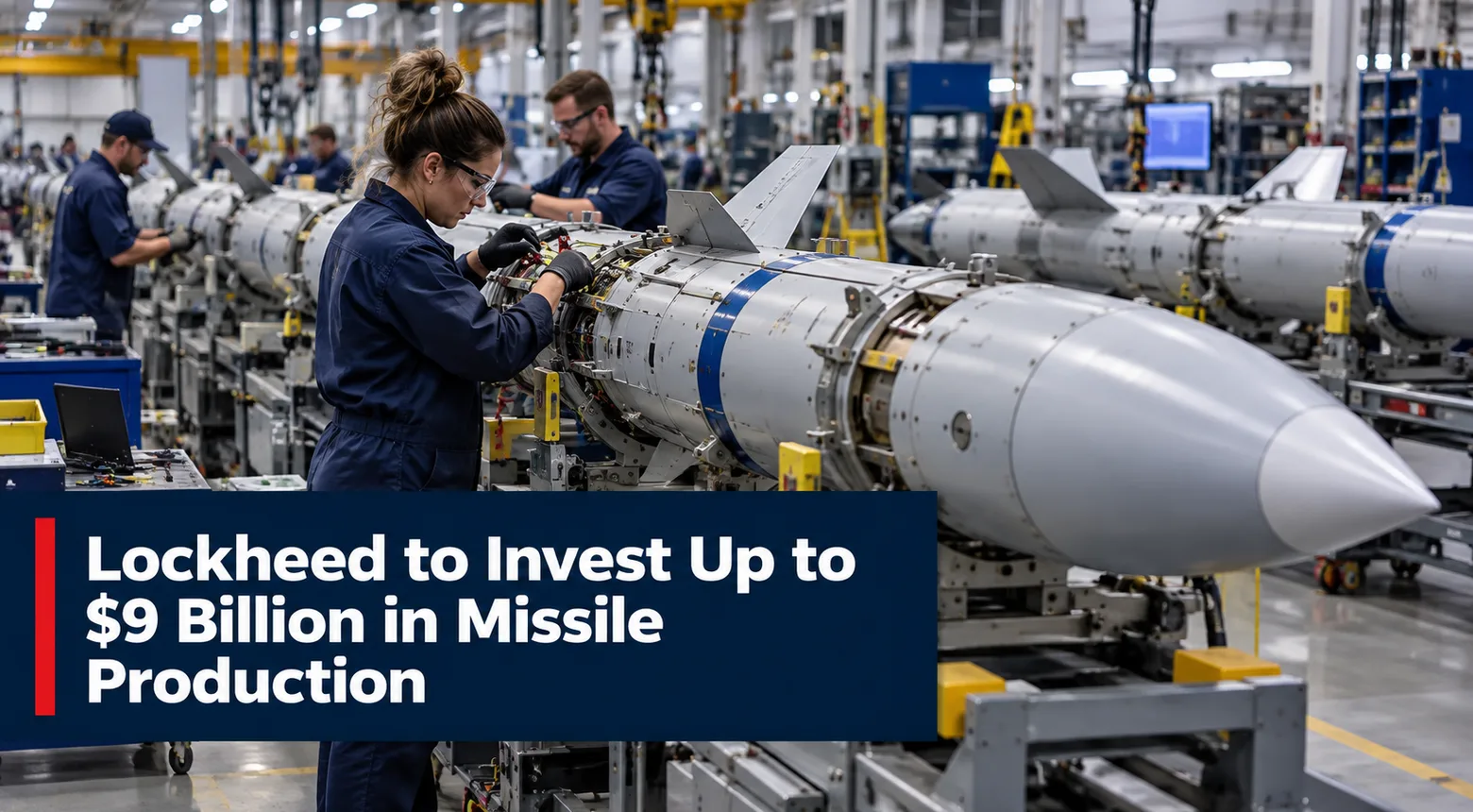
Lockheed Martin has been expanding PAC-3 MSE output in the United States and recently highlighted faster component deliveries from GM Defense. Reuters reported the first batch of GM-produced components arriving less than a month after a manufacturing agreement, illustrating the wider effort to add suppliers and compress lead times. Germany’s proposal fits that same industrial problem: demand from the United States, Europe and other users is growing faster than legacy production assumptions were designed to support.
For European operators, a regional production footprint could reduce some logistics exposure and create a larger sustainment base, although it would not remove dependence on U.S.-controlled intellectual property, export approvals or specialist components unless the localisation package were unusually broad. The exact degree of sovereignty would therefore depend on the eventual scope of licensed work.
A European line would have strategic value beyond Germany
Germany is one of several European Patriot users and has become a central logistics and procurement node for continental air defence. Additional PAC-3 MSE production in Europe could support replenishment, shared procurement and potentially faster sustainment cycles for allied inventories. It could also reduce the risk that every customer competes for output from the same U.S. production bottlenecks.
At the same time, the economic case depends on sustained orders. A second production line has to carry tooling, qualification, workforce and supplier costs over a large enough demand base to remain efficient. That makes long-term multinational demand, rather than a one-off German requirement, central to whether localisation would be commercially and operationally attractive.
Implications / Next
The next decisive signals are formal U.S. approval, identification of the German industrial participants, a binding production or licensing contract and a disclosed qualification timeline. Until then, Germany’s PAC-3 MSE ambition is a serious capacity proposal but not yet a manufacturing programme.