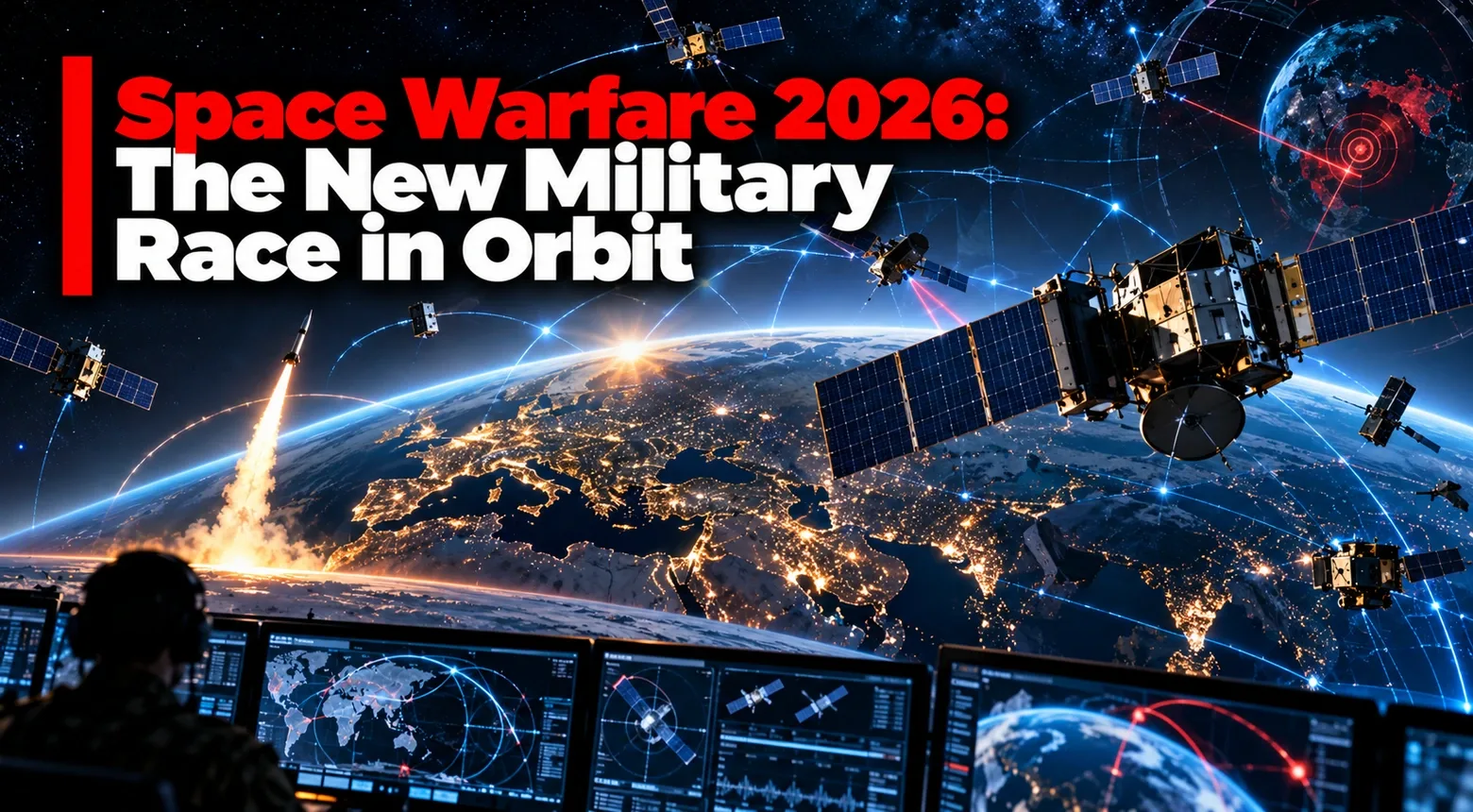
Space warfare 2026 is being shaped by an accelerating contest over satellite communications, missile warning, reconnaissance and the ability to keep orbital systems working under pressure. On 10 October 2026, the US Space Development Agency announced that another 21 transport satellites had been placed in low Earth orbit, bringing its Tranche 1 total to 84 spacecraft. NATO is also exploring a network that would connect military satellites owned by eight Allied countries. These developments matter because the next major military contest in space may be decided less by a single anti-satellite weapon than by which side can preserve data, coverage and trusted communications.
The 10 October US announcement said a SpaceX Falcon 9 launched 21 Northrop Grumman-built Tranche 1 Transport Layer satellites from Vandenberg Space Force Base, bringing the programme's publicly announced on-orbit total to 84. The satellites form part of the Proliferated Warfighter Space Architecture, intended to support secure, low-latency communications and the movement of missile-warning data. Satellites reaching orbit are an important programme milestone; they do not by themselves establish that all planned operational services are fully deployed.
At the NATO Summit Defence Industry Forum in Ankara on 7 July 2026, eight Allies — Canada, Denmark, Finland, Germany, the Netherlands, Norway, Sweden and Türkiye — launched the Hybrid Alliance Layered Operations in Space (HALO) initiative. Its proposed network would connect sovereign national military satellites to support communications, intelligence and missile tracking. HALO remains an initiative to develop an integrated system, not a declared operational mega-constellation.
Key Facts
- US launch milestone: The Space Development Agency reported 84 Tranche 1 spacecraft in orbit as of 10 October 2026, after a fourth launch carrying 21 Northrop Grumman-built transport satellites.
- US missile-sensing award: On 14 July 2026, US authorities announced two agreements totalling approximately USD 1.75 billion for 36 additional tracking and missile-defence satellites, with spacecraft expected to be available for launch by the end of 2028.
- NATO HALO: Eight countries, including Türkiye, launched a project on 7 July 2026 to explore connecting national military satellites.
- NATO APSS: Spain became the 19th participant in the Alliance Persistent Surveillance from Space initiative, according to NATO's 7 July 2026 announcement.
- Orbital congestion: ESA reported more than 300 launches and over 4,000 new payloads in 2025, in its report published on 14 September 2026.
- Counterspace research: Secure World Foundation's 8 April 2026 report covered 13 countries across five counterspace capability categories and said non-destructive counterspace effects are the types reported in active military conflicts.
- Space law: Article IV of the 1967 Outer Space Treaty prohibits placing nuclear weapons or other weapons of mass destruction in Earth orbit; it does not constitute a blanket ban on every military satellite or conventional counterspace capability.
What Is Space Warfare — and Is There Already a War in Orbit?
Space warfare describes military competition involving satellites, orbital infrastructure and the services they provide, together with efforts to protect those capabilities or to interfere with an opponent's access. The term is broader than spacecraft firing weapons at one another. It includes electromagnetic interference affecting satellite links, cyber threats to ground and network systems, surveillance of orbital objects, and the possibility of physical anti-satellite attacks.
The distinction between military use of space and destructive conflict in space matters. Satellites routinely support armed forces through positioning, navigation and timing (PNT), intelligence, surveillance and reconnaissance (ISR), weather information, secure communications and missile warning. NATO's updated space policy overview identifies these functions as essential to deterrence and defence. Routine use of orbital infrastructure is not proof that weapons are being deployed in orbit or that spacecraft are already engaging in combat.
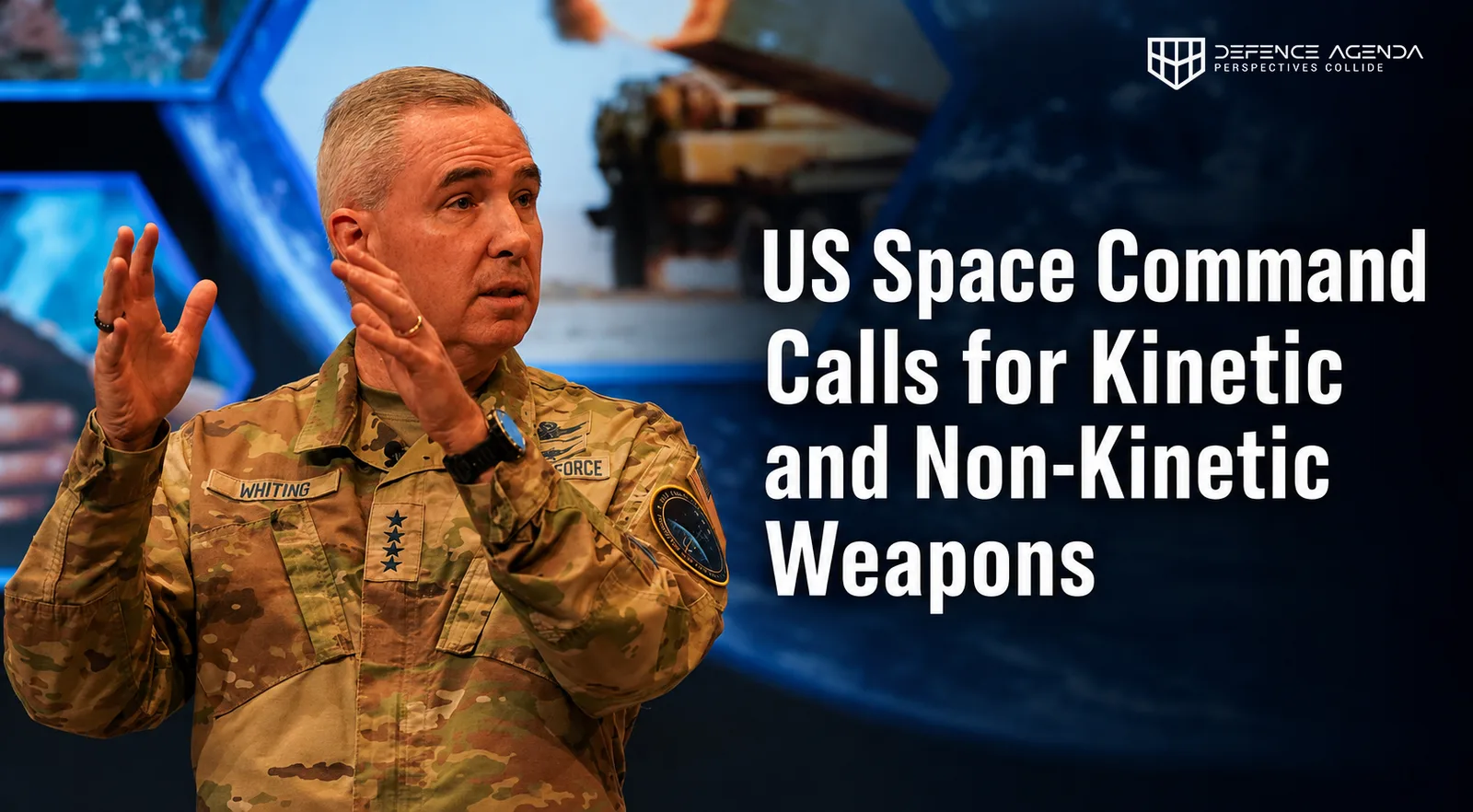
The Secure World Foundation's 2026 counterspace assessment divides relevant capabilities into co-orbital, direct-ascent, electronic warfare, directed energy and cyber categories. Its central distinction is especially important: states are developing a range of potentially destructive systems, but the report characterises the counterspace effects actually used in active military conflicts as non-destructive. The assessment had an information cut-off of 28 February 2026; it should not be treated as a verified account of every subsequent event.
Why Military Satellites Have Become Critical to Air, Land and Naval Operations
A modern military can use an orbital sensor to contribute to early warning, satellites to relay information across long distances, and navigation signals to synchronise systems. This does not mean every weapon or aircraft needs a live satellite connection at every moment. It means space-derived services can improve the speed, reach and coordination of a broader force — and interruptions may complicate those activities.
There are important differences among satellite missions. Communications spacecraft transport information; infrared sensors can contribute to warning of missile launches; imaging satellites support observation; navigation satellites provide timing and positional references. Some spacecraft perform multiple roles, but a communications-only payload must not be presented as an operational missile-detection sensor merely because it is part of the same architecture.
The US programme illustrates this functional division. The Space Development Agency's Tranche 1 programme combines a Transport Layer, intended for robust tactical data movement, with a separate Tracking Layer designed to detect and follow missile threats. Optical inter-satellite links and secure tactical interfaces aim to reduce dependence on a small number of communications pathways. Whether these functions perform as intended at sustained operational scale depends on integration, software, terminals, ground networks and testing — not launch counts alone.
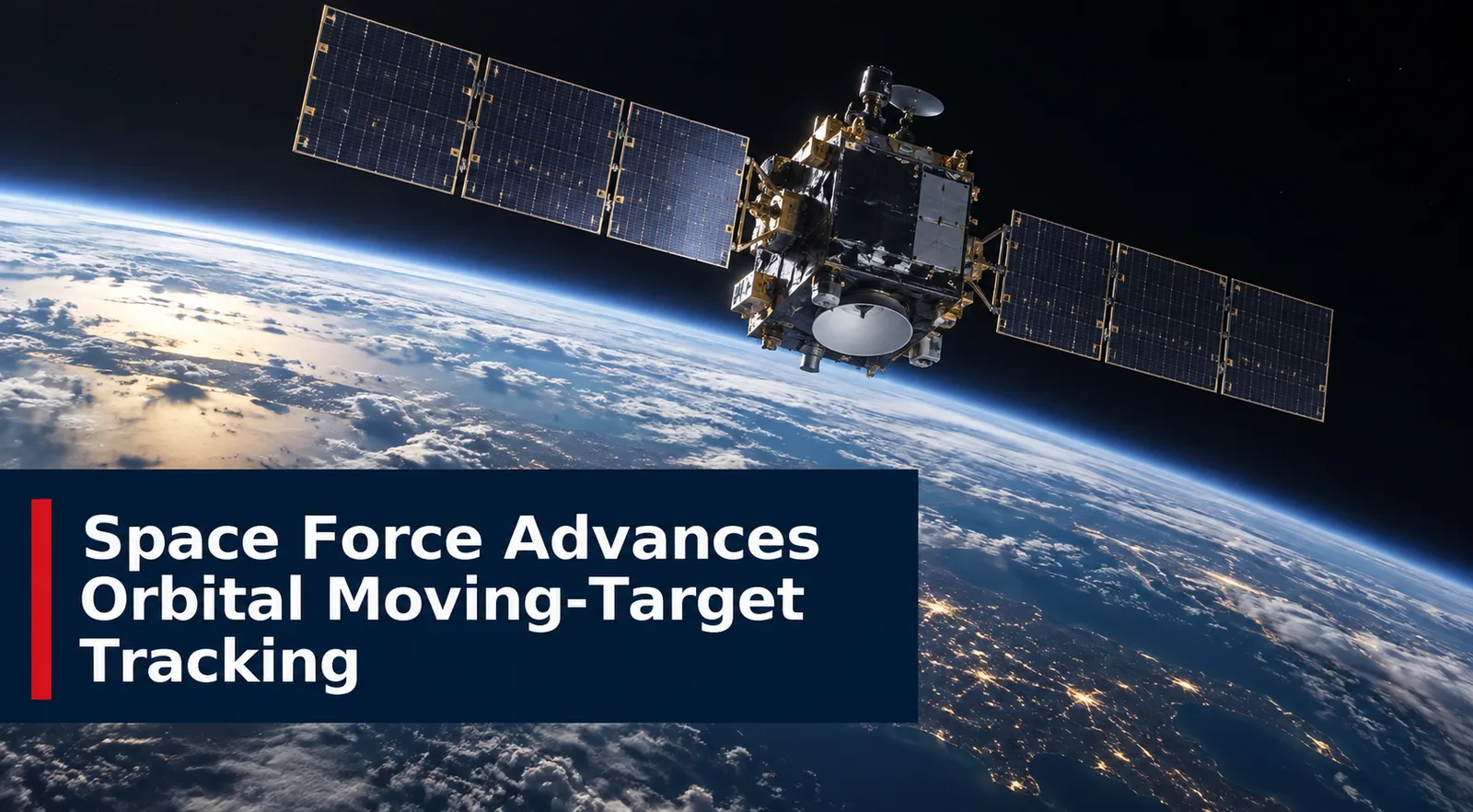
Defence Agenda has separately examined the US Space Force's multi-vendor Space Data Network and its efforts to improve space-based moving-target tracking. Together, these programmes show a shift from treating a satellite as a stand-alone asset towards treating orbital infrastructure as part of a wider military information system.
US Space Force: More Satellites, Faster Data and Missile Tracking
The US Space Development Agency is building what it calls the Proliferated Warfighter Space Architecture (PWSA). In principle, distributing functions across a larger number of satellites can reduce reliance on individual high-value spacecraft and provide more opportunities to maintain coverage following isolated losses. Such proliferation, however, does not make a constellation immune to common software failures, interference with shared infrastructure, cyber compromise or disruptions to launch and replenishment.
In a release dated 16 July 2026, the agency reported that its third Tranche 1 launch raised the on-orbit spacecraft count to 63. The next publicly announced launch on 10 October lifted it to 84. That is an increase of 21 spacecraft between those particular announced totals, not evidence that all spacecraft are certified for wartime service.
The financial scale is also expanding. The US Space Force announcement of 14 July 2026 described two prototype agreements worth approximately USD 1.75 billion in total, covering 36 additional spacecraft distributed over four orbital planes. The awards involve 18 missile-warning and missile-tracking vehicles and 18 missile-defence sensor variants. The stated milestone is availability for launch by the end of 2028. It is not an assurance that the spacecraft will all be launched, operationally accepted or in service by that date.
These figures should not be mistaken for a cost per delivered operational capability. Contract values may have different scopes, including design, spacecraft production and programme-specific support, while full lifecycle costs extend to launch, ground stations, personnel, replacement spacecraft and integration. The central acquisition question is whether additional orbital capacity leads to dependable military services at an affordable recurring cost.
NATO HALO: Can Allies Build a Shared Military Satellite Network?
NATO's HALO initiative responds to a different challenge: Allied space capabilities are nationally owned, procured through different processes and sometimes built around different networks. Bringing them together is not as simple as putting their satellite counts into a single spreadsheet. Governments need compatible technical interfaces, agreed information-sharing rules, security classifications, cyber protection and operational procedures.
At the 7 July 2026 forum, NATO said HALO would seek to connect sovereign national military satellites into a networked mega-constellation, supporting high-speed communications, intelligence and missile tracking. The word seek is decisive. HALO was announced as a project to explore and develop integration; no public claim in the cited announcement establishes that such an Alliance-wide network was already operational.
Other initiatives address related gaps. NATO reported on 7 July that Spain became the nineteenth participant in the Alliance Persistent Surveillance from Space (APSS) programme. NATO's STARLIFT effort explores more responsive launch access, while its Commercial Space Strategy recognises the potential of private satellite providers in peace, crisis and conflict.
Türkiye's role is relevant on two levels. It is one of the eight initial HALO countries, and at the same Ankara forum Türkiye announced plans for two high-resolution Earth-observation satellites, according to NATO. The announcement of plans is not proof of completed satellite manufacture, launch or operational deployment. For aerospace suppliers, the potential areas of industrial interest include protected communications, ground infrastructure, satellite components, software assurance and systems integration, subject to actual procurement decisions.
Counterspace Threats: Jamming, Cyberattacks and Physical Destruction
The popular image of space conflict often centres on a dramatic interceptor strike. The more immediate question for operators is whether an adversary can interrupt access to an essential service. Radio-frequency interference, deceptive signals, compromised ground systems and attacks on supporting networks may degrade a satellite-enabled service without destroying a spacecraft. The exact effects depend on the equipment, system design and circumstances, and should not be assumed to be universal.
The 2026 Secure World Foundation report assessed counterspace development across 13 countries. It discussed rendezvous and proximity operations as well as direct-ascent systems, electronic warfare and cyber capabilities. Close approaches between spacecraft are not automatically proof of an attack: they can serve inspection, servicing, manoeuvring or other purposes. Assessing hostile intent requires context and evidence beyond orbital proximity alone.
Physical destruction creates a different category of strategic risk. Fragments can endanger spacecraft belonging to states and companies not involved in the original confrontation. The report updated its historical assessment of anti-satellite tests by the United States, Russia, China and India, citing 6,904 catalogued fragments, of which 2,773 remained in orbit within its analytical scope. Those are figures associated with the report's underlying methodology and cut-off date, not a real-time count of all orbital debris.
A balanced deterrence assessment must therefore compare potential immediate military gain against uncontrolled consequences. Non-destructive disruption can be serious and could contribute to escalation, but destructive attacks also raise risks of persistent debris, miscalculation and harm to shared services. Neither category guarantees a decisive operational result.
Commercial Satellites and the Problem of Strategic Dependence
Commercial operators supply broadband, imagery, launch services and other space capabilities that governments increasingly rely upon. This creates valuable flexibility but also difficult questions about service availability, contractual rights, cyber protection, sovereign access and the security of shared infrastructure. A commercial network can support military operations without becoming identical to a nationally owned military system.
In a 14 October 2026 Reuters analysis, European officials and experts highlighted how dependence on US-linked satellite services complicates Ukraine's search for alternative communications and intelligence access. The broader conclusion is not that a single company or satellite network determines every battlefield result; it is that replacing an established service can require compatible user terminals, capacity, permissions and integration, rather than merely a different provider's constellation in orbit.
At the Space Defence and Security Summit on 15 September 2026, the NATO Communications and Information Agency argued for a two-speed approach: integrate commercial services quickly where they meet requirements, while sustaining more protected military infrastructure where mission assurance demands it. This is a useful framework for procurement authorities seeking to balance innovation, sovereignty, interoperability and operational reliability.
The US Space Force's experimental NTS-3 navigation programme, covered by Defence Agenda, illustrates a related concern: resilience of positioning and timing when conventional signals are disrupted. An alternative navigation experiment is not the same as a fully operational replacement for existing global positioning services.
Orbital Debris: The Risk That No Military Controls Alone
Military planners cannot consider resilience without also examining the physical environment. The European Space Agency's Space Environment Report 2026, published on 14 September, reports that more than 300 orbital launches took place in 2025, deploying over 4,000 payloads. These are historical 2025 figures published in a 2026 report, not an assertion that 4,000 military satellites entered service in 2026.
ESA warns that certain orbital bands are becoming increasingly congested. Its projections indicate that fragments from collisions can produce additional collisions, making some regions more difficult to use over time. The same physics applies to military, scientific and commercial spacecraft; debris does not discriminate by flag, mission or ownership.
That reality complicates calls for destructive anti-satellite capabilities. Removing one hostile spacecraft by force could leave many unrelated operators managing the resulting risk for years. Conversely, non-destructive techniques may still create serious service outages and can be misinterpreted during a crisis. Space-domain awareness, shared tracking data, collision avoidance and responsible end-of-life disposal are therefore operational and economic requirements, not just environmental preferences. Defence Agenda's earlier space-domain awareness explainer outlines the role of monitoring and characterising orbital activity.
How Do the Major Programmes Compare in 2026?
| Initiative or assessment | Lead / participants | Verifiable 2026 milestone | Intended capability | Main uncertainty |
|---|---|---|---|---|
| PWSA Tranche 1 | US Space Development Agency / US Space Force | 84 spacecraft reported in orbit by 10 October 2026 | Distributed tactical data links and support for missile tracking | In-orbit testing, operational acceptance and integration |
| Accelerated Missile Defense Tranche 3 | US Space Force / SDA | 36 satellites, approximately USD 1.75bn in prototype agreements announced 14 July 2026 | Missile warning, tracking and defence sensing | Launch readiness by end-2028 versus actual deployed capability |
| NATO HALO | Eight founding Allies, including Türkiye | Multinational initiative announced 7 July 2026 | Integrate sovereign satellites into a resilient network | Governance, funding, interfaces and operational timetable |
| NATO APSS | NATO participating Allies | Spain joined as 19th participant on 7 July 2026 | Improved space-derived surveillance and intelligence | Data access, exploitation and interoperable delivery |
| ESA environment monitoring | European Space Agency | 2026 report published 14 September; 2025 launch and debris data | Monitor space sustainability and collision risks | Traffic growth, compliance and active debris removal |
The comparison concerns different types of programme and assessment. Counts, prototype values, technical objectives and reported progress are not directly interchangeable indicators of military effectiveness.
What the Outer Space Treaty Does — and Does Not — Prohibit
Space security discussions often overstate the scope of existing international law. Under Article IV of the 1967 Outer Space Treaty, states parties undertake not to place nuclear weapons or other weapons of mass destruction in Earth orbit, station such weapons elsewhere in outer space or install them on celestial bodies. The article also sets specific restrictions on the military use of the Moon and other celestial bodies.
The treaty does not amount to a universal ban on reconnaissance satellites, military communications, navigation support or every conceivable conventional counterspace system in Earth orbit. Other international legal obligations remain relevant, and the lawfulness of a particular act depends on its circumstances. NATO has said its activities in space remain subject to international law and that the Alliance has no intention of placing weapons in space. These statements concern NATO policy, not a guarantee about the behaviour of every other actor.
For policymakers, an important strategic challenge is reducing the chance that ambiguous satellite manoeuvres, interference or communication failures are misread during periods of military tension. Credible information sharing, diplomatic channels, clear operational procedures and sustained verification matter alongside technical defences.
Risks, Alternatives and the Limits of a Satellite Arms Race
More satellites are not automatically better. A large constellation can be comparatively resilient to individual losses, but it also creates recurring replacement costs, dependencies on ground terminals and pressure on launch availability. A smaller, highly protected system can deliver strong capability in specialised missions, although concentration may create single points of failure. A hybrid architecture combining distributed commercial capacity, protected government spacecraft and terrestrial alternatives may provide a better balance than a single model.
Space-based surveillance and missile warning also have limits. Sensors may face coverage constraints, a communications architecture can be disrupted and collected data must be interpreted correctly. Decision-makers should distinguish a satellite launched, commissioned, interoperable, available to users, or declared operationally capable. Those are different milestones, with different evidence requirements. Public programme announcements rarely answer all of them.
There is also an industrial counterargument to rushing procurement. A government could purchase more orbital capacity while failing to fund resilient ground networks, cybersecurity, data processing and trained operators. For manufacturers and systems integrators, long-term revenue opportunities may therefore sit as much in terminals, secure software, components and sustainment as in spacecraft production. Those opportunities remain prospective unless connected to documented awards.
Implications / Next: Milestones to Watch
For the United States, the next credible measures are continued Tranche 1 spacecraft launches, on-orbit test results, user integration and subsequent missile-sensing deployment. The Tranche 3 target of launch availability by the end of 2028 should be assessed separately from operational service dates. Procurement monitoring should also distinguish the roughly USD 1.75bn July prototype awards from total lifecycle programme expenditure.
For NATO, HALO's next meaningful evidence will be defined programme governance, agreed technical interfaces, funded implementation steps and demonstrations that national military satellite services can function together. APSS and STARLIFT progress should be tracked on their own terms. The test is whether multinational connectivity becomes a dependable service rather than remaining a policy ambition.
For industry, the core competition extends beyond how many satellites a country can launch. Secure optical and radio-frequency links, interoperable ground systems, assured access to space, cyber resilience, rapid repair or replacement and the ability to process information at operational tempo all affect delivered value. Suppliers will need to demonstrate measurable performance rather than relying on the language of 'space superiority'.
For all orbital operators, ESA's updated debris findings argue for greater attention to space traffic coordination and sustainable disposal. The economic value of orbital infrastructure increases the cost of accidents and irresponsible behaviour, irrespective of whether the initial incident is military or civilian.
Conclusion
Space warfare in 2026 is best understood as a competition over resilient services and trusted information, not a prediction of an imminent battle between armed satellites. The US deployment of 84 Tranche 1 spacecraft, NATO's HALO initiative and 2026 counterspace threat assessments show that governments are putting institutional and industrial resources behind space security. But none establishes an invulnerable architecture or proves that planned capabilities are operationally mature. The decisive questions are whether systems work together, remain available under stress, can be replaced when lost and avoid creating new dangers in Earth's increasingly crowded orbital environment.
Further Reading
- US SDA: Fourth Tranche 1 launch and 84-spacecraft milestone (10 October 2026)
- NATO: Eight Allies launch HALO satellite-network initiative (7 July 2026)
- ESA: Space Environment Report 2026 (14 September 2026)
- Secure World Foundation: Global Counterspace Capabilities 2026 (8 April 2026)
- Defence Agenda: Space Force Adds Five Vendors to Space Data Network
- Defence Agenda: Space Force Tests NTS-3 to Shape Future GPS
- Defence Agenda: Orbital Moving-Target Tracking
- Defence Agenda: Space Domain Awareness