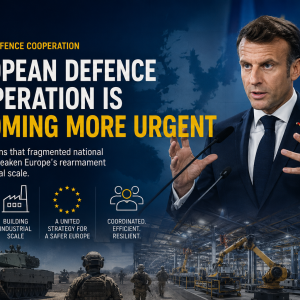
European defence cooperation is moving from a political slogan to an operational necessity as France warns that fragmented national strategies could weaken Europe’s rearmament drive.
French President Emmanuel Macron used a Bastille Day-eve defence speech to argue that Europe cannot meet its security requirements through isolated national programmes. According to Reuters, Macron called go-it-alone defence strategies in Europe an “absurdity” and urged stronger collaboration as the continent increases military spending.
The remarks come at a sensitive moment for Europe’s defence industry. Governments are raising budgets, but they still face production bottlenecks, fragmented procurement and competing national industrial priorities. Therefore, the central challenge is not only how much Europe spends. It is also how Europe spends together.
Macron’s message also reflects concern over duplicated capabilities. If every country tries to build a separate national solution for the same mission area, Europe may spend more while delivering less military effect. In contrast, joint programmes can create scale, reduce unit costs and support common logistics.
European Defence Cooperation Becomes a Rearmament Test
European defence cooperation now sits at the centre of the continent’s rearmament debate. Russia’s war against Ukraine has exposed gaps in ammunition, air defence, long-range strike, drones and industrial surge capacity. As a result, European states need faster procurement and deeper production lines.
However, higher budgets alone will not solve the problem. If new spending flows into uncoordinated national programmes, Europe may reinforce the fragmentation that has limited its defence output for decades. Joint capability planning is therefore becoming as important as funding.
This is why Macron’s warning matters. It reframes cooperation as a military requirement rather than a diplomatic preference. Europe needs common programmes that can produce equipment at scale, support interoperability and deliver operational mass.
FCAS, KNDS and the Industrial Politics of Scale
The debate is especially visible in major land and air programmes. Future Combat Air System discussions have faced industrial and political strain, while the Franco-German KNDS structure remains a key example of cross-border land-systems cooperation.
These programmes show the promise and difficulty of European industrial integration. On one hand, joint projects can combine engineering depth, production capacity and export reach. On the other hand, workshare disputes, national champions and sovereignty concerns can slow delivery.
For Europe, the issue is strategic. If joint programmes fail, countries may return to national alternatives. That may protect some domestic industries in the short term. However, it can also reduce scale, increase costs and weaken Europe’s ability to compete with larger defence industrial bases.
Ukraine Adds Urgency to European Defence Cooperation
Ukraine has made the cooperation problem more urgent. European countries must support Kyiv while also rebuilding their own stockpiles. This requires more missiles, air-defence interceptors, drones, artillery ammunition and maintenance capacity.
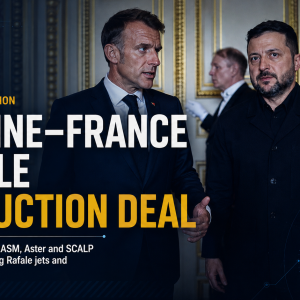
Recent announcements in Paris point in this direction. France will allow Ukraine to produce French-designed weapons, including AASM, Aster and SCALP systems. Kyiv has also ordered Rafale fighter jets and next-generation SAMP/T systems. These steps link military support to industrial production and future force planning.
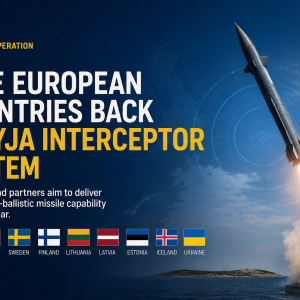
At the same time, Ukraine and European partners have advanced an integrated anti-ballistic missile coalition around the Freyja interceptor system. This shows how wartime requirements are pushing Europe toward shared development models, not only emergency donations.
The Risk of National Duplication
National duplication creates three risks. First, it spreads limited funding across too many similar programmes. Second, it weakens interoperability between European forces. Third, it prevents industry from building production runs large enough to reduce cost and improve readiness.
Air defence offers a clear example. Europe needs more sensors, launchers, interceptors and command systems. Yet a fragmented approach can create multiple systems with different supply chains and limited commonality. This makes wartime sustainment harder.
The same logic applies to combat aircraft, armoured vehicles, drones, electronic warfare and long-range strike. Europe does not need one single system for every mission. However, it does need enough standardisation to create scale and resilience.
Strategic Autonomy Requires Industrial Discipline
Macron has long supported European strategic autonomy. The latest speech adds a sharper industrial message. Strategic autonomy cannot mean every country acting alone. It requires common priorities, shared production and political discipline.
This creates a difficult balance. European governments want sovereign control over critical capabilities. They also want national industries to benefit from rising defence budgets. Still, the war in Ukraine has shown that fragmented sovereignty can become operational weakness if it prevents scale.
Therefore, the next phase of European defence cooperation will depend on execution. Governments must decide which systems need national control, which can be built jointly and which should be procured through common frameworks.
Implications for European Defence Industry
For defence companies, the message is direct. Europe’s rearmament cycle will reward firms that can deliver scale, speed and interoperability. Companies that remain locked inside narrow national markets may struggle to meet demand or compete globally.
Joint programmes can also support export competitiveness. A system backed by multiple European governments has a stronger production base and a broader customer network. In addition, shared maintenance and training structures can make the offer more attractive to allied buyers.
However, cooperation must move faster than past multinational programmes. Europe cannot afford long delays caused by industrial rivalry or political bargaining. The next generation of cooperation needs clearer governance, faster decision-making and stronger production commitments.
European Defence Cooperation Must Move From Intent to Output
Macron’s warning highlights a basic problem. Europe has the economic size, engineering base and defence companies needed to build stronger military capability. Yet those advantages lose value when national strategies move in separate directions.
The test is now practical. European defence cooperation must deliver equipment, stockpiles and operational readiness. If it does, Europe can turn higher spending into real military power. If it does not, the continent may spend heavily while remaining dependent, fragmented and slow.
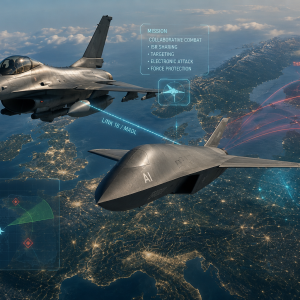
For further Defence Agenda coverage, read our Europe, defence industry and air defence sections. Related analysis includes Freyja interceptor system and European missile defence, Ukraine’s French missile production roadmap and wingman aircraft in Europe’s rearmament debate.