Freyja interceptor system has gained political backing from Ukraine and nine European countries as Kyiv and its partners seek to accelerate a new anti-ballistic missile capability for Europe.
The initiative brings together Denmark, France, Germany, Italy, the Netherlands, Norway, Spain, Sweden, Ukraine and the United Kingdom. The countries announced the establishment of an Integrated Anti-Ballistic Missile Coalition after a meeting of Ukraine’s defence allies in Paris.
According to Defense News, the coalition wants to speed up production of the Freyja interceptor system and move toward operational capability within 12 months. The project comes as Ukraine and European states face growing demand for missile defence interceptors.
The official Ukrainian declaration describes the effort as a purely defensive anti-ballistic missile coalition. It also says the coalition will establish common operational requirements, technical working groups, governance mechanisms and a roadmap for first operational capabilities.
Freyja Interceptor System Targets Europe’s Missile Defence Gap
The Freyja interceptor system is emerging because demand for ballistic missile defence has exceeded available supply. Patriot, SAMP/T, IRIS-T and NASAMS systems remain central to European air defence. However, the interceptor shortage has become a strategic constraint for Ukraine and NATO members.
Ukraine needs more anti-ballistic capability to protect cities, infrastructure and frontline areas from Russian missile attacks. Europe also needs deeper stockpiles and more production capacity. Therefore, Freyja is being framed as both a Ukrainian capability project and a European rearmament initiative.
The system is expected to combine Ukrainian interceptor development with European radar, tracking and command-and-control contributions. This structure allows partners to share industrial capacity while keeping the project focused on operational air-defence needs.
Ukraine Leads the Interceptor Effort
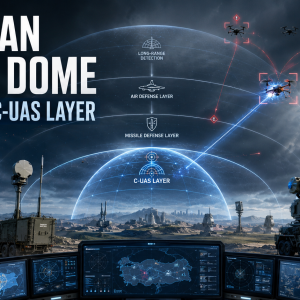
Ukraine is expected to lead the Freyja project by providing the interceptor component. European partners would add the systems Ukraine still needs around the missile, including sensors, tracking, command-and-control and wider integration into a layered missile defence architecture.
Defense News links the system to Fire Point’s FP-7.X interceptor concept. The interceptor is designed to engage ballistic targets at roughly 15 miles altitude. Earlier reporting also identified Hensoldt, Thales, Leonardo and Kongsberg as potential industrial contributors around radar, tracking and command-and-control functions.
This model reflects a wider shift in European defence procurement. Ukraine contributes battlefield experience and rapid development cycles. European partners contribute industrial scale, sensors, integration capacity and funding routes. Together, these elements could shorten the path from concept to deployable capability.
Why Freyja Matters Beyond Ukraine
The Freyja interceptor system matters because Europe’s air-defence problem is no longer limited to Ukraine. Ballistic missiles, long-range drones and cruise missiles are now central to modern strike campaigns. As a result, European states need more interceptors, better radar coverage and faster replenishment models.
The coalition also signals a move toward collective European missile defence development. Instead of relying only on existing imported or nationally procured systems, the participating countries are exploring a shared anti-ballistic missile capacity. This could support national defence plans and NATO’s wider integrated air and missile defence posture.
The project remains early. Technical requirements, funding, production roles, test schedules and operational deployment concepts still need to mature. Even so, the coalition gives Freyja political momentum at a time when Europe is trying to close capability gaps faster than traditional procurement cycles allow.
A Patriot Alternative, Not a Patriot Replacement
Freyja is being discussed as an alternative path to scarce Patriot interceptors. However, it should not be viewed as a direct replacement for Patriot. Patriot remains a mature and combat-proven system. Freyja is still an emerging project that must pass technical, industrial and operational tests.
The more realistic role is complementary. If Freyja succeeds, it could add a lower-cost and more scalable interceptor layer to Europe’s missile defence mix. That would reduce pressure on limited Patriot stocks and give Ukraine more freedom from foreign supply bottlenecks.
Cost will be a central issue. Defence News has reported that Fire Point aims to bring down ballistic missile interception costs significantly compared with high-end Western interceptors. If that target holds through testing and production, Freyja could alter the economics of European missile defence.
Industrial Implications for European Defence
The coalition gives European defence companies a potential route into a fast-moving missile defence project. Companies named in the Paris meeting included firms active in radars, missiles, sensors, tracking, command-and-control and air-defence integration.
For Europe, the industrial question is whether the coalition can turn political urgency into production discipline. Missile defence requires more than a successful interceptor. It needs validated sensors, secure data links, command systems, training, maintenance, production lines and ammunition stockpiles.
Therefore, Freyja will test Europe’s ability to build a multinational defence project at wartime speed. If the coalition avoids slow governance and fragmented workshare, it could create a new model for rapid European capability development.
Freyja Interceptor System Faces a Tight Timeline
The target of moving toward capability within a year is ambitious. Anti-ballistic missile defence is technically demanding. The system must detect, track, classify, engage and destroy fast-moving ballistic targets under operational conditions.
Still, Ukraine’s wartime innovation cycle gives the project a different starting point. Ukrainian developers have already shown that battlefield feedback can compress design and production timelines. European industrial support could add the scale and systems integration needed to make Freyja operationally credible.
The next milestones will be technical rather than political. The coalition must define requirements, test the interceptor, integrate European sensors and prove command-and-control performance. Only then can Freyja move from a promising coalition project to a deployable missile defence capability.
For further Defence Agenda coverage, read our missiles, air defence and Europe sections. Related analysis includes Defence-as-a-Service and Europe’s new procurement model and wingman aircraft in Europe’s rearmament debate.