SAHA 2026 has moved beyond a standard defence exhibition. It has become a strategic marketplace for Türkiye’s defence industry, export policy and foreign policy message. Defence24 described the Istanbul event as a display of Ankara’s ambitions. The post-show data supports that view. Türkiye is using industrial scale, export-ready systems and partnerships to grow its role as a security supplier.
Key Facts
- Date and venue: SAHA 2026 took place on 5–9 May 2026 at Istanbul Expo Center.
- Scale: The exhibition hosted 1,548 participating companies and 148,872 total visitors.
- Professional audience: The event drew 38,246 professional visitors and 28,947 B2B meetings.
- Deal flow: Signing ceremonies reached 216, with a total declared value of $26.5 billion. Around $8 billion came from export value.
- Delegations: SAHA 2026 hosted 204 official delegations from 75 countries, including 819 delegation members.
- Technology signal: Air defence, unmanned systems, naval autonomy, space technologies and long-range deterrence shaped the show narrative.
SAHA 2026 as an Industrial-Geopolitical Platform
The main value of Defence24’s SAHA 2026 assessment lies in its strategic framing. The Polish outlet argued that the show reflected Ankara’s wider geopolitical posture. That reading fits the event’s measurable results. SAHA 2026 delivered thousands of business meetings, high-level delegations and large signing ceremonies. It also displayed systems linked to air defence, autonomy, maritime security and future air combat.
For international readers, the core issue is not only new equipment. Türkiye is building a product ecosystem. It links platforms, sensors, munitions, electronic warfare, autonomous systems and export finance. This offer matters for mid-sized states. Many need useful military capability without long delivery timelines or heavy political limits.
The official event information positioned SAHA 2026 as a global defence and aerospace meeting point. It brought together industry, procurement bodies and international delegations. In practice, the post-show picture shows another role. The exhibition worked as a tool of industrial diplomacy. It helped Türkiye present itself as a producer, integrator and partner.
Why Defence24’s Ankara Ambitions Frame Matters
Defence24’s view is important because it comes from NATO’s eastern flank. Poland and Türkiye face different threats. Yet both operate in a security setting shaped by Russian pressure, air threats, missile risks, drone warfare and fragile supply chains. For Warsaw, Ankara’s defence industry raises a practical question. Can Turkish systems support European capability growth where older supply channels remain slow?
That question gives SAHA 2026 wider relevance. The exhibition showed Türkiye’s attempt to compete through scale, speed and flexible cooperation. It did not rely only on flagship platforms. This model appears in drones, loitering munitions, counter-drone systems, armoured vehicles, naval systems and electronics. It also appears in export packages with training, local workshare and faster delivery options.
Air Defence, Drones and Scalable Capability
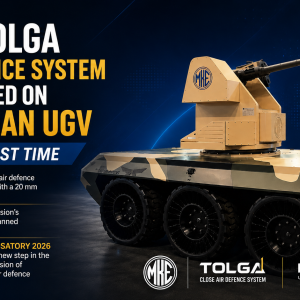
One of the strongest themes at SAHA 2026 was air defence. Counter-unmanned aerial systems also drew attention. ASELSAN’s Steel Dome-related announcements linked the show to a clear lesson from recent conflicts. Modern forces need layered protection against missiles, drones, loitering munitions and electronic attack. They also need that protection at a sustainable cost.
ASELSAN highlighted a layered model. It combines electronic warfare, directed-energy concepts, kinetic interceptors and networked command logic. Cost is central to this model. A force that uses expensive interceptors against cheap drones will struggle in a long conflict. Türkiye’s industry is trying to fill the gap between high-end strategic defence and lower-cost battlefield protection.
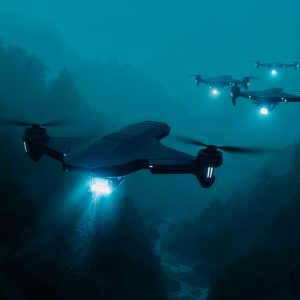
The same logic applied to unmanned systems around the exhibition. Baykar’s loitering munition portfolio, STM’s long-range concepts and Türkiye’s naval drone segment all point in the same direction. Industry is adapting to conflicts where autonomy, range, survivability and replaceability matter. Defence Agenda has separately assessed the MIZRAK loitering munition and ASELSAN’s new Steel Dome-linked counter-UAS layer as part of this shift.
KAAN, Propulsion and Strategic Autonomy
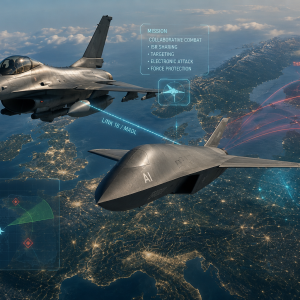
SAHA 2026 also strengthened the political weight of Türkiye’s combat-aircraft and propulsion plans. The KAAN fighter programme remains one of Ankara’s main sovereignty projects. It connects advanced air combat, supply-chain independence, industrial depth and export potential. Defence24 placed KAAN and related propulsion work inside a wider “Made in Türkiye” narrative. That reflects a clear trend. Aircraft programmes now serve military, industrial and diplomatic goals.
The narrative has value. It also carries execution risk. Fifth-generation fighter development needs stable funding, mature engines, strong sensors and reliable software. It also needs disciplined flight testing and production quality. For Türkiye, the strategic benefit is clear. A successful KAAN path would reduce dependence on foreign combat aircraft suppliers. It would also increase Ankara’s leverage in future defence partnerships.
Yıldırımhan and Strategic Signalling
The Yıldırımhan missile discussion gave SAHA 2026 a sharper deterrence angle. Defence24 described the system as a long-range strategic missile concept. It also noted caution around feasibility, cost and reputation. That caution is reasonable. Long-range missile programmes depend on propulsion, guidance, re-entry technology, test infrastructure and political messaging.
Public disclosure can create strategic effect before full validation. It can also raise expectations too quickly. For Türkiye, the message is clear. Ankara wants to show that its industry can enter strategic domains led by major powers. Yet the opportunity cost matters. Large deterrence projects can compete for budget and talent with air defence, fighter production, electronic warfare and unmanned systems.
Contracts Show the Shift From Display to Output
The strongest evidence of SAHA 2026’s growth is its deal flow. The exhibition recorded 216 signing ceremonies and $26.5 billion in declared value. That shows Türkiye can turn a defence fair into a transaction platform. The export component is especially important. Around $8 billion in export value converts industrial capability into long-term foreign partnerships.
This is why SAHA 2026 matters to the wider defence market. Many exhibitions generate visibility. Fewer generate measurable industrial movement at this scale. The mix of B2B meetings, official delegations, professional visitors and launches helped Turkish companies present full cooperation pathways. That model supports Ankara in regions that need urgent capability and supplier choice.
Poland, NATO Flanks and Cooperation
Defence24’s Polish angle deserves attention. Poland is running one of Europe’s most intense defence modernisation programmes. Türkiye has become one of NATO’s most active industrial suppliers outside Western Europe. Both countries sit on exposed strategic axes. Both need scalable capability. Each also wants faster procurement without excessive dependence on limited production lines.
These conditions create realistic cooperation areas. They include unmanned aerial systems, radar, counter-drone systems, active protection, electronic warfare, naval technologies and precision munitions. The main barrier is not only technical interest. Political trust, industrial workshare, certification, export-control alignment and sustainment planning will decide the depth of cooperation. SAHA 2026 showed that the industrial conversation exists. The next step is to convert it into funded and interoperable projects.
Implications / Next
SAHA 2026 shows that Türkiye’s defence and aerospace industry now works as a geopolitical asset. It is not only a national procurement base. The exhibition linked technology, export contracts, political messaging and defence diplomacy under one platform. That is the practical meaning of the event’s “Rule Technology, Shape the Future” positioning.
The next milestones will show how durable this signal becomes. Key indicators include Steel Dome delivery tempo, KAAN flight-test progress and export implementation after SAHA 2026 signings. Unmanned naval systems will also matter. So will any verifiable testing linked to long-range missile claims. If these tracks advance, SAHA 2026 will stand as a visible turning point in Türkiye’s defence-industrial rise.
Further Reading
- SAHA 2026 Post-Show Media Review
- ASELSAN Steel Dome Adds New C-UAS Layer
- MIZRAK Loitering Munition Debuts at SAHA 2026
- Drone Warfare 2026: AI, Robots and Swarms
- SAHA 2026 Exhibition Information
- Defence24: SAHA 2026 as a demonstration of Ankara’s geopolitical ambitions
References
- Defence24, “SAHA Expo 2026 as a demonstration of Ankara’s geopolitical ambitions,” 22 May 2026.
- SAHA 2026 official exhibition information, accessed 24 May 2026.
- SAHA 2026 official press release, 8 April 2026.
- Anadolu Agency, “SAHA 2026 eyes $8B in export deals,” 5 May 2026.
- SETA, “SAHA Expo 2026: Showcase of Türkiye’s Deterrent Power,” 15 May 2026.