Türkiye naval modernisation is moving on multiple tracks at once. Recent announcements highlighted progress in submarine acquisition, amphibious support, autonomous surface systems, and corvette exports. In parallel, Ankara framed the goal as bigger than platforms alone. It also covers workforce, technology, and industrial capacity across the defence ecosystem.
Key Facts
- Type 214 submarines: Approximately 68.5 m long; up to 20 knots submerged; six boats planned for the Turkish Navy.
- C159 landing craft: Commissioned for demanding maritime operations and humanitarian missions.
- ULAQ armed USV: Unveiled as an autonomous, AI-enabled naval system; reported 90% localisation rate for its domestically developed engine.
- TCG Koçhisar: Patrol vessel expected to join the fleet by the end of May; described as supporting Türkiye’s maritime rights and interests.
- OPV Seferihisar: First steel-cutting ceremony held for the offshore patrol vessel.
- MILGEM for Pakistan: PNS Babür delivered in May 2024; PNS Hayber delivered after sea trials; PNS Bedir due by end of June 2026; PNS Tarık due in Q1 2027.
- Exports: Türkiye ranks 11th globally in defence exports; defence and aerospace exports reported at $8.6B so far this year; target is top 10 by 2028 with $11B.
Type 214 submarines: export lineage and Turkish Navy plans
The Type 214 submarine sits at the centre of Türkiye’s undersea ambitions. The platform is described as an export version of the Type 212 submarine design in service with European navies. Countries that build or operate Type 214 boats include Greece, the Republic of Korea, Portugal, and Türkiye.
From a performance perspective, the boats measure approximately 68.5 metres in length and can reach speeds of around 20 knots while submerged. Most importantly, Türkiye plans six submarines for its navy, a number that signals long-term intent rather than a limited, symbolic buy.
Moreover, submarine programmes tend to drive local capability in combat systems integration, sustainment, and supplier qualification. As a result, Type 214 procurement also supports a wider industrial base that can feed other naval and missile programmes over time.
C159 landing craft: dual-use readiness for demanding seas
Türkiye also commissioned the C159 new-type landing craft. The programme emphasises flexibility. It aims to support both challenging maritime operations and humanitarian missions. That dual-use framing matters. In practice, it improves day-to-day utility while also reinforcing expeditionary options when crises escalate.
In addition, landing craft investments often pair naturally with amphibious task groups and coastal logistics. Therefore, even a single commissioning event can connect to a broader readiness model built around distributed operations and rapid response.
ULAQ armed USV: autonomy moves from prototype to signalling
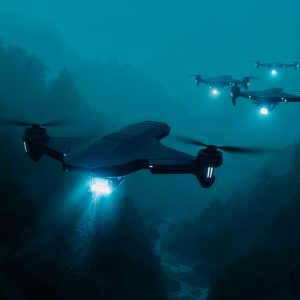
The unveiling of the ULAQ armed unmanned surface vessel adds a different layer to Türkiye naval modernisation. Unlike classic fleet renewal, USVs stress software, autonomy, sensor fusion, and human-machine teaming. They also offer a lower-cost path to presence and risk distribution in contested waters.
Erdoğan highlighted that ULAQ uses a domestically developed engine and cited a 90% localisation rate. That point matters because propulsion and powertrain sovereignty often constrain exportability and sustainment. Consequently, localisation claims serve both operational and industrial messaging.
However, autonomy also raises questions about doctrine, rules of engagement, and electronic warfare resilience. For that reason, the real measure of USV maturity will be how well the system performs in degraded comms and heavy jamming environments, not just calm-water demonstrations.
TCG Koçhisar and OPV Seferihisar: surface fleet capacity and persistence
On the surface fleet side, the patrol vessel TCG Koçhisar is expected to join the Turkish Navy by the end of May. Officials described it as a symbol of Türkiye’s determination to protect its rights and interests at sea. That language fits a wider pattern: Ankara couples platform milestones with sovereignty signalling, especially in regions where persistence matters.
In the same timeframe, the first steel-cutting ceremony took place for the offshore patrol vessel Seferihisar. Steel cutting is an early step. Still, it signals programme momentum and industrial scheduling. In addition, OPVs provide cost-effective maritime security coverage, which can free higher-end combatants for deterrence tasks.
MILGEM exports to Pakistan: pacing, delivery schedule, and industrial depth
Türkiye also advanced its naval export narrative through the MILGEM-class corvette programme for Pakistan. After completing sea trials, Türkiye delivered another MILGEM-class corvette to the Pakistan Navy, PNS Hayber. The first ship, PNS Babür, was delivered in May 2024.
The schedule extends into the next two years. PNS Bedir is scheduled for delivery by the end of June 2026. Meanwhile, PNS Tarık is scheduled for delivery in the first quarter of 2027. The fourth vessel remains under construction at the Karachi Shipyard.
The four-ship contract was signed in 2018. Under that structure, two ships were built at Istanbul Naval Shipyard, while the other two were assigned to Karachi Shipyard and Engineering Works. As a result, the deal functions as an export and an industrial cooperation model at the same time.
Moreover, serial export deliveries tend to validate design maturity, supply chain reliability, and training pipelines. Therefore, the MILGEM track record matters beyond Pakistan. It strengthens Türkiye’s credibility when it competes for naval programmes in other regions.
Why these milestones matter: deterrence across domains
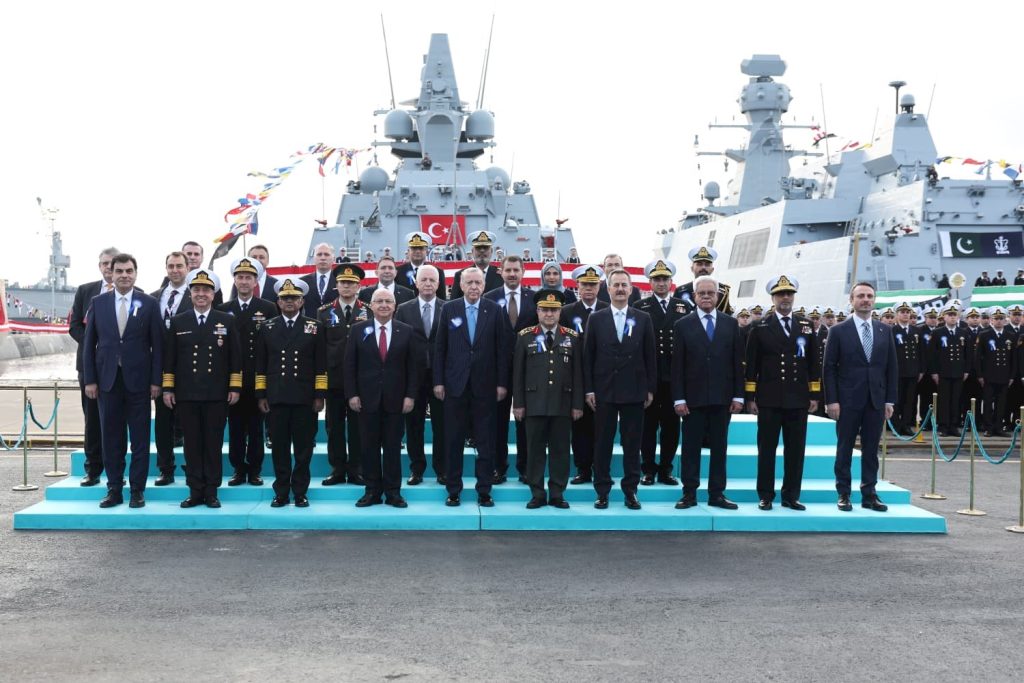
In a broader framing, Erdoğan underlined that Türkiye aims to strengthen not only platforms but also the entire defence ecosystem, including human capital and technological capacity. He also linked effective deterrence to strength on land, in the air, and at sea. That theme aligns with multi-domain thinking and with the procurement mix described above.
Finally, the export message ties the story together. Türkiye reportedly ranks 11th globally in defence exports. Defence and aerospace exports reportedly reached $8.6 billion so far this year. The stated target is entry into the global top 10 by 2028, supported by an export target of $11 billion. Officials also noted that Turkish shipyards exported more than 140 naval platforms worldwide.
Taken together, these data points suggest a deliberate strategy. Türkiye naval modernisation is not a single programme. Instead, it is a portfolio built for deterrence signalling, operational readiness, and export growth.
Implications and what to watch next
- Submarine pacing: Track delivery cadence and how Türkiye scales sustainment and training across six boats.
- Autonomy doctrine: Watch how ULAQ-like USVs integrate into fleet tactics and electronic warfare planning.
- OPV production tempo: Steel cutting to sea trials timelines will indicate shipyard throughput and capacity.
- MILGEM follow-on demand: Additional export campaigns may lean on the Pakistan delivery record as proof of performance.
- Export targets: Monitor whether platform exports and subsystem localisation translate into durable, repeatable contracts.