Turkey–Hungary defence industry cooperation has entered a new phase with a comprehensive framework agreement and two landmark industrial deals centred on the Gidran 4×4 armoured vehicle and advanced defence technologies. Announced during Hungarian Prime Minister Viktor Orbán’s visit to Türkiye on 8 December 2025, these agreements strengthen bilateral defence ties, deepen NATO interoperability and accelerate Hungary’s land forces modernisation.
High-Level Visit Unlocks a New Defence Industry Framework
Prime Minister Orbán’s visit to Istanbul formed part of the High-Level Strategic Cooperation Council between Türkiye and Hungary and coincided with the signing of 16 cooperation agreements across multiple sectors, including defence, energy and technology. Within this broader package, defence industrial cooperation emerged as a central pillar, positioning Hungary as a key European gateway for Turkish systems and technologies and reinforcing Türkiye’s role as a strategic defence partner inside the European Union and NATO.
For Ankara, the new framework helps consolidate hard-won defence export gains in Central Europe and aligns with its broader ambition to act as both a NATO contributor and a bridge to the wider Turkic world. For Budapest, it offers a cost-effective route to modern armoured platforms and cutting-edge electronics while diversifying away from a narrow supplier base and embedding Hungary more deeply in NATO-standard defence supply chains.
Exclusive Gidran 4×4 Distribution Rights in the Hungarian Market
The first major pillar of the agreements grants 4iG Space and Defence Technologies (4iG SDT) exclusive distributor rights for Gidran 4×4 armoured vehicles in the Hungarian market until 2030. Under the deal, 4iG SDT becomes the only company authorised to sell and supply Gidran 4×4 vehicles to all potential Hungarian users, including defence, gendarmerie and other government customers.
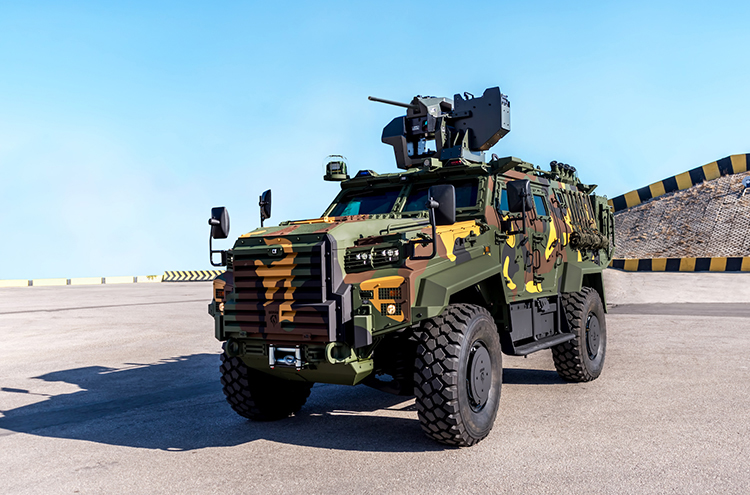
Gidran 4×4 is the Hungarian variant of Nurol Makina’s battle-proven Ejder Yalçın family of tactical armoured vehicles. The platform combines high mobility, STANAG-level protection and modular mission configurations, making it suitable for roles ranging from patrol and convoy escort to reconnaissance and internal security. More than 100 Gidran vehicles, tailored with input from Hungarian Ministry of Defence experts, have already entered service, giving the Hungarian Defence Forces a mature base of user experience to build on.
Local Production in Győr and Integrated Life-Cycle Support
A core element of the Turkey–Hungary defence industry cooperation package is the localisation of Gidran production. Assembly and the manufacture of selected subsystems will take place in the city of Győr, with Hungarian automotive group Rába playing a central role alongside Nurol Makina Hungary and 4iG SDT. As Rába’s majority shareholding moves under 4iG SDT’s control, all key stages of the Gidran programme—from production and integration to sales and in-service support—will sit within a single corporate group.
From 2026 onward, the partners plan to manufacture more than 400 additional Gidran vehicles in Hungary, expanding the national fleet by roughly a factor of five. This industrial model supports Hungarian jobs, builds local armoured-vehicle expertise and creates an opportunity to position Hungary as a regional hub for upgrades, maintenance and future exports, while Türkiye consolidates its status as a leading supplier of NATO-standard wheeled armoured vehicles.
ASELSAN–4iG Technology Partnership for Future Systems
The second defence pillar is an agreement between 4iG SDT and ASELSAN to prepare the establishment of a joint venture in Hungary. The planned entity will focus on developing and producing remote-controlled weapon stations, counter-UAS (drone defence) solutions and air defence systems for the Hungarian market, with an eye to potential regional export opportunities.
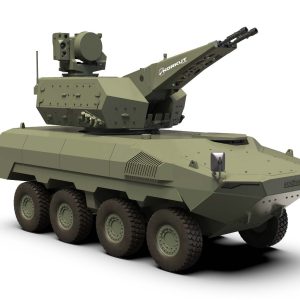
In practical terms, this means that future Gidran 4×4 variants and other Hungarian platforms could integrate ASELSAN’s combat-proven remote weapon stations, sensors and command-and-control solutions under local production schemes. Over time, the cooperation could extend into radar, electronic warfare and integrated air defence architectures, providing Hungary with NATO-compatible capabilities while anchoring Turkish defence electronics more firmly in Europe’s industrial landscape.
The ASELSAN–4iG partnership also supports the broader objective of developing NATO-standard technologies on Hungarian soil. By co-designing and manufacturing systems locally, Budapest can strengthen its technological sovereignty and deepen its role in Alliance capability planning, while Ankara gains a trusted EU-based partner for technology insertion, certification and long-term sustainment.
Strategic Significance for NATO and European Security
Taken together, these agreements underline how Turkey–Hungary defence industry cooperation is evolving from simple buyer–seller dynamics into structured, long-term industrial integration. Hungary benefits from rapid access to combat-proven platforms and advanced electronics without bearing the full cost of greenfield development. Türkiye, meanwhile, anchors its defence companies in a NATO and EU member state, expanding their footprint in Europe’s procurement ecosystem.
For NATO, the deals are strategically relevant in three ways. First, they enhance the Alliance’s land forces with interoperable, modern armoured vehicles and weapon systems. Second, they diversify Europe’s industrial base at a time when many allies are rearming and looking for cost-effective, quickly deliverable solutions. Third, they signal that Türkiye can leverage its maturing defence industry to strengthen intra-Alliance ties, even as it pursues a more autonomous foreign policy.
The agreements also complement Hungary’s ambition to act as a bridge between the EU and the Turkic world. By linking 4iG SDT, Rába, ASELSAN and Nurol Makina into shared projects, Budapest and Ankara build practical interdependence that spans technology, supply chains and operational concepts. In a period of heightened European security concerns, this type of structured cooperation offers both resilience and flexibility.
What to Watch Next
Over the coming years, several milestones will show how far this Turkey–Hungary defence industry cooperation progresses in practice. Key indicators include the start of full-rate Gidran 4×4 production in Győr, the scale of Hungarian content in each vehicle, and the speed at which the fleet grows beyond the current hundred-plus vehicles already delivered.
Another marker will be the formal establishment and initial product roadmap of the ASELSAN–4iG joint venture. The choice of first systems—whether remote weapon stations, counter-drone suites or short-range air defence—will reveal immediate priorities and export ambitions. Finally, any future decisions to market Hungarian-built Gidran vehicles or Hungarian-produced ASELSAN systems to third countries will show how far the partnership has matured into a genuine regional export platform.
As Europe continues to rearm, cost-effective and quickly scalable solutions will remain in high demand. The Turkey–Hungary defence industry cooperation around Gidran 4×4 armoured vehicles and advanced electronic systems positions both countries to play a more influential role in that emerging landscape.
Related Coverage and Background
For more context on Turkey’s wider defence export strategy and European partnerships, see our analysis of Türkiye’s defence export strategy toward 2030 and our recent coverage of Turkish armoured vehicle programmes in Europe.
External sources on the latest agreements and bilateral context include official and specialist reporting such as: Türkiye’s Communications Directorate summary of the 16 bilateral agreements, coverage of the Gidran 4×4 exclusive distributor agreement and local production plans, and 4iG Group statements on strengthening defence and economic cooperation with Türkiye.