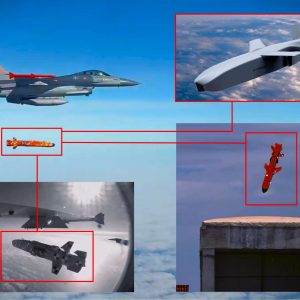
Low-Cost Containerized Munitions have moved from concept to procurement pathway. The Pentagon now plans a major push for affordable strike mass. On 13 May 2026, Reuters reported framework agreements with Anduril, CoAspire, Leidos and Zone 5. These agreements launch the Low-Cost Containerized Munitions, or LCCM, programme. The framework could support more than 10,000 low-cost cruise missiles over three years from 2027. The move matters because Western forces need deeper missile stocks. High-end missiles remain vital, but armed forces also need cheaper weapons they can produce and field in large numbers.
Key Facts
- Programme: The Pentagon designed Low-Cost Containerized Munitions (LCCM) to scale low-cost cruise missile production.
- Companies: The framework names Anduril, CoAspire, Leidos and Zone 5.
- Volume objective: The Pentagon says the framework could support more than 10,000 low-cost cruise missiles from 2027 to 2029.
- Assessment phase: The Pentagon expects test missile purchases from the four LCCM vendors to begin in June 2026.
- Contract model: The agreements set terms for future firm-fixed-price production contracts and fixed material-unit costs.
- Parallel hypersonic effort: A separate Castelion pathway could support at least 500 Blackbeard missiles each year after testing and validation.
Why the LCCM Framework Matters
The Pentagon’s LCCM framework is more than another missile announcement. It answers a clear strategic problem. Modern conflict consumes precision weapons faster than many defence industries can replace them. The United States and its allies have invested for years in high-end standoff weapons. They now face a second requirement: magazine depth.
Ukraine, the Red Sea, the Indo-Pacific and the Middle East all show the same trend. Forces need enough missiles to sustain pressure, not only enough missiles to win one exchange. Large inventories also support deterrence. They show an adversary that a first strike or early salvo will not exhaust the defender.
The official U.S. release says the LCCM effort aims to add affordable kinetic mass for the Joint Force. Reuters reported that the Pentagon’s framework could support more than 10,000 containerized missiles from 2027. The same report also points to a parallel low-cost hypersonic path through Castelion’s Blackbeard missile [1] [2].
The word “containerized” is central. A container format can help forces move, hide and disperse missile launchers. It can also support launch concepts from ground vehicles, expeditionary sites and maritime platforms. This flexibility does not remove the need for strong command-and-control. Forces still need targeting, communications security and clear rules of engagement. But the launch layer becomes more modular, mobile and harder to target.
Affordable Strike Mass Versus High-End Missiles
Low-Cost Containerized Munitions do not replace Tomahawk, JASSM-ER, LRASM or future hypersonic weapons. Instead, LCCM adds a lower-cost strike layer. This layer can handle missions that do not require the most expensive missile in the inventory. It can also support saturation, distributed fires and routine strike tasks.
This is a different industrial model from boutique procurement. It needs steady demand, simple production paths and rapid test cycles. It also needs firms that can invest capital before the government awards large production lots.
Leidos’ public statement shows this model in practice. The company said it will build an initial 3,000 LCCM rounds under its framework agreement. It also plans to expand workforce and facilities in Huntsville, Alabama, and McEwen, Tennessee. Leidos says it will use technologies from its AGM-190A Small Cruise Missile programme. The company expects design, development and test work to lead to production in 2027. Its initial design focuses on ground launch, but Leidos says it could adapt the weapon for maritime and air launch [3].
This issue matters well beyond Washington. European and Indo-Pacific planners face similar pressure. They must cover larger threat sets, longer ranges and more demanding salvo scenarios. Defence Agenda has previously assessed how Europe’s readiness challenge depends on missile stocks, industrial surge capacity and defence spending discipline [4].
Industrial Base Effects: New Entrants and Fixed Prices
The strongest signal may come from the industrial base. The Pentagon placed Anduril, CoAspire, Leidos and Zone 5 inside the LCCM framework. That decision broadens the missile supplier base beyond the traditional prime-contractor model. It does not make established primes less important. But it gives new entrants a clearer route into munitions production.
Firm-fixed-price structures also matter. They push vendors to control cost and simplify production. They also shift more performance risk to industry. This can work if the Pentagon keeps requirements stable. It can fail if the government adds new requirements during testing.
Open architecture will shape the result. A modular missile family can accept new seekers, datalinks, warheads and software faster. But too much modular ambition can slow certification. The Pentagon will need a disciplined baseline. It will also need enough flexibility to upgrade the weapons after fielding.
Operational Implications for Distributed Fires
LCCM fits the rise of distributed fires. In the Indo-Pacific, U.S. forces must manage long distances, vulnerable bases and contested logistics. They also need to hold maritime and land targets at risk from dispersed locations. In Europe, the geography differs. The logic remains similar. Mobile launchers, resilient stockpiles and rapid repositioning can complicate an adversary’s targeting cycle.
Containerized launchers could add more firing points. They could also reduce dependence on large, visible infrastructure. Yet the concept carries risks. Adversaries may struggle to distinguish military launch containers from civilian logistics containers. That could create escalation-management problems. It also raises the burden on positive control, target validation and communications resilience.
The Barracuda-500 debate adds useful context. Anduril’s low-cost cruise missile family has become part of a wider discussion about affordable mass and Taiwan’s deterrence needs. Defence Agenda’s earlier analysis of Barracuda-500 local production in Taiwan explains why low-cost cruise missiles now matter for both operations and industrial policy [5].
Blackbeard and the Low-Cost Hypersonic Question
The separate Castelion agreement adds a second layer to the story. Reuters reported that the Pentagon plans a two-year contract path for at least 500 Blackbeard missiles each year. That annual target depends on testing and validation. Reuters also reported that the Pentagon seeks authority and funding to buy more than 12,000 Blackbeard missiles over five years.
That figure stands out because hypersonic weapons usually carry high costs and complex production demands. The Blackbeard path remains conditional. Testing, manufacturing yield, guidance reliability and integration will decide the outcome. Even so, the Pentagon’s approach shows a broader portfolio strategy. It wants several price points, ranges and speed regimes. That mix can overwhelm defences and reduce dependence on a small number of premium weapons.
Assessment: A Test for Missile Production at Scale
The Pentagon’s Low-Cost Containerized Munitions plan tests a new defence-industrial thesis. Commercial-style iteration, private capital and fixed-price production may deliver magazine depth faster than legacy acquisition paths. The upside is clear. If the LCCM vendors scale production from 2027, the United States gains a deeper strike layer. That layer would complement high-end missiles and support distributed operations.
The risk is also clear. Low-cost missiles still need guidance systems, propulsion, warheads, test ranges and secure supply chains. Fragile components or single-source suppliers could create new bottlenecks. Immature production lines could do the same. The next milestones therefore go beyond flight tests. Production-rate validation, cost transparency and service-level utility will matter just as much.
Allies should track this programme closely. It shows where missile procurement is heading. Future deterrence will rely on layered strike portfolios. Countries will need high-end precision weapons, affordable mass, resilient launch architectures and deeper industrial capacity. The states that combine these elements will hold a stronger position in conventional deterrence.
Implications / Next
The near-term watchpoints are clear. The Pentagon expects the assessment phase to begin in June 2026. Production decisions should shape the 2027–2029 lots. Congress will decide whether the department receives the funding and authority needed for sustained missile buys. For industry, the key test is simple. Vendors must prove that affordable strike mass can move from slogan to repeatable production model.
Further Reading
- Defence Agenda — Taiwan’s Barracuda-500 Goes Local
- Defence Agenda — AGM-158 XR Extreme Range Cruise Missile
- Defence Agenda — Europe’s Defence Readiness vs Russia
- Defence Agenda — Global Defence Spending Forecast 2026
- Reuters — Pentagon strikes agreements with defence firms on containerized missiles
- U.S. Department of War — Lethal strike capacity framework release
References
- Reuters, “Pentagon strikes agreements with defense firms on containerized missiles,” 13 May 2026.
- U.S. Department of War, “Department of War Enhances Lethal Strike Capacity Through Partnership With New Entrants,” 13 May 2026.
- Leidos / PR Newswire, “Leidos to build initial 3,000 low-cost containerized munitions through Department of War framework agreement,” 13 May 2026.
- Defence Agenda, “Europe’s Defence Readiness vs Russia.”
- Defence Agenda, “Taiwan’s Barracuda-500 Goes Local.”