
ASELSAN 2025 Revenue Reaches TRY 180.4 Billion

ASELSAN 2025 Revenue Signals Strong Growth in Defence Sector Türkiye’s leading defence electronics company, ASELSAN, reported a TRY 180.4 billion revenue for 2025, marking a significant milestone in its financial and operational trajectory. The performance underscores the company’s expanding role in both domestic and international defence and aerospace markets. Key Facts Financial Performance and Growth […]
Indo-Pacific Extended Deterrence and Strategic Depth

Indo-Pacific extended deterrence has moved from theory to daily strategy. Nuclear risks now sit next to conventional war planning. Moreover, arms control has weakened while nuclear threats have become more routine. At the same time, Chinese and North Korean arsenal growth adds pressure. As a result, allies must revisit how they signal resolve, protect forces, […]
Tactical Edge Computing vs Centralized Cloud

Tactical edge computing vs centralized cloud has become a defining choice in modern military digital transformation. The way armed forces distribute computing power now shapes how fast units can sense, decide, and act under fire. It also determines how vulnerable command-and-control becomes to cyber, electronic, and kinetic attack. Today’s forces are torn between the efficiency […]
Dual-Use Defence Technologies in Space

Dual-use defence technologies are reshaping how militaries fight and plan. The most visible changes are in commercial low Earth orbit (LEO) satellite networks and emerging quantum sensing. Military Reliance on Dual-Use Defence Technologies in LEO Recent conflicts show how commercial LEO constellations have become essential to modern operations. Services such as SpaceX Starlink now support […]
Battlefield AI Trust Gap: Why Explainability Matters

Would you accept a machine’s recommendation on a life-and-death decision if you could not explain how it reached that conclusion? That is the core dilemma at the heart of battlefield AI trust. As artificial intelligence systems move from labs into command posts, cockpits, and tactical operations centers, militaries are discovering that raw algorithmic power is […]
Defense Supply Chain Vulnerabilities: The Hidden Kill Switch

Defense supply chain vulnerabilities are emerging as the hidden kill switch of modern military power. Rare earths, specialty metals, and advanced microelectronics sit inside every smart weapon and secure network. When a handful of suppliers and refineries control these inputs, they gain leverage over entire armed forces. That risk is now a daily concern for […]
NATO Multi-Domain Operations: Closing the 2030 Gap

Why NATO Multi-Domain Operations Matter NATO multi-domain operations will shape how the Alliance deters and fights in the coming decade. In future crises, success will depend on how quickly forces can combine effects across land, air, sea, space, cyber and the electromagnetic spectrum. Consequently, the Alliance’s ability to integrate these domains will be a central […]
Three Think‑Tank Perspectives on Defence Diplomacy

Abstract Over the past month, three analyses from distinct geographies (the United States, the Euro-Atlantic region, and the Indo-Pacific region) have examined how defense diplomacy shapes industrial bases, supply chains, and alliance-managed procurement. The GAO (US) report foregrounds risk stemming from dependence on foreign suppliers and proposes governance tools to improve supply‑chain visibility. The Atlantic […]
DSEI 2025: Defence Trends & Commercial Outlook

This report surfaces the most visible DSEI 2025 defence trends: autonomy and UAV ecosystems, layered counter‑UAS and directed energy, uncrewed and naval systems for MCM/ASW, rapid‑deployment ISR/radar kits, and deep‑strike/NLOS munitions. Headlines, sources, and dates are taken verbatim from the list; insights are grouped newest → oldest and translated into commercial implications.
MSPO 2025 Commercial Report: Deals, UAS & Fires

The MSPO 2025 commercial report shows a market pivoting around three forces: (1) Poland’s localisation drive and PGZ ecosystem expansion, (2) intense foreign OEM competition coupled with technology transfer offers, and (3) an operational pull from Ukraine that prioritises UAS/C-UAS and long-range fires. The feed of 26 May–9 September 2025 headlines reveals concrete moves—local rocket […]
Editorial Z-Report | 06.09.2025

Defence Agenda — Evening Brief End-of-day summary · Updated: 31 August 2025 · Europe/Istanbul (UTC+3) 5Top stories 3Programmes moving 2Budget/force structure 24hWatchlist Top Stories UAV swarms vs SHORAD Swarm–defence match-up enters a new test cycle; layered counters are shifting from point solutions to networked effects. Air & Missile Defence CapLink array and missile defence Link-budget […]
China new generation weapons parade
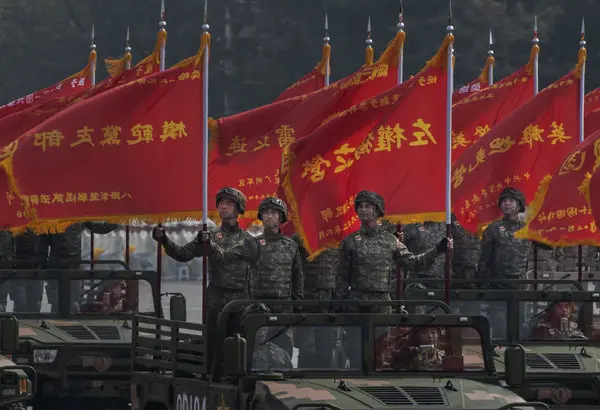
At the China new generation weapons parade, Beijing unveiled platforms spanning small arms, armor, hypersonics, air defense and nuclear delivery—signaling a fully networked, multi-domain PLA entering service now. Key Facts Why this parade matters China concentrated a decade of modernization into one broadcast moment. The China new generation weapons parade ties five threads together: survivable […]
Editorial Z-Report | 31.08.2025

Defence Agenda — Evening Brief End-of-day summary · Updated: 31 August 2025 · Europe/Istanbul (UTC+3) 5Top stories 3Programmes moving 2Budget/force structure 24hWatchlist Top Stories UAV swarms vs SHORAD Swarm–defence match-up enters a new test cycle; layered counters are shifting from point solutions to networked effects. Air & Missile Defence CapLink array and missile defence Link-budget […]
Hypersonics vs Layered Defence

In the debate over hypersonic missiles vs layered defence, two developments changed the tone this year: credible Navy–MDA testing of terminal defence upgrades and a renewed push to fund the glide-phase kill chain in space and at sea. The question is no longer whether a defender can touch a hypersonic threat at all; it is […]
ASELSAN Steel Dome Unveiled
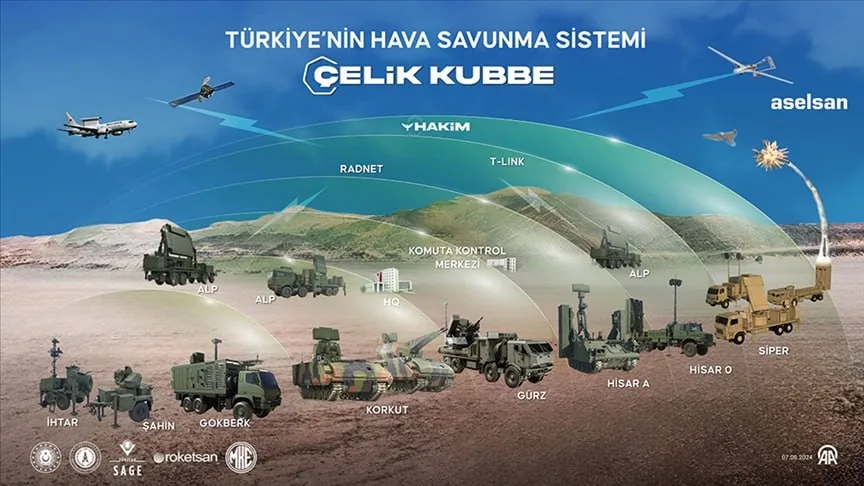
Türkiye has officially unveiled the ASELSAN Steel Dome—an integrated, layered air and missile defence architecture that fuses national sensors, command‑and‑control, and interceptors. The ASELSAN Steel Dome anchors a cost‑effective defence against drones, cruise missiles, and select ballistic threats by combining HAKİM/HERİKKS C2, long‑range early‑warning radars, and the HİSAR–SİPER interceptor family. [1][2][3] Why it matters The […]
Altay T1 Delivery Begins

Altay T1 Delivery Begins Altay T1 delivery moves from planning to action. BMC told the international defence press that first tanks will transfer to the Turkish Land Forces soon. The first batch sets the tone for series production and a later shift to the domestic BATU power group. In short, Altay T1 delivery starts the […]
Defense & Space: 2025–2026 Outlook

Defense and aerospace strategic trends for 2025–2026 in the US, EU and Türkiye. Read the analysis now and stay ahead in decision-making. What’s driving 2025–2026 Defense and aerospace strategic trends are converging. First, militaries are racing to connect sensors, shooters, and commanders with trusted data. Second, governments are scaling industry to refill stockpiles and shorten […]
Türkiye’s Rise in Armored Ground Vehicle Exports
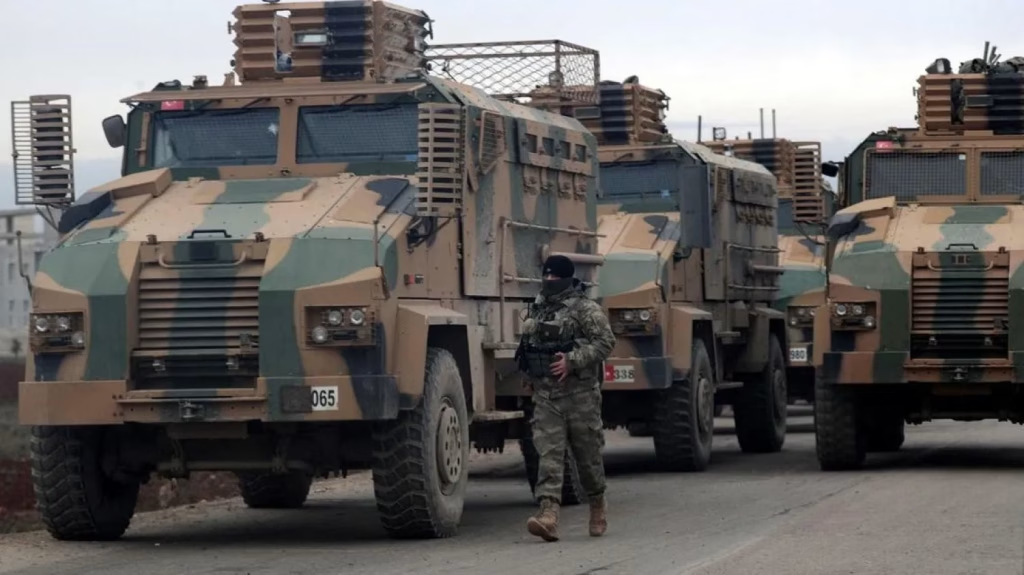
Global armored ground vehicle exports are undergoing a period of significant transformation, as a new generation of suppliers—most notably Türkiye—steps onto the world stage to challenge the dominance of long-established defense exporters. This shift is not merely a change in market share; it reflects a deeper rebalancing of the defense industrial landscape. Traditional exporters such […]
Saudi Arabia Defense Technology Transfer from Türkiye

The Saudi Arabia defense technology transfer initiative took a decisive leap forward during the International Defense Industry Fair (IDEF 2025) in Istanbul — one of the largest defense exhibitions in Eurasia and a focal point for high-level government and industry engagements. At the event, Saudi Arabian Military Industries (SAMI) signed landmark agreements with three of […]
Roketsan Unveils Covert Drone Launcher System
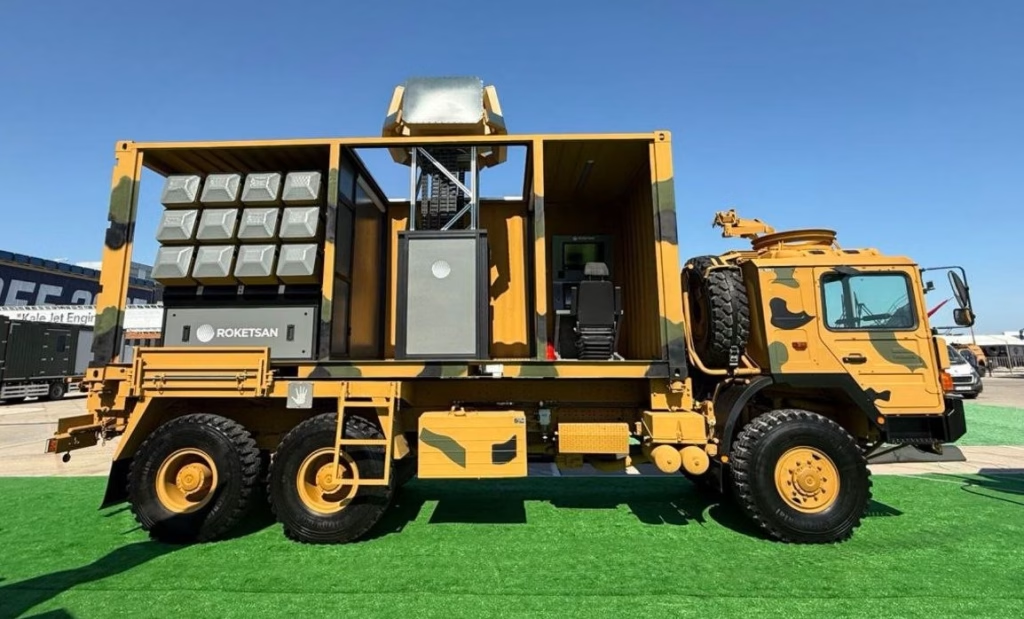
Introduction Turkish defense firm Roketsan has introduced a covert drone launcher that hides in plain sight, disguised as a standard shipping container on a truck. Unveiled at the IDEF 2025 defense expo in Istanbul, the containerized system is designed for surprise deep-strike attacks reminiscent of Ukraine’s daring Operation Spiderweb campaign. By blending in with civilian […]